September 14, 2022
Mohenjo
Business, Food For Thought, Human Interest, Medical, Political, Science, Technical
amazon, business, Business News, current-events, Future, Hotels, human-rights, medicine, mental-health, research, Science, Science News, technology, Technology News, travel, vacation

Click the link below the picture
.
Dear How to Do It,
My partner “Chris” and I have been together for 6 years, and I recently learned something shocking. We were splitting a bottle of wine and started talking about things in our past that would surprise the other. Chris certainly won: He told me that he had sex several times with his own mother, “Sheila.” She had been recently divorced (from her second husband, not his father), and was going through a dry spell. They tried it once on an impulse, and both enjoyed it, so they kept doing it until the rush wore off. To put this in perspective, he was in his early 20s and she was in her early 40s. We are both in our 30s now.
Chris said that he wasn’t traumatized by the experience, and I believe him. They still have a warm relationship. Sheila is a lovely woman, and until I learned this I had no trouble seeing her as a mother-in-law. Now I feel like our relationship has completely changed. Whenever I see her, I want to blurt out that I know what they did. (Chris said that I can have a discrete conversation with her about this if I want.) The weird thing is that I feel like we are competing as women now, and she would have something over me if she knew that I knew. Does this make sense? Not to mention that Chris and Sheila violated an ancient taboo. It seems like this should bother me. My relationship my Sheila feels different, but I still feel the same about Chris. I am still thinking about marrying and raising children with him. Am I crazy?
— Not Sure About Being Mrs. Oedipus
.

.
.
Click the link below for the article:
.
__________________________________________
September 13, 2022
Mohenjo
Business, Enthralling, Human Interest, Photographs
amazon, business, Business News, current-events, Future, Hotels, human-rights, medicine, mental-health, research, Science, Science News, technology, Technology News, travel, vacation

Click the link below the picture
.
Cirrhitidae, the hawkfishes, are a family of marine perciform ray-finned fishes found in tropical seas and which are associated with coral reefs.
The Cirrhitidae were first recognized as a family by the Scots-born Australian naturalist William Sharp Macleay in 1841. It is one of the 5 constituent families in the superfamily Cirrhitoidea which is classified in the suborder Percoidei of the order Perciformes. Within the Cirrhitoidea, the Cirrhitidae is probably the most basal family. They have been placed in the order Centrarchiformes by some authorities, as part of the superfamily Cirrhitoidea, however, the 5th edition of Fishes of the World does not recognize the Centrarchiformes. The name of the family is taken from that of the genus Cirrhitus which is derived from cirrhus meaning a “lock of hair” or “a barbel”, thought to be a reference to lower, unbranched rays of the pectoral fins which Bernard Germain de Lacépède termed as “barbillons”, which means “barbels” in his description of the type species of the genus C. maculatus, and which he thought to be “false” pectoral fins. Another possibility is that the name refers to cirri extending from the tips of the spines in the dorsal fin spines, although Lacépède did not mention this feature.
Genera
The following 12 genera are classified within the Cirrhitidae, containing a total of 33 species:
- Amblycirrhitus Gill, 1862
- Cirrhitichthys Bleeker, 1857
- Cirrhitops J.L.B Smith, 1951
- Cirrhitus Lacepède, 1803
- Cristacirrhitus Randall, 2001
- Cyprinocirrhites Tanaka, 1917
- Isocirrhitus Randall, 1963
- Itycirrhitus Randall 2001
- Neocirrhites Castelnau, 1873
- Notocirrhitus Randall, 2001
- Oxycirrhites Bleeker, 1857
- Paracirrhites Bleeker, 1874
Cirrhitidae hawkfishes are roughly oblong in shape with a body which has a depth which is 21% to 50% of its standard length. They have a fringe of cirri on the rear edge of the forward nostrils. There are two poorly developed spines, on the gill cover. The outer row of teeth on the jaws are canine-like, the longest normally being located at the front of the upper jaw and the middle of the lower jaw. Inside this row, there is a band of bristle-like teeth, wider in the front. The dorsal fin is continuous, having 10 spines and 11-17 soft rays, it has an incision separating the spiny and soft-rayed parts. The anal fin contains 3 spines and 5–7, typically 6, soft rays. There are 14 pectoral fin rays with the lowest 5-7 rays unbranched and normally thickened, with deep notches in the membranes separating these lower rays. There is a single spine in the pelvic fins as well as 5 soft rays. The scales are cycloid and they lack a swimbladder. The color and pattern vary between species. The maximum length attained is around 55 cm (22 in), although around 30 cm (12 in) is more typical. Most species are quite small and colorfully patterned. Wikipedia
.
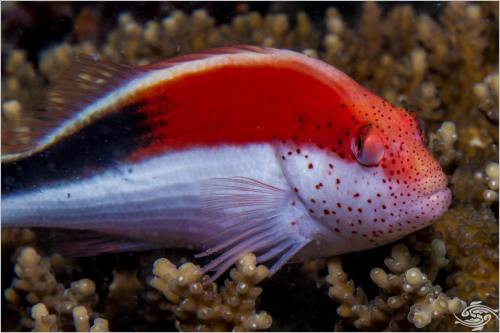 An image of a Hawkfish
.
.
Click the link below for images:
.
__________________________________________
September 13, 2022
Mohenjo
Business, Food For Thought, Human Interest, Medical, Science, Technical
amazon, business, Business News, current-events, Future, Hotels, human-rights, medicine, mental-health, research, Science, Science News, technology, Technology News, travel, vacation

Click the link below the picture
.
Vegetables of all colors are packed with vitamins, minerals, fiber, and phytonutrients. You can’t go wrong by adding more colorful produce to your plate. There are, however, vegetables with a higher nutrient content relative to their calories, making them exceptionally helpful for weight control and health.
Dr. Fuhrman, the developer of the nutritarian diet, came up with the idea of an ANDI (aggregate nutrient density index) to quantify the nutrient content of fruits and vegetables relative to their calories. Using the ANDI score, researchers undertook the time-consuming task of ranking 41 fruits and vegetables according to their nutrient density. Let’s look at which produce tops the list in terms of nutrient density per calorie, based on the ANDI score.
.
 Veggie lovers delight
.
.
Click the link below for the article:
.
__________________________________________
September 13, 2022
Mohenjo
Business, Food For Thought, Human Interest, Medical, Political, Science, Technical
amazon, business, Business News, current-events, Future, Hotels, human-rights, medicine, mental-health, research, Science, Science News, technology, Technology News, travel, vacation

Click the link below the picture
.
We generally assume that home renovations will increase the value of our home. Whether it’s a new kitchen or a gently refreshed guest bedroom, most of the time, the math works in our favor when we do work on a house, making the dust, mishaps, and strain on our bank accounts ultimately worth it.
But not always. Sometimes the renovations don’t pay off the way we expect; while something like a kitchen remodel definitely boosts the value of your home, it doesn’t actually pay for itself, returning just 71% or so of your investment, which is a sobering thing to learn when you’re about to write an enormous check to a contractor. But the real kick in the shins are the home renovations and remodeling projects that actually decrease the value of your home. These are the home renovations you should avoid—unless you love your hot tub too much to care.
.
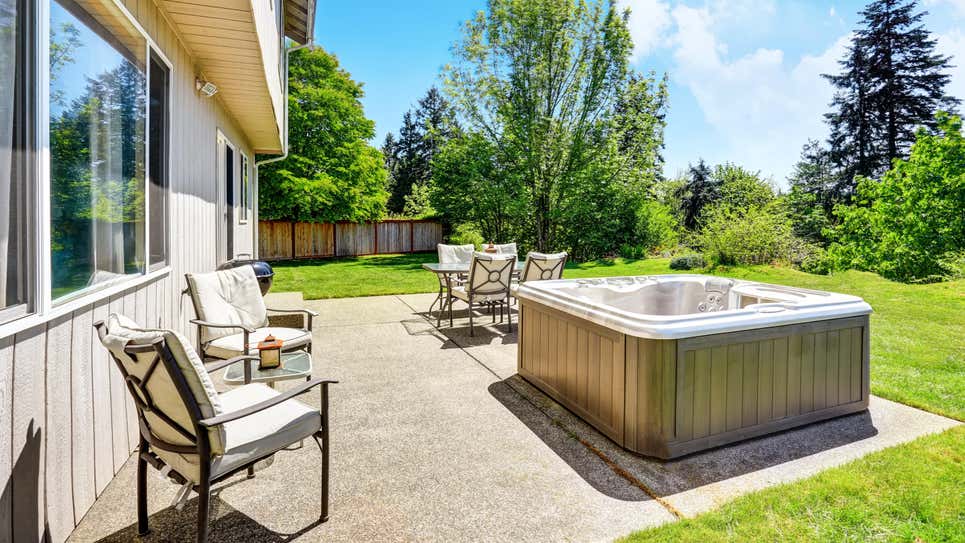 Photo: Artazum (Shutterstock)
.
.
Click the link below for the article:
.
__________________________________________
September 12, 2022
Mohenjo
Business, Enthralling, Human Interest, Photographs
amazon, business, Business News, current-events, Future, Hotels, human-rights, medicine, mental-health, research, Science, Science News, technology, Technology News, travel, vacation
Click the link below the picture
.
Tierra del Fuego National Park is a national park on the Argentine part of the island of Tierra del Fuego, within Tierra del Fuego Province in the ecoregion of Patagonic Forest and Altos Andes, a part of the subantarctic forest. Established on 15 October 1960 under the Law 15.554 and expanded in 1966, it was the first shoreline national park to be established in Argentina.
The park has dramatic scenery, with waterfalls, forests, mountains, and glaciers. Its 630 km2 (240 sq mi) include parts of the Fagnano and Roca lakes. The Senda Costera (Coastal Path), connecting Ensenada Bay to Lapataia Bay on Lago Roca, is a popular hiking trail within the park. Forests of Antarctic beech, lenga beech, and coihue in the lower elevations of the park are home to many animal species. There are 20 species of terrestrial mammals, including the guanaco, Andean fox, North American beaver, European rabbit, and muskrat. Among the 90 species of birds are the kelp goose, torrent duck, austral parakeet, Andean condor, blackish oystercatcher, and Magellanic oystercatcher.
The southernmost national park in Argentina, it is listed as an IUCN category II park. The park stretches 60 km (37 mi) north from the Beagle Channel along the Chilean border. Ushuaia, the capital of Tierra del Fuego Province, is 11 km (6.8 mi) from the park. The park can be reached by car or by train. The southern terminus of the Pan-American Highway is located within the park, as is the El Parque station of the End of the World Train.
The park forms the southern portion of the subantarctic forest and is known for its biological richness. The subantarctic forest vegetation is dominated by tree species of coihue, nires, and lenga (a tree or shrub native to the Andes and also known as lenga beech) apart from a profusion of massbed. The flora that characterizes the “Andino-Patagonico” forests, the lenga, is well distributed over the mountain slopes above sea level to a height of 600 m (2,000 ft). Above 600 m (2,000 ft) elevation, the flora consists of altoandina with small little bushes, plants en cojin, and grasses. Wikipedia
.
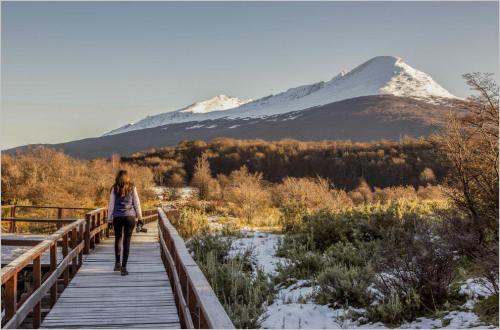 An image from Tierra Del Fuego National Park
.
.
Click the link below for images:
.
__________________________________________
September 12, 2022
Mohenjo
Business, Food For Thought, Human Interest, Medical, Political, Science, Technical
amazon, business, Business News, current-events, Future, Hotels, human-rights, medicine, mental-health, research, Science, Science News, technology, Technology News, travel, vacation
Click the link below the picture
.
What distinguishes the human brain from that of all other animals — including even our closest primate relatives? Yale researchers identified species-specific — particularly human-specific — features in an analysis of cell types in the prefrontal cortex of four primate species. They reported their findings on August 25, 2022, in the journal Science.
What they found that makes us human may also make us susceptible to neuropsychiatric diseases.
For the study, the scientists looked specifically at the dorsolateral prefrontal cortex (dlPFC). This is a brain region that is unique to primates and essential for higher-order cognition. Using a single-cell RNA-sequencing technique, the researchers profiled expression levels of genes in hundreds of thousands of cells collected from the dlPFC of adult humans, chimpanzees, macaque, and marmoset monkeys.
“Today, we view the dorsolateral prefrontal cortex as the core component of human identity, but still we don’t know what makes this unique in humans and distinguishes us from other primate species,” said Nenad Sestan. He is the lead senior author of the paper, the Harvey and Kate Cushing Professor of Neuroscience at Yale, professor of comparative medicine, of genetics, and of psychiatry. “Now we have more clues.”
To answer this, the scientists first asked whether there are there any cell types uniquely present in humans or other analyzed non-human primate species. After grouping cells with similar expression profiles, they revealed 109 shared primate cell types. They also discovered five that were not common to all species. These included a type of microglia, or brain-specific immune cell, that was present only in humans and a second type shared by only humans and chimpanzees.
.
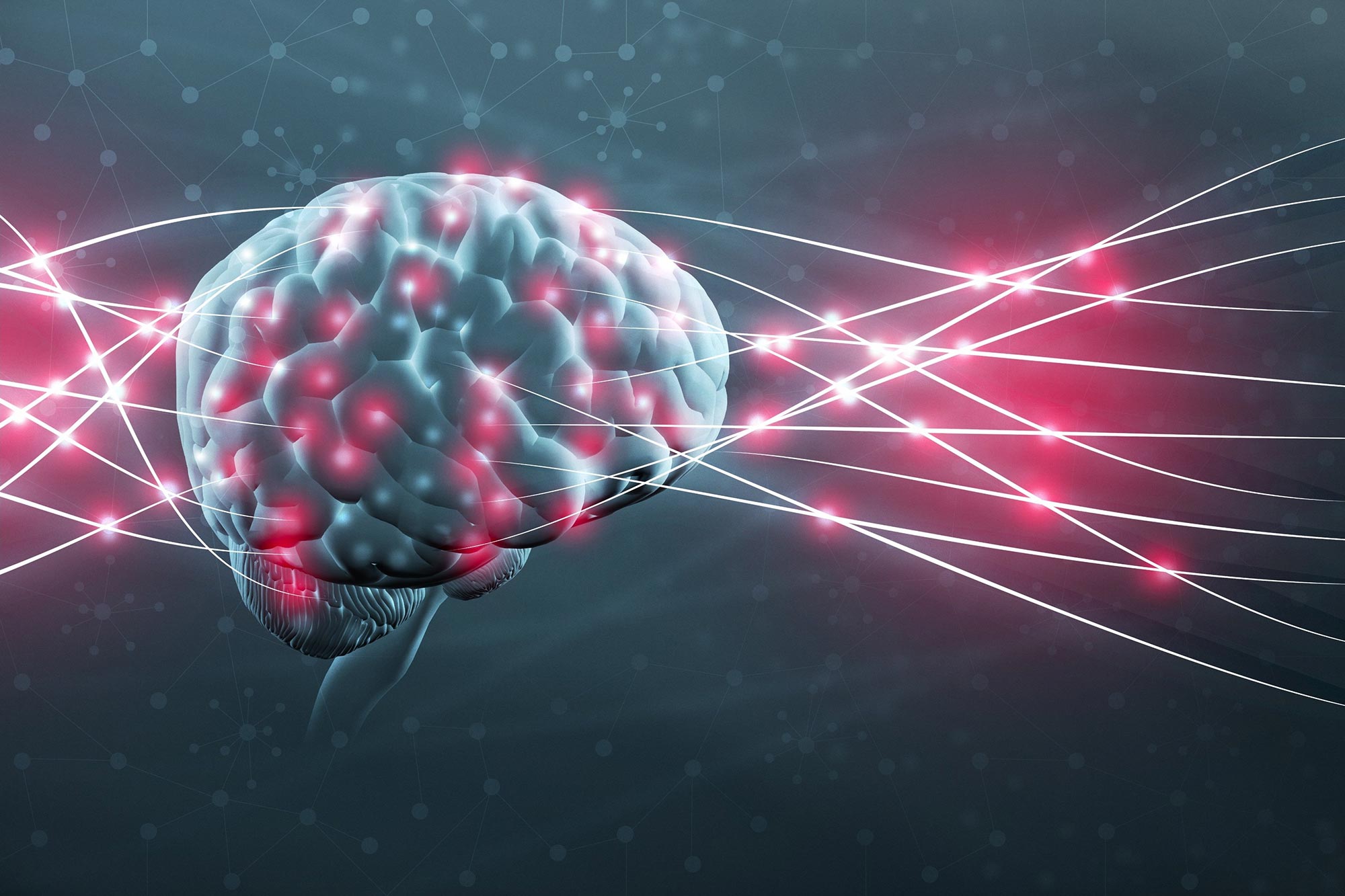 Yale researchers have identified human-specific features in the prefrontal cortex.
.
.
Click the link below for the article:
.
__________________________________________
September 12, 2022
Mohenjo
Business, Food For Thought, Human Interest, Medical, Political, Science, Technical
amazon, business, Business News, current-events, Future, Hotels, human-rights, medicine, mental-health, research, Science, Science News, technology, Technology News, travel, vacation

Click the link below the picture
.
Parents, picture this: Your child has just taken a test they’ve been studying for. Do you usually wait for good test results before you take them out for ice cream?
Leaders, picture this: An employee has been working long hours on a report. Do you usually wait to see its final quality before you recognize their effort?
If you answered yes to either of these, you may need to rethink your strategy.
In a commencement speech at Stanford, Sundar Pichai said four words that encapsulated years of research on the psychology of human motivation: “Reward efforts, not outcomes.”
What he’s tapping into here is creating sources of intrinsic motivation. This means motivating people to do something because they truly enjoy it, love the challenge, or find it interesting. As opposed to seeking a reward (or avoiding a punishment).
In other words, make results kind of irrelevant.
This might sound counterintuitive. After all, what’s in it for you? What you really want is that good test score or that excellent report, right?
Think again. In reality, science backs the intrinsic route. Here’s why you should too. Your employees and your kids will thank you for it.
.

Google CEO Sundar Pichai. Photo: Getty Images
.
.
Click the link below for the article:
.
__________________________________________
September 11, 2022
Mohenjo
Business, Food For Thought, Human Interest, Medical, Political, Science, Technical
amazon, business, Business News, current-events, Future, Hotels, human-rights, medicine, mental-health, research, Science, Science News, technology, Technology News, travel, vacation

Click the link below the picture
.
President Eisenhower signed the law establishing the National Aeronautics and Space Administration on July 29, 1958. At the time, the United States had put about 30 kg of small satellites into orbit. Less than 11 years later, Neil Armstrong and Buzz Aldrin landed on the Moon.
President Obama signed a NASA Authorization Act on October 11, 2010. Among its provisions, the law called on NASA to create the Space Launch System rocket and have it ready for launch in 2016. It seemed reasonable. At the time, NASA had been launching rockets, including very large ones, for half a century. And in some sense, this new SLS rocket was already built.
The most challenging aspect of almost any launch vehicle is its engines. No problem—the SLS rocket would use engines left over from the space shuttle program. Its side-mounted boosters would be slightly larger versions of those that powered the shuttle for three decades. The newest part of the vehicle would be its large core stage, housing liquid hydrogen, and oxygen fuel tanks to feed the rocket’s four main engines. But even this component was derivative. The core stage’s 8.4-meter diameter was identical to the space shuttle’s external tank, which carried the same propellants for the shuttle’s main engines.
.
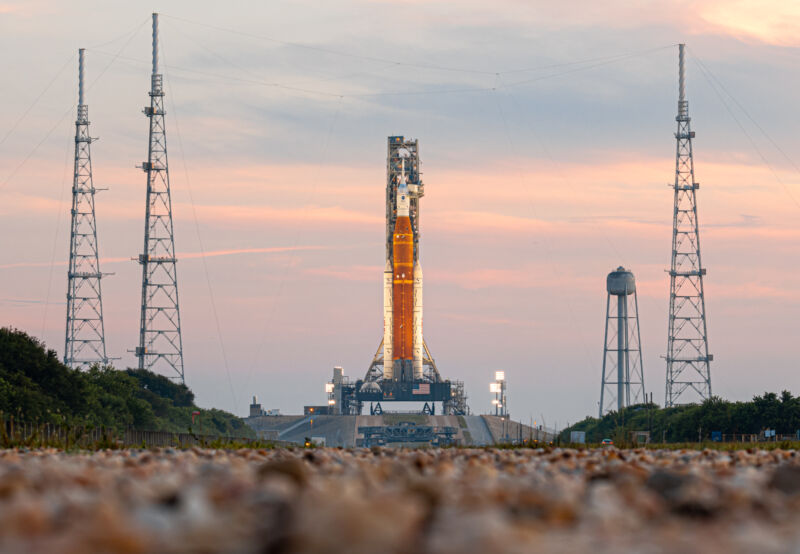 NASA’s Space Launch System Rocket at LC-39B, preparing to lift off at 8:33 am ET on August 29th, 2022.
.
.
Click the link below for the article:
.
__________________________________________
September 11, 2022
Mohenjo
Business, Food For Thought, Human Interest, Medical, Political, Science, Technical
amazon, business, Business News, current-events, Future, Hotels, human-rights, medicine, mental-health, research, Science, Science News, technology, Technology News, travel, vacation
Click the link below the picture
.
Dear Prudence,
I’m 49, and my husband, Quinn, is 42. I love the way I look and the way I’ve aged, so I don’t say the following to be self-deprecating: Quinn is breathtakingly gorgeous and has only grown more handsome with age. Women and men are drawn to him, and I can’t fault them for taste. Most people are respectful about it, but there have been a number of people over the years who’ve either believed I wasn’t good-looking enough for Quinn or that he would cheat on me (possibly with them). Those experiences bothered us both, but we love and trust each other, and it’s easy to move on from them. Seventeen years and three kids in, I don’t think about the so-called discrepancy between our looks unless someone calls my attention to it.
Recently, Anna, a good friend whom I met through our daughters’ school, texted me screenshots of a conversation between her and Bridget and Rita, two other good friends. Bridget and Rita spoke very graphically about what they’d like to do to Quinn and said some really unkind things about me. She said she thought I should know what was being said behind my back. I was shocked and haven’t replied to her.
I’m really sad that my friendship with Bridget and Rita wasn’t genuine. Our daughters are friends, and we facilitate Skype play dates each week, so I’m not sure what to say to them or whether our kids should play together anymore. I’m also angry about how they talked about Quinn like a slab of meat. And a small part of me that I hate most of all feels shame about the things Bridget and Rita said about me, which is what’s kept me from showing Quinn the messages. I like myself a lot, and it feels so stupid that I’ve let two mean girls affect that and make me feel embarrassed to confide in my husband. This has shaken me, and I want to start moving forward. What should I do?
.
 Photo illustration by Slate. Photo by fizkes/iStock/Getty Images Plus.
.
.
Click the link below for the article:
.
__________________________________________
September 10, 2022
Mohenjo
Business, Enthralling, Human Interest, Photographs
amazon, business, Business News, current-events, Future, Hotels, human-rights, medicine, mental-health, research, Science, Science News, technology, Technology News, travel, vacation
Click the link below the picture
.
Castle Hill Lighthouse is located on Narragansett Bay in Newport, Rhode Island at the end of the historic Ocean Drive. It is an active navigation aid for vessels entering the East Passage, between Conanicut Island and Aquidneck Island. The lighthouse has become a symbol of Newport, and a frequent site for wedding photos, proposals, and tourist photos. Although the property is owned by the nearby Castle Hill Inn, the lighthouse is owned by the United States Coast Guard.
Henry Hobson Richardson drew a sketch for a lighthouse at this location which may or may not have been the basis for the actual design. The structure does not include the residence which was featured in Richardson’s sketch. The keeper’s house was built and still stands, near Castle Hill Cove, a few hundred feet away.
The lighthouse was completed in 1890 on property formerly belonging to the naturalist, oceanographer, and zoologist Alexander Agassiz of Harvard University. Agassiz sold the land to the United States Government for the lighthouse for $1. His mansion on the property, commissioned in 1874, is now an inn. It was added to the National Register of Historic Places in 1988 as Castle Hill Lighthouse.
Although the lighthouse building is not open to the public, the shoreline and cliff face where the lighthouse sits are accessible by several footpaths from the Castle Hill Inn and the Castle Hill Cove Marina. The lighthouse is a popular site for tourist photos and wedding shoots, and widely recognizable as a symbol of Newport. While the property is owned by the nearby Castle Hill Inn, the lighthouse itself is owned by the United States Coast Guard.
By 2020, the iconic lighthouse had become streaked with unsightly brown rust, and the Coast Guard indicated that it had no plans to perform any exterior maintenance.
In March 2021, the Castle Hill Inn signed a five-year agreement with the Coast Guard to refresh the lighthouse’s exterior appearance. A local contractor was hired to perform a full power wash, paint, and beautification at a cost of $17,000, just in time for the 2021 summer wedding season. Wikipedia
.
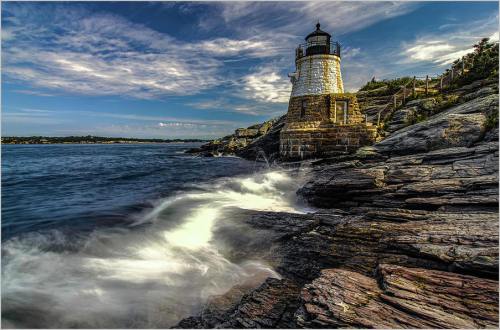 An image of Castle Hill Lighthouse Rhode Island
.
.
Click the link below for images:
.
__________________________________________
Older Entries
Newer Entries

