Doctors were baffled when a 21-year-old woman was admitted into an Italian hospital for “sweating blood” from her face and her hands, a condition she’s had for three years, according to two physicians from the University of Florence.
It’s a condition few doctors have seen, and some have questioned whether sweating blood is even possible. Cases of people sweating blood are uncommon, and the Italian floated the idea that the woman may be faking her symptoms.
The bleeding has no clear apparent trigger and can happen while the woman is asleep or during physical activity, wrote doctors Roberto Maglie and Marzia Caproni in a case report published Monday in the Canadian Medical Association Journal. The bleeding becomes more intense, she told doctors, during times of stress, and the episodes can last from one to five minutes. The woman has isolated herself out of embarrassment, and reported symptoms associated with major depressive and panic disorders, doctors said.
.
An Italian woman’s bleeding episodes lasted one to five minutes and were more intense whenever the woman was feeling emotionally stressed. Embarrassed by the bleeding, the woman grew socially isolated, depressed and anxious. (Canadian Medical Association Journal)
There have been so many horrifying stories about male predatory behavior since the Harvey Weinstein story broke earlier this month, but one quote has truly stood out.
In a damning memo about her boss, a Weinstein Co. employee named Lauren O’Connor neatly explained how the Hollywood producer could get away with sexually harassing so many women.
“The balance of power is me: 0, Harvey Weinstein: 10,” she reportedly wrote.
That one sentence sums up more than the situation with Weinstein, now accused of sexual harassing or assaulting more than 50 women. That same power imbalance exists in every corner of the country, in the White House, Congress, the media, police departments, academia, most big law firms, and nearly every major corporate boardroom, corner office and C-suite.
“Weinstein is the embodiment of the power differential that plays out all over the workplace in the United States,” said Teresa Boyer, the director of the Anne Welsh McNulty Institute for Women’s Leadership at Villanova University.
It started with a simple idea: What if I sat down with chief executives, and never asked them about their companies?
The notion occurred to me roughly a decade ago, after spending years as a reporter and interviewing C.E.O.s about many of the expected things: their growth plans, the competition, the economic forces driving their industries. But the more time I spent doing this, the more I found myself wanting to ask instead about more expansive themes — not about pivoting, scaling or moving to the cloud, but how they lead their employees, how they hire, and the life advice they give or wish they had received.
That led to 525 Corner Office columns, and weekly reminders that questions like these can lead to unexpected places.
I met an executive who grew up in a dirt-floor home, and another who escaped the drugs and gangs of her dangerous neighborhood. I learned about different approaches to building culture, from doing away with titles to offering twice-a-month housecleaning to all employees as a retention tool.
A slight girl all of 6, she leaves the modest family farm, where the father minds the livestock and the mother keeps a painful secret, and walks out to the main road. Off she goes to primary school, off to the Sisters of Mercy.
Her auburn hair in ringlets, this child named Catherine is bound for Tuam, the ancient County Galway town whose name derives from a Latin term for “burial mound.” It is the seat of a Roman Catholic archdiocese, a proud distinction announced by the skyscraping cathedral that for generations has loomed over factory and field.
Two miles into this long-ago Irish morning, the young girl passes through a gantlet of gray formed by high walls along the Dublin Road that seem to thwart sunshine. To her right runs the Parkmore racecourse, where hard-earned shillings are won or lost by a nose. And to her left, the mother and baby home, with glass shards embedded atop its stony enclosure.
Behind this forbidding divide, nuns keep watch over unmarried mothers and their children. Sinners and their illegitimate spawn, it is said. The fallen.
.
A shrine built to honor the children.Paulo Nunes dos Santos for The New York Times
You won’t hear about her death from officials investigating the aftermath of Hurricane Maria, but you should know her name and her story.
She was Isabel Rivera González.
.
Rivera was 80. She loved to dance, and was known in this hilly enclave of Puerto Rico for her Saturday-night merengue moves. In family photos displayed at her funeral last week, she was shown laughing near a shoreline as flamingos tiptoed behind her. In a black-and-white image, she beamed as she held an infant, one of her five children. Those children described their mother as healthy and full of energy late into her years — a woman who lit up a room.
.
Rivera survived Hurricane Maria on September 20 huddled next to her boyfriend, Demencio Olmeda, 76. The storm’s winds tore out their curtains and windows, swirling debris in the sky, knocking out power and water service and killing, officially, 51 people.
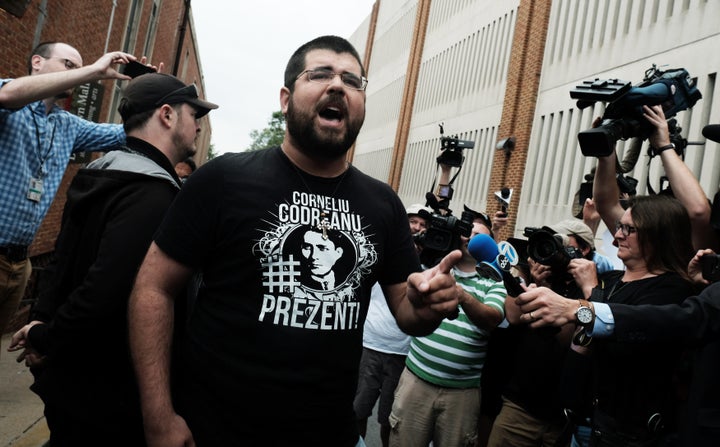
In post-Charlottesville America, any large gathering of racists and fascists becomes both spectacle and specter. The threat of violence is omnipresent. Locals must “brace” themselves for “chaos and bloodshed.” Everyone dreads “another Charlottesville.” Dread is what Nazis want.
In two small cities near Nashville in Middle Tennessee, the fear was palpable ahead of two “White Lives Matter” rallies here on Saturday.
“So … what brings you to town?” a wary clerk asked guests as they checked into a hotel in Murfreesboro, home to Middle Tennessee State University and 132,000 residents, where one rally will be held Saturday afternoon outside the Rutherford County Courthouse. I heard some version of this question three times before I’d even found my room.
In nearby Shelbyville, a town of 21,000 south of Murfreesboro in Tennessee horse country, another rally ― organized by the same racists and fascists ― is scheduled for Saturday morning. Many Shelbyville residents will stay indoors or clear out altogether, according to local police.
.
Justin Ide/Reuters
Matthew Heimbach, seen here after the white supremacist rally in Charlottesville, Virginia, is head of the Traditionalist Worker Party.
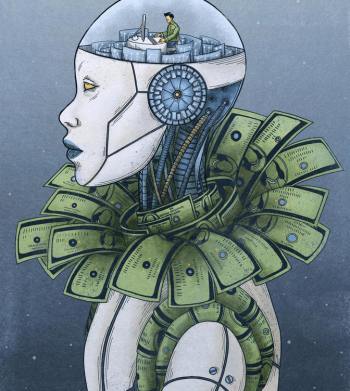
Nearly all big tech companies have an artificial intelligence project, and they are willing to pay experts millions of dollars to help get it done.
Silicon Valley’s start-ups have always had a recruiting advantage over the industry’s giants: Take a chance on us and we’ll give you an ownership stake that could make you rich if the company is successful.
Now the tech industry’s race to embrace artificial intelligence may render that advantage moot — at least for the few prospective employees who know a lot about A.I.
Tech’s biggest companies are placing huge bets on artificial intelligence, banking on things ranging from face-scanning smartphones and conversational coffee-table gadgets to computerized health care and autonomous vehicles. As they chase this future, they are doling out salaries that are startling even in an industry that has never been shy about lavishing a fortune on its top talent.
I have met Trump haters before, lots of them, the kind who seize upon every conspiracy theory and refuse to give him any benefit of any doubt. The four people I recently spent the morning with at Solly’s Tavern in D.C. (sans booze, don’t worry) were not Trump haters. They were, however, Trump quitters.
All of them, at some point over the course of the last nine months, had left their posts within the current administration, having decided that they could better serve their country from outside the government than from within. They weren’t happy about quitting, either. They were civil servants who wanted to remain civil servants, who, except for one, had worked under presidents of both parties. They had disagreed with superiors over the years, they had been fearful of new regulations and wary of political appointees, but they stayed on because that’s the nature of career work in government. This was different.
.
Four Quitters Walk Into a Bar…
To swap war stories from an administration they couldn’t serve for one more minute.
Film and Writing Festival for Comedy. Showcasing best of comedy short films at the FEEDBACK Film Festival. Plus, showcasing best of comedy novels, short stories, poems, screenplays (TV, short, feature) at the festival performed by professional actors.

 An Italian woman’s bleeding episodes lasted one to five minutes and were more intense whenever the woman was feeling emotionally stressed. Embarrassed by the bleeding, the woman grew socially isolated, depressed and anxious. (Canadian Medical Association Journal)






 Puerto Rico’s uncounted hurricane deaths



 Huge Salaries for Scarce A.I. Talent
 .
.
 Four Quitters Walk Into a Bar…
