
Home

Fears of Harm to Its Employees

Leave a comment

Click the link below the picture

.

The theft by a criminal hacking group of reams of sensitive personal data involving potentially tens of thousands of former and current F.B.I. employees is emerging as one of the worst breaches of sensitive government information, leaving the bureau rushing to protect its personnel as an uncertain deadline loomed.

Nearly a week after the group, known as ShinyHunters, revealed it had pilfered intimate details about bureau personnel from the agency’s jobs portal and threatened to leak them online, F.B.I. investigators are still piecing together how the breach took place and the total damage.

The hack appears to have swept up home addresses, Social Security numbers, secretive job assignments and much more, according to a New York Times analysis of some of the records. Some are already comparing it to China’s breach of more than 20 million records from the Office of Personnel Management over a decade ago, considered so catastrophic that officials and lawmakers vowed to never let something like it happen again.

Many F.B.I. employees first learned about the hack when news reports about it surfaced on Tuesday, according to current and former officials. The next day, F.B.I. staff received an email reminding them that October is cybersecurity awareness month, which struck some as tone deaf in light of the breach, one of those people said.

On Friday, bureau leaders, in an internal memo to its rank and file, declared the hack a cybersecurity incident and acknowledged its employees had personal information stolen.

“We are operating under the premise that the threat actor is also exfiltrating PII of all F.B.I. employees,” according to the memo, which was described by someone who had seen it, using the abbreviation for personally identifiable information.

The memo said the agency would offer virtual briefings in the weeks ahead and instructed employees to remain vigilant at home and at work, report any unsolicited contacts or threats, avoid answering calls from unknown numbers and set up voice mail accounts with A.I.-generated voices. “Bureau leadership remains committed to supporting the safety of you and your family,” it said.

Still, many past and present personnel remain in the dark about whether their data has been purloined. In recent days, some have anxiously asked Times reporters whether their names are contained in the hacked data, wondering whether they needed to take steps to protect themselves or their families.

In a statement on Monday, the agency said it was “working around the clock to investigate the cyber incident involving FBIJobs.gov and is in regular communication with anyone who may be impacted — including multiple bureau-wide communications within 24 hours of public reporting.”

It added, “The F.B.I. treats the security of its information and the safety of its work force as top priorities, and our investigation is ongoing.”

In announcing its hack, ShinyHunters, believed to be a loose collective of young hackers operating across the globe, said it had targeted the F.B.I. as retribution for a public advisory the bureau had issued in the spring, warning that the group was known to harass victims and family members with threatening or coercive maneuvers. In their note, the hackers demanded that the F.B.I. “correct or simply REMOVE” the advisory or risk further consequences.

In an email to The Times on Friday, ShinyHunters said that the bureau had until the end of Tuesday to fulfill its request, even as the hackers themselves appeared to acknowledge that the bureau was unlikely to acquiesce.

That note left open the possibility that the hackers would not dump the data online, even as the group reiterated its deadline. But on Monday, in a new statement, the group claimed it never intended to do so.

“Since the very beginning we had made our decision that we would never publish this data,” the group said. “We have never intended to nor have we ever planned to.” It added that the hack and threat to the F.B.I. was a “marketing campaign to protect our business” and said that “we are not taking any further actions” with the data, including revealing more about what is contained in the files.

“We seek no escalation as our goals have widely been accomplished,” it said.

It remains to be seen what ShinyHunters will do, and security researchers warned that even if they did not publish it online they could still sell it to other criminals or foreign governments.

It is also unclear just how much sensitive information the hackers stole. The group claimed publicly to have stolen records on everyone who has applied for a job at the F.B.I., and told The Times that the people with compromised information numbered in the tens of thousands.

Ciaran Martin, the former head of Britain’s cyberdefense agency, said the F.B.I. hack likely had “huge impact on the operational capability” of the bureau and could rank as one of the most consequential data breaches in history — graver even than the Office of Personnel Management burglary.

“Losing the data on 20 million federal employees to the Chinese was bad,” Mr. Martin said. “But you knew the Chinese weren’t going to sell or publish it.”

A sample of records that the hackers have shared with The Times and other news organizations includes newer hires as well as retired ones, with birth dates ranging from the early 1940s to the mid 2000s. The most recent date references in the spreadsheet were from late April, suggesting the stolen files are at most only months old.

Current and former U.S. officials said that at least portions of the sample, and potentially all of it, appeared to be authentic.

A Times review of the sample found that it contained a range of private personal data, including:

  • The names, home addresses, phone numbers, work emails, Social Security numbers and birth dates and hire dates of current and former F.B.I. personnel.

  • Names and numbers for spouses and other emergency contacts, including in some cases parents, siblings and even children.

  • Employee identification numbers that are used for the Transportation Security Administration’s PreCheck program, which could aid spies in tracking travel itineraries of agents, including those that work undercover.

  • Names of the units in which F.B.I. personnel are employed and their job titles, as well as the names of supervisors. While some list mundane departments, others reveal extraordinarily sensitive assignments including counterintelligence, narcotics and various desks focused on Russian, Chinese and Iranian national security threats. F.B.I. agents in those roles are generally expected to zealously protect their work in such fields to avoid putting a target on their back.

Additionally, ShinyHunters said that it had stolen medical data about employees, including psychiatric records and documents related to blood and urine tests. It also said that it had additional background check files on employees.

Former bureau officials and security experts said the hacked data prompted no end of worries. The data could also make it far easier for violent criminals to seek revenge against F.B.I. agents who sent them to prison. When they submit paperwork against criminal suspects, F.B.I. agents sign their names to the records but are typically trained to not let delicate personal information easily emerge online.

“It doesn’t take much imagination to picture scenarios where employees or their families could be threatened or harmed by this kind of information being released,” said Andrew Brandt, a threat intelligence researcher at the cybersecurity company Huntress. “The bigger worry is ShinyHunters selling the data to other criminal or nation-state groups who could put it to more damaging use, rather than dumping it themselves.”

.

United States flags hang from the exterior of the J. Edgar Hoover Building in Washington.A criminal hacking group known as ShinyHunters said it had targeted the F.B.I. as retribution for its public warning in the spring that the group was known to harass its victims and their family members. Credit…Tierney L. Cross/The New York Times

.

.

Click the link below for the complete article:

https://www.nytimes.com/2026/09/28/us/politics/fbi-shinyhunters-damage.html

.

__________________________________________

The North Little Rock High School Desegregation Crisis (1957)

Leave a comment

The North Little Rock High School Desegregation Crisis (1957)

How the body’s own immune system can attack the brain

Leave a comment

Click the link below the picture

.

Peter Jones once treated a patient with strikingly vivid hallucinations of animals. During ward visits, the patient would stroke and interact with the critters “in as real a way as he was with me,” says Jones, an academic psychiatrist at the University of Cambridge in England.

Antipsychotic drugs did nothing to dissolve these Snow White-esque visions. But when the patient received-plasma exchange –– a treatment normally reserved for a misbehaving immune system –– his hallucinations dissipated.

Clearly, this was not a textbook case of schizophrenia. Rather, the patient’s symptoms stemmed from autoimmune encephalitis, a rare form of brain inflammation that can, in some cases, cause hallucinations and other symptoms of psychosis. When these patients are treated with drugs that tamp down the immune system, the psychotic symptoms often disappear.

Autoimmune encephalitis is usually first identified through testing blood or spinal fluid for certain types of antibodies. If patients test positive for these antibodies, it’s a sign that their immune system may be attacking the brain. Other signs can help to solidify diagnosis: bright patches of inflammation on MRI scans, quickly worsening psychotic symptoms and — importantly — clear neurological symptoms such as seizures.

But Jones’ patient didn’t have those obvious neurological symptoms. If Jones hadn’t suspected an autoimmune cause, the case likely would have been missed.

Some experts suspect that the field of psychiatry is overlooking a small number of patients like this, and they are working to find more of them. They’re considering screening a broader array of psychiatric patients and seeking out new antibodies that may be involved in autoimmune encephalitis.

At the same time, many worry that there’s a risk of planting false hopes and diverting patients from the psychiatric treatments the vast majority will actually need, should autoimmune encephalitis become over-diagnosed.

Landmark research paper

The “artificial divide” between the body and the mind that separates the fields of psychiatry and neurology is starting to break down, says Michael Zandi, a neurologist at University College London. Psychosis, for example, can be caused by a mix of mental and biological factors, from psychological trauma to drug abuse to physical diseases or infections (such as syphilis) that alter brain activity. Around 3 percent of people will experience a psychotic episode in their lifetime.

Brain inflammation caused by the body assaulting itself, as in autoimmune encephalitis, has been recognized for the past couple of decades. In the early stages of this condition, many patients develop the core features of psychosis –– hallucinations, delusions and agitation –– and so are initially sent to psychiatric services.

A landmark paper about this condition came in 2007, when researchers described the cases of 12 women with autoimmune encephalitis. Nine of the patients initially presented with a number of psychosis-like symptoms, while the others mainly had memory loss. All but one devolved into seizures. The researchers found that the women’s conditions were caused by antibodies that bind to the brain’s NMDA receptors, proteins that are involved in many processes in the brain, such as learning and the formation of memories.

The trigger for autoimmune encephalitis, in this case, seemed to be tumors in these patients, 90 percent of which were ovarian. All five tumors the researchers examined contained nerve tissue complete with NMDA receptors. This confused the immune system, which came to recognize the NMDA receptor as foreign and ramped up the manufacture of antibodies that bind to it.

But those antibodies also bound to NMDA receptors in healthy brain tissue, interfering with brain function. Other cells of the immune system gathered to the area, sparking inflammation that, in many of these cases, caused psychosis.

.

https://static.scientificamerican.com/dam/asset/f4518766-d6c2-468c-ae3a-8e4b08bee80b/Knowable-Autoimmune-Psychosis.jpg?m=1790358736.339&w=900

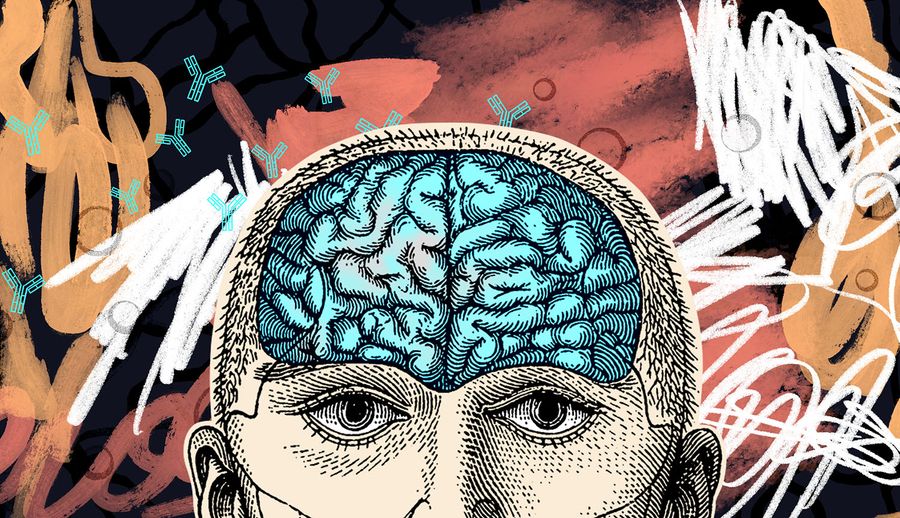
In rare cases, brain inflammation can cause psychosis. When antipsychotics are replaced with immune-suppressing drugs, patients can recover completely. But how do we identify these cases? Knowable Magazine

.

.

Click the link below for the complete article:

https://www.scientificamerican.com/article/how-the-bodys-own-immune-system-can-attack-the-brain/

.

__________________________________________

Taylor Swift’s New Songs Promise an Encore, but They’re Really a Bunch of Repeats

Leave a comment

Click the link below the picture

.

Taylor Swift’s September surprise seemed more exciting when it sounded like it would consist of just one song. Coming nearly a year after the big-pop mishmash that was The Life of a Showgirl, and a few months after the soft-countryish Toy Story 5 single “I Knew It, I Knew You,” maybe “Patient Zero” would signal another stylistic turn ahead of a future album. At least, as the first official release from Taylor Swift the Married Lady, it would be some kind of landmark.

But that was Tuesday. On Wednesday we learned the single would be part of a four-song “encore” to Showgirl, in other words part of the now standard “deluxe edition” method by which artists usually extend the streaming life cycle of an album. Yawn. Meanwhile, Swift claims she was dropping in on producers Max Martin and Shellback to celebrate Showgirl’s record-setting first-week sales and they just got so worked up they accidentally wrote four songs. Because that’s plausibly how the schedule of the world’s biggest pop star works.

Give Swift some credit: By her standards, adding only four songs to a previously released album, and waiting a year to do it, is a huge act of restraint, like a former pack-a-day smoker who now just bums a loosie when she’s drunk. Keep it up and this music critic’s trauma might yet heal from that infamous April night when she added a whole second album to The Tortured Poets Department at 2 in the morning.

Anyway, true to its billing as the “encore” to Showgirl, these new songs sound fairly similar to that album, and similarly are at best a couple of notches above half-successful. “Patient Zero” itself opens with an unexpectedly Celtic-sounding fiddle lick. This teased at my futile hope that it would be a callout of her embattled friend and sometime faux-Celtic singer Ed Sheeran, with the upshot of “Remember, he failed to come out in solidarity with me first!” But no such luck. Instead, the epidemic-origin metaphor—a pop-culture commonplace by now, whose uncomfortable AIDS-era origins I don’t blame Swift for being too young to know—is directed at a woman being done wrong by some dog of a dude who did Swift wrong first. It’s a highly Swiftian formula of sympathy with a scoop of “I told you so.” And it’s perfectly passable, with lilting cadences you’ll hum along with when it’s playing and likely forget until it plays again.

The upbeat “Cleveland” would sound fine if you heard it from four or five rooms away, but listening closer, it just leads me to beg for the thousandth time that Swift please, please, please stop reading the comments. She recites a litany of mean things her Ohio-born footballing beau’s fans have said about her, does some of her most annoying talk-singing to say nyah-nyah, he likes me anyway, and then seems to announce their engagement at the end, which might feel like something if they hadn’t been married since July already. In other words, consistent with all her big love songs about Travis Kelce so far, it sucks. At least, unlike Showgirl’s “Wood,” it doesn’t make me want to peel all my skin off to escape it.

Mercifully, matters improve from there. “Pink Clouding” is an airy disco song whose theme is genuinely affecting: “You were so good / That’s why you haunt me like you should … Years later, I still wonder how to tell you sorry.” The title echoes “Lavender Haze,” from Midnights, and a lyric refers to “where the arrow hit,” reminding me of “The Archer,” from Lover. It could have fit on either of those records, and maybe it’s about the same person they were. On a couple of hours’ acquaintance, I would call it a keeper.

That goes double for “Babylon,” which is a story song in the Folklore–Evermore line, which Swift seems to be doing at least once an album these days to prove she still can. It always makes me wish she’d flip the ratio and write mostly fictional narratives (as on Evermore) while saving the personal ones up for the deepest impact. The yarns need to find a wider musical range, though—“Babylon” has contours a bit too much like “The Last Great American Dynasty,” for instance. It’s about a man who comes to regret abandoning his family for pleasure and ambition, wishing he could go back to “Babylon”—which Swift seems to be using as a lost-paradise term like Shangri-la, and I’d say somebody really needs to expand her reggae collection stat, except I fear where that might lead. But it’s not immature, whiny, or narcissistic, and that, my brethren and sistren and ’tren beyond the binary, is an exodus to root for.
.
To be honest, I’ve almost stopped hoping for more. Maybe we’ve gotten all the growth from Swift we’ll ever get. But “Babylon” at least reminds me there was a time not so long ago when she took an evolutionary leap, even though she then mostly reverted to form. It could happen again, ideally without need of another pandemic. Otherwise, it feels as if her reality, as with so many of her fellow billionaires, will only continue to withdraw from the one the rest of us must inhabit, and her future will continue to look like a series of ever-less-convincing encores.

.

The singer in a black sleeveless turtleneck dress, her back against a concrete wall.Taylor Swift/Instagram

.

.

Click the link below for the complete article:

https://slate.com/culture/2026/09/taylor-swift-cleveland-patient-zero-babylon-pink-clouding-lyrics.html

.

__________________________________________
How China’s Leader Plans to Win the Future With A.I.

Leave a comment

Click the link below the picture

.

In a stretch of former farmland now transformed into a gleaming technology park, China’s leader, Xi Jinping, watched two robotic hands slowly thread a needle.

What he was seeing, he declared, would help China seize its future.

It is a future in which artificial intelligence permeates China’s factories, hospitals and classrooms, reinvigorating the economy through advanced robotics and high-end manufacturing. It is a future in which China, not the United States, dominates A.I. development, turning the technology into what Mr. Xi has called a “lead goose” to fly the country into its next economic revolution.

To realize that vision, the Chinese government is mobilizing the full weight of the state.

At the park that Mr. Xi visited, on the outskirts of Beijing in February, hundreds of companies have set up offices to develop cutting-edge chips and A.I. models. The city government is giving them tens of millions of dollars in free computing power. An exhibition hall shows off their creations, including chips designed to power nuclear missiles and brain implants that could help paralyzed patients speak.

Mr. Xi, during his visit, said that China’s strength lies in its ability to zero in on a direction and follow through.

“We must give full play to our nation’s advantage of concentrating resources to accomplish major tasks,” he told an assembled group of entrepreneurs, researchers and officials.

China’s A.I. campaign is backed by enormous sums of government money. Economists estimate that state-led funds put more than $184 billion into A.I. firms between 2000 and 2023, and last year, the government and state-owned banks pledged hundreds of billions more. Private A.I. investment in China is far lower than in the United States, where private sources poured $285 billion into the technology in 2025 alone.

Beijing’s approach to A.I. is distinct from the prevailing one in the United States in other ways, too.

Many in Washington and Silicon Valley see A.I. development as a race toward artificial general intelligence, a still-theoretical form of A.I. that could think and learn as well as — or better than — humans.

Chinese officials have hardly mentioned A.G.I., focusing on more immediate goals.

China’s population is rapidly shrinking and getting older, creating an urgent need for intelligent robots to replace retiring workers. Poor rural residents could seek medical care from digital avatars of top urban doctors. The authorities could more easily know where Chinese citizens are, what they say and perhaps even how they feel.

In a stretch of former farmland now transformed into a gleaming technology park, China’s leader, Xi Jinping, watched two robotic hands slowly thread a needle.

What he was seeing, he declared, would help China seize its future.

It is a future in which artificial intelligence permeates China’s factories, hospitals and classrooms, reinvigorating the economy through advanced robotics and high-end manufacturing. It is a future in which China, not the United States, dominates A.I. development, turning the technology into what Mr. Xi has called a “lead goose” to fly the country into its next economic revolution.

To realize that vision, the Chinese government is mobilizing the full weight of the state.

At the park that Mr. Xi visited, on the outskirts of Beijing in February, hundreds of companies have set up offices to develop cutting-edge chips and A.I. models. The city government is giving them tens of millions of dollars in free computing power. An exhibition hall shows off their creations, including chips designed to power nuclear missiles and brain implants that could help paralyzed patients speak.

Mr. Xi, during his visit, said that China’s strength lies in its ability to zero in on a direction and follow through.

“We must give full play to our nation’s advantage of concentrating resources to accomplish major tasks,” he told an assembled group of entrepreneurs, researchers and officials.

China’s A.I. campaign is backed by enormous sums of government money. Economists estimate that state-led funds put more than $184 billion into A.I. firms between 2000 and 2023, and last year, the government and state-owned banks pledged hundreds of billions more. Private A.I. investment in China is far lower than in the United States, where private sources poured $285 billion into the technology in 2025 alone.

Beijing’s approach to A.I. is distinct from the prevailing one in the United States in other ways, too.

Many in Washington and Silicon Valley see A.I. development as a race toward artificial general intelligence, a still-theoretical form of A.I. that could think and learn as well as — or better than — humans.

Chinese officials have hardly mentioned A.G.I., focusing on more immediate goals.

China’s population is rapidly shrinking and getting older, creating an urgent need for intelligent robots to replace retiring workers. Poor rural residents could seek medical care from digital avatars of top urban doctors. The authorities could more easily know where Chinese citizens are, what they say and perhaps even how they feel.

.

https://static01.nyt.com/images/2026/09/24/world/china-ai-xi-reveal/china-ai-xi-reveal-superJumbo.png?quality=75&auto=avifKarolis Strautniekas

.

.

Click the link below for the complete article:

https://www.nytimes.com/2026/09/23/world/asia/china-ai-economy-xi-jinping.html

.

__________________________________________

Arkansas Freedom Summer (1965), A Pivotal Event in Civil Rights Movement

2 Comments

Arkansas Freedom Summer (1965), A Pivotal Event in Civil Rights Movement

Best VPN Service for 2026: The Top-Ranked VPNs in Our Testing

Leave a comment

Click the link below the picture

.

The best VPNs offer robust privacy protections without compromising on performance or noticeably affecting your internet speeds. ExpressVPN is our Editors’ Choice for best overall VPN, thanks to its top-notch approach to privacy and transparency, paired with great streaming capabilities. It’s followed closely by NordVPN, the fastest VPN we tested. Surfshark is another great option, especially for anyone looking for simultaneous connections. Proton VPN and Mullvad round out our recommendations as particularly privacy-forward services that are also budget-friendly.

What is the best VPN in 2026?

Editors’ note, Sept. 1: We’re making some changes to our methodology this year. We’ve expanded our speed-testing process to include multiple connection types, and we’re adjusting our value assessment to better account for VPNs that offer bundled services. We’ll update this page with new rankings and data when we conclude our testing and evaluation next month, but in the meantime, we stand by the recommendations on this page.

The race for the title of best VPN is as close as ever: Our top three VPNs all sit within a half-point of one another in our ratings. Here’s a comprehensive breakdown of the five VPNs we recommend.

ExpressVPN is currently the best VPN overall thanks to its streamlined apps, fast server speeds, excellent streaming capabilities and strong privacy.

NordVPN is an exceptional VPN that gave us the fastest connection speeds in our testing — it’s great for streaming and packed with privacy features.

Surfshark delivers speeds and features comparable to ExpressVPN and NordVPN, but is cheaper upfront and offers unlimited simultaneous connections.

Proton VPN is privacy-forward, with unique features like discreet app icons on Android to disguise your VPN app as a notes, weather or calculator app.

Mullvad VPN charges a straightforward monthly price and takes a unique approach to privacy that doesn’t require any personal information whatsoever to use the service.

.

.

Click the link below for the complete article (for complete descriptions click link below):

https://www.cnet.com/tech/services-and-software/best-vpn/

.

__________________________________________

They Kept Outsiders Away for 500 Years. Their World Is About to Change.

Leave a comment

Click the link below the picture

.

My father dedicated his life to studying the Guna people of Panama, and they may soon allow unprecedented development through their land. I went on a trek through the jungle to find out why.

In 1970, my father, a shaggy 25-year-old from the Chicago suburbs finishing his Ph.D. in anthropology, traveled with my mother to the Gunayala region of northeast Panama to ask its inhabitants, the Guna people, for permission to study them. The Guna lived on an archipelago of sandy, palm-covered islets along the Caribbean coast and had a reputation as prickly and disagreeable.

My parents went from village to village as my father, James, introduced himself in Spanish. He was not the first anthropologist the group had seen. The Guna had a long history of interacting with wagas, as they called non-Guna. Wagas tended to be struck by Guna independence. According to a U.S. government report in 1964, the Guna’s “chief characteristic has been and continues to be a persistent determination to preserve their cultural and racial structure against pressures from the outside.” That had been evident when, just a few years before my father arrived, an American businessman named W.D. Barton built a resort on one of Gunayala’s more than 350 uninhabited islands. The Guna burned it down. And when Barton tried to rebuild it, they burned it down again.

My father spent much of the 1970s regularly traveling to live with the Guna, joined for several months at a time by my mother, June, and then by me. Digandiggi, our home, was a village of 200 thatched-roof homes built on a coral reef, half a mile from the mainland jungle and the hulking silhouette of the Serranía de San Blas, a mountain range that is an extension of the Continental Divide.When I think of Digandiggi, I hear the thud of breakers and smell the burning of coconut husks in cooking fires. Our dirt-floored home, which we shared with a village chief, had a roof of palm fronds that crackled and popped in the afternoon heat. There was a fist-size hole in the corner leading to the lair of some nocturnal creature; afraid of snakes, I dared not ask what it might be. We had no privacy. The neighbors, whose roof almost touched ours, could hear every whisper through the cane walls. The only place on the entire island where I could find solitude was the communal outhouse, which stood over shallow water at the end of a narrow plank. I would hide there for hours, studying the mountains as clouds tumbled over the peaks.

Guna villages, hives of activity with dizzyingly high population density, tended to overheat my social circuits. But my father could be out all day and night making house calls, having his ear bent, hearing stories he’d already heard dozens of times. There was chemistry between him and the Guna. They liked to tell him their stories, especially the old shamans, who were running out of apprentices.

And my father liked to listen. Within a year, to the Guna’s astonishment, he became fluent in their language and a natural with their customs. “If you want to work with the Guna,” Dad says, “you have to spend a lot of time traveling around and explaining yourself.” This involved what I regard as heroic self-discipline, for as with human beings everywhere, the Guna currency of trust is food: If they offer it, you better eat it. And the Guna staple, proffered upon arrival in every household, is dulemasi (literally “people food”), a thin gray soup larded with plantains, fish and sometimes river snails. Thanks to dulemasi, I decided early on not to become an anthropologist. My father, as far as I can tell, doesn’t particularly enjoy the dish, either, but he won’t say. To insult it, even in private, would be to insult the Guna.

There were other reasons the Guna liked my father. He was an ally, not only agreeable but also loyal, returning decade after decade. He belonged to a wave of American anthropologists who, in the wake of the 1960s, saw themselves as not simply studying their subjects but standing with them against imperialism and colonialism. They were not simply detached observers; they were advocates and intermediaries, atoning for their predecessors’ misdeeds, if not their countries’.

My father, arriving in Gunayala on the cusp of this change, intended to study kinship, a staple of old-school anthropology. But he soon switched to the study of Guna exorcisms and puberty rituals, as well as their town-hall-style democracy. Above all, my father wanted to understand — and bolster, to whatever extent possible — the aspect of the Guna that has long fascinated outsiders: their resistance to external pressure.

Over the last 500-some years, the Guna have proved uniquely successful at keeping intruders at bay, at times through violence. Since fighting a brief war of independence in 1925, the Guna have enjoyed virtual autonomy, even after pledging nominal allegiance to the Republic of Panama. But Panama’s government has never stopped pressing for access to Guna land. Gunayala contains what may be the most pristine jungle in all of Latin America, and it includes hundreds of uninhabited islands that have been likened to remote parts of the Bahamas before tourism. Most valuable of all, perhaps, it controls land near the Panama-Colombia border, which includes vital access to a potential transit route for migration and commerce of all kinds.

.

The Guna people in Panama inhabit what may be the most pristine jungle in all of Latin America, and for centuries they have been successful at keeping intruders at bay.

.

.

Click the link below for the complete article:

https://www.nytimes.com/2026/09/23/magazine/darien-gap-road-panama-colombia.html

.

__________________________________________

Trump Organization Is Said to Be in Talks on a Saudi Government Real Estate Deal

Leave a comment

Click the link below the picture

.

The Trump Organization is in talks that could bring a Trump-branded property to one of Saudi Arabia’s largest government-owned real estate developments, according to the chief executive of the Saudi company leading the development.

The negotiations are the latest example of Mr. Trump blending governance and family business, particularly in Persian Gulf countries. Since returning to office, the president’s family and businesses have announced new ventures abroad involving billions of dollars, made hundreds of millions from cryptocurrency, and sold tickets to a private dinner hosted by Mr. Trump.

Mr. Trump is set to host Crown Prince Mohammed bin Salman, Saudi Arabia’s de facto ruler, in Washington next week.

The prince is overseeing a $63 billion project that is set to transform the historic Saudi town of Diriyah into a luxury destination with hotels, retail shops, and office space. The Trump business has a history of lending its name to mixed-use projects touting “iconic luxury.”

“Nothing announced yet, but soon to be,” Jerry Inzerillo, chief executive of the Diriyah development and a longtime friend of President Trump, said in an interview. He said it was “just a matter of time” before the Trump Organization sealed a deal.

Saudi officials toured the Diriyah development with Mr. Trump during the president’s official state visit in May, with the goal of piquing his interest in the project, Mr. Inzerillo said.

“It turned out to be a good stroke of luck and maybe a little bit clever of us to say, ‘OK, let’s appeal to him as a developer’ — and he loved it,” Mr. Inzerillo said.

Next week, Prince Mohammed is expected to make his first visit to the United States in seven years. He hopes to sign a mutual defense agreement with Washington and potentially advance a deal to transfer American nuclear technology to Saudi Arabia.

That sets up a scenario in which Mr. Trump discusses matters of national security with a foreign leader who is also a key figure in a potential business deal with the president’s family.

Deal-making and diplomacy are increasingly intertwined for Mr. Trump and his family members. Some have engaged in business talks around the world in tandem with his statecraft, mingling profit-making ventures with political relationships.

Diriyah is one of several ongoing Saudi developments that are so big that officials call them “giga-projects.”

The Trump Organization did not respond to questions about the potential deal, nor did Eric Trump, one of Mr. Trump’s two sons overseeing the family business. It can be hard to separate hype from reality in international real estate discussions. Speculation doesn’t always lead to negotiations, and negotiations don’t always end in signed contracts.

.

https://static01.nyt.com/images/2025/11/15/multimedia/15int-trump-saudi01a-photo-wzml/15int-trump-saudi01a-photo-wzml-superJumbo.jpg?quality=75&auto=webp

.

.

Click the link below for the complete article:

https://www.nytimes.com/2025/11/15/world/middleeast/trump-organization-saudi-development-deal.html

.

__________________________________________

Charles E. Bussey Jr., (1918-1996) First African American Serve in Positions

Leave a comment

Charles E. Bussey Jr., (1918-1996) First African American Serve in Positions

Older Entries Newer Entries

Moara de Vânt

Să facem glume, nu război

🇲🇲Dear all peace-loving people around the world🇲🇲

In the world, human beings are facing various problems. People who are full of greed, anger, and ignorance are seen to be fighting with each other in words and deeds. As the fighting continues, various problems such as civil wars, wars of aggression, and wars of aggression are occurring. As world peace is being destroyed, humans are facing unbearable problems. Innocent children and women are not getting the rights they deserve and deserve. I can't think of one thing every time. What is it? The United Nations. If we look at the responsibilities and duties of the United Nations, I think it is not suitable for solving the problems that are happening in the world today. In fact, the United Nations and the World Security Council, such an organization must rule the world, must be able to give orders, and must have various ways to obey orders. There must be no organization that can influence more than that organization. There should be experts from each country. They can even dominate the superpowers like the US, China, and Britain. Only then will global peace be achieved quickly. Now, if a country with power develops more militarily, economically, or socially than its own country, then powerful countries will jealously seek out enemies and wage war. Or they will attack with fighter jets. In this, innocent people are losing their lives. No one understands the value of a life. You should think about how to achieve global peace by controlling these. If the US continues to be the permanent president of the UN, world peace will never be achieved. If you think carefully, no one sees that they are working for the common good, but for their own benefit, for the benefit of their own country. The permanent president of the UN and the Security Council has rejected this, As a young Rohingya, I have come to realize that only by electing the president and secretary from among the countries in the world through a secret ballot system and governing the world fairly can we achieve global peace. The United Nations and the Security Council are organizations in which any country must govern, give orders, and make them obey their orders. For example, only when a defendant is tried in court can we hold the leaders of the countries in check and control them, can we achieve global peace smoothly. Otherwise, it will not be easy for powerful countries to use various excuses to end this war every year, every year, for the benefit of themselves and their countries. No country's leaders pay any attention to the words of the United Nations and the Security Council. If we look at it in practice, look at the Rohingya issue. Myanmar is a small country. Even that country has been under siege for 8 years. What action can be taken? Why is the UN and the Security Council Powerless? Without such Power, how can the organization bring about global peace? Everyone should think about it. Whether there is a veto or a strong one, all countries in the world can only achieve global peace if they are subject to the UN and the Security Council. Seek peace in the quiet embrace of nature. Peace is an indispensable need of the human race. It is not as if one person can kill another person, and it is as if one country can attack another country, but instead of trying to build peace, we must try to destroy the peace now, and the world is getting hotter and is on the verge of collapse. I especially appeal to all the world experts to urgently try to bring about peace in all parts of the world. Mr, Noor Muhamed Arkhan Rohingya Youth Myanmar

Gazeta cuiburilor de cuc

Publicație umoristică dedicată glumeților de pretutindeni

JaZzArt en València

Faith saved us from the savages that we were, losing faith makes us savages again

PeopleTalky

Where Trends Meet Truth

MRS. T’S CORNER

https://www.tangietwoods

Srikanth’s poetry

Freelance poetry writing

MediaNegy

Zalai Betti

INOVATION BLOG AND NEWS

INOVATION BLOG PEOPLE AND NEWS

szigetingy | budapest

Németh György

PT. LPPL Lombok

Konsultan Lingkungan Hidup di Lombok - NTB

Idézetek – LeaArt21

Lea Krasznai (LeaArt21) – Idezetek (Idézetek) WordPress (Budapest, Hungary)

danielecolleoni

Appunti, spunti e passioni in liberta'

تعلم وعلم، ادخر،سافر واستجمم .

تعنى بتقديم نصائح للمعلمين المبتدئين، والطلبة الممتحنين، ومشاركة الاخرين تجربة الادخار في المال، بترشيد الاستهلاك المنزلي، وترتيب البيت، والحفاظ على البيئة، وتشجيع السيارات صديقةالبيئة، والسياحة والاسفار، ونماء رؤوس الاموال، والطب البديل وتشجيع التعليم الرقمي والذكاء الاصطناعي، والعناية بالنحل وتربية الاسماك، والاسثمار في رؤوس الاموال، الزراعة العضوية، والعناية باسنان الرضع، و صحة الحوامل، وتفسير القران

scientifique

apprendre pour évoluer

In Between the Lines

Thoughts on books, language, meaning, and the culture around it.

Great Lakes Mindset

Outdoor Recreation & Adventure in the Great Lakes Region

Nelsapy

News, Info, Bio, Articles, Reviews, Lyrics, Technology, Science, Inspiration, Motivation, Philosphy and many more...

Becoming HIS Tapestry

Christian Lifestyle Blogger

Joe Mullins Commissioner

CEO and president of The Mullins Companies

The Luttie Board

Two Cultures. One Life. Endless Stories

Charles Maxwell DeCook

Real Estate Development Specialist

Amor Entre Estrellas

¡Bienvenido de vuelta viajero!

Heart of Loia `'.,°~

so looking to the sky ¡ sing and from my heart to YOU ¡ bring...

Michael Ciullo

CEO and Founder of Nsight Health

Nelson MCBS

Catholic News, Prayers, HD Images, Rosary, Music, Videos, Holy Mass, Homily, Saints, Lyrics, Novenas, Retreats, Talks, Devotionals and Many More

global geopolitics

Decoding Power. Defying Narratives.

Talk Photo

A creative collaboration introducing the art of nature and nature's art.

Movie Burner Entertainment

The Home Of Entertainment News, Reviews and Reactions

C r i s t i a n a' s Fine Arts ⛄️

•Whenever you are confronted with an opponent, conquer him with love.(Gandhi)

TradingClubsMan

Algotrader at TRADING-CLUBS.COM

Comedy FESTIVAL

Film and Writing Festival for Comedy. Showcasing best of comedy short films at the FEEDBACK Film Festival. Plus, showcasing best of comedy novels, short stories, poems, screenplays (TV, short, feature) at the festival performed by professional actors.

Bonnywood Manor

Peace. Tranquility. Insanity.

Warum ich Rad fahre

Take a ride on the wild side

Madame-Radio

Découvre des musiques prometteuses (principalement) dans la sphère musicale française.

Ir de Compras Online

No tiene que Ser una Pesadilla.

Kana's Chronicles

Life in Kana-text (er... CONtext)

Jam Writes

Where feelings meet metaphors and make questionable choices.

emotionalpeace

Finding hope and peace through writing, art, photography, and faith in Jesus.

Essu Center

Eyasu The Wonderful