
James Alexander Hood (1942-2013) First African American Male Student at The University of Alabama in Tuscaloosa
Assorted human interest posts.
June 11, 2026
June 10, 2026
Business, Food For Thought, Human Interest, Political, Science, Technical amazon, business, Business News, current-events, Future, Hotels, human-rights, medicine, mental-health, research, Science, Science News, technology, Technology News, travel, vacation 4 Comments

Click the link below the picture
.
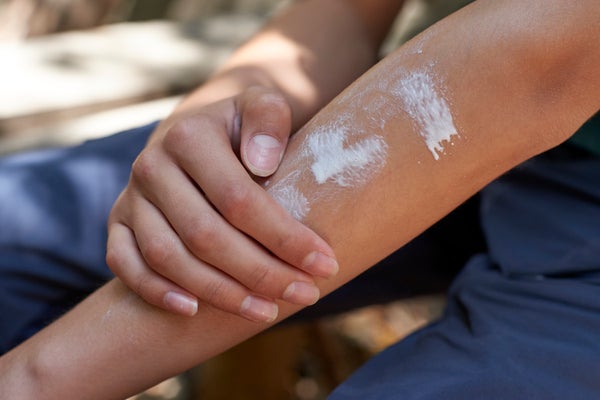
The U.S. is finally getting a new, better sunscreen ingredient. Today, the Food and Drug Administration added bemotrizinol, an effective chemical filter that’s been used in sunscreens made in Asia and Europe for decades, to its list of permitted active ingredients in over-the-counter sunscreens. This list hasn’t seen a new entry in more than 20 years.
Bemotrizinol, also called BEMT, brings the list of approved active sunscreen ingredients in the U.S. to 17—a number that still lags behind Europe, which has more than 30 approved filters. While the FDA’s official action comes just seven months after the agency initially proposed it, critics have pointed out that the lengthy regulatory process prolonged bemotrizinol’s approval; the application was filed in 2005. The Environmental Working Group, an environmental health advocacy organization, has claimed this delay has caused U.S. sunscreens to fall behind in better coverage against harmful ultraviolet (UV) rays. Experts say today’s decision is a move in the right direction, offering people stronger protection from the sun.
Expanding sunscreen ingredient options in the U.S. is “a pretty big deal,” says AJ Addae, a chemist and doctoral candidate a University of California, Los Angeles, who studies cosmetics and sunscreen formulations. “It’s definitely something that we haven’t had in a very long time.”
How Bemotrizinol Works
There are two main classes of sunscreen filters: inorganic, or “physical,” and organic, or “chemical.” Sunscreens with physical filters—such as titanium and zinc—are mineral-based and are known to leave a white cast on skin. Chemical filters, such as avobenzone, octocrylene, and homosalate, appear clear when rubbed on the skin but sometimes feel oily. There are more organic filters than inorganic ones, but there aren’t as many approved ones in the U.S. as in other parts of the world, Addae says.
Contrary to popular belief, both types primarily work by absorbing UV light and converting that radiation energy into heat that is released from the skin, explains Saranya Wyles, a dermatologist at the Mayo Clinic in Minnesota. All sunscreens have the ability to reflect some light, though inorganic filters can reflect a little more, Addae adds.
UV radiation comes in two types: UVA and UVB. UVB is high-energy radiation that is typically associated with sunburns and can cause genetic mutations that lead to skin cancer, but UVA rays have increasingly become recognized as relevant for skin health, too. UVA is a longer-wavelength radiation that can penetrate deeper into the skin than UVB, breaking down the skin’s structure and creating harmful, skin‑aging molecules.
In the U.S., “the only thing that is really tested is a sunscreen’s ability to absorb UV light—specifically UVB light,” Addae says. This is how sun protection factor (SPF) is determined, but the measurement doesn’t capture UVA light. U.S. sunscreens offer only 24 percent of the protection indicated on SPF labels against UVA radiation, according to an analysis by the Environmental Working Group.
“When we think about a sunscreen, we want something to be broad spectrum,” Wyles says—meaning it covers both UVA and UVB. “What’s so exciting about this new BEMT filter is that it has more coverage in that UVA spectrum” compared with other organic filters. BEMT covers those “deeper UVA” rays that are often linked to photoaging of the skin, she says.
Safety and Stability Properties
Between various countries’ regulatory approval and real-world use, bemotrizinol has some of the most robust safety and efficacy testing among sunscreen filters. Following the ingredient’s development in the late 1990s by the now defunct Switzerland-based company Ciba Specialty Chemicals, the European Union adopted it into sunscreens in 2000. Canada and several countries in Asia followed suit soon after.
“A ton of safety data have had to be accrued in a lot of different populations,” Wyles says. Companies developing sunscreen filters need lots of funding to get the data needed for approval in the U.S., she adds.
Not only is bemotrizinol now the first filter to obtain the FDA’s stamp of approval since 1999, it’s also the first and only organic filter to receive the FDA’s safety and effectiveness standard, known as generally recognized as safe and effective (GRASE), for over-the-counter drugs or ingredients that don’t require full regulatory approval. The GRASE designation “is huge,” Addae says.
“I think that will kind of debunk the consumer’s perception that inorganic filters are generally recognized as safe and effective and organic filters tend to not be,” she says. “This shows that there can be organic filters that are that are determined GRASE.”
It’s impossible to draw “a clear line in the sand” on whether certain sunscreen ingredients are completely healthy for people or not, Addae says. But she adds that evidence has emerged that has given researchers some insight into how sunscreen filters generally interact with our bodies. Chemically, BEMT has larger chromophores—light-absorbing molecules—than other organic filters, which makes them less of a concern for adverse biological interactions, Addae says. In pharmacology and dermatology, researchers use the “500 dalton rule,” in which molecules with a molecular weight of more than 500 daltons are usually too large and bulky to pass through the skin.
“BEMT exceeds this limit quite well,” Addae says. “I think that’s likely a large reason why the GRASE status was on the table for this particular filter.”
Scientists are investigating whether BEMT degrades in pool water. It’s unclear if subsequent chemical by-products after a breakdown of BEMT might cause irritation or damage to the skin. In sunlight, though, most evidence suggests that BEMT is quite stable and longer-lasting than other filters. “BEMT is one that does stay on longer, but this doesn’t mean you can apply this and then you don’t have to reapply for a long time,” Wyles says. “That degradation curve varies for everybody.”
The FDA evaluated the safety and efficacy of BEMT concentrations of up to 6 percent and considered how BEMT interacts with other sunscreen filters and ingredients. Because companies will only be able to use up to 6 percent concentrations of BEMT in formulations, Wyles doesn’t anticipate it will fully replace existing U.S. filters.
“A lot of times, you’re not going to see BEMT standing alone; it’s going to be combined with other sunscreen filters,” Wyles says.
The Future of UV Filters
Researchers are keeping tabs on how BEMT’s approval will affect the approval of other UV filters in the U.S. Wyles says others in the BEMT family might see similar approvals. Another organic filter, Mexoryl 400, has also demonstrated coverage of the UVA spectrum and is increasingly found in sunscreens produced in Asia and Europe. “I can see that coming to the U.S. at some point,” Wyles says.
Addae, who also created a research-and-development lab to make products for cosmetic chains, recently worked with her colleagues at U.C.L.A. to create a mineral-based filter with less of a white cast. She changed the chemical properties of zinc oxide to reduce aggregation that causes a white cast. The filter scattered light differently but still absorbed UV rays effectively. It was more effective with UVB than UVA rays, however. Further efficacy testing is needed, but the filter wouldn’t require new regulatory approval, she says.
BEMT sunscreens are anticipated to hit U.S. shelves later this year. The Dutch company DSM Nutritional Products will be the first in the U.S. to sell its BEMT-formulated sunscreen, Parsol Shield, according to the Associated Press. The company has an 18-month exclusivity period, after which the other manufacturers can start using the ingredient. Addae adds that it will take some time for U.S. chemists and companies to incorporate the filter into new products and learn best practices.
“At the end of the day, what matters is that people wear their sunscreen, no matter what’s in it,” she says.
.
 Pablo Jeffs Munizaga/Fototrekking/Getty Images
.
.
Click the link below for the complete article:
.
__________________________________________
June 10, 2026
Business, Food For Thought, Human Interest, Political, Science, Technical amazon, business, Business News, current-events, Future, Hotels, human-rights, medicine, mental-health, research, Science, Science News, technology, Technology News, travel, vacation Leave a comment

Click the link below the picture
.
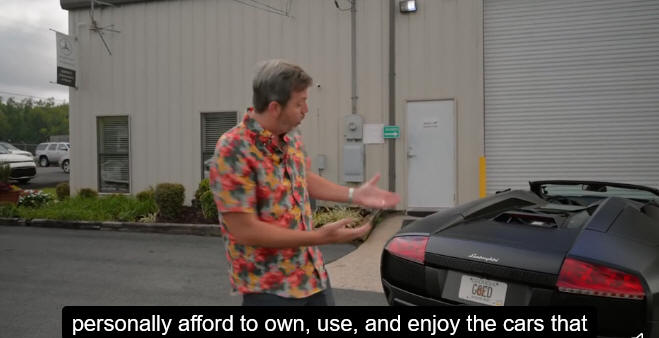
Owning a $4 million Lamborghini collection sounds like a dream – until reality kicks in. Behind the perfect looks, these cars are filled with problems, from oil leaks and misfires to failing clutches and electrical chaos. Years of putting off repairs have finally caught up, and now the cost to fix everything is overwhelming. What seems like luxury quickly turns into a constant battle just to keep them running. It’s a rare look at the truth behind owning some of the most desirable cars in the world.
.
.
.
Click the link below for the complete article:
.
__________________________________________
June 10, 2026
Business, Food For Thought, Human Interest, Political, Science, Technical amazon, business, Business News, current-events, Future, Hotels, human-rights, medicine, mental-health, research, Science, Science News, technology, Technology News, travel, vacation 2 Comments

Click the link below the picture
.
After nearly four years, the World Cup is back to take over the summer. But alongside celebration for the sumptuous soccer to come, there’s ample cause for consternation. This year’s tournament, jointly hosted by the United States, Mexico, and Canada, will play out against a backdrop of endemic FIFA corruption, President Trump’s depredations, and severely strained relations between the host nations.
To gauge the mood on the eve of the competition, we asked three writers — an American, a Mexican, a Canadian — what the World Cup means to them and their countries. Their varied responses testify to both the maddening complexity of contemporary life and the enduring wonder of world soccer.
It’s Not U.S. 1994, but It’s Something
It’s not easy to explain, to kids growing up today surrounded by screens and viral videos, the epiphanic force with which the men’s World Cup landed on American TV in 1994. It certainly did on the old Magnavox TV in my parents’ house in northern New England’s woods. Like many American kids in the waning years of the Cold War, I spent my Saturday mornings kicking a ball around American fields. I had joined a travel team whose sponsor’s logo (“CABOT: Cheese from Vermont”) vied for space with Adidas on our chests. But I’d never seen the game played at the highest level — until 1994.
To live in range of ABC’s coverage of the games that summer was to glimpse the world’s finest players and best-loved teams. It was also to be treated to vivid and at times incongruous tableaux of ethnic fervor and comity, involving not merely those teams but their impassioned fans, too. They filled America’s biggest arenas — green-clad Nigerians and sombrero-wearing Mexicans, Swedes in Viking hats and Argentines singing songs about Diego Maradona. Feelings of national rivalry and pride occasioned not war but play.
To take in those games, as ABC’s commentators informed us, was to watch telecasts also being absorbed by billions of other humans — and to participate in the world.
In 2026, the world doesn’t look like we hoped it might from the sunny vantage of the early 1990s, when history still felt like it was moving in a positive direction. The United States, which seemed destined to be increasingly open-minded, is more closed off. But the return of the World Cup, a competition founded in the same era as the League of Nations and involving a sport that Americans have now learned to love, will still channel conflicts between countries into “peaceful contests in the stadium,” as Jules Rimet, the man who masterminded the competition, once put it. As important, it will offer us all a chance to experience, even if just for a moment, a mighty form of communion.
In 1994, the Cold War was over, and America — notwithstanding Washington’s frequently awful proxy wars in developing countries — was admired as the global paragon of democracy and the rule of law. But the sporting culture in the United States was insular and jingoistic. It was defined by sports that Americans evolved from the games of our colonial masters: Gridiron football was a more dynamic and violent form of English rugby; baseball was an American riff on cricket. Americans took pride in the fact that few others in the world cared about or played our “national pastime.”
Association Football — a game with ancient global roots but whose modern form was, like rugby and cricket, codified in England — became the globe’s game thanks to factors both of history and of form. The British Empire brought British sailors, engineers, and miners to the world’s ports. The game they played by wharves from Buenos Aires to Accra to Hong Kong was embraced by people who founded clubs in those cities and a thousand more. Soccer became the 20th century’s pre-eminent way for people around the world to hail, as the soccer historian David Goldblatt put it, “the miracle of our own solidarities.”
Except in the United States — until 1994, anyway. That summer’s World Cup was the best-attended and most-watched tournament that soccer’s worldwide governing body, FIFA, had ever staged. This was the goal. FIFA and its partners, among them some of the world’s biggest companies and media conglomerates, aimed to make the globe’s best-loved sport a big business in the world’s richest market.
In the 32 years since the 1994 World Cup, the dreams of FIFA and its corporate cronies have in large part come to pass. We follow the world’s top leagues on TV, and our women’s team are worldbeaters. Soccer, according to one recent poll, has surpassed baseball as Americans’ third-favorite sport. Among teens, it comes close to rivaling the N.B.A. for hearts and eyeballs.
Now the World Cup is back. Since 1994, the reputations of both the United States and FIFA have taken some profound dings. FIFA’s corruption was never exactly a secret, but has now been exposed to the world. President Trump’s contempt for the rule of law and international norms has done vast damage to America’s global standing and American society alike.
The reason FIFA’s flagship event has returned to the world’s richest country, this time sharing hosting duties with our North American neighbors and cosignatories to NAFTA that Mr. Trump loves to hate, is the same reason that Gianni Infantino, FIFA’s unctuous current head, expanded this World Cup from 32 nations to 48: cash.
.
 World Cup
.
.
Click the link below for the complete article:
.
__________________________________________
June 10, 2026

Masters of the Universe (also known as He-Man and the Masters of the Universe in India) is a sword-and-sorcery film based on the media franchise by Mattel. It is the second live-action film adaptation after the 1987 film of the same name. It was directed by Travis Knight and written by Chris Butler, Aaron Nee, […]
MASTERS OF THE UNIVERSE (2026) – My rating: 7/10
June 9, 2026
Business, Food For Thought, Human Interest, Political, Science, Technical amazon, business, Business News, current-events, Future, Hotels, human-rights, medicine, mental-health, research, Science, Science News, technology, Technology News, travel, vacation Leave a comment
Click the link below the picture
.
On Tuesday, NASA revealed the four astronauts who will crew its upcoming Artemis III mission—the agency’s critical next step toward landing humans back on the moon for the first time in more than 50 years.
The four astronauts who will fly on the mission, currently slated for 2027, are NASA astronauts Andre Douglas, Frank Rubio, and Randy Bresnik and European Space Agency astronaut Luca Parmitano.
Douglas is a spaceflight rookie who will serve as mission specialist alongside Rubio, who holds the record for the American with the longest spaceflight. Parmitano will be Artemis III’s pilot, and Bresnik will be mission commander. Should any of the four need to pull out of the mission, there is a back-up crew member: NASA astronaut Bob Hines.
According to NASA’s official timeline, Artemis III could launch as early as the second half of 2027, but many experts expect that schedule to slip. Originally conceived as the first U.S. crewed moon landing since 1972’s Apollo 17, NASA overhauled the mission’s scope earlier this year to make it a test flight in low-Earth orbit. There, the four astronauts will seek to rendezvous NASA’s Orion crew capsule with two separate Human Landing System (HLS) vehicles. In future Artemis missions, such HLS spacecraft will ferry crews from lunar orbit to the surface of the moon and back.
“Artemis III is an incredibly exciting, complicated, and highly coordinated multilaunch campaign. It’s going to happen in a short period of time with three of the world’s most powerful rockets,” said Jeremy Parsons, acting assistant deputy associate administrator for NASA’s Moon to Mars Program Office, at Tuesday’s announcement.
The mission will begin with the launch of Blue Origin’s lander test vehicle, which Parsons said can “loiter” in space for up to 90 days. The crew will launch inside the Orion capsule via the space agency’s Space Launch System rocket. Then they will orbit in a circular trajectory around Earth before they attempt to rendezvous the Orion capsule with the Blue Origin lander. The paired spacecraft will spend around two days together, enabling technology demonstrations and tests—including inside the Blue Origin spacecraft, Parsons said.
After that, the Orion capsule will detach from the Blue Origin spacecraft and perform a similar meetup and demonstration with a version of SpaceX’s Starship.
“This gives our teams key information on systems the lunar lander crew will depend on an environment close to home versus four plus days away around the moon,” Parsons said. “This mission is deliberately designed to take calculated risks so that future crews will be safer and ultimately successful when we put boots on the lunar surface.”
During their mission, the crew will spend around two weeks inside their Orion capsule—about four days more than their predecessors did in April’s Artemis II mission, a nearly 10-day voyage that took four other astronauts looping around the moon’s farside.
Artemis III’s objectives also include a space walk and other tests of the agency’s latest space suits, which are being designed and made by the aerospace company Axiom Space and the fashion firm Prada. The basic outline is similar in sequence and scope to Apollo 9, a 1969 mission that was a critical precursor to Apollo 11, the first-ever human moon landing, later that year, and that was itself preceded by 1968’s moon-orbiting Apollo 8.
For now, NASA’s human return to the moon is planned for 2028 via the Artemis IV mission. At the Tuesday event, NASA chief Jared Isaacman said that Artemis III will be critical to getting into the rhythm necessary to make Artemis IV and future moon missions achievable.
The Artemis III crew “are carrying, carrying forward the hopes and dreams of the next generation, just as the Apollo astronauts did for so many of us,” Isaacman said. “When [astronaut] Gene Cernan left the lunar surface on Apollo 17, he said, ‘We leave as we came, and God willing, we shall return with peace and hope for all mankind.’ Now it’s taken a little bit longer than he may have imagined, but we are returning, and we do so with the experience of Apollo, the lessons of Artemis II, the crew, now, of Artemis III, and the promise of what lies ahead and our collective effort to build out humanity’s first outpost on another world.”
Both SpaceX and Blue Origin are vying to supply the HLS; SpaceX’s lander is a variant of its enormous Starship rocket, which has yet to fully reach Earth orbit despite a dozen test flights. Blue Origin’s HLS contribution is its in-development Blue Moon lander, which would lift off on the company’s huge New Glenn rocket. That latter plan, however, suffered a major setback after a New Glenn exploded—destroying some of Blue Origin’s mission-critical infrastructure—during testing on the company’s launchpad on May 28. The company’s CEO, David Limp, has vowed that New Glenn will return to flight before the end of this year—a sentiment echoed on Tuesday by John Couluris, Blue Origin’s senior vice president of lunar permanence.
Even if both companies manage to meet those ambitious deadlines in time for Artemis III, other hurdles remain. To actually get crews to the lunar surface and back, Starship and Blue Moon alike would require in-space refueling—a scarcely tested maneuver that carries significant risks and the possibility of further delays. At the same event on Tuesday, SpaceX’s vice president of customer operations and integration, Jessica Jensen, said the company will attempt a fuel transfer in space later this year. SpaceX CEO Elon Musk is targeting late 2026 for Starship’s next launch.
Artemis III won’t test refueling even under ideal circumstances, which suggests that capability will require further uncrewed test flights of both HLS systems before either one can be used for a crewed lunar return.
“Let me assure you, NASA is taking an active role with all of our partners, contractors, and vendors to help solve the problems that are here today and ensure the right outcomes are achieved,” Parsons said.
Jensen said SpaceX is planning to use a Starship V3 with a docking mod borrowed from its Crew Dragon capsule, which SpaceX uses to ferry NASA astronauts to the International Space Station, for Artemis III. The firm is also building a Starship HLS cabin at its Starbase site in Texas to further test its systems on Earth before a moon landing.
Isaacman said that NASA will release a further update on its moon base plans in the coming weeks.
.
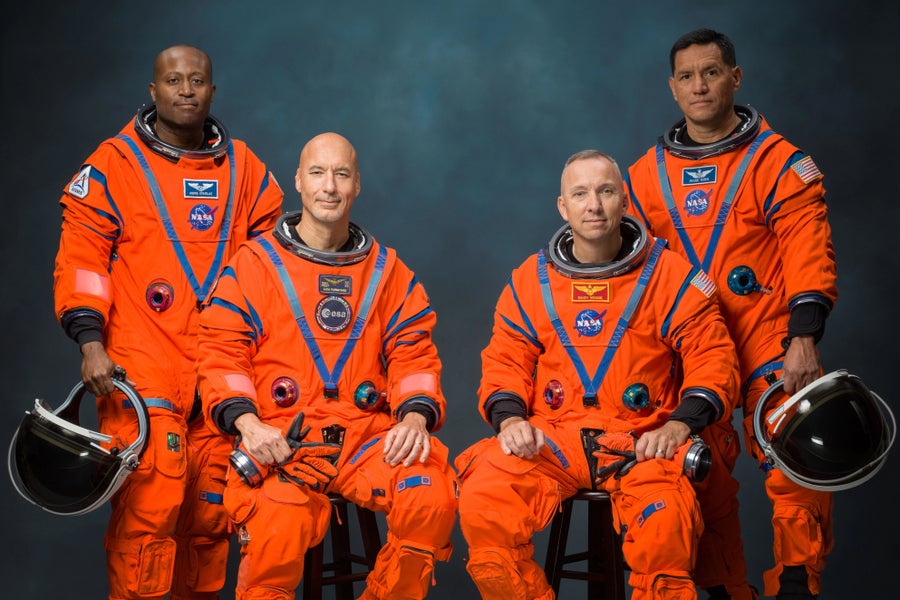
From left to right: Artemis III astronauts Andre Douglas, Luca Parmitano, Randy Bresnik, and Frank Rubio. NASA
.
.
Click the link below for the complete article:
.
__________________________________________
June 9, 2026
Business, Food For Thought, Human Interest, Political, Science, Technical amazon, business, Business News, current-events, Future, Hotels, human-rights, medicine, mental-health, research, Science, Science News, technology, Technology News, travel, vacation Leave a comment

Click the link below the picture
.
Key Takeaways
- Yellowstone National Park is famous for its geothermal features and beautiful landscapes in three U.S. states.
- The park’s dramatic geography includes high-altitude mountains, lakes, and diverse ecosystems with numerous plant and animal species.
- Yellowstone’s unique geology is shaped by a volcanic hotspot, creating the caldera and many geysers like Old Faithful.
Yellowstone is the United States’ first national park. It was established on March 1, 1872 , by President Ulysses S. Grant. Yellowstone is mainly located in the state of Wyoming, but it also extends into Montana and a small part of Idaho. It covers an area of 3,472 square miles (8,987 sq km) that is made up of various geothermal features like geysers, as well as mountains, lakes, canyons, and rivers. The Yellowstone area also features many different types of plants and animals.
History of Yellowstone National Park
The history of humans in Yellowstone dates back to around 11,000 years ago, when Indigenous groups began to hunt and fish in the region. It is believed that these early humans were a part of the Clovis culture and used the obsidian in the region to make their hunting weapons, mainly Clovis tips, and other tools.
Some of the first explorers to enter the Yellowstone region were Lewis and Clark in 1805. During their time spent in the area, they encountered several Indigenous communities such as the Nez Perce, Crow, and Shoshone. In 1806, John Colter, who was a member of the Lewis and Clark expedition, left the group to join fur trappers – at which point he came across one of the park’s geothermal areas.
In 1859, some early explorations of Yellowstone took place when Captain William Reynolds, a U.S. Army surveyor, began exploring the northern Rocky Mountains. Exploration of the Yellowstone area was then interrupted due to the beginning of the Civil War, and did not officially resume until the 1860s.
One of the first detailed, explorations of Yellowstone occurred in 1869 with the Cook-Folsom-Peterson Expedition. Shortly thereafter, in 1870, the Washburn-Langford-Doane Expedition spent a month surveying the area, collecting different plants and animals, and naming unique sites. Following that expedition, Cornelius Hedges, a writer, and lawyer from Montana who had been a part of the Washburn expedition, suggested making the region a national park.
Although there was much action to protect Yellowstone in the early 1870s, serious attempts to make Yellowstone a national park did not occur until 1871, when geologist Ferdinand Hayden completed the Hayden Geological Survey of 1871. In that survey, Hayden gathered a complete report on Yellowstone. It was this report that finally convinced the United States Congress to make the region a national park before it was bought by a private landowner and taken away from the public. On March 1, 1872, President Ulysses S. Grant signed the Act of Dedication and officially created Yellowstone National Park.
Since its founding, millions of tourists have visited Yellowstone. In addition, roads, several hotels like the Old Faithful Inn, and visitor centers, such as the Heritage and Research Center, have been constructed within the park’s boundaries. Recreational activities like snowshoeing, mountaineering, fishing, hiking, and camping are also popular tourist activities in Yellowstone.
Yellowstone’s Geography and Climate
96% of Yellowstone’s land is within the state of Wyoming, while 3% is in Montana and 1% is in Idaho. Rivers and lakes make up 5% of the park’s land area, and the largest body of water in Yellowstone is Yellowstone Lake, which covers 87,040 acres and is up to 400 feet (120 m) deep. Yellowstone Lake has an elevation of 7,733 feet (2,357 m), which makes it the highest altitude lake in North America. The remainder of the park is mostly covered by forest and a small percentage of grassland. Mountains and deep canyons also dominate much of Yellowstone.
Because Yellowstone has variations in altitude, this determines the park’s climate. Lower elevations are milder, but in general, summers in Yellowstone average 70-80°F (21-27°C) with afternoon thunderstorms. Yellowstone’s winters are normally very cold with highs of just 0-20°F (-20- -5°C). Winter snow is common throughout the park.
Geology of Yellowstone
Yellowstone was initially made famous due to its unique geology caused by its location on the North American plate, which for millions of years has slowly moved across a mantle hotspot via plate tectonics. The Yellowstone Caldera is a volcanic system, the largest in North America, which has formed as a result of this hot spot and subsequent large volcanic eruptions.
Geysers and hot springs are also common geologic features in Yellowstone, which have formed due to the hotspot and geologic instability. Old Faithful is Yellowstone’s most famous geyser, but there are 300 more geysers within the park.
In addition to these geysers, Yellowstone commonly experiences small earthquakes, most of which are not felt by people. However, large earthquakes of magnitudes 6.0 and greater have struck the park. For example, in 1959, a magnitude 7.5 earthquake hit just outside the park’s boundaries and caused geyser eruptions, landslides, extensive property damage, and killed 28 people.
Yellowstone’s Flora and Fauna
In addition to its unique geography and geology, Yellowstone is also home to many different species of plants and animals. For example, there are 1,700 species of trees and plants native to the Yellowstone area. It is also home to many different species of fauna- many of which are considered megafaunas such as grizzly bears and bison. There are around 60 animal species in Yellowstone, some of which include the gray wolf, black bears, elk, moose, deer, bighorn sheep, and mountain lions. Eighteen species of fish and 311 species of birds also live within Yellowstone’s boundaries.
To learn more about Yellowstone, visit the National Park Service’s Yellowstone page.
.
:max_bytes(150000):strip_icc()/GettyImages-157439873-5b521ce946e0fb0037a930d3.jpg) Two young girls watch as Old Faithful is Erupting.
Two young girls watch as Old Faithful is Erupting.
.
.
Click the link below for the complete article:
.
__________________________________________
June 9, 2026
Business, Food For Thought, Human Interest, Political, Science, Technical amazon, business, Business News, current-events, Future, Hotels, human-rights, medicine, mental-health, research, Science, Science News, technology, Technology News, travel, vacation Leave a comment

Click the link below the picture
.
A new kind of institutional vandalism appeared last month in the form of a 412-page Trump administration regulatory proposal and a comment period. If the proposal passes, it will damage one of the most rigorous, productive and valuable scientific enterprises in the world.
The Office of Management and Budget has called for a rule change that would impose restrictions on the kinds of research that can be funded and give political appointees the final authority to deny federal funding for research deemed inconsistent with presidential priorities. Such a revision is necessary, the agency said, because there is a “lack of transparency, accountability and proper oversight” in the way federal funds are dispersed. That led to the waste and misuse of federal funds to “promote a ‘woke’ policy agenda,” according to the agency, particularly the diversity, equity and inclusion programs of the Biden years.
O.M.B.’s solution is to weaken the very process that already ensures a strong degree of accountability: The proposal demotes peer review where expert scientists, working inside and outside the agencies, evaluate research based on the scientific merits and strengths of the underlying evidence. Instead of being “routinely deferred to,” peer review would now be only “advisory.” That upends the longstanding compact between the federal government and the scientific community, where Congress appropriates funds, agencies administer them and scientists (through peer review) determine which proposals represent the best science.
Right now, the political appointees who lead agencies such as the Department of Health Human Services have broad authority to administer their agencies’ programs and set new priorities. But they didn’t typically do political evaluations of scientific research proposals. The new rules expand their power over which grants get approved based on whether the projects align with political ideology. The incentive to prioritize loyalty to a political leader over quality and America’s needs would be strong.
Scientists are not infallible. This is why we have checks and balances — enforced by our peers — built into the grant review and publication process. From the outside, it may look inefficient, and it certainly is not perfect. But it’s the best, most transparent and externally verifiable process we have. The proposed rules would take us in a different direction, corrupting the conditions under which rigorous science operates for the public good.
Let’s say the administration doesn’t like the scientific justification for a grant proposal on climate change, vaccines or the health disparities that women of color experience. A political appointee would have the power to deny funding relating to these topics. Appointees could also terminate an active grant project if they decide it is politically or ideologically inconvenient. As written, the proposed rules would govern virtually every grant from every federal agency, including housing, disaster recovery, transportation and Medicaid. Such sweeping power would affect billions in grant funding paid for by taxpayers.
Who would benefit from the proposed rules? For one, politically connected industries — including those that may want to obscure scientific links between their products and harmful health effects. Other beneficiaries might include partisan think tanks, pseudoscientists or even government agencies that may shirk their legal obligations to protect the public.
Other knock-on effects would be profound. Scientists and graduate students would learn quickly which topics are unlikely to be approved. Entire fields could wither without funding not because the science is weak or unimportant, but because it is unwelcome. One day, American taxpayers might wake up and demand to know why we fund research on baseless conspiracy theories rather than investing in our collective future.
An alternative path to the proposed rules exists: the Scientific Integrity Act, a bill with bipartisan support that was reintroduced in the House in 2025. It would protect federal agencies and scientists from political interference by requiring that every federal agency that funds, conducts or oversees scientific research establish and maintain clear scientific integrity standards. It would also help ensure that policy decisions are based on independent, evidence-based science. If the bill were to become law, scientific integrity would become a robust and permanent requirement rather than something vulnerable to executive branch interference.
The O.M.B. proposal is open for public comment until July 13. Congress has a bill on the table. We should defend and improve upon the system by which we rigorously and transparently establish facts. It is how we advance the health and prosperity of all Americans.
.
 Chloe Niclas
.
.
Click the link below for the complete article:
.
__________________________________________
Find the Best Forex Broker for Your Trading Success
AS HUMILDES OPINIÕES DE UMA MULHER DE CORAGEM QUE DIZ SIM À VIDA!
Să facem glume, nu război
In the world, human beings are facing various problems. People who are full of greed, anger, and ignorance are seen to be fighting with each other in words and deeds. As the fighting continues, various problems such as civil wars, wars of aggression, and wars of aggression are occurring. As world peace is being destroyed, humans are facing unbearable problems. Innocent children and women are not getting the rights they deserve and deserve. I can't think of one thing every time. What is it? The United Nations. If we look at the responsibilities and duties of the United Nations, I think it is not suitable for solving the problems that are happening in the world today. In fact, the United Nations and the World Security Council, such an organization must rule the world, must be able to give orders, and must have various ways to obey orders. There must be no organization that can influence more than that organization. There should be experts from each country. They can even dominate the superpowers like the US, China, and Britain. Only then will global peace be achieved quickly. Now, if a country with power develops more militarily, economically, or socially than its own country, then powerful countries will jealously seek out enemies and wage war. Or they will attack with fighter jets. In this, innocent people are losing their lives. No one understands the value of a life. You should think about how to achieve global peace by controlling these. If the US continues to be the permanent president of the UN, world peace will never be achieved. If you think carefully, no one sees that they are working for the common good, but for their own benefit, for the benefit of their own country. The permanent president of the UN and the Security Council has rejected this, As a young Rohingya, I have come to realize that only by electing the president and secretary from among the countries in the world through a secret ballot system and governing the world fairly can we achieve global peace. The United Nations and the Security Council are organizations in which any country must govern, give orders, and make them obey their orders. For example, only when a defendant is tried in court can we hold the leaders of the countries in check and control them, can we achieve global peace smoothly. Otherwise, it will not be easy for powerful countries to use various excuses to end this war every year, every year, for the benefit of themselves and their countries. No country's leaders pay any attention to the words of the United Nations and the Security Council. If we look at it in practice, look at the Rohingya issue. Myanmar is a small country. Even that country has been under siege for 8 years. What action can be taken? Why is the UN and the Security Council Powerless? Without such Power, how can the organization bring about global peace? Everyone should think about it. Whether there is a veto or a strong one, all countries in the world can only achieve global peace if they are subject to the UN and the Security Council. Seek peace in the quiet embrace of nature. Peace is an indispensable need of the human race. It is not as if one person can kill another person, and it is as if one country can attack another country, but instead of trying to build peace, we must try to destroy the peace now, and the world is getting hotter and is on the verge of collapse. I especially appeal to all the world experts to urgently try to bring about peace in all parts of the world. Mr, Noor Muhamed Arkhan Rohingya Youth Myanmar
Publicație umoristică dedicată glumeților de pretutindeni
Faith saved us from the savages that we were, losing faith makes us savages again
Where Trends Meet Truth
https://www.tangietwoods
Freelance poetry writing
Zalai Betti
INOVATION BLOG PEOPLE AND NEWS
Németh György
Konsultan Lingkungan Hidup di Lombok - NTB
Lea Krasznai (LeaArt21) – Idezetek (Idézetek) WordPress (Budapest, Hungary)
Appunti, spunti e passioni in liberta'
Gyorgy Nemeth
تعنى بتقديم نصائح للمعلمين المبتدئين، والطلبة الممتحنين، ومشاركة الاخرين تجربة الادخار في المال، بترشيد الاستهلاك المنزلي، وترتيب البيت، والحفاظ على البيئة، وتشجيع السيارات صديقةالبيئة، والسياحة والاسفار، ونماء رؤوس الاموال، والطب البديل وتشجيع التعليم الرقمي والذكاء الاصطناعي، والعناية بالنحل وتربية الاسماك، والاسثمار في رؤوس الاموال، الزراعة العضوية، والعناية باسنان الرضع، و صحة الحوامل، وتفسير القران
apprendre pour évoluer
Thoughts on books, language, meaning, and the culture around it.
Outdoor Recreation & Adventure in the Great Lakes Region
News, Info, Bio, Articles, Reviews, Lyrics, Technology, Science, Inspiration, Motivation, Philosphy and many more...
Christian Lifestyle Blogger
CEO and president of The Mullins Companies
Two Cultures. One Life. Endless Stories
Real Estate Development Specialist
¡Bienvenido de vuelta viajero!
so looking to the sky ¡ sing and from my heart to YOU ¡ bring...
CEO and Founder of Nsight Health
Catholic News, Prayers, HD Images, Rosary, Music, Videos, Holy Mass, Homily, Saints, Lyrics, Novenas, Retreats, Talks, Devotionals and Many More
Decoding Power. Defying Narratives.
A creative collaboration introducing the art of nature and nature's art.
The Home Of Entertainment News, Reviews and Reactions
•Whenever you are confronted with an opponent, conquer him with love.(Gandhi)
Algotrader at TRADING-CLUBS.COM
Film and Writing Festival for Comedy. Showcasing best of comedy short films at the FEEDBACK Film Festival. Plus, showcasing best of comedy novels, short stories, poems, screenplays (TV, short, feature) at the festival performed by professional actors.
Peace. Tranquility. Insanity.
Take a ride on the wild side
Découvre des musiques prometteuses (principalement) dans la sphère musicale française.
No tiene que Ser una Pesadilla.
Life in Kana-text (er... CONtext)
Where feelings meet metaphors and make questionable choices.
Finding hope and peace through writing, art, photography, and faith in Jesus.

