May 26, 2023
Mohenjo
Business, Food For Thought, Human Interest, Political, Science, Technical
amazon, business, Business News, current-events, Future, Hotels, human-rights, medicine, mental-health, research, Science, Science News, technology, Technology News, travel, vacation

Click the link below the picture
.
When computer scientists at Microsoft started to experiment with a new artificial intelligence system last year, they asked it to solve a puzzle that should have required an intuitive understanding of the physical world.
“Here we have a book, nine eggs, a laptop, a bottle and a nail,” they asked. “Please tell me how to stack them onto each other in a stable manner.”
The researchers were startled by the ingenuity of the A.I. system’s answer. Put the eggs on the book, it said. Arrange the eggs in three rows with space between them. Make sure you don’t crack them.
“Place the laptop on top of the eggs, with the screen facing down and the keyboard facing up,” it wrote. “The laptop will fit snugly within the boundaries of the book and the eggs, and its flat and rigid surface will provide a stable platform for the next layer.”
The clever suggestion made the researchers wonder whether they were witnessing a new kind of intelligence. In March, they published a 155-page research paper arguing that the system was a step toward artificial general intelligence, or A.G.I., which is shorthand for a machine that can do anything the human brain can do. The paper was published on an internet research repository.
Microsoft, the first major tech company to release a paper making such a bold claim, stirred one of the tech world’s testiest debates: Is the industry building something akin to human intelligence? Or are some of the industry’s brightest minds letting their imaginations get the best of them?
“I started off being very skeptical — and that evolved into a sense of frustration, annoyance, maybe even fear,” Peter Lee, who leads research at Microsoft, said. “You think: Where the heck is this coming from?”
.

.
.
Click the link below for the article:
.
__________________________________________
May 26, 2023
Mohenjo
Food For Thought, Human Interest, missed News, Political, Science, Technical
amazon, business, Business News, current-events, Future, Hotels, human-rights, medicine, mental-health, research, Science, Science News, technology, Technology News, travel, vacation

.
News You might have missed!
Use your browser or smartphone back arrow (<-) to return to this table for your next selection.
.
__________________________________________
May 25, 2023
Mohenjo
Business, Food For Thought, Human Interest, Political, Science, Technical
amazon, business, Business News, current-events, Future, Hotels, human-rights, medicine, mental-health, research, Science, Science News, technology, Technology News, travel, vacation

Click the link below the picture
.
What is the most bizarre real number that you can imagine? Probably many people think of an irrational number such as pi (π) or Euler’s number. And indeed, such values can be considered “wild.” After all, their decimal representation is infinite, with no digits ever repeating. Even such bonkers-looking numbers, however, together with all the rational numbers, make up only a tiny fraction of the real numbers, or numbers that can appear along a number line. (As a reminder, these are the kinds of numbers that can be used in all manner of familiar measurements, including time, temperature and distance.)
But it turns out that if you happened to pick out a number at random on a number line, you would almost certainly draw a “noncomputable” number. For such values, there is no way to determine them precisely.
The real numbers are made up of the rational and irrational numbers. The rational numbers (that is, numbers that can be written as the fraction p⁄q, where p and q are integers) include the natural numbers (0, 1, 2, 3,…) and the integers (…, –2, –1, 0, 1, 2,…). The rest of the numbers on the number line are irrational numbers. These, too, can be divided into different categories—most of which we can’t even imagine.
.
 Credit: nagelestock.com/Alamy Stock Photo
.
.
Click the link below for the article:
.
__________________________________________
May 25, 2023
Mohenjo
Business, Food For Thought, Human Interest, Political, Science, Technical
amazon, business, Business News, current-events, Future, Hotels, human-rights, medicine, mental-health, research, Science, Science News, technology, Technology News, travel, vacation

Click the link below the picture
.
Meetings are critical for achieving goals, as they foster unity and facilitate communication, planning, and alignment — but only if they’re run effectively. Poorly run meetings negatively affect a team’s performance, cohesion, and ultimately its success in meeting its goals.
In a survey of senior managers, 71% said meetings are unproductive and inefficient. And a study of 20 organizations revealed that dysfunctional behaviors in meetings — like complaining or criticizing others — are associated with lower market share, less innovation, and lower employee engagement.
See if the following scenario sounds familiar: You receive a meeting invitation whose title is simply “Product Launch,” with no further details. You attend the meeting because your team handles a launch component and you want to ensure you’re not missing anything. Lisa, the team lead, introduces the new product line. However, within minutes, the conversation takes a turn when John, a senior marketing executive, starts complaining about the company’s culture and lack of support from upper management. This sparks an unrelated, heated debate about the company’s culture instead of the product launch. Everybody is confused and frustrated.
Over many years of working with teams and coaching team leaders, I’ve observed four dysfunctional behaviors that cause meetings to derail. To ensure productivity, efficiency, and effectiveness, managers need to know how to spot, prevent, and deal with these behaviors when they appear.
.
 Ozgur Donmaz/Getty Images
.
.
Click the link below for the article:
.
__________________________________________
May 25, 2023
Mohenjo
Crime, Food For Thought, Human Interest, Medical, missed News, Political, Science, Technical
amazon, business, Business News, current-events, Future, Hotels, human-rights, medicine, mental-health, research, Science, Science News, technology, Technology News, travel, vacation
.
News You might have missed!
Use your browser or smartphone back arrow (<-) to return to this table for your next selection.
.
__________________________________________
May 24, 2023
Mohenjo
Business, Food For Thought, Human Interest, Political, Science, Technical
amazon, business, Business News, current-events, Future, Hotels, human-rights, medicine, mental-health, research, Science, Science News, technology, Technology News, travel, vacation

Click the link below the picture
.
Grass, mammals, penicillin, John Keats. None was successful right away.
Grasses struggled along in patches here and there for some 45 million years before, rather quickly, unfurling, almost blanketlike, across the continents. Mammals, as we know, were furry blurs underground and underfoot for more than 100 million years before ascending to prominence—and then dominance. The life-saving drug penicillin was abandoned by its discoverer and lay mostly neglected for more than a decade before it was ever administered to a single patient. And now-revered Romantic poet John Keats sold just a couple hundred volumes of his poetry in his life—only entering the canon decades after his death.
In fact, many lasting innovations, whether biological or cultural, were no overnight success. Instead, they emerged and managed to persist, in the shadows, until the time was just right for them to step into the limelight.
So argues biologist Andreas Wagner in his new book, Sleeping Beauties: The Mystery of Dormant Innovations in Nature and Culture. Wagner, a professor at the Institute of Evolutionary Biology and Environmental Studies at the University of Zurich, and a professor at the Santa Fe Institute, came to biology not as a boy fascinated by newts or lichens, but as a teenager enchanted by the prospect of uncovering principles that guide the natural world. In the lab, Wagner has pioneered models of gene networks. In the author’s chair, he has probed the puzzling natures of innovation and creativity.
He said he originally came to the concept of “sleeping beauties” from conversations with artists and with scientists, many of whom are often frustrated by their lack of success. “I think every scientist has written a paper that he or she thought was going to rock the world,” he says. “And then once the paper comes out, nobody’s interested in it. So there are two readings of that. First: The paper just sucks and it’s not important. Or: It’s waiting to be discovered.” And in the lab, he and his colleagues have found evidence of these “latent innovations” emerging in the DNA of living organisms. So, for the wide-ranging book, he says, “I wanted to put all of this together.”
.
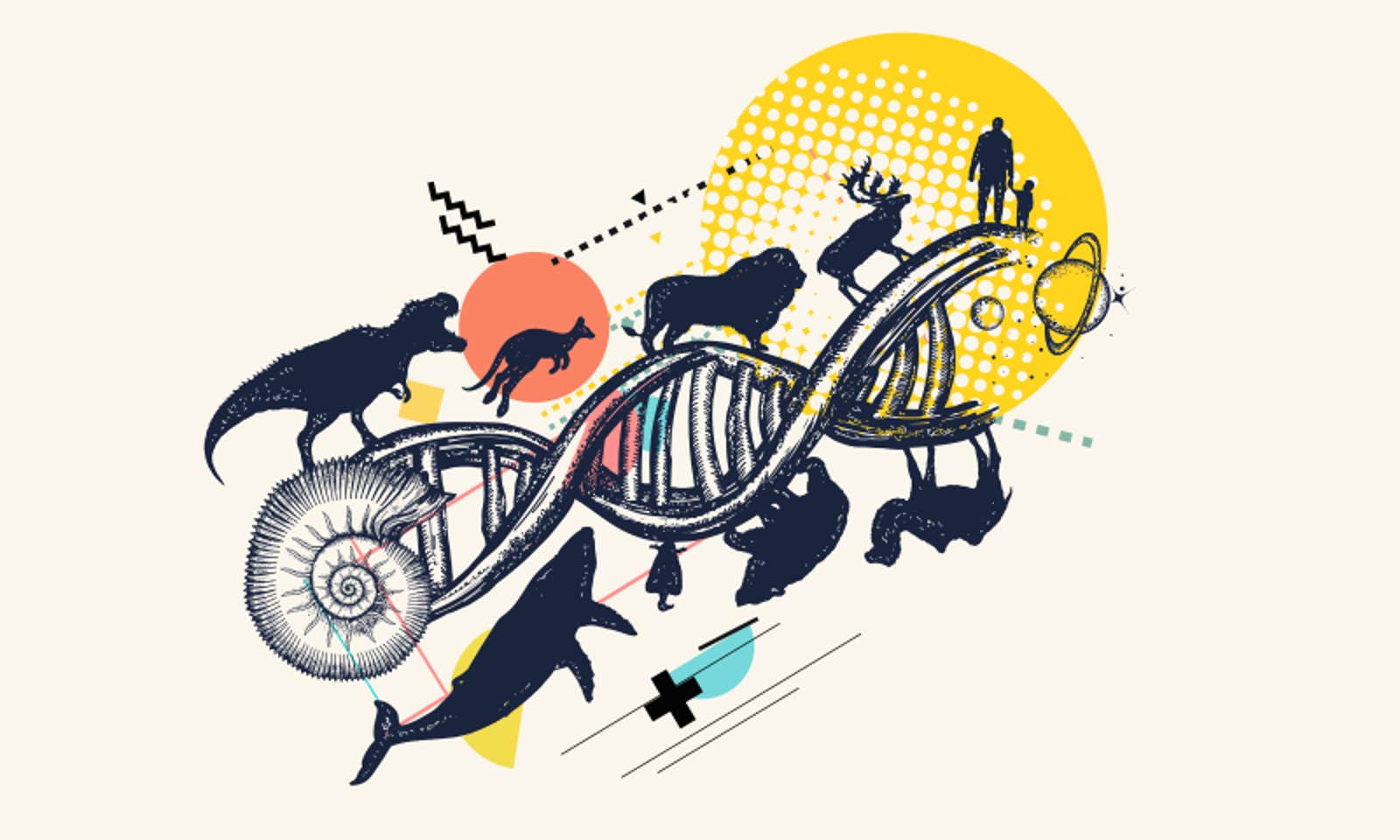 Success in nature and culture depends just as much on timing as it does on brilliance.
.
.
Click the link below for the article:
.
__________________________________________
May 24, 2023
Mohenjo
Business, Food For Thought, Human Interest, Political, Science, Technical
amazon, business, Business News, current-events, Future, Hotels, human-rights, medicine, mental-health, research, Science, Science News, technology, Technology News, travel, vacation

Click the link below the picture
.
For years, the Rev. Donald Perryman wondered why the formerly thriving Black downtown of Toledo, Ohio, couldn’t get a grocery store.
His suspicions were confirmed after a city study found in 2020 that the opening of new Dollar General stores drove other companies out of business, deterring potential grocers from investing there. He, along with a group of ministers, knew that in order to get a supermarket, they had to stop new chain dollar stores from plaguing their communities. They made great strides when the Toledo City Council passed a moratorium the same year that required new small-box retail stores to apply for a special-use permit.
The moratorium expired a year later, however — without the community’s knowledge — and a new Dollar General opened down the street from Perryman’s church on Dorr Street.
This month, the city proposed a $12 million project to construct a food incubation hub that would deliver fresh and healthy foods to local markets and low-income areas such as Dorr Street. Without renewed legislation, Perryman fears the threat of another dollar store could jeopardize the project, halting their years-long efforts.
Now, his coalition is pushing the city to ban these stores altogether.
.
 A push is underway in many communities to limit dollar stores such as Family Dollar and Dollar General. One critic compared the fast-growing segment to “an invasive species.” (Rogelio V. Solis/Associated Press)
.
.
Click the link below for the article:
.
__________________________________________
May 23, 2023
Mohenjo
Business, Food For Thought, Human Interest, Political, Science, Technical
amazon, business, Business News, current-events, Future, Hotels, human-rights, medicine, mental-health, research, Science, Science News, technology, Technology News, travel, vacation

Click the link below the picture
.
Video games are natural predators. In the earliest incarnation of the art — the arcade cabinets scattered across movie-theater lobbies and dentist waiting rooms in the ’70s and ’80s — you’d exchange a quarter for three lives and a dream. A few minutes later, once those ghosts claimed Pac-Man’s soul, or after Jumpman tripped over one too many of Donkey Kong’s barrels, you were sent back to your mother, tail between your legs, in hopes that she had a bit more spare change left in her purse. This was the business model; video games attempted to separate kids from their allowances as efficiently as possible, which was most easily accomplished through the blunt force of difficulty.
The modern home console-based games industry is almost unrecognizable compared to those early days. Extra lives are no longer stingily meted out between checkpoints, an easy mode is usually only a toggle away, and generally speaking, publishers are more interested in immersing us in a story rather than humbling us with our inadequacies. And yet, even now, gamers have a grudging appreciation for a really tough level. They may not be as common as they were in the old days when there was a direct financial incentive in thwarting players, but plenty of studios still crank up the meters to 11, eager to break our thumbs in two. In fact, with the mainstream success of games like Elden Ring and Returnal, difficulty seems to be coming back into fashion. We’re here to celebrate the tradition and hopefully get some closure on our collective anguish.
There are so many different ways to create a hard level. This list contains resource-draining RPG grinds, uncompromising tactical grids, mind-melting adventure-game puzzles, and the sort of quicksilver, arcade-y gauntlets that require a speedrunner’s acumen. (It does not contain, we want to note, The Legend of Zelda: Tears of the Kingdom, which came out too recently for us to confidently make a determination about whether any of its challenges warrant a spot. We reserve the right to add it at a later date.) We only looked at console and/or PC games released in the U.S. — meaning no arcade games (unless they were ported to a console) and no mobile-first games
.
 Illustration: Diego Patiño
.
.
Click the link below for the article:
.
__________________________________________
May 22, 2023
Mohenjo
Business, Food For Thought, Human Interest, Political, Science, Technical
amazon, business, Business News, current-events, Future, Hotels, human-rights, medicine, mental-health, research, Science, Science News, technology, Technology News, travel, vacation

Click the link below the picture
.
We all know that food and drinks can go bad. Your refrigerator likely has items right now that were once wholesome food and is now…not wholesome, and no longer food. But one basic component of our lives that might seem immune to that spoilage is water. It’s a pretty fundamental compound, after all, and doesn’t contain anything other than a bunch of hydrogen and oxygen, so there doesn’t seem to be anything in there that other organisms could defile. When your leftover mint chutney goes bad, it makes sense, but water seems so impervious that noticing an expiration date on a bottle of water seems kind of ludicrous. But it’s not completely wrong. Water doesn’t rot or spoil like many foods, but there’s definitely a shelf life.
When tap water goes bad
Water that comes out of your faucet has most likely been treated with chlorine, which helps keep it free from microorganisms that can do you harm. But that water will react with the carbon dioxide in the air continuously, lowering the pH of the water, making it more acidic, which will can make it taste funny. Additionally, uncovered water will collect dust and other stuff from the air, adding to the unpleasantness. Eventually, this process could even make you sick—although the water would have to sit there a very long time before it became dangerous as opposed to just gross.
At the same time, that chlorine that was added is off-gassing and leeching away, making the water more inviting to organisms. The executive summary is that a glass of tap water left out overnight might taste weird, but is probably okay to drink from a health point of view. But water that sits out for a very long time should probably be avoided—especially if there are obvious signs of things, you know, living in it.
.
 Photo: CHALERMPHON SRISANG (Shutterstock)
.
.
Click the link below for the article:
.
__________________________________________
May 21, 2023
Mohenjo
Business, Food For Thought, Human Interest, Political, Science, Technical
amazon, business, Business News, current-events, Future, Hotels, human-rights, medicine, mental-health, research, Science, Science News, technology, Technology News, travel, vacation
Click the link below the picture
.
Have you ever suffered creative mortification? Coined by educator Ronald Beghetto, the term describes losing your willingness to pursue a creative avenue following a negative outcome. Maybe you gave up on stand-up comedy forever after your set at the open mic night was met with murmurs instead of laughs, or you burned your accordion after that disastrous appearance on America’s Got Talent.
Creative mortification doesn’t refer to temporarily being discouraged by negative feedback; that’s called “creative suppression” (also “reading the YouTube comments”), and it’s inevitable in any creative pursuit. Creative mortification can be understood by the classic definition of the word “mortification.” It means “to put to death,” and it encompasses all the finality that implies. It describes someone who loved to sing but never opened their mouth again after being in the school play or the person who says “I can’t draw” for their entire life because of a 4th-grade art teacher’s criticism. Creative mortification is giving up completely.
When discouragement becomes mortification
According to Beghetto’s research, there are two main components of creative mortification. The first is “attributing negative outcomes to one’s fixed creative ability,” and the second is experiencing negative emotions, particularly shame.
If you ask high-level creatives how they got that way, most will say something like, “I practiced a lot.” Very few will respond, “I’m just naturally good at it.” Still, the idea that here’s some inherent talent level that a person either has or doesn’t have tends to be how most people think of creative pursuits, especially when we’re thinking about ourselves. Mortification can come from an external event that reinforces your internal insecurity about your own inherent talent.
.
 Photo: Maria Sbytova (Shutterstock)
.
.
Click the link below for the article:
.
__________________________________________
Older Entries
Newer Entries
 James' World 2