Malcolm John Rebennack Jr., who died Thursday at age 77, was a onetime Catholic schoolboy who remade himself into a bona fide high priest of funk — and a lifelong ambassador of gritty, glittery New Orleans groove.
Inducted into the Rock and Roll Hall of Fame in 2011, Dr. John — the name and characterization he adopted in 1968 with the release of the landmark Gris Gris album, based in part on stories of a 19th-century voodoo priest — earned 15 Grammy nominations and six wins during a career that spanned more than 50 years. He beat drug addiction, did a long-ago stint in jail, knew witches and invented his own particular sideways way of speaking English. (The title of his 1974 album Desitively Bonnaroo was half old Creole slang and half his singular patois, and gave the name to one of America’s most successful music festivals — whose founders, having come of age in New Orleans worshiping Dr. John, are likely astonished to be mentioned in most remembrances of the music icon.) In 2013 he accepted an honorary Ph.D. from Tulane University, making him a double doctor.
.
We look back at 12 essential songs by Dr. John, the late pianist-singer who “[had] the whole history of New Orleans music in his head.”
It has become the most natural thing to do: get in the car, type a destination into a smartphone, and let an algorithm using GPS data show the way. Personal GPS-equipped devices entered the mass market in only the past 15 or so years, but hundreds of millions of people now rarely travel without them. These gadgets are extremely powerful, allowing people to know their location at all times, to explore unknown places and to avoid getting lost.
But they also affect perception and judgment. When people are told which way to turn, it relieves them of the need to create their own routes and remember them. They pay less attention to their surroundings. And neuroscientists can now see that brain behavior changes when people rely on turn-by-turn directions.
The things we hold have changed, but the maneuvers are the same.
Take the figure facing the statue of Atlas: He peers upward, his elbow jutting out, his hand clasped around a camera. In one version of this image, he wears a blazer; in the other, a windbreaker, trilby and backpack.
When placed side-by-side, these photos — and others, all shot 68 years apart — resemble a trick mirror, changing black-and-white to color, suits to casualwear, film cameras to digital. Only the New York City backdrops — Rockefeller Center, Central Park or St. Patrick’s Cathedral — remain largely static.
The black-and-white pictures were shot for The New York Times Magazine by the staff photographer Sam Falk on April 2, 1951. The color ones are by Tony Cenicola, a current Times staff photographer, and were shot on April 2, 2019 (in addition to April 1 and 3). Together, they form an entirely unscientific experiment that asks: What does amateur photography look like today versus 68 years ago?
.
The “Atlas” statue in Rockefeller Center. April 2, 1951; April 1, 2019.CreditSam Falk/The New York Times; Tony Cenicola/The New York Times
Before Emma Boettcher arrived at the “Jeopardy!” studio in California on a Tuesday in March, she hadn’t heard of James Holzhauer.
Boettcher, a 27-year-old librarian at the University of Chicago, did not know that the contestant she would soon face had already won 32 games, amassed $2.46 million and established himself as one of the game show’s greatest players of all time. Games are prerecorded, usually five in one day; Holzhauer’s first win would not air until April 4.
“It was weird to be a daily watcher of ‘Jeopardy!’ and somehow there’s this phenomenon that I’d never heard of,” Boettcher said in an interview last week. (The interview was conducted before the episode aired under the condition it not be published until Monday.)
.
Emma Boettcher first auditioned for “Jeopardy!” when she was a senior in high school. She got the call to appear on the show after her fourth audition.CreditWhitten Sabbatini for The New York Times
The NHL has suspended St. Louis Blues forward Ivan Barbashev for one game for an illegal check to the head of Boston Bruins forward Marcus Johansson during Game 5 of the Stanley Cup Final.
The check occurred 5:24 into the first period of St. Louis’ 2-1 victory Thursday night.
Barbashev, 23, has played in each of the Blues’ 24 playoff games this year. He has three goals and three assists in the postseason, averaging a little more than 12 minutes a game on the fourth line. He scored 14 goals in the regular season.
The NHL’s department of player safety announced the suspension on Friday.
“There was a pond in the woods back of the house where my parents had a summer place in Connecticut. I would catch tadpoles and dissect frogs to see how they were inside,” he says. Today, at age 86, with a Ph.D. in physiology and psychology from the University of Rochester and a National Institutes of Health fellowship from Johns Hopkins School of Medicine, Coleman hasn’t lost his fascination with slippery, slimy, squishy objects.
As senior scientist and director of the L.J. Roberts Center for Alzheimer’s Research at Banner Sun Health Research Institute in Sun City, Arizona, Coleman has seen his backyard grow into a much bigger pond. The institute houses the world’s premier bank of human brains, which are harvested at high-speed precision from the 50 miles surrounding the center, where the median age is 75.
Rows of heavily monitored freezers line the walls of the research institute, packed with Tupperware containers by the thousands that store high-quality brain tissue. These containers hold out a mighty hope that scientists will soon have the answers to diagnose and treat one of humanity’s most dark and elusive diseases — Alzheimer’s.
.
For 7-year-old Paul David Coleman, the backyard pond was a source of endless fascination — and ultimately would be the place that ushered him into the world of science and single-cell research.
The eighth Women’s World Cup, which begins Friday in France, comes at a pivotal time for the women’s game. For years, players around the world have demanded better pay and more support from their federations. In some countries, serious progress has been made; in many others, the fight continues.
We wanted to know what it’s like to be an elite women’s soccer player in this moment.
To get inside that bubble, The New York Times sent a survey to every national team participating in this year’s World Cup and heard back from more than 100 players from 17 of the 24 countries competing in France.
.
Members of the United States national team at training camp in San Jose, Calif., in May.Photograph by Kelley O’Hara, 30, United States defender
Ahead of his D-Day speech in Normandy, France, on Thursday, Donald Trump sat down with Laura Ingraham. During their conversation, the president reacted to reports that House Speaker Nancy Pelosi said she’d rather see him in prison than see him impeached. This allegedly came as Pelosi clashed with Judiciary Committee Chairman Jerry Nadler over possible impeachment proceedings. Trump responded by calling Pelosi a “disgrace.”
“I actually don’t think she’s a talented person,” he said. “I’ve tried to be nice to her because I would have liked to have gotten some deals done. She’s incapable of doing deals. She’s a nasty, vindictive, horrible person.”
.
House Speaker Nancy Pelosi joins Putin as a ‘Trump Puppet Master’
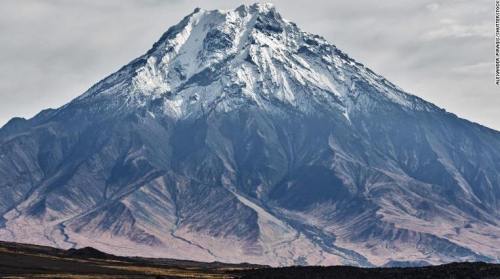
A volcano in the far eastern corner of Russia that was previously considered extinct may be waking up — and an eruption could be catastrophic.
The Bolshaya Udina volcano — part of the Kamchatka Peninsula’s Udina volcanic complex — was believed to be extinct until 2017, when increasing seismic activity was detected beneath it, scientists say.
.
Now, Ivan Koulakov, a geophysicist from Russia’s A.A. Trofimuk Institute of Petroleum Geology and Geophysics who led a study into the volcano, believes it should be reclassified as active.
“At any moment, an eruption can occur,” Koulakov told CNN.
Between 1999 and September 2017, about 100 weak seismic events were detected beneath the volcano, which stands at 9,590 feet above sea level. An “anomalous increase” in seismicity, however, began in October 2017. Between October 2017 and February 2019, about 2,400 seismic events were recorded.
Film and Writing Festival for Comedy. Showcasing best of comedy short films at the FEEDBACK Film Festival. Plus, showcasing best of comedy novels, short stories, poems, screenplays (TV, short, feature) at the festival performed by professional actors.

 We look back at 12 essential songs by Dr. John, the late pianist-singer who “[had] the whole history of New Orleans music in his head.”





 St. Louis Blues forward Ivan Barbashev suspended
 For 7-year-old Paul David Coleman, the backyard pond was a source of endless fascination — and ultimately would be the place that ushered him into the world of science and single-cell research.


 House Speaker Nancy Pelosi joins Putin as a ‘Trump Puppet Master’