For thousands of years, the Bramble Cay melomys, a small, mouse-like rodent, eked out a living on a tiny coral island in Australia’s Great Barrier Reef. It was the reef’s only endemic mammal species, and survived on the few plants that grew on its island home.
But as climate change expedited sea level rise and increased storm surges that flooded the low-lying island, the Bramble Cay melomys and its food supply was severely threatened. In June, after years of fruitless searching, scientists announced that they could no longer find any trace of the rodent.
The melomys was posthumously bestowed the ignominious title of the first mammal to go extinct because of human-induced global warming. “Sadly,” WWF-Australia spokesperson Darren Grover told The New York Times, “it won’t be the last.”
Scientists say the planet is currently on the precipice of the sixth mass extinction, an event that could see the wiping out of at least 75 percent of the Earth’s species. The current extinction rate is at least 100 times higher than normal, according to a 2015 study. Humans have triggered an extinction episode “unparalleled for 65 million years,” the researchers said.
.
University of Queensland
.
.
Click link below for article, photos and slideshow:
Sara, a recent graduate of Stanford University, is a survivor. During her freshman year at the school, she says, a male student she was dating turned violent after she refused to have sex with him. He choked her and threatened to kill her, whispering in her ear that no one would care if she died, she says.
Sara reported the attack to Stanford administrators, who then spoke with Robert, the alleged assailant. University administrators told Sara that he didn’t contest her story.
The school imposed a no-contact order on Robert, meaning he had to keep his distance from Sara or face punishment. Sara says she was told to focus on her recovery. She agreed to the plan, and says she asked the school to notify her if other victims of his ever came forward. It is not clear if anyone at the university agreed to her request, though Sara says she was under the impression the school would let her know about any future allegations against Robert.
.
Image: Breaking News and Opinion on The Huffington Post
A full-grown giant sequoia is a thirsty tree. In the height of summer, the millenia-old behemoths, some of which grow upwards of 30 stories tall, can guzzle 500 to 800 gallons of water per day. They can also survive a variety of scourges that would fell an inferior conifer — beetles, wildfires, storms. But scientists are worried the species may have met its match in the ongoing California drought.
Nate Stephenson, a research ecologist with the U.S. Geological Survey, was walking through the woods last year when he noticed some of the trees he’d been studying for decades had dropped most of their leaves. He joined forces with other researchers from the USGS, as well as from the National Park Service, U.S. Forest Service, Stanford University, UC Berkeley and the Carnegie Airborne Observatory, to launch a comprehensive health study on the sequoia.
Anthony Ambrose, a tree ecologist at University of California, Berkeley, led a recent bout of fieldwork to monitor how stressed the sequoia have been, and if, in fact, we should be worried about their longevity. A few weeks from now, his team plans to collect a slew of samples from more than 50 trees that have dropped up to 75 percent of their leaves. He hopes the research can provide real-time data to forest managers who can prioritize care for threatened trees.
.
Credit: Anthony Ambrose
Image: Breaking News and Opinion on The Huffington Post
The theory has long been touted as the best hope for a unified “theory of everything,” bringing together the physics of the vanishingly small and the mindbendingly large. But it has also been criticized and even ridiculed for failing to make any predictions that could be checked experimentally. It’s not just that we don’t have big enough particle accelerators or powerful enough computers; string theory’s most vocal critics charge that no experiment could even be imagined that would prove it right or wrong, making the whole theory effectively useless.
Now, physicists at Imperial College London and Stanford University have found a way to make string theory useful, not for a theory of everything, but for quantum entanglement.
“We can use string theory to solve problems in a different area of physics,” said theoretical physicist Michael Duff of Imperial College London. “In that context it’s actually useful: We can make statements which you could in principle check by experiment.” Duff and his colleagues describe their findings in a paper in Physical Review Letters September 2.
String theory suggests that matter can be broken down beyond electrons and quarks into tiny loops of vibrating strings. Those strings move and vibrate at different frequencies, giving particles distinctive properties like mass and charge. This strange idea could unite all the fundamental forces, explain the origins of fundamental particles and connect Einstein’s general relativity to quantum mechanics. But to do so, the theory requires six extra dimensions of space and time curled up inside the four that we’re used to.
Our technology may be getting smarter, but a provocative new study suggests human intelligence is on the decline. In fact, it indicates that Westerners have lost 14 I.Q. points on average since the Victorian Era.
What exactly explains this decline? Study co-author Dr. Jan te Nijenhuis, professor of work and organizational psychology at the University of Amsterdam, points to the fact that women of high intelligence tend to have fewer children than do women of lower intelligence. This negative association between I.Q. and fertility has been demonstrated time and again in research over the last century.
But this isn’t the first evidence of a possible decline in human intelligence.
“The reduction in human intelligence (if there is any reduction) would have begun at the time that genetic selection became more relaxed,” Dr. Gerald Crabtree, professor of pathology and developmental biology at Stanford University, told The Huffington Post in an email. “I projected this occurred as our ancestors began to live in more supportive high density societies (cities) and had access to a steady supply of food. Both of these might have resulted from the invention of agriculture, which occurred about 5,000 to 12,000 years ago.”
.
.
.Click link below for story, slideshow, and video:
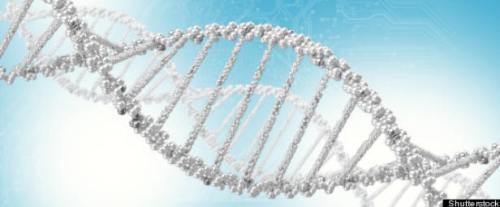
Researchers at Stanford University announced this week that they’ve created genetic receptors that can act as a sort of “biological computer,” potentially revolutionizing how diseases are treated.
In a paper published in the journal “Science” on Friday, the team described their system of genetic transistors, which can be inserted into living cells and turned on and off if certain conditions are met. The researchers hope these transistors could eventually be built into microscopic living computers. Said computers would be able to accomplish tasks like telling if a certain toxin is present inside a cell, seeing how many times a cancerous cell has divided or determining precisely how an administered drug interacts with each individual cell.
.
.
.Click link below for story, slideshow, and video:
As many people hit middle age, they often start to notice that their memory and mental clarity are not what they used to be. We suddenly can’t remember where we put the keys just a moment ago, or an old acquaintance’s name, or the name of an old band we used to love. As the brain fades, we euphemistically refer to these occurrences as “senior moments.”
Film and Writing Festival for Comedy. Showcasing best of comedy short films at the FEEDBACK Film Festival. Plus, showcasing best of comedy novels, short stories, poems, screenplays (TV, short, feature) at the festival performed by professional actors.






 James' World 2