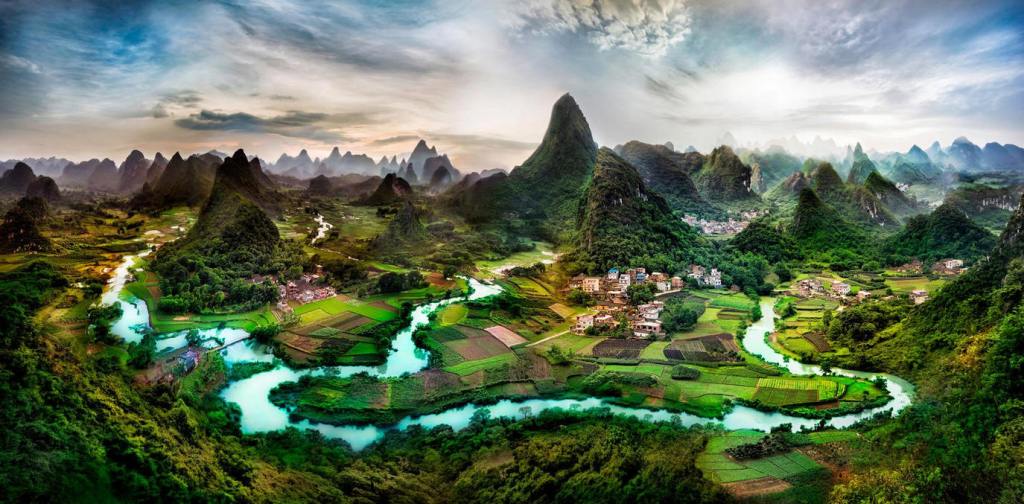
Guilin is a city in southern China known for its dramatic landscape of limestone karst hills.At its center are 2 lakes, Shanhu (Cedar) and Ronghu (Banyan), remaining from a medieval-era moat that once surrounded the city. Boats travel through these and other lakes via connected rivers. On Shanhu Lake’s shore, twin pagodas, the Sun and Moon, light up the sky at night.
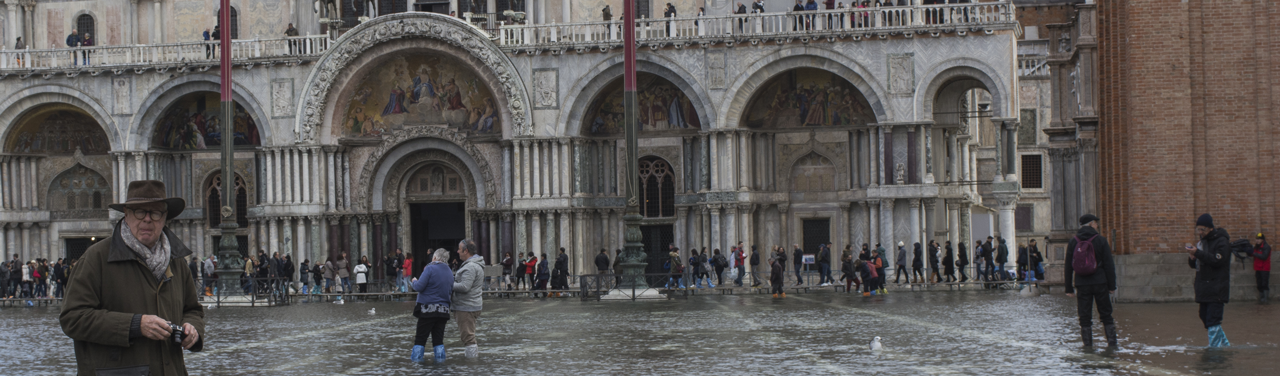
Water rushes into Venice’s city council chamber just minutes after the local government rejects measures to combat climate change. Wildfires consume eastern Australia as fire danger soars past “severe” and “extreme” to “catastrophic” in parts of New South Wales. Ice levels in the Chukchi Sea, north of Alaska, hit record lows. England sees floods all across the country. And that’s just this week, as I write this.
Human-caused climate change, and the disasters it brings, are here. In fact, they’re just getting started. What will things be like in another decade or century?
It depends on what we do. If our goal is to stop global warming, the best way is to cut carbon emissions now—to zero. The United Kingdom, Denmark, and Norway have passed laws requiring net-zero emissions by 2050. Sweden is aiming at 2045. But the biggest emitters—China, the United States, and India—are dragging their heels. So to keep global warming below 2 degrees Celsius over pre-industrial levels by 2100, it’s becoming more and more likely that we’ll need negative carbon emissions. That is, we’ll need to fix the air. We’ll need to suck more carbon dioxide out of the atmosphere than we put in.
On July 4, 1988, FIFA awarded the 1994 World Cup to the United States. At the time, there was no top-flight professional league in the U.S., and it had been 38 years since the country had participated in a World Cup. As a condition for awarding the tournament, FIFA required the United States to create a new professional league.
A year and a half later, Paul Caligiuri scored one of the most important goals in American soccer history. His strike against Trinidad and Tobago qualified the U.S. for the 1990 World Cup — the team’s first since 1950. Although under manager Bob Gansler the Americans lost all three World Cup games in Italy that summer, falling to Czechoslovakia, the Italians, and Austria, the modern era of American soccer had begun.
Two months after the 1990 World Cup, United States Soccer Federation president Werner Fricker was up for reelection. Although Fricker had helped the U.S. secure the 1994 World Cup, he was ousted and replaced by Alan Rothenberg, a former investor in the North American Soccer League and overseer of the wildly successful 1984 Olympic soccer tournament in Los Angeles.
One of Rothenberg’s first moves as president was to name Bora Milutinovic head coach of the national team. The Serbian coached Mexico to the 1986 World Cup quarterfinal and, even more impressively, led Costa Rica to the 1990 World Cup round of 16 after being hired as head coach just 90 days before the tournament.
.
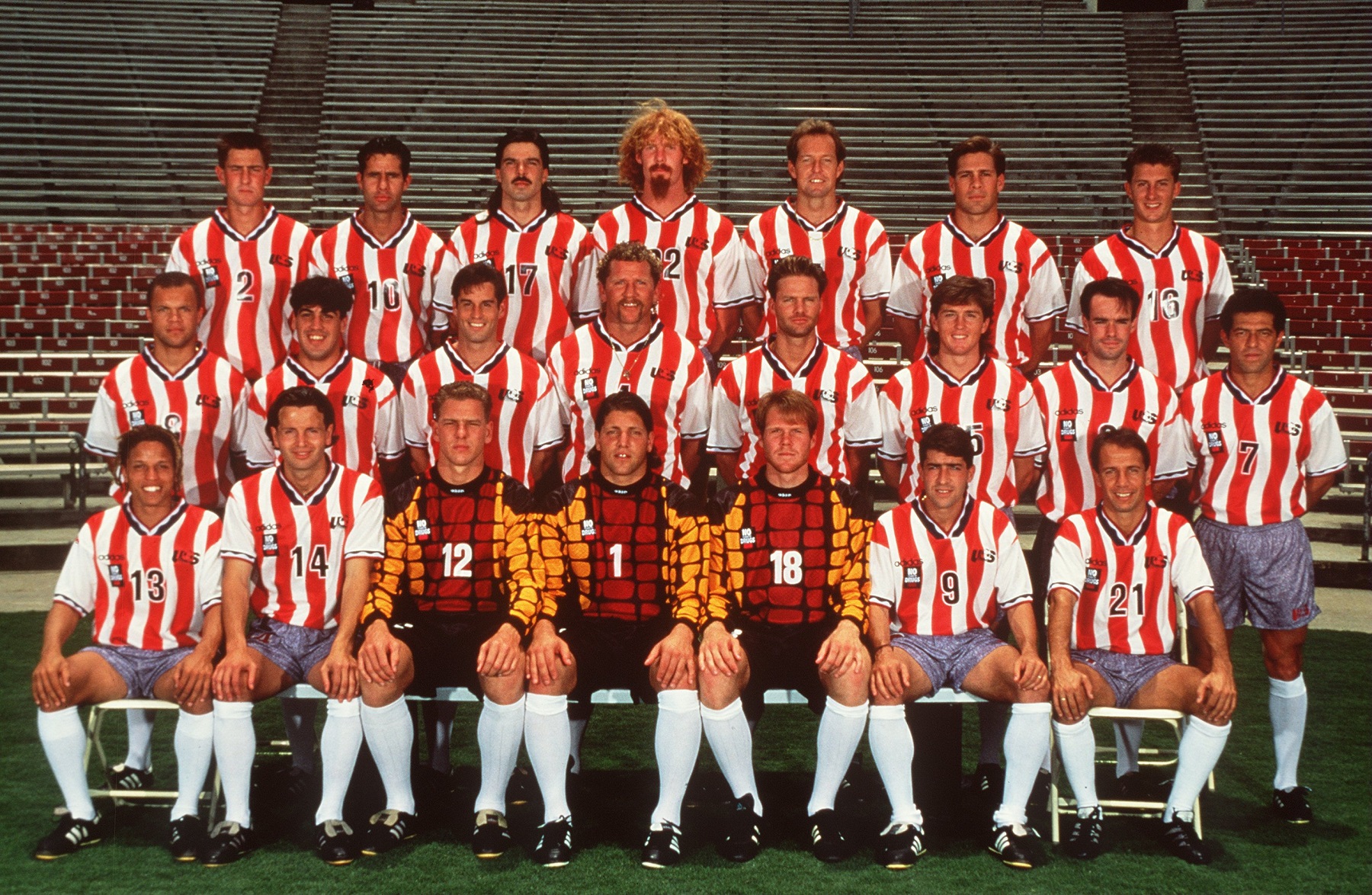
The final 22-man USMNT roster for the ’94 World Cup. (Getty Images)
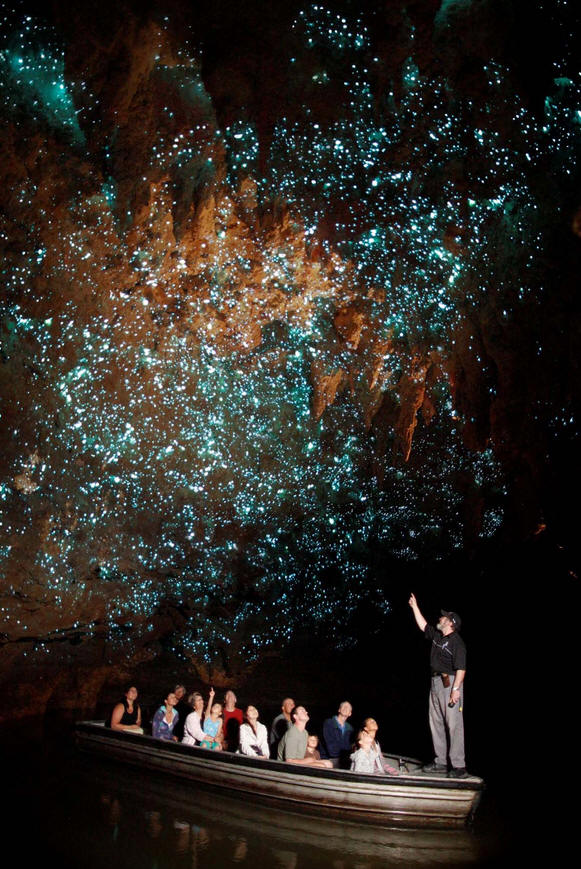
Waitomo is a village on the North Island of New Zealand.It’s known for its extensive underground cave systems. Thousands of glow-worms light up the Glowworm Caves. The vast Ruakuri Cave features waterfalls and limestone formations. West, Mangapohue Natural Bridge is a high limestone arch over Mangapohue Stream. Northeast of the village, Otorohanga Kiwi House shelters several species of the rare native kiwi bird.
Lisa Barlow, whose name I have changed to protect her privacy, is at her kitchen table in Washington DC when she realizes that each Sunday, fifteen passenger trains depart for New Haven, CT. She’s a successful copy editor and has a meeting in New Haven early Monday morning. She has no plans Sunday, so doesn’t care when she arrives or how long it takes. She travels coach so has thirty tickets to choose from fifteen departures each with two price options.
Should she choose the more-expensive flexible ticket over the locked-in value ticket? Does she want to leave earlier or later? Brunch in DC or lunch in New Haven? She can’t decide.
She scrolls the screen up and down, up and down, faster and faster. Her eyes dart about the webpage. She feels a rising tension in her chest. Her breathing shortens. Her thoughts race in and out of her mind like the breath in her lungs. She touches her face and notices the telltale sign: it’s numb. She reaches into her pocket, where she safeguards a small pill for moments like these. A pharmacologic reset button.
.
Photo from the Science Photo Library / Getty Images.
New South Wales is a southeastern Australian state, distinguished by its coastal cities and national parks. Sydney, its capital, is home to iconic structures such as the Sydney Opera House and Harbour Bridge.Inland are the rugged Blue Mountains, rainforests and outback towns where opals are mined. Along the coastline are long surfing beaches. The Hunter Valley region, in the north, has dozens of wineries.
Some content on this page was disabled on April 15, 2025 as a result of a DMCA takedown notice from Guardian Media Group. You can learn more about the DMCA here:
Film and Writing Festival for Comedy. Showcasing best of comedy short films at the FEEDBACK Film Festival. Plus, showcasing best of comedy novels, short stories, poems, screenplays (TV, short, feature) at the festival performed by professional actors.



 The final 22-man USMNT roster for the ’94 World Cup. (Getty Images)