“WHO ORDERED that?” This was the reaction, famous in particle-physics circles, of Isidor Isaac Rabi to the discovery of the muon. Rabi, a Nobel laureate who helped America develop the atom bomb, was reflecting physicists’ general surprise that muons, which are, to all intents and purposes, just heavy and unstable versions of electrons, actually exist. To an orderly physicist’s mind, they somehow seemed superfluous to Nature’s requirements.
Establishing the muon’s nature was, though, an important part of the creation of what is known as the Standard Model of particle physics. This, along with Einstein’s general theory of relativity (actually a theory of gravity), is one of the two foundation stones on which modern physics is built. Yet the Standard Model is known to be incomplete for several reasons, one of which is precisely the fact that it does not yet embrace gravity.
A quarter of the deep links in The New York Times articles are now rotten, leading to completely inaccessible pages, according to a team of researchers from Harvard Law School, who worked with the Times’ digital team. They found that this problem affected over half of the articles containing links in the NYT’s catalog going back to 1996, illustrating the problem of link rot and how difficult it is for context to survive on the web.
The study looked at over 550,000 articles, which contained over 2.2 million links to external websites. It found that 72 percent of those links were “deep,” or pointing to a specific page rather than a general website. Predictably, it found that, as time went on, links were more likely to be dead: 6 percent of links in 2018 articles were inaccessible, while a whopping 72 percent of links from 1998 were dead. For a recent, widespread example of link rot in practice, just look at what happened when Twitter banned Donald Trump: all of the articles that were embedded in his tweets were littered with gray boxes.
The team chose TheNew York Times in part because the paper is known for its archiving practices, but it’s not suggesting the Times is all that unusual in its link rot problems. Rather, it’s using the paper of record as an example of a phenomenon that happens all across the internet. As time goes by, the websites that once provided valuable insight, important context, or proof of contentious claims through links will be bought and sold, or simply just stop existing, leaving the link to lead to an empty page — or worse.
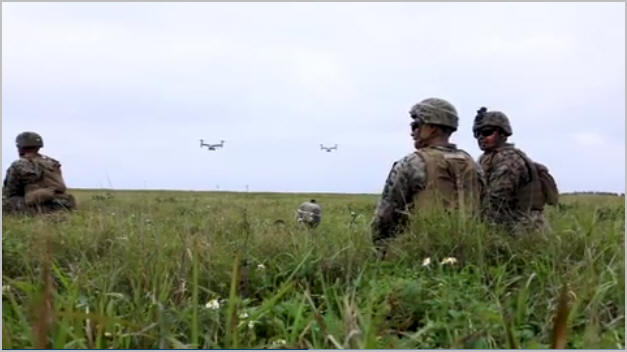
Video of Memorial Day narrated by Gen Joel Carey, 18th Wing Commander, and CMSgt Jessica Bender, 18th Wing Command Chief. (U.S. Air Force video by Senior Airman Demond Mcghee and Airman 1st Class)
.
In the field
.
.
Click the link below for the article (Visit the Military.com Memorial Day page in article):
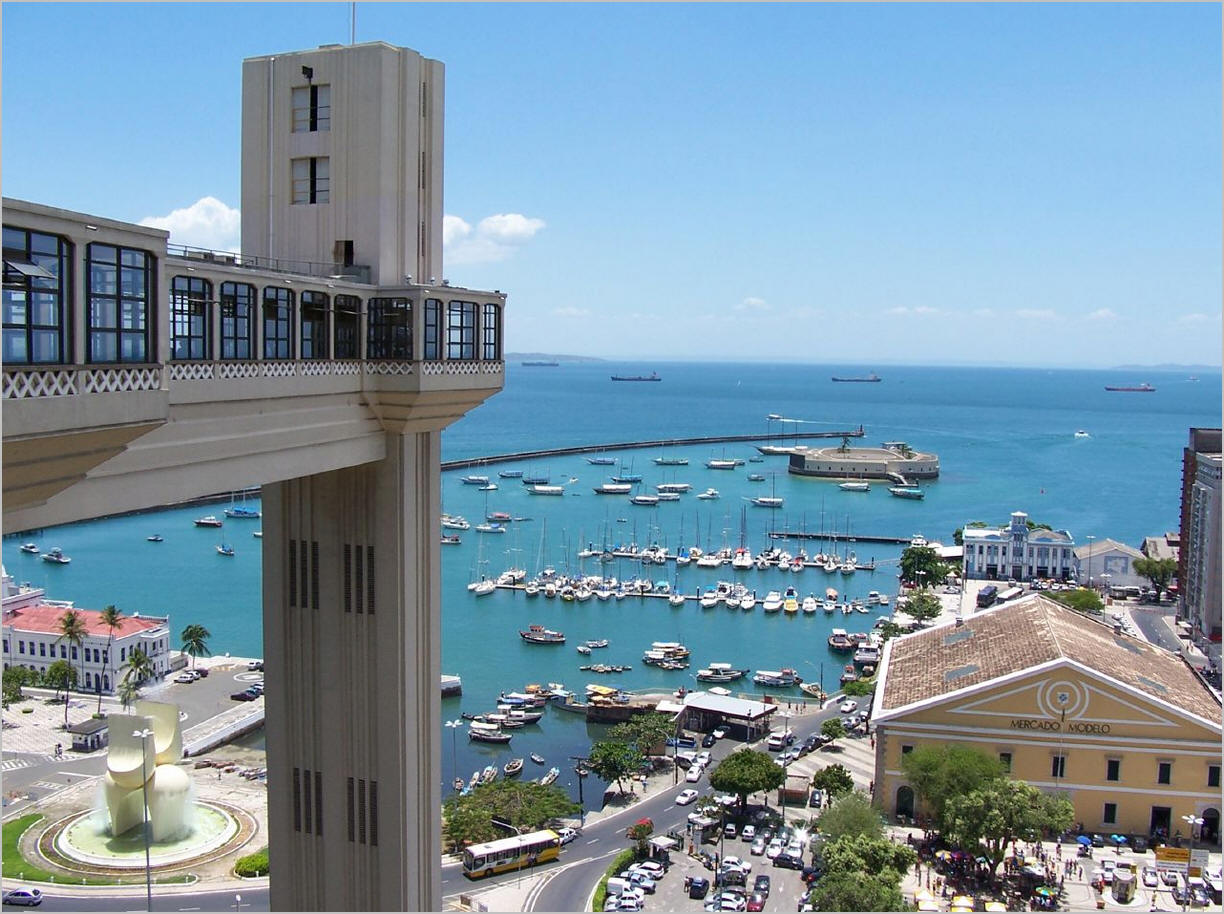
Bahia is one of the 26 states of Brazil and in the northeast of the country, on the Atlantic coast. It is the fourth-largest Brazilian state by population (after São Paulo, Minas Gerais, and Rio de Janeiro) and the 5th-largest by area. Bahia’s capital is the city of Salvador (formerly known as “Cidade do São Salvador da Bahia de Todos os Santos”, literally “City of the Saint Savior of the Bay of All the Saints”), on a spit of land separating the Bay of All Saints from the Atlantic. Once a monarchial stronghold dominated by agricultural, slaving, and ranching interests, Bahia is now still predominantly a working-class industrial and agricultural state. The state is home to 7% of the Brazilian population and produces 4.2% of the country’s GDP. Wikipedia
The interrogators were doing a lousy job. Never mind that David Christ was the one being interrogated. It was his professional opinion that these Cubans couldn’t make a can of beer sweat.
It was the middle of the night but hot as an oven in Havana. Christ had just been dragged from his cell in the bowels of G2, the Cuban intelligence agency, to a small interrogation room that held one desk, two chairs, and three Cubans. In Christ’s view, they were a motley crew of lowlifes — which made it all the more humiliating that they’d caught him red-handed. One of the Cubans wore baggy slacks and a Hawaiian shirt. He looked like a pimp. The second was big as a refrigerator. He barely moved, just flexed his biceps, and glared from a damp corner. The third ran the show. He had a chubby face and bad teeth riddled with festering holes. Christ nicknamed him bad teeth.
Hansel Emmanuel, a native of the Dominican Republic, who plays high school basketball for Life Christian Academy in Kissimmee, Florida, lost his arm in a tragic accident at the age of six.
Now 16, the accident has clearly not slowed down his love of basketball. After first making waves earlier this year, Emmanuel recently went viral again with an impressive highlight reel playing AAU ball.
According to Yahoo Sports, he says he remembers the accident as “a life lesson that God exists” and has given him the power to exceed various challenges he faces in life.
His Instagram account also features numerous improbable highlights, sometimes accompanied by words of inspiration or encouragement.“The more difficult the obtaining, the easier the path will be.”
.
Hansel Emmanuel, a native of the Dominican Republic
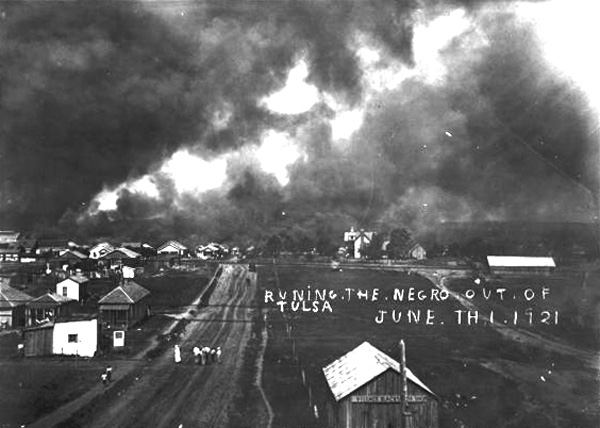
Regrettably, racial violence has been a distinct part of American history since 1660. While that violence has impacted almost every ethnic and racial group in the United States, it has had a particularly horrific effect on African American life. Listed below are some of the major incidents of racial violence profiled on BlackPast.org. They range from revolts of the enslaved to more recent urban uprisings such as the Rodney King Riot in Los Angeles in 1992. This page does not cover violence affecting a single individual such as lynchings or police shootings.
Anyone who has ever taken an economics class has heard the phrase, “There’s no such thing as a free lunch.”
It means that everything has a cost, even if that cost is not always immediately apparent. To achieve anything, you must give up something else.
In today’s happiness-obsessed culture, most pursue just the opposite: we want to know how to be happy with no costs, all benefits. We want the rewards without the risks, the gain without the pain.
But ironically, it’s this unwillingness to sacrifice anything, to give up anything, that makes us more miserable.
As with anything else, happiness has costs. It is not free. And despite what Cover Girl or Tony Robbins or the Dalai Lama once told you, it’s not always easy breezy figuring out how to be happy either.
Film and Writing Festival for Comedy. Showcasing best of comedy short films at the FEEDBACK Film Festival. Plus, showcasing best of comedy novels, short stories, poems, screenplays (TV, short, feature) at the festival performed by professional actors.

 Cindy Arnold Fermilab
/cdn.vox-cdn.com/uploads/chorus_image/image/69325497/VRG_ILLO_4489_003.0.jpg)




 ?
?



 Happiness
