June 17, 2023
Mohenjo
Business, Food For Thought, Human Interest, Political, Science, Technical
amazon, business, Business News, current-events, Future, Hotels, human-rights, medicine, mental-health, research, Science, Science News, technology, Technology News, travel, vacation

Click the link below the picture
.
This morning, Kendel Kay woke without an alarm and went outside to meditate in the sunshine on her balcony. She made herself breakfast — she invariably has either a smoothie or overnight oats — did her morning skincare routine of several serums, an LED mask, and ice rolling, followed by a Pilates workout. Then she made her boyfriend, Luke, his breakfast: eggs, a bagel, and chicken breast for extra protein.
Soon, it was time to make lunch for them both — some sort of salad — and then Kay went on her usual afternoon walk for an hour or so. She did some laundry and a bit of cleaning. Then she made their dinner, did the nighttime version of her skincare routine, hung out with Luke, and went to bed.
This is a typical day in the life of a “stay-at-home girlfriend.” It’s a concept, a lifestyle, a viral TikTok trend that’s been sparking equal parts outrage, consternation, and, yes, envy.
Kay would know. Last August, she posted a vlog of her “morning routine as a 25-year-old stay-at-home girlfriend.” It blew up in the way that only happens on TikTok, quickly garnering millions of views (it’s currently at over 12 million), hundreds of thousands of likes, and tens of thousands of comments, which ranged the gamut of “this is satire, yes?” to “manifesting this.”
Kay didn’t coin the term “stay-at-home girlfriend,” but when she saw it on another video, it immediately resonated with her. Her situation is best summarized by another video she posted with the words: “my boyfriend: ‘I’ll make enough money for both of us if you wanna be a stay at home girlfriend, take care of our house, and make me food.’” Her caption: “Deal,” and the sealed envelope emoji.
.
:format(webp)/https://www.thestar.com/content/dam/thestar/life/2023/05/27/inside-the-rise-of-the-stay-at-home-girlfriend-trend-which-is-sparking-outrage-and-envy/stay_at_home_girlfriend_tik_tok_trend.jpg) Stay-at-home girlfriend
Stay-at-home girlfriend
.
.
Click the link below for the article:
.
__________________________________________
June 16, 2023
Mohenjo
Business, Food For Thought, Human Interest, Political, Science, Technical
amazon, business, Business News, current-events, Future, Hotels, human-rights, medicine, mental-health, research, Science, Science News, technology, Technology News, travel, vacation

Click the link below the picture
.
Some days, it can feel really hard to start work, especially work that requires deep, focused thinking. I had many moments while writing my latest book where I had a daily writing target to achieve but would instead sit staring at a flashing cursor for 20 minutes before something useful came out of my brain (although on some mornings, “useful” might be overstating things). All I wanted on these days was to get into flow and write, but my brain had other ideas.
Rachel Botsman, a world-renowned expert on trust and technology and the first-ever Trust Fellow at Oxford University, used to love the 6 a.m. to 9 a.m. slot for her writing. She found she could do more work in those three hours than she could achieve during the rest of the day. But when she had kids, that slot disappeared.
While trying to find a new groove for her work having started a family, she discovered that one of the tricks to getting into flow was how she settled herself into work for the day. “How you start is really key to the rest of the day,” Botsman explains.
“A really easy trick I learned is: if you’re in flow the day before, don’t finish that paragraph. Get halfway through the paragraph, and then stop. Write the next sentence the following day because it makes it really easy to pick up. Days where you’ve completed something, and you’re starting again, they’re harder because you’re starting the engine from scratch.”
Organizational psychologist and Wharton professor Adam Grant uses a similar strategy. He refers to it as parking on a downhill slope, given the ease that this act brings to getting back into flow the following day.
. [Source Video: Pixabay]
.
.
Click the link below for the article:
.
__________________________________________
June 15, 2023
Mohenjo
Business, Food For Thought, Human Interest, Political, Science, Technical
amazon, business, Business News, current-events, Future, Hotels, human-rights, medicine, mental-health, research, Science, Science News, technology, Technology News, travel, vacation

Click the link below the picture
.
There comes a special moment in every relationship when the person you are with reveals something that makes you go, “Hmm … okay.” It could be the particular way they do their laundry or their deep fear of astronauts. This tidbit of information is neither a dealbreaker nor a dealmaker, neither alarming nor alluring; it simply is. This, according to TikTok, is a beige flag.
Beige flags are traits that, while not immediate cause for concern, are cause for pause. Of course, this is subjective, making the exact definition of a beige flag hard to pin down. The phrase isn’t entirely new — videos listing beige flags made the rounds on Australian TikTok last year. And according to those TikToks, a beige flag is simply something that indicates a person isn’t very interesting. On dating-app bios, it manifests as phrases and interests that some users read as shorthand for “I’m boring.” (Think: saying you’re looking for the “Pam to your Jim”; listing “adventure” or “coffee” as an interest.) However, in the year since, what TikTok considers a beige flag has shifted.
If you’re confused, so is everyone else. TikTok isn’t in total agreement on what qualifies as a beige flag. The comments section of these videos is often littered with some variation of the question, “Isn’t this just … a characteristic?” Some people’s beige flags fall into the category of “charming quirk,” an innocuous trait (e.g., remembering everyone’s birthday). Or the everyday, recurring inside jokes that you have with yourself (e.g., throwing theme parties for no reason). Then there are beige flags that seem to be at best annoying habits and at worst red flags masquerading as beige flags.
.
 Photo-Illustration: by The Cut; Photo: Ed Freeman/Getty Images
.
.
Click the link below for the article:
.
__________________________________________
June 15, 2023
Mohenjo
Business, Food For Thought, Human Interest, Political, Science, Technical
amazon, business, Business News, current-events, Future, Hotels, human-rights, medicine, mental-health, research, Science, Science News, technology, Technology News, travel, vacation

Click the link below the picture
.
Have you been feeling persistently sad for weeks or months? Perhaps you’ve been lacking motivation, or feeling irritable, or anxious, or constantly “on edge”. If symptoms like these are causing you concern and affecting your daily life – including your work, social life, or both – you might consider therapy.
If you’re experiencing persistent mental health symptoms, in the first instance you should consider speaking to your GP. You will be able to discuss your specific symptoms with them and possible treatments, including therapy.
If you decide psychological therapy is right for you, there are many different types available. It can be confusing to decide which one would work best for you, especially if it’s your first time seeking therapy.
So here’s a bit about some of the different options to help you work out what might suit you.
The options covered in this article are some of those used to treat mild depression, as recommended by health authorities in the UK and generally available for free via the NHS or mental health charities. But if you have a preference or want to specify your therapist, you may need to go private.
.
 It can be overwhelming deciding what kind of therapy is best for you. dodotone/Shutterstock
.
.
Click the link below for the article:
.
__________________________________________
June 14, 2023
Mohenjo
Business, Food For Thought, Human Interest, Political, Science, Technical
amazon, business, Business News, current-events, Future, Hotels, human-rights, medicine, mental-health, research, Science, Science News, technology, Technology News, travel, vacation

Click the link below the picture
.
Imagine you’re traveling through the desert. You’re exhausted, dehydrated, and on the brink of collapse. To the east, maybe a mile out, you see a pastoral outpost with an artesian well centered among the plain, clay-brick homes. To the west, teetering on the horizon, you see an oasis. Palm trees enwreathe a cool blue pond next to which stands a pavilion supported on alabaster columns. And, if you’re not mistaken, it’s populated with sexy servants armed with frond fans and dishes piled with exotic fruits. Which do you choose?
The pastoral village, of course. You may be dying of thirst, but you aren’t an idiot. You recognize a cliché, cartoon-inspired mirage when you see one, and know that such a pain-free paradise will remain forever out of reach. Better to seek true relief than risk further misery.
Yet, when it comes to our happiness, the mirages of our minds fool us time and again. We set our sights on dreamy perfection, and despite our best efforts to cover the distance, such happiness eludes us. In fact, a growing body of research demonstrates that the more we value and pursue happiness, the less happy we become. This is known as the happiness paradox.
That puts us in a predicament. Happiness is associated with an oasis of life benefits: more creativity, a boosted immune system, stronger relationships, improved mental health, and better performance at work. Plus, it just feels good to be happy. But how can we become happier and enjoy those benefits if we can’t pursue happiness directly? Research suggests there is a way, but we first need to understand why the pursuit of happiness is so counterproductive.
.
 Credit: “The Blue Gown,” Frederick Carl Frieseke, 1917
.
.
Click the link below for the article:
.
__________________________________________
June 14, 2023
Mohenjo
Business, Food For Thought, Human Interest, Political, Science, Technical
amazon, business, Business News, current-events, Future, Hotels, human-rights, medicine, mental-health, research, Science, Science News, technology, Technology News, travel, vacation

Click the link below the picture
.
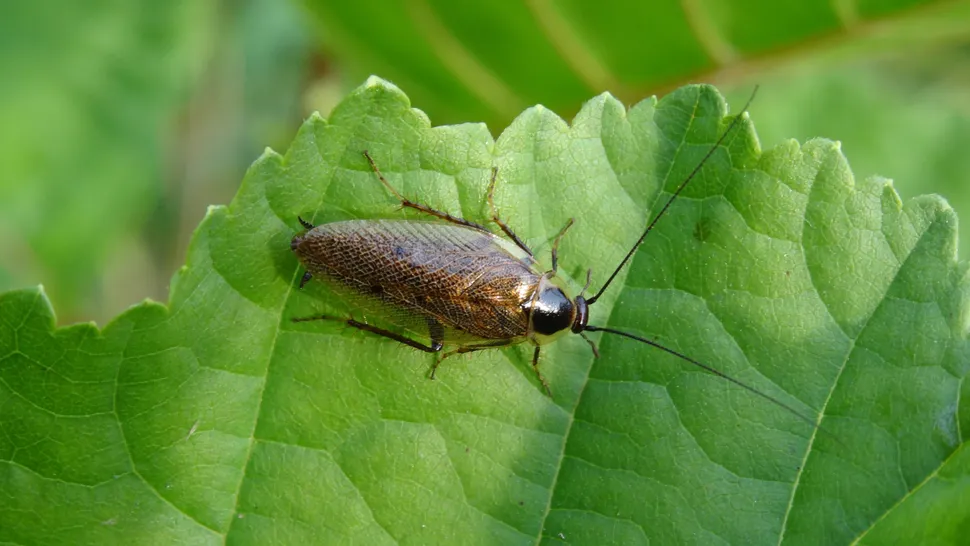
There’s nothing worse than flicking the lights on at home and spotting a rogue cockroach scurrying away. Roaches are a difficult pest to deal with at the best of times; they’re fast, hardy, and arguably clever. But, you can’t ignore their presence. These bugs are unhygienic to have in the home — they carry and spread disease, plus they multiply quickly given the right environment.
Looking up how to get rid of roaches can deal with an immediate problem, but should you want to stop the insects from returning, there are further steps you can take. One thing you can do is introduce plants to your home which roaches plainly don’t like. In fact, there are several such plants which can help deter roaches and keep them at bay. If you’re keen to learn all about it, we’ve listed them here.
.
 (Image credit: Shutterstock)
.
.
Click the link below for the article:
.
__________________________________________
June 14, 2023
Mohenjo
Arts, Food For Thought, Human Interest, missed News, Political, Science, sports, Technical
amazon, business, Business News, current-events, Future, Hotels, human-rights, medicine, mental-health, research, Science, Science News, technology, Technology News, travel, vacation

.
News You might have missed!
Use your browser or smartphone back arrow (<-) to return to this table for your next selection.
.
__________________________________________
June 13, 2023
Mohenjo
Business, Food For Thought, Human Interest, Political, Science, Technical
amazon, business, Business News, current-events, Future, Hotels, human-rights, medicine, mental-health, research, Science, Science News, technology, Technology News, travel, vacation

Click the link below the picture
.
Here’s a situation most of us can relate to: We find ourselves facing a dull moment—maybe standing in a checkout line, sitting in a waiting room, or even stuck at a red light—and our hands suddenly feel empty. Like they have a mind of their own, they reach for our pockets and place a screen in front of our faces. Never mind the eyestrain, the neck pain, or the voice in our heads yelling at us to do something, anything, else. Before we know it, we’re tapping, swiping, and scrolling our attention away.
Addictive cravings have become an everyday part of our relationship with technology. At the same time, comparing these urges to drug addictions can seem like hyperbole. Addictive drugs, after all, are chemical substances that need to physically enter your body to get you hooked—but you can’t exactly inject an iPhone. So how similar could they be?
More than you might think. From a neuroscientific perspective, it’s not unreasonable to draw parallels between addictive tech and cocaine. That’s not to say that compulsively checking your phone is as harmful as a substance use disorder, but the underlying neural circuitry is essentially the same, and in both situations, the catalyst is—you guessed it—dopamine.
So, how exactly does cocaine leverage dopamine to hook you, and what does addictive tech do to mimic that habit-forming potential? Let’s take a look between your ears.
The human brain is divided into a number of different regions. You can think of these like departments in a company; they each take on particular sets of tasks and even have interdepartmental mail in the form of specialized chemicals called neurotransmitters. Dopamine, famous and largely misunderstood, is one such chemical. It’s used to transmit a variety of different signals in the brain (most neurotransmitters do) but what it’s best known for is the role it plays in reward processing.
.
 Illustration: Vicky Leta
.
.
Click the link below for the article:
.
__________________________________________
June 13, 2023
Mohenjo
Business, Food For Thought, Human Interest, Political, Science, Technical
amazon, business, Business News, current-events, Future, Hotels, human-rights, medicine, mental-health, research, Science, Science News, technology, Technology News, travel, vacation

Click the link below the picture
.
Being a good husband isn’t about grand gestures or elaborate displays of romance. If that’s your thing, hey don’t let us stop you. But it’s the small, daily habits that make the biggest impact on how loving, healthy relationships are cultivated. Because they’re “little things”, they can be easy to overlook or dismiss as insignificant, but they’re the real difference-makers on a daily basis. And as they become more habitual, they add smoothness to the journey for both partners.
A habit isn’t always something that requires concerted effort. Some are automatic and engrained. Others, though, require a bit of self-reflection to get started. Realizing what you are doing, what you’re not doing, what you could be doing, or what you should be doing in your role as a father and husband is the first step toward growth. And embracing simple habits that show courtesy, affection, respect, or open-mindedness is a great way to start growing.
Whether you’re newly married or have been with your partner for years, simple habits can help you deepen your connection and create a more fulfilling relationship. These 12 dads/husbands shared elements of their daily, weekly, or monthly routine as partners and caregivers that have made all the difference. And whether through words or actions, embracing these habits has made them better husbands.
.

.
.
Click the link below for the article:
.
__________________________________________
June 13, 2023
Mohenjo
Crime, Food For Thought, Human Interest, Medical, missed News, Political, Science, Technical
amazon, business, Business News, current-events, Future, Hotels, human-rights, medicine, mental-health, research, Science, Science News, technology, Technology News, travel, vacation
.
News You might have missed!
Use your browser or smartphone back arrow (<-) to return to this table for your next selection.
.
__________________________________________
Older Entries
Newer Entries

