Some content on this page was disabled on April 15, 2025 as a result of a DMCA takedown notice from Guardian Media Group. You can learn more about the DMCA here:
Coronavirus is evolving. Whether it gets deadlier or not may depend on us
February 13, 2021
Business, Human Interest, Medical amazon, business, Business News, current-events, Future, Hotels, human-rights, medicine, mental-health, research, Science, Science News, technology, Technology News, travel, vacation Leave a comment
Missed News 492
February 13, 2021
Arts, Crime, Enthralling, Food For Thought, Human Interest, missed News, Political, Science, Technical amazon, business, Business News, current-events, Future, Hotels, human-rights, medicine, mental-health, research, Science, Science News, technology, Technology News, travel, vacation Leave a comment

.
News You might have missed!
Use your browser or smartphone back arrow (<-) to return to this table for your next selection.
.
__________________________________________
Dehradun, Uttarakhand, India
February 12, 2021
Business, Enthralling, Human Interest, Photographs amazon, business, Business News, current-events, Future, Hotels, human-rights, medicine, mental-health, research, Science, Science News, technology, Technology News, travel, vacation Leave a comment

Click the link below the picture
.
Dehradun, also known as Dera Doon, is the winter capital and the most populated city of the Indian state of Uttarakhand. It is the administrative headquarters of the eponymous district and the city is governed by the Dehradun Municipal Corporation. Part of the Garhwal region, it lies along National Highway 7 with a distance of 248 kilometres (154 mi) north of India’s capital New Delhi and is served by Dehradun railway station and Jolly Grant Airport. Dehradun is one of the “Counter Magnets” of the National Capital Region (NCR) being developed as an alternative center of growth to help ease the migration and population explosion in the Delhi metropolitan area and to establish a smart city at Dehradun.
.
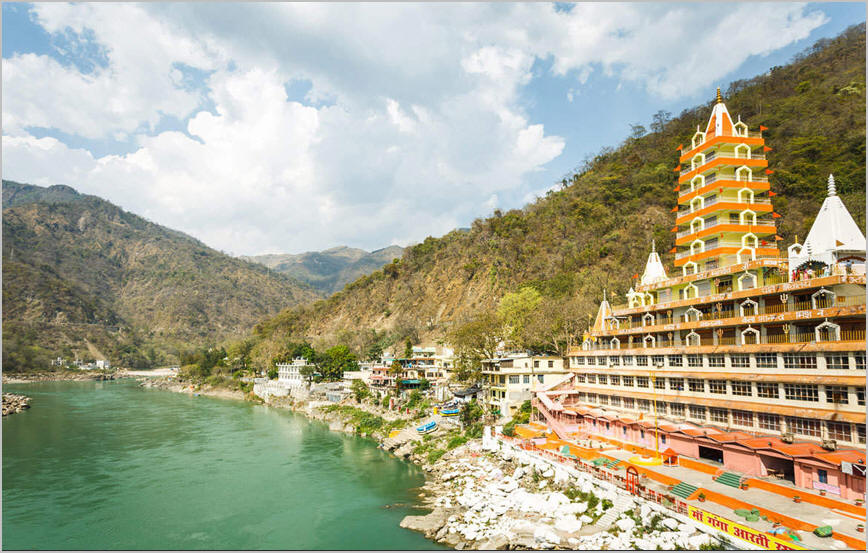 An image from Dehradun, Uttarakhand, India
.
.
Click the link below for images:
.
__________________________________________
Room-Temperature Superconductivity Achieved for the First Time
February 12, 2021
Business, Human Interest, Science, Technical amazon, business, Business News, current-events, Future, Hotels, human-rights, medicine, mental-health, research, Science, Science News, technology, Technology News, travel, vacation Leave a comment
Click the link below the picture
.
A team of physicists in New York has discovered a material that conducts electricity with perfect efficiency at room temperature — a long-sought scientific milestone. The hydrogen, carbon, and sulfur compound operates as a superconductor at up to 59 degrees Fahrenheit, the team reported today in Nature. That’s more than 50 degrees hotter than the previous high-temperature superconductivity record set last year.
“This is the first time we can really claim that room-temperature superconductivity has been found,” said Ion Errea, a condensed matter theorist at the University of the Basque Country in Spain who was not involved in the work.
“It’s clearly a landmark,” said Chris Pickard, a materials scientist at the University of Cambridge. “That’s a chilly room, maybe a British Victorian cottage,” he said of the 59-degree temperature.
Yet while researchers celebrate the achievement, they stress that the newfound compound — created by a team led by Ranga Dias of the University of Rochester — will never find its way into lossless power lines, frictionless high-speed trains, or any of the revolutionary technologies that could become ubiquitous if the fragile quantum effect underlying superconductivity could be maintained in truly ambient conditions. That’s because the substance superconducts at room temperature only while being crushed between a pair of diamonds to pressures roughly 75% as extreme as those found in the Earth’s core.
.

A novel metallic compound of hydrogen, carbon, and sulfur exhibited superconductivity at a balmy 59 degrees Fahrenheit when pressurized between a pair of diamond anvils. J. Adam Fenster / University of Rochester
.
.
Click the link below for the article:
.
__________________________________________
Bringing the chill of the cosmos to a warming planet
February 12, 2021
Business, Human Interest, Science, Technical amazon, business, Business News, current-events, Future, Hotels, human-rights, medicine, mental-health, research, Science, Science News, technology, Technology News, travel, vacation Leave a comment

Click the link below the picture
.
Long ago, in lands that were always warm, people got ice from the heavens.
At sunset, they poured water into shallow earthen pits or ceramic trays insulated with reeds. All through the night, the water would radiate its heat into the chilly void of space. By morning, it turned to ice — even though the air temperature never dropped below freezing.
This wasn’t magic; it was science.
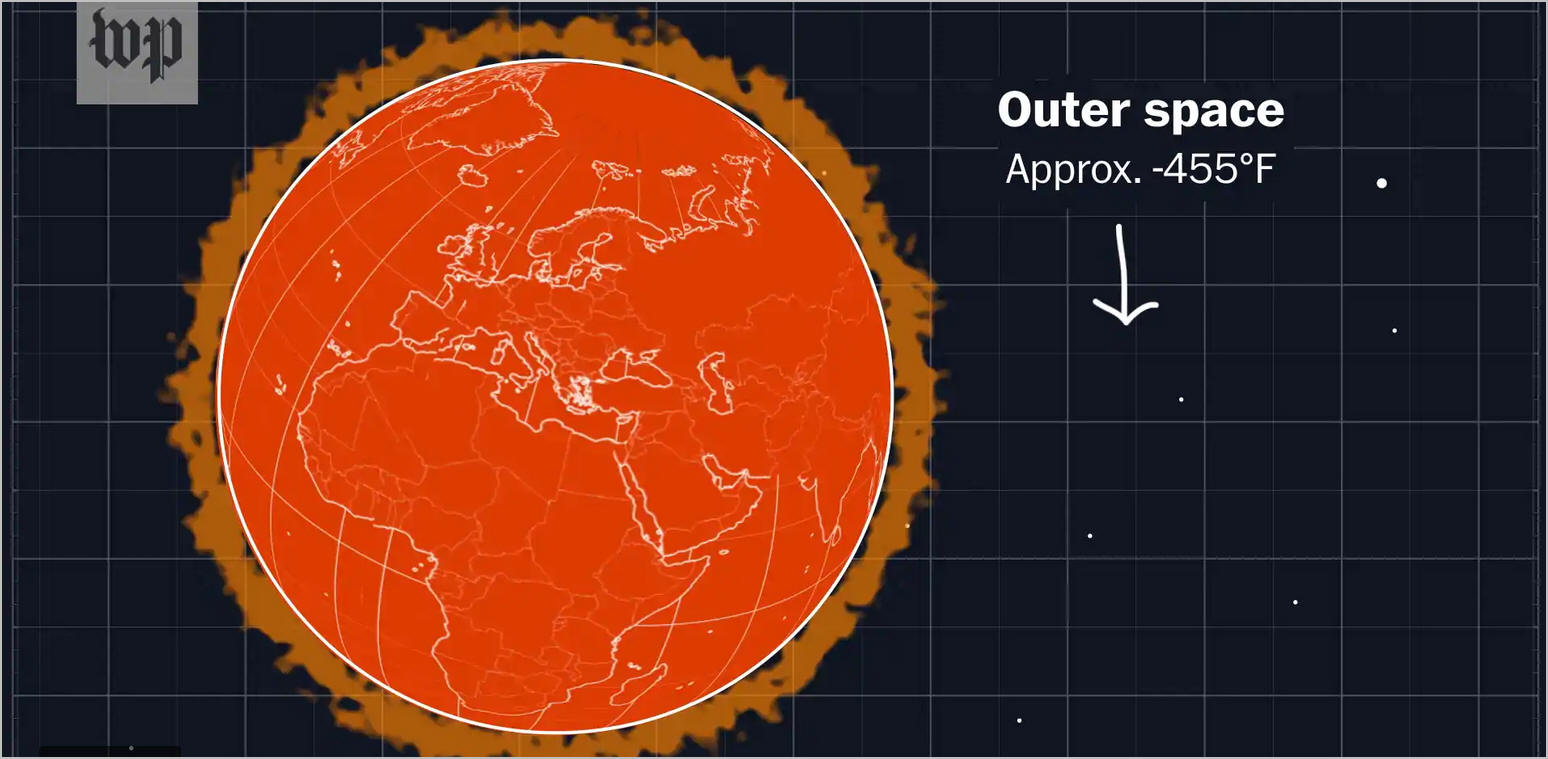
For centuries, desert dwellers in North Africa, India, and Iran tapped into the law of physics called radiative cooling. All objects — people, plants, buildings, planets — give off heat in waves of invisible light. On a clear, starry night, that radiation can rise through the atmosphere until it escapes Earth entirely. Coldness, which is really the absence of heat, is created through this invisible connection to the cosmos.
The world now cools off with the help of more than 3.5 billion refrigerators and air conditioners, a number that is quickly growing. But those appliances are also a major source of greenhouse gas emissions. In seeking relief from the heat, humans are making the globe even hotter, compounding the demand for cooling.
To break that cycle, University of California at Los Angeles materials scientist Aaswath Raman wants to turn ancient technology into a 21st-century tool.
.
 By Sarah Kaplan
.
.
Click the link below for the article:
.
__________________________________________
Missed News 491
February 12, 2021
Human Interest, missed News amazon, business, Business News, current-events, Future, Hotels, human-rights, medicine, mental-health, research, Science, Science News, technology, Technology News, travel, vacation Leave a comment
.
News You might have missed!
Use your browser or smartphone back arrow (<-) to return to this table for your next selection.
.
__________________________________________
Los Glaciares National Park
February 11, 2021
Business, Enthralling, Human Interest, Photographs amazon, business, Business News, current-events, Future, Hotels, human-rights, medicine, mental-health, research, Science, Science News, technology, Technology News, travel, vacation Leave a comment
Click the link below the picture
.
Los Glaciares National Park is a federal protected area in Santa Cruz Province, Argentina.
The park covers an area of 726,927 ha (7,269.27 km2; 2,806.68 sq mi), making it the largest national park in the country. Established on 11 May 1937, it hosts a representative sample of Magellanic subpolar forest and west Patagonian steppe biodiversity in a state of conservation. In 1981, it was declared a World Heritage Site by UNESCO.
The park’s name refers to the giant ice cap in the Andes, the largest outside of Antarctica, Greenland, and Iceland, feeding 47 large glaciers, of which 13 flow towards the Pacific Ocean. In other parts of the world, glaciers start at a height of at least 2,500 m (8,200 ft) above mean sea level, but due to the size of the ice cap, these glaciers begin at only 1,500 m (4,900 ft), sliding down to 200 m (660 ft). Los Glaciares borders Torres del Paine National Park to the south in Chilean territory.
.
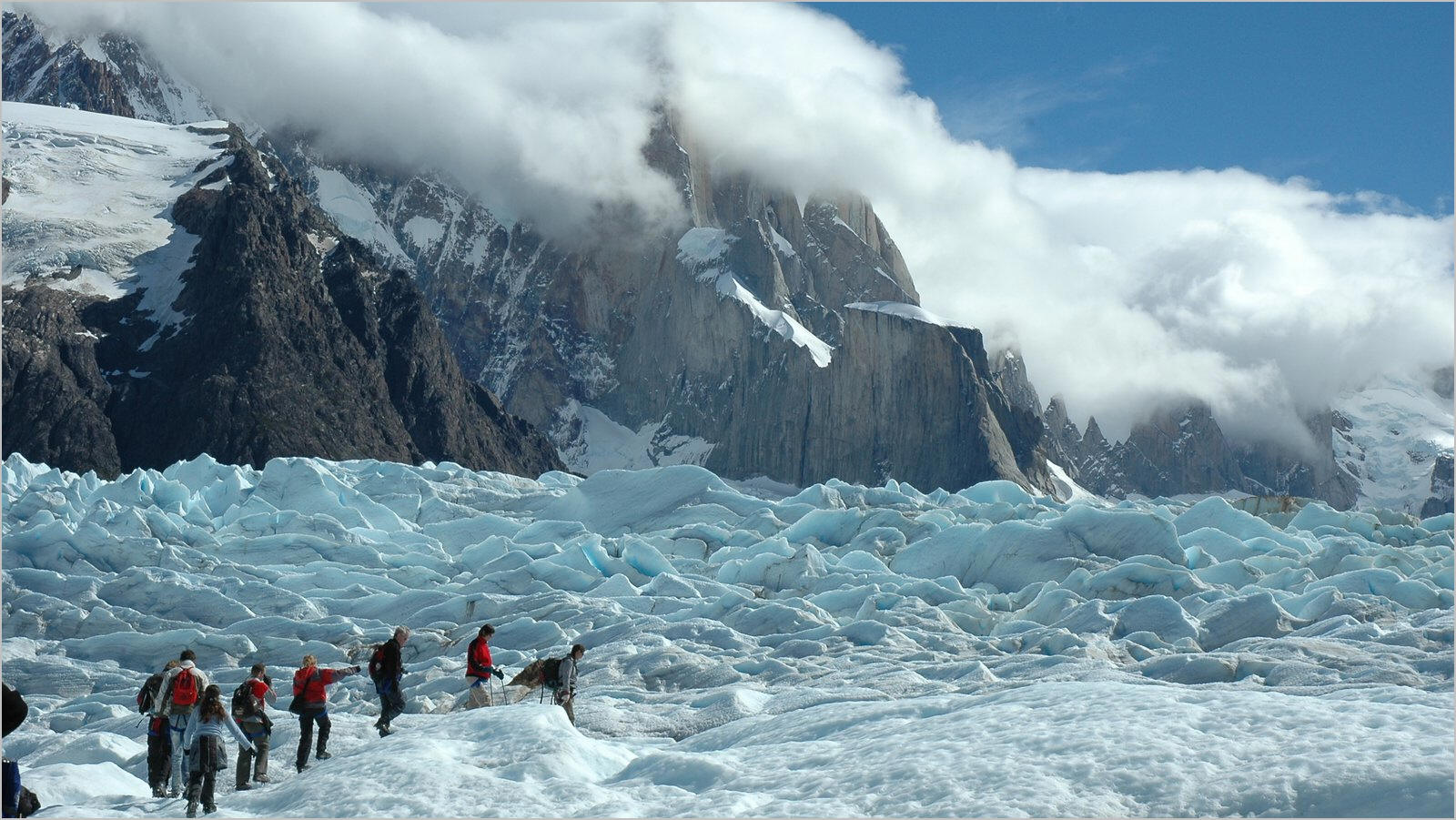 An image from Los Glaciares National Park
.
.
Click the link below for images:
.
__________________________________________
After 20 years of service, the Space Station flies into an uncertain future
February 11, 2021
Business, Human Interest, Science, Technical amazon, business, Business News, current-events, Future, Hotels, human-rights, medicine, mental-health, research, Science, Science News, technology, Technology News, travel, vacation Leave a comment

Click the link below the picture
.
The Cold War had been concluded for less than a decade when NASA astronaut Bill Shepherd and two Russian cosmonauts, Sergei Krikalev and Yuri Gidzenko, crammed themselves into a Soyuz spacecraft and blasted into orbit on Halloween, 20 years ago.
Two days later their small spacecraft docked with the International Space Station, then a fraction of the size it is today. Their arrival would herald the beginning of what has since become 20 years of continuous habitation of the laboratory that NASA, leading an international partnership, would continue to build for another decade.
Born of a desire to smooth geopolitical tensions in the aftermath of the great conflict between the United States and the Soviet Union, the space station partnership has more or less succeeded—the station has remained inhabited despite the space shuttle Columbia disaster in 2003, and later, nearly a decade of no US space transportation. NASA, Roscosmos, and the European, Japanese, and Canadian partners have been able to rely on one another.
Not that it has been easy. Tensions have existed from those very first moments on the station. Shepherd, who would serve as the first ISS commander over his more experienced cosmonaut counterparts, wanted to nickname the station “Alpha.” He had support for this from Krikalev, but some Russian space officials believed their earlier Mir space station had earned that honor. The new station, they believed, ought to be named “Beta.” NASA, too, had not signed off on this designation.
.
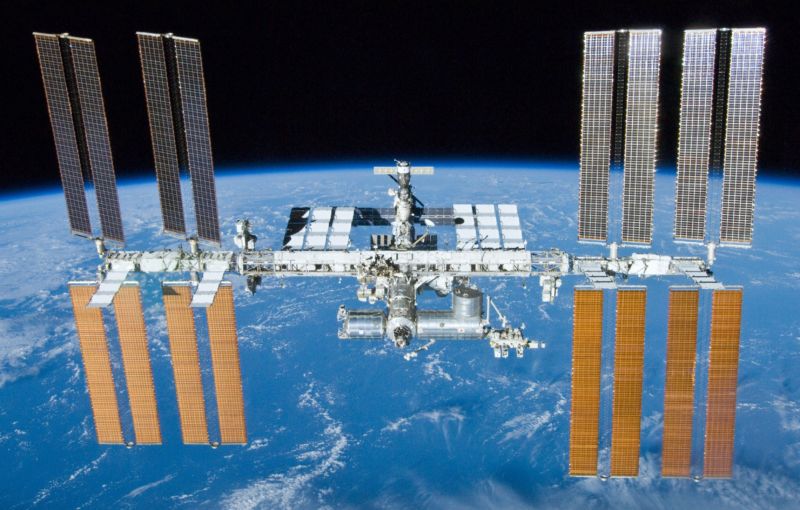 The essentially complete International Space Station in 2010, as seen by space shuttle Atlantis.
.
.
Click the link below for the article:
.
__________________________________________
Does the human brain resemble the Universe?
February 11, 2021
Business, Food For Thought, Human Interest, Science, Technical amazon, business, Business News, current-events, Future, Hotels, human-rights, medicine, mental-health, research, Science, Science News, technology, Technology News, travel, vacation Leave a comment

Click the link below the picture
.
An astrophysicist at the University of Bologna and a neurosurgeon at the University of Verona compared the network of neuronal cells in the human brain with the cosmic network of galaxies… and surprising similarities emerged.
In their paper published in Frontiers in Physics, Franco Vazza (astrophysicist at the University of Bologna) and Alberto Feletti (neurosurgeon at the University of Verona) investigated the similarities between two of the most challenging and complex systems in nature: the cosmic network of galaxies and the network of neuronal cells in the human brain.
Despite the substantial difference in scale between the two networks (more than 27 orders of magnitude), their quantitative analysis, which sits at the crossroads of cosmology and neurosurgery, suggests that diverse physical processes can build structures characterized by similar levels of complexity and self-organization.
The human brain functions thanks to its wide neuronal network that is deemed to contain approximately 69 billion neurons. On the other hand, the observable universe is composed of a cosmic web of at least 100 billion galaxies. Within both systems, only 30% of their masses are composed of galaxies and neurons. Within both systems, galaxies and neurons arrange themselves in long filaments or nodes between the filaments. Finally, within both systems, 70% of the distribution of mass or energy is composed of components playing an apparently passive role: water in the brain and dark energy in the observable Universe.
.
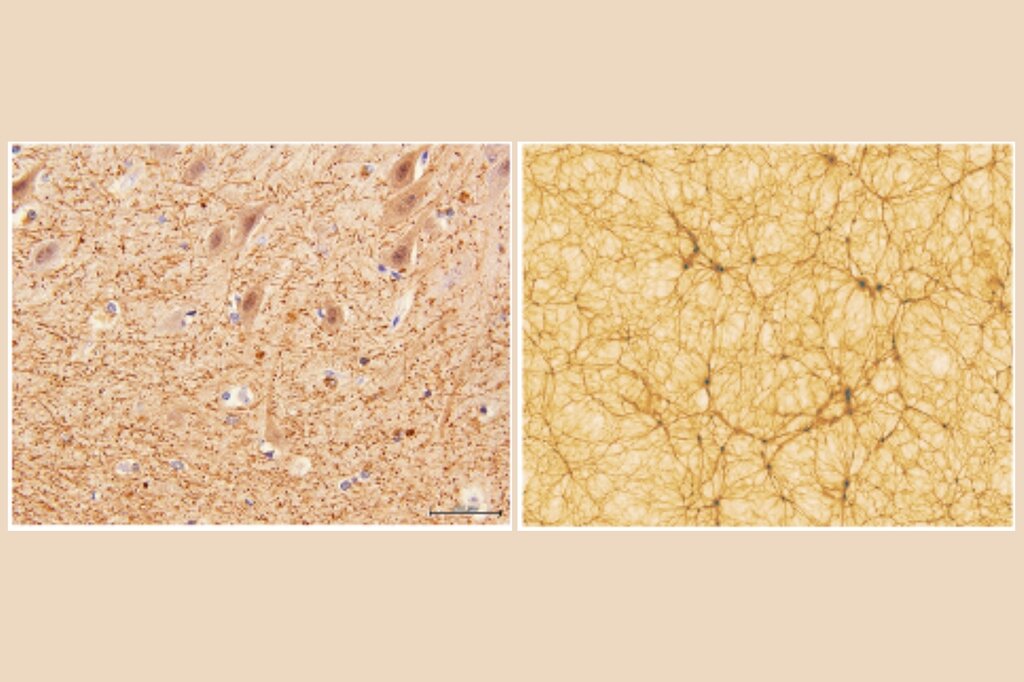 Left: section of cerebellum, with magnification factor 40x, obtained with electron microscopy (Dr. E. Zunarelli, University Hospital of Modena); right: section of a cosmological simulation, with an extension of 300 million light-years on each side (Vazza et al. 2019 A&A). Credit: University of Bologna
.
.
Click the link below for the article:
.
__________________________________________
Missed News 490
February 11, 2021
Arts, Crime, Food For Thought, Human Interest, missed News, Political, Science, Technical amazon, business, Business News, current-events, Future, Hotels, human-rights, medicine, mental-health, research, Science, Science News, technology, Technology News, travel, vacation Leave a comment
.
News You might have missed!
Use your browser or smartphone back arrow (<-) to return to this table for your next selection.
.
__________________________________________

