Some content on this page was disabled on April 15, 2025 as a result of a DMCA takedown notice from Guardian Media Group. You can learn more about the DMCA here:
Six promises you can make to help reduce carbon emissions
March 9, 2022
Business, Food For Thought, Human Interest, Science, Technical amazon, business, Business News, current-events, Future, Hotels, human-rights, medicine, mental-health, research, Science, Science News, technology, Technology News, travel, vacation Leave a comment
Missed News 825
March 9, 2022
Arts, Crime, Food For Thought, Human Interest, Medical, missed News, Political, Science, Technical amazon, business, Business News, current-events, Future, Hotels, human-rights, medicine, mental-health, research, Science, Science News, technology, Technology News, travel, vacation Leave a comment

.
News You might have missed!
Use your browser or smartphone back arrow (<-) to return to this table for your next selection.
.
__________________________________________
Ribat Of Monastir
March 8, 2022
Business, Enthralling, Human Interest, Photographs amazon, business, Business News, current-events, Future, Hotels, human-rights, medicine, mental-health, research, Science, Science News, technology, Technology News, travel, vacation Leave a comment

Click the link below the picture
.
Founded in 796 by the Abbasid leader and the governor of Ifriqiya, Harthama ibn A’yan, several improvements and changes were introduced to the building throughout the medieval times, including the expansion carried out by Abu al-Qasim ibn Tammam in 966. Initially, it was quadrilateral shaped and then renovated into a composition of four buildings with two inner courtyards. There’s also a spiral stair of about a hundred steps leading to the watchtower where visual messages were exchanged at night with the towers of neighboring ribats. Many watchtowers were added between 11th and 13th, 17th, and 19th centuries in order to accommodate the artillery. The towers are also climbable, allowing visitors to enjoy a view of the city and the beach.
In addition to the small rooms dedicated to the worshiping Mujahideen who were performing prayer and meditation during their military duty, the ribat has two mosques, the largest of which hosts a unique collection of worshiping materials and traditional medieval industrial materials today. Wikipedia
.
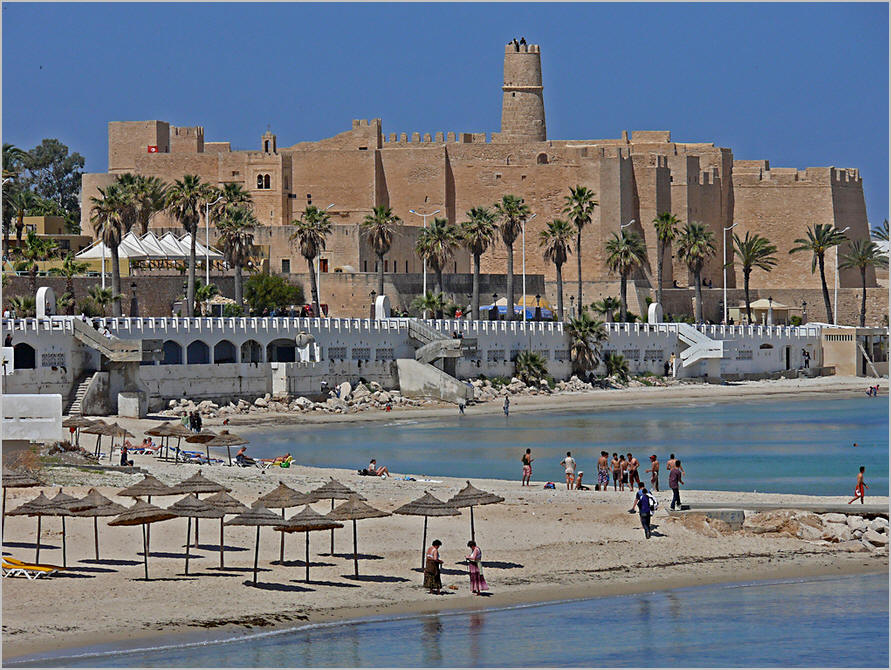 An image from Ribat Of Monastir
.
.
Click the link below for images:
.
__________________________________________
The drought plaguing the American West is the worst in 1,200 years
March 8, 2022
Business, Food For Thought, Human Interest, Science, Technical amazon, business, Business News, current-events, Future, Hotels, human-rights, medicine, mental-health, research, Science, Science News, technology, Technology News, travel, vacation Leave a comment

Click the link below the picture
.
Scientists already had a pretty good idea that things have been about as dry as can be out west for a while now. The region has been experiencing a “megadrought” that dates back to the start of the century. In 2020, researchers dubbed it the worst drought in 500 years, in a paper published in the journal Science.
Things have only gotten worse since then. In the last two years, the region already bereft of rainfall saw record-setting heatwaves — including a new high for hottest temperature ever recorded and a devastating heat dome that literally started to melt infrastructure — along with out of control wildfires, shrinking water reservoirs, and dwindling supplies of natural water sources. With a full record of the last two decades, scientists concluded that the West’s ongoing drought is the worst since at least 800 A.D.
Researchers and climate scientists examined moisture levels in soils collected from a wide stretch of the American West, ranging from up north in Montana to areas of northern Mexico, out west toward the coast of the Pacific Ocean, and eastbound to the Rocky Mountains. Those samples — along with tree ring samples, which appear closer together during dry periods — helped to paint a picture of this modern drought and those of the past. Unfortunately, our current situation does not compare favorably to history.
.
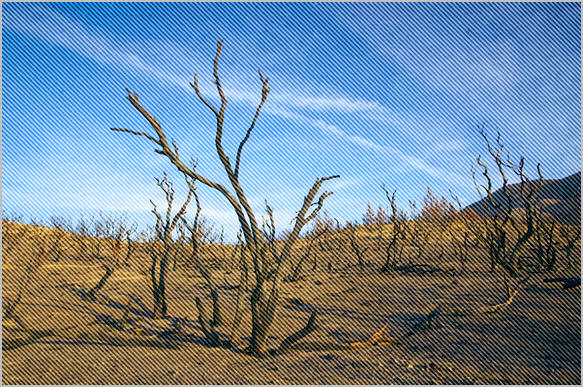 A new study has found that the current 20-year drought is the worst dry period in recorded history. Shutterstock
.
.
Click the link below for the article:
.
__________________________________________
A Giant Gas Cloud Is Coming Toward Us At 700,000 Miles Per Hour
March 8, 2022
Business, Food For Thought, Human Interest, Science, Technical amazon, business, Business News, current-events, Future, Hotels, human-rights, medicine, mental-health, research, Science, Science News, technology, Technology News, travel, vacation Leave a comment

Click the link below the picture
.
An invisible cloud of gas is speeding toward our Milky Way galaxy at 700,000 miles per hour. But don’t worry: It will take about 30 million years to get here.
It’s a case of “what goes up must come down,” according to Hubble Space Telescope astronomers who say the space cloud likely originated in our galaxy and is boomeranging back. When it returns, they predict “a spectacular burst of star formation, perhaps providing enough gas to make 2 million suns.”
Astronomers are aware of many space clouds, but the Smith Cloud is unique because its trajectory is well-known.
“The cloud is an example of how the galaxy is changing with time,” said Andrew Fox of the Space Telescope Science Institute in Baltimore, Maryland. “It’s telling us that the Milky Way is a bubbling, very active place where gas can be thrown out of one part of the disk and then return back down into another.
.
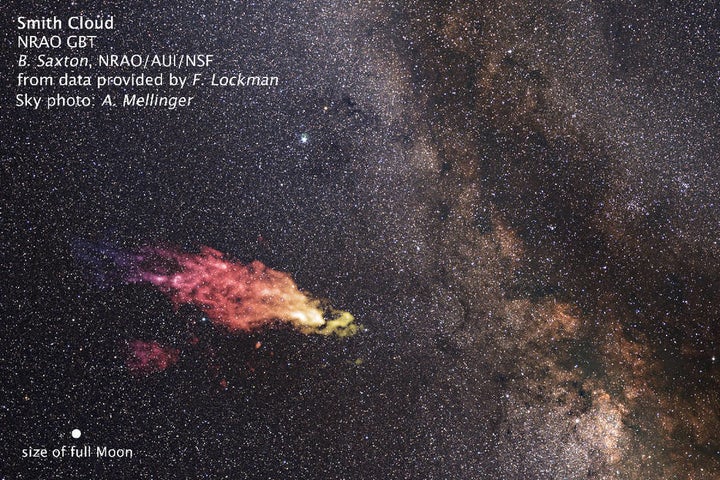
This visualization of the Smith Cloud shows its size compared to the size of the Earth’s moon. Saxton/Lockman/NRAO/AUI/NSF/Mellinger
.
.
Click the link below for the article:
.
__________________________________________
Missed News 824
March 8, 2022
Crime, Food For Thought, Human Interest, Medical, missed News, Political, Science, Technical amazon, business, Business News, current-events, Future, Hotels, human-rights, medicine, mental-health, research, Science, Science News, technology, Technology News, travel, vacation Leave a comment
.
News You might have missed!
Use your browser or smartphone back arrow (<-) to return to this table for your next selection.
.
__________________________________________
United Kingdom
March 7, 2022
Business, Enthralling, Human Interest, Photographs amazon, business, Business News, current-events, Future, Hotels, human-rights, medicine, mental-health, research, Science, Science News, technology, Technology News, travel, vacation Leave a comment
Click the link below the picture
.
The United Kingdom of Great Britain and Northern Ireland, commonly known as the United Kingdom (UK) or Britain, is a sovereign country in north-western Europe, off the north-western coast of the European mainland. The United Kingdom includes the island of Great Britain, the north-eastern part of the island of Ireland, and many smaller islands within the British Isles. Northern Ireland shares a land border with the Republic of Ireland. Otherwise, the United Kingdom is surrounded by the Atlantic Ocean, with the North Sea to the east, the English Channel to the south, and the Celtic Sea to the south-west, giving it the 12th-longest coastline in the world. The Irish Sea separates Great Britain and Ireland. The total area of the United Kingdom is 93,628 square miles (242,500 km2), with an estimated population in 2020 of 67 million.
The United Kingdom is a unitary parliamentary democracy and constitutional monarchy. The monarch, Queen Elizabeth II, has reigned since 1952. The capital and largest city is London, a global city and financial center with a metropolitan area population of 14 million. Other major cities include Birmingham, Manchester, Glasgow, Liverpool, and Leeds. The United Kingdom consists of four countries: England, Scotland, Wales, and Northern Ireland. Other than England, the constituent countries have their own devolved governments, each with varying powers.
The United Kingdom has evolved from a series of annexations, unions, and separations of constituent countries over several hundred years. The Treaty of Union between the Kingdom of England (which included Wales, annexed in 1542) and the Kingdom of Scotland in 1707 formed the Kingdom of Great Britain. Its union in 1801 with the Kingdom of Ireland created the United Kingdom of Great Britain and Ireland. Most of Ireland seceded from the UK in 1922, leaving the present United Kingdom of Great Britain and Northern Ireland, which formally adopted that name in 1927.
The nearby Isle of Man, Guernsey, and Jersey are not part of the UK, being Crown Dependencies with the British Government responsible for defense and international representation. There are also 14 British Overseas Territories, the last remnants of the British Empire which, at its height in the 1920s, encompassed almost a quarter of the world’s landmass and a third of the world’s population, and was the largest empire in history. British influence can be observed in the language, culture, and the legal and political systems of many of its former colonies.
The United Kingdom has the world’s fifth-largest economy by nominal gross domestic product (GDP), and the tenth-largest by purchasing power parity (PPP). It has a high-income economy and a very high human development index rating, ranking 13th in the world. The UK became the world’s first industrialized country and was the world’s foremost power during the 19th and early 20th centuries. Today the UK remains one of the world’s great powers, with considerable economic, cultural, military, scientific, technological, and political influence internationally. It is a recognized nuclear state and is ranked fourth globally in military expenditure. It has been a permanent member of the United Nations Security Council since its first session in 1946.
The United Kingdom is a member of the Commonwealth of Nations, the Council of Europe, the G7, the Group of Ten, the G20, the United Nations, NATO, AUKUS, the Organisation for Economic Co-operation and Development (OECD), Interpol, and the World Trade Organization (WTO). It was a member state of the European Communities (EC) and its successor, the European Union (EU), from its accession in 1973 until its withdrawal in 2020 following a referendum held in 2016. Wikipedia
.
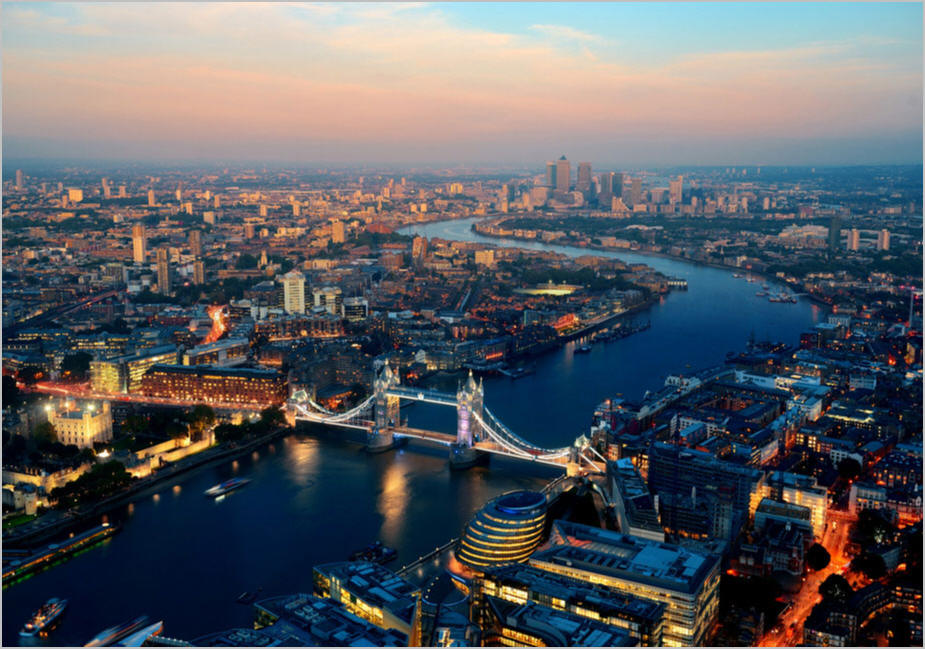 An image from the United Kingdom
.
.
Click the link below for images:
.
__________________________________________
Of course crypto went all-in on the Super Bowl
March 7, 2022
Business, Food For Thought, Human Interest, Science, Technical amazon, business, Business News, current-events, Future, Hotels, human-rights, medicine, mental-health, research, Science, Science News, technology, Technology News, travel, vacation Leave a comment
Click the link below the picture
.
Hypothetically speaking, let’s say that you’re a part of a pyramid scheme. Maybe you know that’s what it is, or maybe you truly believe in it, but either way, it’s a pyramid scheme. And in order for it to run, you need a constant flow of new blood. You need new people who don’t really understand what you’re doing, but they see people making money and want in. And let’s say that your pyramid scheme has been having a real rough go of things lately, and you’re down big. Getting a bunch of new people in could allow you to cash out. What would be the ideal space to reach lots of folks with a promise of wealth and a message of FOMO for anyone who fails to get on board?
Spoiler alert: It takes place on a Sunday in February. That’s right: Four cryptocurrency companies — all crypto exchanges where people turn real money into fake money in hopes that the lines go up — managed to get national advertisements during the biggest televised event of the year, Super Bowl LVI.
Coinbase got the most attention, broadcasting a DVD screensaver-style QR code for 60 seconds to lure folks into visiting their app, which then crashed. You’d think that if you drop more than $6.5 million for a commercial, you might want to put some money into maintaining your servers, but hey, that’s just me. Those who did get through to the Coinbase app were met with an offer: $15 of Bitcoin, just for signing up. This is, of course, a common tactic of any gambling site: “Here’s some funny money, it’s not worth anything but it’s enough to get you hooked.”
Other crypto exchanges went a more conventional route, pulling in celebrities for their spots. FTX, another exchange, tapped comedian Larry David, who spent the ad dismissing major technological innovations throughout human history, including the wheel, toilets, electricity, and democracy — which, sure? Those all seem equal to crypto, I guess. The ad ends with the message, “Don’t be like Larry. Don’t miss out on the next big thing.” What world-changing innovation crypto offers is never explained in the ad — the real message is that if you don’t get it, you’re a fool.
.
 crypto
.
.
Click the link below for the article:
.
__________________________________________
Stephen Hawking: Earth Is Doomed (Probably)
March 7, 2022
Business, Food For Thought, Human Interest, Political, Science, Technical amazon, business, Business News, current-events, Future, Hotels, human-rights, medicine, mental-health, research, Science, Science News, technology, Technology News, travel, vacation Leave a comment
Click the link below the picture
.
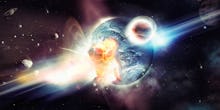
Stephen Hawking, one of the world’s most renowned theoretical physicists has said that the likelihood of Earth facing a man-made disaster was a “near certainty” within the next thousand to ten thousand years.
According to Hawking, famous for his work in black holes and quantum mechanics and the author of A Brief History of Time, the calamity — whatever it may be — will likely be the result of an uncontrolled consequence of human science and technology.
“We face a number of threats: nuclear war, global warming, and genetically engineered viruses,” he said during the BBC’s annual Reith Lectures on Jan. 7, the Telegraph reported. “Although the chance of a disaster on planet Earth in a given year may be quite low, it adds up over time, becoming a near certainty in the next thousand or ten thousand years.”
In a cosmic silver lining, Hawking said that he was optimistic that by the time of any mega virus or nuclear holocaust, humans were likely to be safely ensconced in colonies around the universe, shielding the race from total extinction when the hammer falls.
“By that time we should have spread out into space, and to other stars, so it would not mean the end of the human race,” he said. “However, we will not establish self-sustaining colonies in space for at least the next hundred years, so we have to be very careful in this period.”
.
.
.
Click the link below for the article:
.
__________________________________________
Missed News 823
March 7, 2022
Food For Thought, Human Interest, Medical, missed News, Political, Science, Technical amazon, business, Business News, current-events, Future, Hotels, human-rights, medicine, mental-health, research, Science, Science News, technology, Technology News, travel, vacation Leave a comment
.
News You might have missed!
Use your browser or smartphone back arrow (<-) to return to this table for your next selection.
.
__________________________________________

