President Donald Trump’s decision to strike Syrian facilities in response to Syrian President Bashar Assad’s reported use of chemical weapons against civilians fulfills Trump’s promise of being tougher than President Barack Obama.
But it’s unlikely to have much impact beyond that ― and will likely be historically judged as a failure on Trump’s own terms.
Trump’s military response alongside France and the U.K. is ostensibly an attempt to deter Assad’s murderous behavior and demonstrate American toughness to Assad’s patrons, Iran and Russia. It won’t serve either of those goals.
More than three months before any ballots have been cast at the Republican convention, Roger Stone, Donald Trump’s on-again, off-again consigliere, has delivered the campaign equivalent of a severed horse head to delegates who might consider denying Trump the nomination. Trump’s supporters will find you in your sleep, he merrily informed them this week. He did not mean it metaphorically.
“We will disclose the hotels and the room numbers of those delegates who are directly involved in the steal,” Stone said Monday, on Freedomain Radio. “If you’re from Pennsylvania, we’ll tell you who the culprits are. We urge you to visit their hotel and find them. You have a right to discuss this, if you voted in the Pennsylvania primary, for example, and your votes are being disallowed,” Stone said.
Over the years, I’ve covered elections in Iraq, Iran, and Burma. Stone’s taunt is every bit as threatening as anything I heard in those places, which have far less experience than America with democracy. Such is the moment we currently inhabit.
.
Even before he was a candidate, Trump displayed a rare gift for cultivating the dark power of a crowd. Credit Photograph by Edmund D. Fountain/The New York Times/Redux
Four American citizens, including a Washington Post reporter, who have been imprisoned in Iran are set to board a Swiss aircraft Saturday from Tehran to an as-yet-undetermined location, where they will be freed as part of a prisoner release deal between the U.S. and Iran. The agreement is the result of 14 months of high-stakes secret negotiations between the two traditional adversaries.
“Our citizens have not yet been flown out of Iran, so we don’t want to do anything that could complicate it,” a senior administration official said Saturday. “But we are told the deal is done, that they will be let out.”
As part of the exchange, the U.S. will release seven Iranians who were being held in the country on sanctions violations. All were born in Iran, but six are dual Iranian-American citizens. The seven men all have the option to remain in the U.S.
.
Image: Breaking News and Opinion on The Huffington Post
Ten U.S. sailors detained by Iran were released early Wednesday, officials said.
The sailors — nine men and one woman — were held overnight on Iran’s Farsi Island. They were taken into custody Tuesday when their two small U.S. navy riverine vessels drifted into Iranian waters during a training mission.
Iran’s Revolutionary Guards (IRGC) said in a statement Wednesday that the sailors had been released back into international waters following a U.S. apology and clarifications that any incursion was “a mistake.”
.
Iran’s Release of 10 U.S. Sailors Heads off International Crisis
.
.
Click link below for article, social media and videos:
Iran on Thursday accused the Saudi-led coalition battling Shiite rebels in Yemen of hitting its embassy in the capital, Sanaa, in an overnight airstrike, but there were no visible signs of damage on the building.
The accusation comes amid a dangerous rise in tensions between Iran and Saudi Arabia in recent days, following the kingdom’s execution of a Shiite cleric and attacks on Saudi diplomatic posts in the Islamic Republic.
Analysts have feared the dispute could boil over into the proxy wars between the two Mideast rivals in Yemen and in Syria.
.
Image: Breaking News and Opinion on The Huffington Post
Former Secretary of State Colin Powell expressed support for the nuclear agreement with Iran on Sunday, calling the various planks Iranian leaders accepted “remarkable” and dismissing critics’ concerns over its implementation.
“It’s a pretty good deal,” he said on NBC’s “Meet the Press.”
Critics concerned that the deal will expedite Iran’s pursuit of a nuclear weapon, Powell added, are “forgetting the reality that [Iranian leaders] have been on a superhighway, for the last 10 years, to create a nuclear weapon or a nuclear weapons program, with no speed limit.”
He said the reduction in centrifuges, Iran’s uranium stockpile and their agreement to shut down their plutonium reactor were all “remarkable.”
Twenty-nine of the nation’s top scientists — including Nobel laureates, veteran makers of nuclear arms and former White House science advisers — wrote to President Obama on Saturday to praise the Iran deal, calling it innovative and stringent.
The letter, from some of the world’s most knowledgeable experts in the fields of nuclear weapons and arms control, arrives as Mr. Obama is lobbying Congress, the American public and the nation’s allies to support the agreement.
The two-page letter may give the White House arguments a boost after the blow Mr. Obama suffered on Thursday when Senator Chuck Schumer of New York, a Democrat and among the most influential Jewish voices in Congress, announced he would oppose the deal, which calls for Iran to curb its nuclear program and allow inspections in return for an end to international oil and financial sanctions.
.
President Obama and Michelle Obama arriving on Martha’s Vineyard, Mass., on Friday.Credit Susan Walsh/Associated Press
The nuclear accord with Iran required a difficult series of compromises for world powers and Tehran.
For President Barack Obama, it meant climbing down from demands that Tehran halt almost all of its enrichment of potential bomb-making material and shutter an underground facility possibly impervious to an air attack. It also meant dropping pledges to secure “anytime, anywhere” inspections and Iran’s complete answering of questions related to past weapons work.
But Iran’s supreme leader was forced to retreat on some key issues, too. Relief from crippling economic sanctions won’t come on Day 1, as he long clamored for, and his country will have to open up military sites to international inspectors at some point if the Islamic Republic is going to fulfill its commitments. Iran also will have to adhere to multiyear restrictions on enrichment and nuclear research and development that Ayatollah Khamenei and other leaders once opposed.
.
Image: Breaking News and Opinion on The Huffington Post
Iran reached a historic deal with six world powers on Tuesday that promises to curb Tehran’s controversial nuclear program in exchange for economic sanctions relief.
The accord was announced on Tuesday by Iranian Foreign Minister Mohammad Javad Zarif and the European Union’s foreign policy chief Federica Mogherini in a joint statement in the Austrian capital, Vienna.
Zarif acknowledged that the final agreement wasn’t perfect, but described the announcement as a “historic moment.”
.
Image: Breaking News and Opinion on The Huffington Post
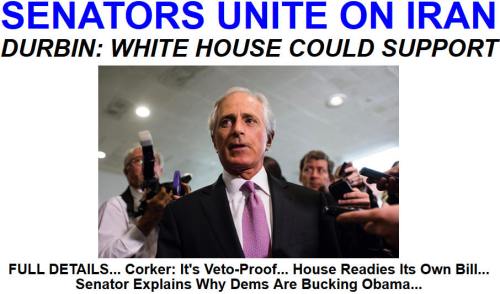
A tentative deal has been reached by senators on a bill to apply congressional oversight to a nuclear deal with Iran.
Under the deal, the president would still be required to submit any final agreement before Congress and Congress would continue to have a say over whether he can lift sanctions on Iran in exchange for restrictions on Iran’s nuclear program. But the new deal, hammered out between Republicans and Democrats on the Senate Foreign Relations Committee, would reduce the time frame the Senate has to consider the lifting of sanctions — from 60 days to 52 at most — and would keep demands on Iran limited primarily to its nuclear program and not, for example, against its sponsorship of terrorism.
An aide to Sen. Bob Corker (R-Tenn.), the chairman of the Foreign Relations Committee, sent over the details of the new bill. It still may face a veto from the president, who has generally opposed efforts to restrict his flexibility when it comes to executing a deal with Iran.
Film and Writing Festival for Comedy. Showcasing best of comedy short films at the FEEDBACK Film Festival. Plus, showcasing best of comedy novels, short stories, poems, screenplays (TV, short, feature) at the festival performed by professional actors.

 .
.


 Image: Breaking News and Opinion on The Huffington Post
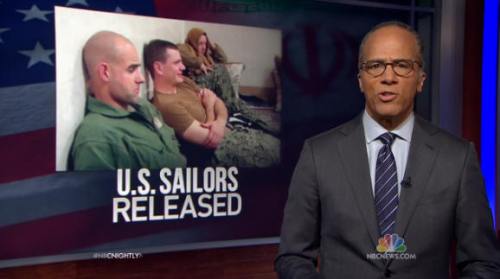

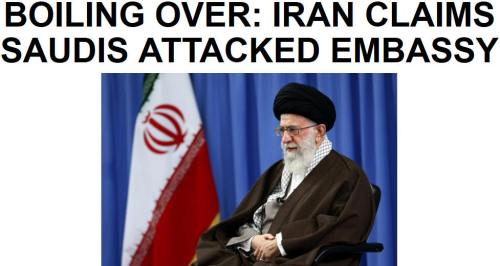 Image: Breaking News and Opinion on The Huffington Post
 Iran Deal Is a ‘Pretty Good Deal
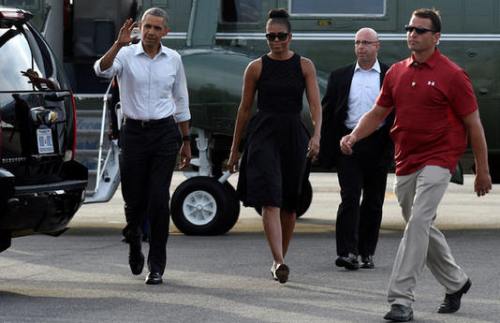
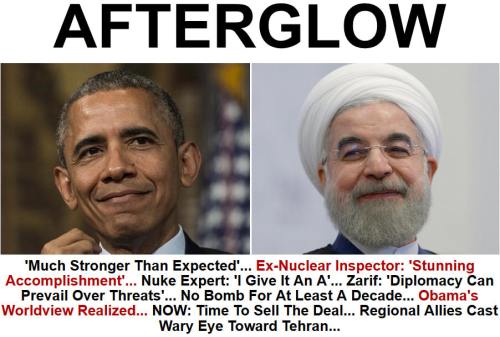 Image: Breaking News and Opinion on The Huffington Post
 Image: Breaking News and Opinion on The Huffington Post
 .
. James' World 2