January 20, 2024
Mohenjo
Business, Food For Thought, Human Interest, Political, Science, Technical
amazon, business, Business News, current-events, Future, Hotels, human-rights, medicine, mental-health, research, Science, Science News, technology, Technology News, travel, vacation

Click the link below the picture
.
With ice-blue caves, kaleidoscopic lakes, and confusing rock formations, Earth is capable of producing some over-the-top scenery. These transportive landscapes are escapes from modern life—sometimes to what feel like other planets altogether. Below are some of our favorite otherworldly natural wonders across the world, from the marvelous to the strange.
Lake Natron, Tanzania
Don’t let the ring of salty marshes along the edge of Lake Natron fool you: This body of water is one of the most inhospitable areas on Earth. Colored a deep red from salt-loving organisms and algae, the lake reaches hellish temperatures and is nearly as basic as ammonia. Although most human settlements throughout history have formed around lakes and rivers, the barren landscape around Lake Natron tells a clear story of a place no one has ever wanted to live in.
Chile Marble Caves, Chile
Carved into the Patagonian Andes, the Cuevas de Mármol are located on a peninsula of solid marble along Lake General Carrera, a remote glacial body of water that spans the Chile-Argentina border. Formed by 6,000-plus years of waves washing up against calcium carbonate, the smooth, swirling blues of the cavern walls are a reflection of the lake’s azure waters, which change in intensity and hue depending on water level and time of year.
.

White Desert, Egypt Anton Petrus/Getty Images
.
.
Click the link below for the article (Click the Title of each Location, then click the back arrow to return to the Article for the next Location):
.
__________________________________________
January 20, 2024
Mohenjo
Business, Food For Thought, Human Interest, Political, Science, Technical
amazon, business, Business News, current-events, Future, Hotels, human-rights, medicine, mental-health, research, Science, Science News, technology, Technology News, travel, vacation

Click the link below the picture
.
You begin shopping for your future the moment you become an adult in New York City. Rich and well-furnished lives are aggressively paraded about. Parlor windows reveal Noguchi lamps the size of small horses, couples sit for brunch, families haul exploding bags of farmers’-market produce back to their lairs. People are furiously refreshing Resy to pay $27 for spaghetti pomodoro (!) and going, constantly, to Mexico City. Sure, it’s always been ludicrously expensive, and the “what you could get for the same price of this Chelsea studio in Ohio” game is our little way of torturing ourselves. New York is the most expensive city in the world, according to one recent report. Half the households that live here simply cannot afford to, according to another, which says you have to make $100,000 just to reasonably get by — to afford food and transportation to work. A one-pound container of strawberries at Eli’s costs $30.
We decided to put a price tag on the dream lives of a wide range of New Yorkers, all 30 and under and childless. We spoke to dozens of people but narrowed it down to a handful, each reasonably en route to the upper-middle- (and, in two instances, just plain upper-) class life they picture in their heads. We were surprised by how many people fantasize about a life with a partner and kids in brownstone Brooklyn — we expected more to plan lives as single artists or to build households of friends and throuples. We expected a few more to actually want to live in Manhattan. Instead, we heard a craving for high-end domesticity; so many people told us they wanted to be married with “between one and two kids,” a shocking number said they wanted three or more, and nearly everyone said they wanted to own their homes.
We went deep with these nine people on their aspirations for their lives in 15 years. We asked, What, would a “nice life” look like? Do they want extreme levels of well off, or bourgeois comfort, or simply freedom from financial worry with the time to pursue a hobby?
.
 The dream-life calculator
.
.
Click the link below for the article:
.
__________________________________________
January 19, 2024
Mohenjo
Business, Food For Thought, Human Interest, Political, Science, Technical
amazon, business, Business News, current-events, Future, Hotels, human-rights, medicine, mental-health, research, Science, Science News, technology, Technology News, travel, vacation

Click the link below the picture
.
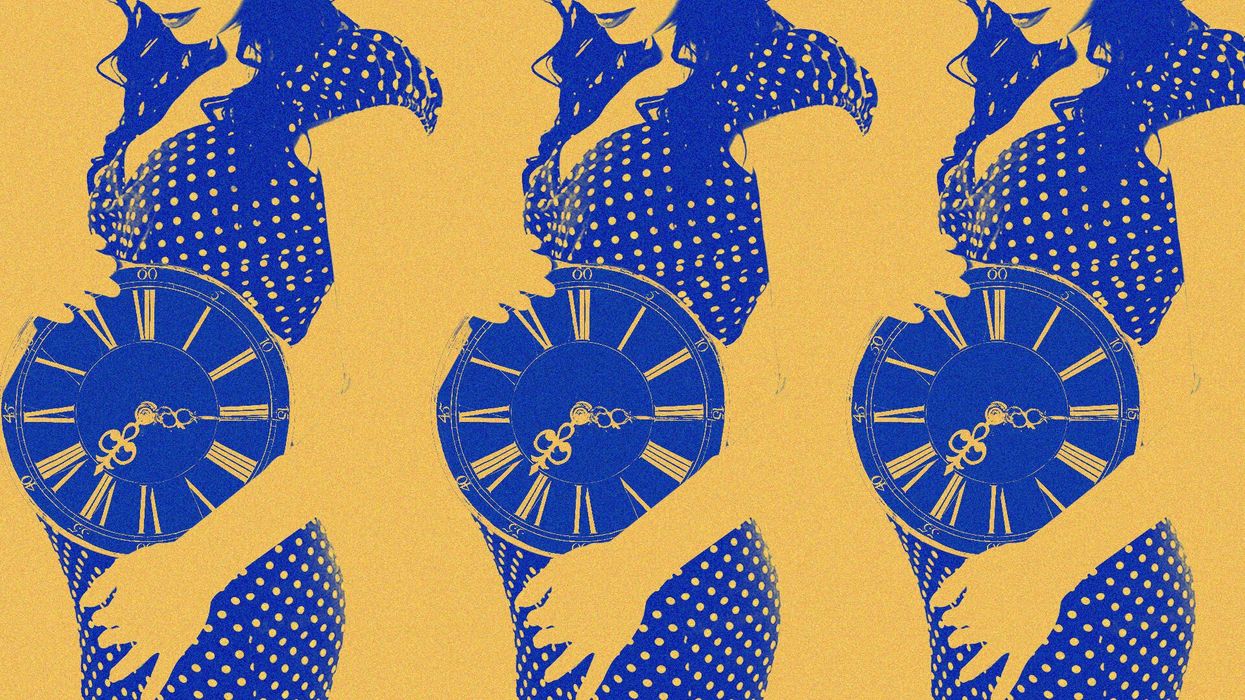
Four months ago, while laying under a beach umbrella on vacation with my best friend in Mexico, a complete stranger walked up to us and asked if I was okay. I was reading a book called Regretting Motherhood, recommended by my friend Jordan, who is also child-free. A liter-sized bottle of what looked like tequila—it was sparkling water—sat beside my beach chair. I was two weeks past my initial egg-freezing consultation, and despite my wishy-washy stance on parenthood, I knew I was going to do it. I just wasn’t sure about the rest of it.
My partner and I have been together for more than three years and though I just turned 35, he’s just nearing 30 and we’re just not ready to decide on, let alone have, kids yet. Both of us come from Italian families with inquiring minds, so holidays and get-togethers often meant we’d be pressured to talk about our plans for reproduction. Friends, family, and strangers always told me, often with a hint of condescension, that I’d “just know” or it’d “just happen.” (It hasn’t.) We figured freezing my eggs wouldn’t just be an insurance plan for later, but it’d also take the pressure off us to plan our lives according to my biological clock—and it’d get my aunts off our back. I’d started looking into it again last year, two years after being told at an NYC clinic-that-shall-not-be-named told me that at 32, I was almost too old.
Like a lot of women, I told myself that because I’d been on the pill for 20 years and because I messed it up so many times and still never been pregnant that I must not be fertile. I actually put off my consultation for so long because I could “come to terms” with my inability to have kids, a fact that I completely fabricated and had conflicting feelings about. At the same time, I’d spent years trying to sort out my views on motherhood, as well as how they mingled with my complicated relationship with my own mother: Did I only think I didn’t want kids because she may not have wanted them? Despite being a co-parent for my nephew, could I ever see myself as truly maternal? It’s a crazy feeling to not know if you want to have kids, but to know fiercely that you want to have the option. Apparently, hoards of women had the same thought—or so I’d find out when I shared my first transvaginal scan on Instagram. We decided to move forward with freezing only my eggs rather than embryos, even though we knew that meant accepting a success rate of about 50 percent rather than 70 percent. I’d later find out from one of my nurses—as well as at least a handful of people in my DMs—that it was mostly single women that went that route.
.
.
.
Click the link below for the article:
.
__________________________________________
January 19, 2024
Mohenjo
Business, Human Interest, Political, Science, Technical
amazon, business, Business News, current-events, Future, Hotels, human-rights, medicine, mental-health, research, Science, Science News, technology, Technology News, travel, vacation

Click the link below the picture
.
Roasting Roasting a chicken, like cooking a steak, is one of those culinary tasks that inspires strong feelings: Everyone’s always trying to iterate to find the “better” technique, despite the existing classics. While I could likely spend a year testing roast chicken recipes (after which I’d certainly never want to eat another roast chicken), I wanted to compare some popular ones that use diverging techniques. How I wanted to know, does a chicken cooked at a relatively low heat compare with one that starts in a very hot oven? Does a wet brine work, and is it worth it? Surely butter makes everything better, right?
To answer these questions, I embarked on what I dubbed Chickenpalooza, a few chicken-packed weeks I spent testing some of the internet’s most beloved roast chicken methods. Spoiler: I liked them all, but I definitely emerged from the experiment with a standout, surprising technique that I’ll be returning to often, whether for my next dinner party or simply a weeknight meal.
Marcella Hazan’s Roast Chicken With Lemons, Food and Wine
Like Marcella Hazan’s legendary tomato sauce, her recipe for roast chicken — which I had to make, given how many people call it their gold standard — is startlingly simple. It calls for no butter, no oil; just salt, pepper, and two lemons. Hazan explains the latter’s preparation meticulously: “Puncture the lemons in at least 20 places each, using a sturdy round toothpick, a trussing needle, a sharp-pointed fork, or similar implement.”
More technique- than ingredient-focused, this roasting method is “self-basting,” as Hazan describes it. While today that can denote birds that have been “injected or marinated with solution,” what it means in this recipe is that the chicken bakes in its own juices while being infused by the lemons inside its cavity. If the skin is unbroken, Hazan writes that the chicken can “puff up” as it cooks, which seems to be mostly an aesthetic perk. Though I didn’t experience this effect, possibly due to shoddy prep, it ultimately didn’t matter for the eating experience.
.
:format(webp)/cdn.vox-cdn.com/uploads/chorus_image/image/73065213/L_Palmberg_Eater_At_Home_008.0.jpg) Eater at Home
Eater at Home
.
.
Click the link below for article:
.
__________________________________________
January 18, 2024
Mohenjo
Business, Food For Thought, Human Interest, Political, Science, Technical
amazon, business, Business News, current-events, Future, Hotels, human-rights, medicine, mental-health, research, Science, Science News, technology, Technology News, travel, vacation

Click the link below the picture
.
In July of 1838, Charles Darwin was twenty-nine years old and single. Two years earlier, he had returned from his voyage aboard H.M.S. Beagle with the observations that would eventually form the basis of “On the Origin of Species.” In the meantime, he faced a more pressing analytical problem. Darwin was considering proposing to his cousin Emma Wedgwood, but he worried that marriage and children might impede his scientific career. To figure out what to do, he made two lists. “Loss of time,” he wrote on the first. “Perhaps quarreling. . . . Cannot read in the evenings. . . . Anxiety and responsibility. Perhaps my wife won’t like London; then the sentence is banishment and degradation into indolent, idle fool.” On the second, he wrote, “Children (if it Please God). Constant companion (and friend in old age). . . . Home, & someone to take care of house.” He noted that it was “intolerable to think of spending one’s whole life, like a neuter bee, working, working. . . . Only picture to yourself a nice soft wife on a sofa with good fire and books and music, perhaps.”
Beneath his lists, Darwin scrawled, “Marry, Marry, Marry QED.” And yet, Steven Johnson writes, in “Farsighted: How We Make the Decisions That Matter the Most,” “we have no evidence of how he actually weighed these competing arguments against each other.” Johnson, the author of “How We Got to Now” and other popular works of intellectual history, can’t help but notice the mediocrity of Darwin’s decision-making process. He points out that Benjamin Franklin used a more advanced pro-and-con technique: in what Franklin called “Prudential Algebra,” a numerical weight is assigned to each listed item, and counterbalancing items are then eliminated. (“If I find a Reason pro equal to some two Reasons con, I strike out the three . . . And thus proceeding I find at length where the Ballance lies,” Franklin explained to a friend.) Even this approach, Johnson writes, is slapdash and dependent upon intuition. “The craft of making farsighted choices—decisions that require long periods of deliberation, decisions whose consequences might last for years,” he concludes, “is a strangely under-appreciated skill.”
We say that we “decide” to get married, to have children, to live in particular cities, or embark on particular careers, and in a sense this is true. But how do we actually make those choices? One of the paradoxes of life is that our big decisions are often less calculated than our small ones are. We agonize over what to stream on Netflix, then let TV shows persuade us to move to New York; buying a new laptop may involve weeks of Internet research, but the deliberations behind a life-changing breakup could consist of a few bottles of wine. We’re hardly more advanced than the ancient Persians, who, Herodotus says, made big decisions by discussing them twice: once while drunk, once while sober.
Johnson hopes to reform us. He examines a number of complex decisions with far-reaching consequences—such as the choice, made by President Barack Obama and his advisers, to green-light the raid on Osama bin Laden’s presumed compound, in Abbottabad, Pakistan—and then shows how the people in charge drew upon insights from “decision science,” a research field at the intersection of behavioral economics, psychology, and management. He thinks that we should apply such techniques to our own lives.
.

.
.
Click the link below for the article:
.
__________________________________________
January 18, 2024
Mohenjo
Business, Food For Thought, Human Interest, Political, Science, Technical
amazon, business, Business News, current-events, Future, Hotels, human-rights, medicine, mental-health, research, Science, Science News, technology, Technology News, travel, vacation

Click the link below the picture
.
Giving kids pocket money can be a really challenging decision for families. It raises questions about when to start it, how much to give and whether it should be tied to chores.
As a finance researcher and parent, it’s also important to view pocket money as an educational opportunity. You can use it to teach children how to make informed financial decisions, set meaningful goals and develop responsible spending habits.
Here’s how you can approach it.
When should you start?
There is no one “right age” but you could reasonably consider pocket money when children start school and begin learning to add and subtract.
This means your child will be old enough to start grasping concepts like saving and spending.
As your child grows, you can move on from basic arithmetic and tailor your discussions to what your child is learning in maths.
How much should it be?
How much you give will depend on your family situation and finances.
A useful starting point is working out what the pocket money will be used for. Is it simply to give your child a bit of autonomy over spending (for example, buying an ice block from the canteen)?. Is it to try to save for something special? Or is it to be used for all entertainment, clothes and on-trend desires like fancy water bottles?
A long-held rule of thumb is giving $1 per week relating to your child’s age (so $5 for a five-year-old). But of course, amounts tying pocket money to a child’s raw age may not work with today’s economic conditions. Three years ago, $10 bought a lot more than it does today.
Of course, you will also need to consider pocket money within the context of your wider household budget. Down the track, there’s nothing wrong with talking to your child about adjusting their pocket money if your household budget needs changing.
.
 Pocket money can teach your child how to spend and how to save. Annie Spratt/Unsplash, CC BY
.
.
Click the link below for the article:
.
__________________________________________
January 17, 2024
Mohenjo
Business, Food For Thought, Human Interest, Political, Science, Technical
amazon, business, Business News, current-events, Future, Hotels, human-rights, medicine, mental-health, research, Science, Science News, technology, Technology News, travel, vacation

Click the link below the picture
.
Ask a woman of reproductive age when her fertility becomes an issue, and she will likely answer: 35. As an OB-GYN in private practice, I see patients who are, for the most part, either pregnant or in some orbit thereof—trying to get pregnant, having trouble getting pregnant, actively trying to prevent pregnancy—and they seem to think there is a threshold midway through one’s 30s that matters very, very much. This may partially result from the fact that women on average are having their first child later in life, so they’re more aware of fertility declining with age. And now, thanks to COVID-19, single and partnered women alike are grappling with delay and uncertainty about whatever timelines they previously held.
Being 35 or older is labeled by the medical community as “advanced maternal age.” In diagnosis code speak, these patients are “elderly,” or in some parts of the world, “geriatric.” In addition to being offensive to most, these terms—so jarringly at odds with what is otherwise considered a young age—instill a sense that one’s reproductive identity is predominantly negative as soon as one reaches age 35. But the number 35 itself, not to mention the conclusions we draw from it, has spun out of our collective control.
Where exactly did the focus on 35 come from? The number was derived decades ago, during a very different reproductive era. Birth control options were limited. Most first pregnancies occurred in women’s 20s. In vitro fertilization was in its infancy.
Most people assume we use age 35 because studies show that things get worse for women at that point. Indeed, early population studies do demonstrate that certain risks, namely the risks of infertility, miscarriage, and chromosomal abnormalities, increase more significantly at age 35. (To be clear, these risks are age-dependent and increase steadily with age generally, but at some point their rate of increase increases, and that inflection point has been pinpointed by some studies at age 35.)
But using age 35 in this way is not as clear cut as it seems. One problem is that it’s an incredibly subjective way of defining what should be objective. The age-related risks of these issues are derived from several large studies, and to look at the tables or graphs of the reported risks is a bit like being administered a Rorschach test: Some will see worrisome numbers starting at age 35, some at 40, some maybe even at younger ages. Moreover, comparing these studies is complicated by their design. For example, when looking at studies regarding Down syndrome risk, some report risk as a function of all live births, while others report it based on amniocentesis results; the amnio risk will appear higher, since some subset of the abnormal pregnancies will miscarry or be electively terminated before the end of the pregnancy could be reached. Put more simply, if you were to ask a dozen professionals to interpret the data and pick one age cutoff whereby to distinguish low-risk from high-risk women, you may very well get a dozen different answers.
.
 Photo illustration by Slate. Photos by Getty Images Plus.
.
.
Click the link below for the article:
.
__________________________________________
January 17, 2024
Mohenjo
Business, Food For Thought, Human Interest, Political, Science, Technical
amazon, business, Business News, current-events, Future, Hotels, human-rights, medicine, mental-health, research, Science, Science News, technology, Technology News, travel, vacation

Click the link below the picture
.
You probably know a lot of sick people right now. Most parts of the U.S. are getting pummeled by respiratory illness, with 7% of all outpatient healthcare visits recorded during the week ending Dec. 30 related to these sicknesses, according to the U.S. Centers for Disease Control and Prevention (CDC).
Many people are sick with flu, while others have RSV or other routine winter viruses. But COVID-19 is also tearing through the population, thanks largely to the highly contagious JN.1 variant. Just like every year since 2021, this one is starting with a COVID-19 surge—and Americans are getting a good glimpse of what their “new normal” may look like, says Katelyn Jetelina, the epidemiologist who writes the Your Local Epidemiologist newsletter.
“Unfortunately,” she says, “signs are pointing to this [being] the level of disruption and disease we’re going to be faced with in years to come.”
The CDC no longer tracks COVID-19 case counts, which makes it harder than it once was to say exactly how widely the virus is spreading. Monitoring the amount of virus detected in wastewater, while not a perfect proxy for case counts, is probably the best real-time signal currently available—and right now, that signal is a screaming red siren. According to some analyses, wastewater data suggest the current surge is second in size only to the monstrous first wave of Omicron, which peaked in early 2022. By some estimates, more than a million people in the U.S. may be newly infected every single day at the peak of this wave.
Wastewater isn’t the only sign that things are bad. Almost 35,000 people in the U.S. were hospitalized with COVID-19 during the week ending Dec. 30—far fewer than were admitted at the height of the first Omicron wave, but a 20% increase over the prior week in 2023. Deaths tend to lag a few weeks behind hospitalizations, but already, about 1,000 people in the U.S. are dying each week from COVID-19.
.
 An Elmurst Hospital worker in New York City on Jan. 4, 2024. Anthony Behar/Sipa USA—AP Images
.
.
Click the link below for the article:
.
__________________________________________
January 16, 2024
Mohenjo
Business, Food For Thought, Human Interest, Political, Science, Technical
amazon, business, Business News, current-events, Future, Hotels, human-rights, medicine, mental-health, research, Science, Science News, technology, Technology News, travel, vacation

Click the link below the picture
.
A surprise, coordinated assault on Israel by Palestinian militant group Hamas — one of the deadliest and most brazen attacks in years — and the Israeli siege and strikes on Gaza that followed, brought renewed attention to an old and continuing problem: the Israeli-Palestinian conflict that has vexed the Middle East for decades.
The roots of the conflict and mistrust are deep and complex, predating the establishment of the state of Israel in 1948. Both Palestinians and Israelis see the territory between the Jordan River and the Mediterranean Sea as their own, and Christians, Jews, and Muslims all hold parts of the land as sacred. The past seven decades have brought war, uprisings and, at times, glimmers of hope for compromise. Here is a timeline beginning around 1948, including the latest violence in the Gaza Strip:
World War I: The question of Palestine
Return to menu
The Ottoman Empire had controlled that part of the Middle East from the early 16th century until control of most of the region was granted to the British after World War I.
Both Israelis and Palestinians were struggling for self-determination and sovereignty over the territory, developing respective movements for their causes.
As World War I began, several controversial diplomatic efforts — some contradicting each other — by the Great Powers tried to shape the map of the modern Middle East, including the Palestinian territories. Palestinians cite a series of letters in 1915 to 1916 between Mecca’s emir and the British high commissioner in Egypt, known as the McMahon-Hussein Correspondence, as outlining a promise of an independent Arab state.
In 1916, the Sykes-Picot Agreement secretly negotiated between Britain and France planned to carve up the Middle East into spheres of influence, and determined that the land in question was to be internationalized.
.
 Palestinians celebrate near a destroyed Israeli tank at the fence separating Israel from the Gaza Strip east of Khan Younis on Oct. 7.
.
.
Click the link below for the article:
.
__________________________________________
January 16, 2024
Mohenjo
Business, Food For Thought, Human Interest, Political, Science, Technical
amazon, business, Business News, current-events, Future, Hotels, human-rights, medicine, mental-health, research, Science, Science News, technology, Technology News, travel, vacation
Click the link below the picture
.
Brutally cold temperatures and dangerous wind chills stayed put across much of the U.S. Monday, promising the coldest temperatures ever for Iowa’s presidential nominating contest, holding up travelers, and testing the mettle of NFL fans in Buffalo for a playoff game that was delayed a day by wind-whipped snow.
About 150 million Americans were under a windchill warning or advisory for dangerous cold and wind, said Zack Taylor, a meteorologist with the National Weather Service in College Park, Maryland, as an Arctic air mass spilled south and eastward across the U.S.
Sunday morning saw temperatures as low as minus 20 degrees Fahrenheit (minus 6.7 degrees Celsius) to minus 40 F (minus 40 c) in northern and northeast Montana. Saco, Montana, dropped to minus 51 F (minus 26 C). Subzero lows reached as far south as Kansas, Missouri, Illinois and parts of Indiana, Taylor said.
About 114,000 U.S. homes and businesses were without power late Monday, the bulk of them in Oregon after widespread outages that started Saturday. Portland General Electric warned that strong winds forecast for Monday and threat of an ice storm Tuesday could delay restoration efforts.
Classes were canceled Tuesday for students in major cities including Chicago — the nation’s fourth-largest public school district — Denver, Dallas, and Fort Worth.
The storm was blamed for at least four-weekend deaths around Portland, including two people who died of suspected hypothermia. Another man was killed after a tree fell on his house, and a woman died in a fire that spread from an open-flame stove after a tree fell onto an RV.
Three deaths of homeless people were under investigation in the Milwaukee area. They likely died from hypothermia, officials said. A 64-year-old man was found dead under a bridge Friday, a 69-year-man was pronounced dead after being found in a vehicle on Saturday, and on Monday a 40-year-old man was found dead near railroad tracks, the Milwaukee County Medical Examiner’s Office said.
In Utah, where almost four feet (1.2 meters) of snow fell in the mountains over a 24-hour period, a snowmobiler was struck and killed Sunday night by a semitrailer about 70 miles (113 kilometers) southeast of Salt Lake City, according to the Utah Highway Patrol. The victim was attempting to cross U.S. Highway 40.
.
 .
.
.
Click the link below for the article:
.
__________________________________________
Older Entries
Newer Entries

