January 25, 2024
Mohenjo
Business, Food For Thought, Human Interest, Political, Science, Technical
amazon, business, Business News, current-events, Future, Hotels, human-rights, medicine, mental-health, research, Science, Science News, technology, Technology News, travel, vacation

Click the link below the picture
.
How long does it take a recruiter to decide if you’re right for a job? It’s actually around seven seconds, according to eye-tracking research. To put that into perspective, close your eyes and take two deep breaths. That’s the time, on average, hiring managers spend skimming your resume, sizing up your history, hopes, and dreams before either tossing it into the trash or moving you to the next round of the application process.
For those of us just entering the workforce or looking to make a career transition, one thing is clear: We need to find ways to stand out — and fast. While there is a plethora of guidance on the Internet surrounding how to be a “great” candidate, it can be contradictory or confusing depending on where and when you look.
I’ve spent the past few weeks catching up with recruitment experts who specialize in remote work, as well as diversity, equity, and inclusion (DEI), in attempt to decode the most up-to-date advice when it comes to applying for a new job — especially during this pandemic. I’ve asked them to weigh in on everything from how resumes are screened to how candidates can make connections that might help them land an actual interview.
Here is what I’ve learned:
Outsmart the Robots
According to Sulaiman Rahman, CEO of DiverseForce, recruiters may not be the only ones you need to impress. “Organizations are increasingly using automation to screen resumes, so it’s important for job seekers to use keywords that are also found in the actual job description,” he told me. In short, more and more artificial intelligence (AI) tools are being used to match the language in your resume to the language in the job posting.
.
 Antony Nagelmann/Getty Images
.
.
Click the link below for the article:
.
__________________________________________
January 25, 2024
Mohenjo
Business, Food For Thought, Human Interest, Political, Science, Technical
amazon, business, Business News, current-events, Future, Hotels, human-rights, medicine, mental-health, research, Science, Science News, technology, Technology News, travel, vacation

Click the link below the picture
.
It’s fair to say math is not everyone’s favorite subject. In fact, for many people, the feelings of tension and anxiety that arise when trying to solve a mathematical problem can be all-consuming. This is known as math anxiety — and this feeling of being a failure at math can affect people’s self-worth for years to come.
For those who suffer from math anxiety, it can be difficult to shift from a mindset of failure to a more positive outlook when it comes to dealing with numbers. This is why, for many people, math anxiety can become a lifelong issue.
But research shows that if teachers tackle math anxiety in the classroom and encourage children to try to approach a problem in a different way — by shifting their mindset — this can be an empowering experience. This is especially the case for pupils from a disadvantaged background.
Mindset Theory
US psychology professor, Carol Dweck, came up with the idea of “mindset theory.” Dweck realized that people can often be categorized into two groups, those who believe they are bad at something and cannot change, and those who believe their abilities can grow and improve.
This formed the basis of her mindset theory, which states that some people have a “fixed mindset,” meaning they believe their ability to be set in stone and unable to be improved. Other people have a “growth mindset,” meaning they believe their ability can change and improve over time with effort and practice.
 Math hack
.
.
Click the link below for the article:
.
__________________________________________
January 24, 2024
Mohenjo
Business, Food For Thought, Human Interest, Political, Science, Technical
amazon, business, Business News, current-events, Future, Hotels, human-rights, medicine, mental-health, research, Science, Science News, technology, Technology News, travel, vacation

Click the link below the picture
.
It’s not too late to make New Year’s resolutions. That’s because January is not over yet, but also because anything can be a temporal milestone if you want it to be. Some of the hype around such resolutions comes from what behavioral researchers call “the fresh start effect,” or the fact that people are more likely to change their behavior when a new time period begins. That juncture doesn’t necessarily have to be the start of a year, however.
Whether you want to set goals for a new year, month or week, there are evidence-backed ways to do so. Although research on New Year’s resolutions in particular is rather scarce, there is a branch of science that has been working to identify how to design goals that work for those who pursue them.
Starting in the 1960s, psychologists Edwin Locke and Gary Latham worked to develop a goal-setting theory based on scientific studies that were mostly performed in work settings. After looking at a bunch of papers, the pair realized that people with specific and challenging goals perform better. In 1990 Locke and Latham came up with five principles that successful goals should have: they should be clear; they should be challenging; they should not be too complex (and should be broken into smaller tasks if needed); people should be committed to them; and people should receive regular feedback on how they are being accomplished.
This research was initially done in a work setting, but these principles can be used for any type of goal, Latham says. Although it might be hard to get regular feedback on your New Year’s resolutions, you can still create a system to measure your progress or talk to a friend or family member to keep yourself accountable. You can also break big personal goals into simpler tasks, such as aiming to read one book per month instead of 12 in the whole year.
.
 Credit: Tom Grill/Getty Images
.
.
Click the link below for the article:
.
__________________________________________
January 24, 2024
Mohenjo
Business, Food For Thought, Human Interest, Political, Science, Technical
amazon, business, Business News, current-events, Future, Hotels, human-rights, medicine, mental-health, research, Science, Science News, technology, Technology News, travel, vacation

Click the link below the picture
.
With each passing year, the climate crisis comes into ever sharper focus. And no matter how small they may seem in the face of the herculean challenges we as a society face, our individual choices do matter. In that spirit, one pillar to consider is your beauty routine. More specifically, what you buy, how often you buy it, and whether it ends up in a landfill at the end of your use. This is because the beauty industry is among the world’s largest polluters. According to Euromonitor International, 152.1 billion units of beauty and personal-care packaging were sold globally in 2018 alone, much of which will never be recycled.
“I am grateful that sustainability has become a major focus for consumer products recently,” says Mia Davis, vice president of sustainability and impact at Credo Beauty. “Sustainability in beauty means that the work we do now–the resources we extract, the stuff we make–will not compromise people’s ability to do the same in the future.”
While change can be daunting, rest assured that being an environmentally conscious consumer and being passionate about your beauty routine aren’t mutually exclusive. “As someone who has always loved beauty, I didn’t want to give that up as I started to transition to a more sustainable lifestyle,” explains sustainability expert and low-waste living content creator Jhánneu. “Many people think they have to give up their lifestyles to be sustainable, but it really comes down to just finding better alternatives.” As a former self-proclaimed Sephora junkie, Ashlee Piper, an eco-lifestyle expert and author of Give a Sh*t: Do Good. Live Better. Save the Planet, knows firsthand it can–and needs–to be done.
“While I love a good haul and discovering new, niche beauty companies [to support], when it comes to creating excess that’s detrimental for the planet and our wallets, beauty and grooming items are right up there,” explains Piper, citing that as of 2018, the beauty and personal care industry has created almost 8 billion rigid plastic packaging units per year in the U.S. alone. “I began evangelizing about paring down and being more mindful about our beauty-product consumption because it’s the unsung area of personal sustainability.”
.

.
.
Click the link below for the article:
.
__________________________________________
January 23, 2024
Mohenjo
Business, Food For Thought, Human Interest, Political, Science, Technical
amazon, business, Business News, current-events, Future, Hotels, human-rights, medicine, mental-health, research, Science, Science News, technology, Technology News, travel, vacation

Click the link below the picture
.
If you’ve been stressed out and ignoring it—isn’t everyone stressed right now?— it could be time to do something about it. That’s because even though you may be basically healthy, tension is doing its stealthy damage. The latest evidence? Researchers have just linked high levels of the stress hormone cortisol to brain shrinkage and impaired memory in healthy middle-aged adults. And get this: The effect was more pronounced in women than in men.
This new research underscores an important point. Though stress affects your whole body, ground zero is your brain. It’s not just the effects of cortisol—it’s that teeth-grinders like traffic jams, personal snubs, and financial worries are perceived and interpreted by your gray matter. Fortunately, research focused on the brain is pointing to new, more effective ways to reduce your tension.
But first, let’s drill down and see how and why your brain’s natural reactions make you more vulnerable to the zings and arrows of tension.
How stress affects your brain
Aspects of the brain’s design that served us well thousands of years ago now make us susceptible to negative emotions and mental fatigue, both of which ratchet up our stress, says Amit Sood, M.D., professor of medicine at the Mayo Clinic and founder of the Mayo Clinic Resilience Program. Although our brains have evolved over time, “the speed of life today is the main stressor—it’s much faster than our brain’s ability to adapt,” he says. And that means we often end up with too little time and too few resources to address what life throws at us each day, which adds to a diminishing sense of control over our lives. Perceived lack of control has been shown to be a huge source of stress.
In his book Mindfulness Redesigned for the Twenty-First Century, Dr. Sood describes a number of traps that frequently ensnare our brains. Three of the most challenging:
.
 Mitch Blunt
.
.
Click the link below for the article:
.
__________________________________________
January 23, 2024
Mohenjo
Business, Food For Thought, Human Interest, Political, Science, Technical
amazon, business, Business News, current-events, Future, Hotels, human-rights, medicine, mental-health, research, Science, Science News, technology, Technology News, travel, vacation

Click the link below the picture
.
Once, in another life, I was a tech founder. It was the late nineties, when the Web was young, and everyone was trying to cash in on the dot-com boom. In college, two of my dorm mates and I discovered that we’d each started an Internet company in high school, and we merged them to form a single, teen-age megacorp. For around six hundred dollars a month, we rented office space in the basement of a building in town. We made Websites and software for an early dating service, an insurance-claims-processing firm, and an online store where customers could “bargain” with a cartoon avatar for overstock goods. I lived large, spending the money I made on tuition, food, and a stereo.
In 1999—our sophomore year—we hit it big. A company that wired mid-tier office buildings with high-speed Internet hired us to build a collaborative work environment for its customers: Slack, avant la lettre. It was a huge project, entrusted to a few college students through some combination of recklessness and charity. We were terrified that we’d taken on work we couldn’t handle, but also felt that we were on track to create something innovative. We blew through deadlines and budgets until the C-suite demanded a demo, which we built. Newly confident, we hired our friends, and used our corporate AmEx to expense a “business dinner” at Nobu. Unlike other kids, who were what—socializing?—I had a business card that said “Creative Director.” After midnight, in our darkened office, I nestled my Aeron chair into my IKEA desk, queued up Nine Inch Nails in Winamp, scrolled code, peeped pixels, and entered the matrix. After my client work was done, I’d write short stories for my creative-writing workshops. Often, I slept on the office futon, waking to plunder the vending machine next to the loading dock, where a homeless man lived with his cart.
I liked this entrepreneurial existence—its ambition, its scrappy, near-future velocity. I thought I might move to San Francisco and work in tech. I saw a path, an opening into life. But, as the dot-com bubble burst, our client’s business was acquired by a firm that was acquired by another firm that didn’t want what we’d made. Our invoices went unpaid. It was senior year—a fork in the road. We closed our business and moved out of the office. A few days before graduation, when I went to pay my tuition bill, a girl on the elevator struck up a conversation, then got off at her floor; on my ride down, she stepped on for a second time, and our conversation continued. We started dating, then went to graduate school in English together. We got married, I became a journalist, and we had a son. I now have a life, a world, a story. I’m me, not him—whoever he might have turned out to be.
“The thought that I might have become someone else is so bland that dwelling on it sometimes seems fatuous,” the literary scholar Andrew H. Miller writes, in “On Not Being Someone Else: Tales of Our Unled Lives” (Harvard). Still, phrased the right way, the thought has an insistent, uncanny magnetism. Miller’s book is, among other things, a compendium of expressions of wonder over what might have been. Miller quotes Clifford Geertz, who, in “The Interpretation of Cultures,” wrote that “one of the most significant facts about us may finally be that we all begin with the natural equipment to live a thousand kinds of life but end in the end having lived only one.” He cites the critic William Empson: “There is more in the child than any man has been able to keep.” We have unlived lives for all sorts of reasons: because we make choices; because society constrains us; because events force our hand; most of all, because we are singular individuals, becoming more so with time. “While growth realizes, it narrows,” Miller writes. “Plural possibilities simmer down.” This is painful, but it’s an odd kind of pain—hypothetical, paradoxical. Even as we regret who we haven’t become, we value who we are. We seem to find meaning in what’s never happened. Our self-portraits use a lot of negative space.
.

.
.
Click the link below for the article:
.
__________________________________________
January 22, 2024
Mohenjo
Business, Food For Thought, Human Interest, Political, Science, Technical
amazon, business, Business News, current-events, Future, Hotels, human-rights, medicine, mental-health, research, Science, Science News, technology, Technology News, travel, vacation
Click the link below the picture
.
Workplace flexibility ranks as the most important element to workers today, second to salary, according to global nonprofit The Conference Board. Hybrid work schedules, where individuals split time working from home and from the office, help put work in its rightful place. Such flexible working schedules allow people to prioritize personal goals like physical activity and spend more time with their family. This is significant given that Pew Research Center finds 73% of U.S. adults say family time is one of the most important things in their life.
Beyond the personal benefits, workplace flexibility is also good for workplace diversity. Women and younger generations are more likely to seek flexible work, making it an attractive offering for employers seeking to recruit a diverse workforce and improve workplace equity and well-being.
Yet, amidst the uptick in return-to-office mandates, hybrid work schedules can be an emotional and complex topic. According to Stanford research, hybrid working does not typically affect worker productivity, but some managers simply don’t feel their employees are as productive when working from home. These types of concerns, and not knowing their employer’s stance on hybrid work, can make it awkward for employees to broach the topic of pivoting to a flexible work schedule.
Consider the following scenario:
Allison, a valued part of the leadership team at a large financial organization, recently hit her 3-year tenure. She recognized the company’s broader commitment to well-being but felt like she had previously hit roadblocks when speaking up about efficiency and productivity. Allison wanted to shift to a hybrid schedule but her day-to-day work and life responsibilities left her with little time and space to prepare her best case for a more flexible work schedule. Then, one day, in a one-on-one meeting, her manager told her that she’d love to see her practice diverse thinking, using logic and evidence to challenge thought processes creatively. This got Allison thinking…
.
 HBR Staff/Karl Hendon/Westend61/Getty Images
.
.
Click the link below for the article:
.
__________________________________________
January 22, 2024
Mohenjo
Business, Food For Thought, Human Interest, Political, Science, Technical
amazon, business, Business News, current-events, Future, Hotels, human-rights, medicine, mental-health, research, Science, Science News, technology, Technology News, travel, vacation

Click the link below the picture
.
The advent of the birth-control pill around 1960 liberated sex from reproduction and, in doing so, helped spark a sexual revolution. And it was no less a revolution when science learned to do the opposite: liberate childbearing from intercourse through the use of assisted reproductive technology.
This second upheaval has had especially profound consequences for queer couples like me and my wife, Sarah, who can now birth children without heterosexual sex. This outcome feels like a miracle, but the process also involves some sacrifices — for instance, forfeiting the luxury of making babies in the privacy of our own home and embracing the absurdities that can come with becoming pregnant, industrial-style.
First, we needed sperm. While my wife and I tried to work up the courage to ask our close college friend to donate, he made it easy for us — knowing we wanted to be parents, he emailed us offering up his “genetic material.” We joyfully accepted.
Then the real ordeal began.
After some failed D.I.Y. attempts at home using a drugstore syringe, we decided to bring in the professionals. Now our conception journey involved doctors, nurses, lawyers, psychologists and a surprising amount of red tape. There was a six-month quarantine period after our good-sport donor gave additional samples through a sperm bank, in order to protect me from any sexually transmitted infections he might harbor. (Never mind that I would have gotten these already from our D.I.Y. at-home attempts. We weren’t allowed to waive the quarantine.) Nearly every time I showed up at the clinic for a procedure, I had to take (and pay for) a new pregnancy test — “just in case!” the nurses would say. In case of … immaculate conception?
.
 Ka Young Lee
.
.
Click the link below for the article:
.
__________________________________________
January 21, 2024
Mohenjo
Business, Food For Thought, Human Interest, Political, Science, Technical
amazon, business, Business News, current-events, Future, Hotels, human-rights, medicine, mental-health, research, Science, Science News, technology, Technology News, travel, vacation
Click the link below the picture
.
Allison Severance cradled an apple in her hand. It looked like a deflated balloon — soft, brown, and leaking. This can’t be what passes for groceries, she thought. Not on my watch.
She was standing in a Dollar General store a few miles from Cascade, Maryland, where she and a dozen other residents are suing a developer to stop a Dollar General from going up.
“The apples were rotten, the zucchini was rotten, the spinach was slimy,” says Severance, who works as a potter and a ceramics teacher out of a 19th-century barn on her property. “It was horrible.”
Cascade, a village of 840 people, has three dollar stores within five miles of town. When Severance heard her next-door neighbor was selling his land to put up another one she made yard signs for other Cascadians to plant on their lawns. She walked up and down the highway waving an enormous banner that read “Say no to Dollar General.”
Along with a dozen others, she hired a lawyer to fight the developer in court. The village quickly racked up thousands in legal fees; Severance held ceramics fundraisers, donating all of the proceeds to pay for the legal bills.
.
 Katherine Laidlaw January 12, 2024
.
.
Click the link below for the article:
.
__________________________________________
January 21, 2024
Mohenjo
Business, Food For Thought, Human Interest, Political, Science, Technical
amazon, business, Business News, current-events, Future, Hotels, human-rights, medicine, mental-health, research, Science, Science News, technology, Technology News, travel, vacation

Click the link below the picture
.
Bob Morris’s father fell in love at the end of his life with a woman who knew her limits.
.
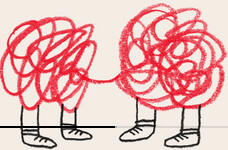 The Marriage Proposal That Wasn’t
.
.
Click the link below for the audio and transcript {click the faded word transcript to start}:
.
__________________________________________
Older Entries
Newer Entries

