June 30, 2013
Mohenjo
Science
3 Super Earths, Alien Life, Alien Planets, amazon, Astronomy, business, Environment, european southern observatory, Exoplanets, Gliese 667Cd, Habitable Planets, Habitable Zone, huffingtonpost, life scientists, Paranormal, Planets, research, rocky planets, Science, Science News, Search for E.T., Slideshow, Space, star gliese, Super Earths, technology, Technology News, three suns, Three Super Earths, travel, vacation, Video
FROM

Click link below picture
.
The habitable zone of a nearby star is filled to the brim with planets that could support alien life, scientists announced today (June 25).
An international team of scientists found a record-breaking three potentially habitable planets around the star Gliese 667C, a star 22 light-years from Earth that is orbited by at least six planets, and possibly as many as seven, researchers said. The three planet contenders for alien life are in the star’s “habitable zone” — the temperature region around the star where liquid water could exist. Gliese 667C is part of a three-star system, so the planets could see three suns in their daytime skies.
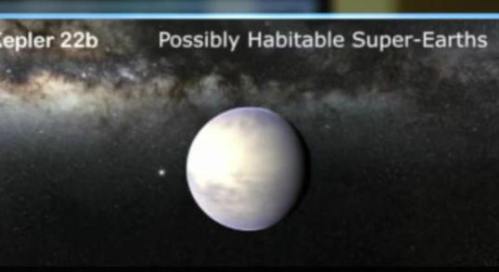
The three potentially rocky planets in Gliese 667C’s habitable zone are known as super-Earths — exoplanets that are less massive than Neptune but more massive than Earth. Their orbits make them possible candidates for hosting life, officials from the European Southern Observatory said in a statement.
.

.
.Click link below for story, video, photos, and slideshow:
http://www.huffingtonpost.com/2013/06/25/three-super-earths-star-gliese-667c-_n_3497371.html?ref=topbar
.
______________________________________________________
January 31, 2013
Mohenjo
Science
alien planet, Alien Planets, Astronomy, business, climate, Environment, Exoplanet Habitable Zone, Exoplanets, far distances, goldilocks, Goldilocks Zone, Habitable Zone, Habitable Zone Planets, huffingtonpost, Paranormal, parent star, penn state university, research, Science, Science News, technology, travel, vacation, Video
FROM
Click link below picture
.
One of the most important characteristics of an alien planet is whether or not it falls into what’s called the habitable zone — a Goldilocks-like range of not-too-close, not-too-far distances from the parent star that might allow the planet to host life.
Now scientists have redefined the boundaries of the habitable zone for alien planets, potentially kicking out some exoplanaets that were thought to fall within it, and maybe allowing a few that had been excluded to squeeze in.
“This will have a significant impact on the number of exoplanets that are within habitable zone,” said research team leader Ravi Kumar Kopparapu of Penn State University.
.

A new definition of the habitable zone around planets, denoting where liquid water
could exist, shifts Earth toward the very edge of the solar system’s own habitable zone.
.
.Click link below for story, slideshow, and video:
http://www.huffingtonpost.com/2013/01/30/habitable-zone-alien-planet-exoplanet-goldilocks_n_2580640.html?utm_hp_ref=science
.
__________________________________________________
December 22, 2012
Mohenjo
Science
Alien Planets, Astronomy, business, climate, cosmic scheme, Exoplanets, Extrasolar Planets, Future, habitable planet, Habitable Planets, Habitable Zone, huffingtonpost, maing, mass just 4.3 times that of Earth, minimum mass, myaol, Planetary Science, Planets, research, Science, Science News, Space, star Tau Ceti, Tau Ceti, technology, travel, vacation, Video
FROM
Click link below picture
.
A sun-like star in our solar system’s backyard may host five planets, including one perhaps capable of supporting life as we know it, a new study reports.
Astronomers have detected five possible alien planets circling the star Tau Ceti, which is less than 12 light-years from Earth — a mere stone’s throw in the cosmic scheme of things. One of the newfound worlds appears to orbit in Tau Ceti’s habitable zone, a range of distances from a star where liquid water can exist on a planet’s surface.
With a minimum mass just 4.3 times that of Earth, this potential planet would be the smallest yet found in the habitable zone of a sun-like star if it’s confirmed, researchers said.
.
.
.Click link below for story, video, and slideshow:
http://www.huffingtonpost.com/2012/12/19/tau-ceti-habitable-planet-star_n_2327915.html?ir=Science&icid=maing-grid7|myaol|dl3|sec1_lnk3%26pLid%3D247750
.
____________________________________________________
 James' World 2