September 12, 2015
Mohenjo
Science
amazon, anthropology, Archeology, business, Business News, Daily Discovery, evolution, fossil, Hotels, human-origins, human-rights, medicine, mental-health, research, Science, Science News, technology, Technology News, travel, Unearthed, vacation
FROM

Click link below picture
.
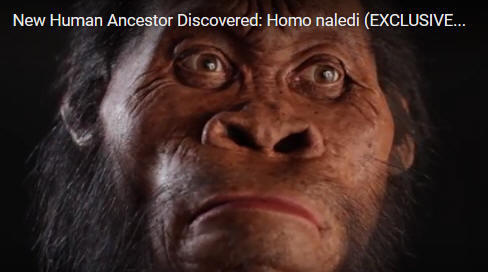
Fossils belonging to a previously unknown species of human relative have been discovered in a cave system northwest of Johannesburg, South Africa, an international team of scientists announced Thursday.
The discovery of Homo naledi is expected to shed new light on the human family tree, according to a written statement released by the National Geographic Society, the University of Witwatersrand, and the South African Department of Science and Technology.
What’s more, the fossils seem to indicate that H. naledi deposited the bodies of its dead in a remote part of the cave — a behavior previously believed to have been practiced only by humans. In all, an astonishing 1,550 fossils belonging H. naledi were found in the Rising Star cave system.
.
.
.
Click link below for story, video and photos:
http://www.huffingtonpost.com/entry/new-species-of-human-relative-discovered_55f09c1ce4b093be51bd679f
.
__________________________________________
April 19, 2015
Mohenjo
Science
amazon, Blackbeard, Blackbeard Medical Devices, Blackbeard Medical Supplies, Blackbeard Pirate Ship, business, Business News, Daily Discovery, Hotels, huffingtonpost, Huffpost Science Click, human-rights, Linda Carnes-McNaughton, medicine, mental-health, pirate Blackbeard, Pirate Ship, Queen Anne's Revenge, Queen Anne's Revenge Medical Devices, Queen Anne's Revenge Medical Supplies, Queen Anne's Revenge Project, Queen Anne's Revenge Ship, research, Science, Science News, Slideshow, technology, Technology News, travel, U.S. Department of Defense, vacation
FROM
Huffpost Science
Click link below picture
.
Ahoy! Archaeologists excavating pirate Blackbeard’s sunken ship, named Queen Anne’s Revenge, recently unearthed from the wreckage various medical devices–and some of them look pretty darn terrifying.
Among the grisly finds were a urethral syringe that would have been used to treat syphilis, two pumps, and a porringer that would have been used in bloodletting, Live Science reported.
“We just have to understand that these people were suffering,” Dr. Linda Carnes-McNaughton, an archaeologist with the U.S. Department of Defense who volunteered on the excavation, told CNN. “They were seeking relief for any kind of ailment, and certainly if there was warfare on the water, there were wounds among other ailments that needed treatment. It wasn’t always a formally trained person in desperate times. That’s probably more common than we know.”
.

A urethral syringe used to treat syphilis found aboard Blackbeard’s ship Queen Anne’s Revenge, which wrecked off the coast of North Carolina in 1718. | North Carolina Department of Cultural Resources
.
.
Click link below for story and slideshow:
http://www.huffingtonpost.com/2015/01/31/blackbeard-pirate-ship-medical-supplies_n_6582112.html?cps=gravity_1787_1892953707780659463
.
__________________________________________
March 4, 2015
Mohenjo
Science
amazon, Baby Woolly Rhino, business, Business News, Daily Discovery, Fossils, Hotels, Huffpost Science Click, human-rights, medicine, mental-health, Paleontology, permafrost, Prehistoric Rhino, Prehistoric Woolly Rhino, Prehistory, research, Rhino Sasha, Sakha Republic, Science, Science News, Siberia, technology, Technology News, travel, vacation, Video, Woolly Rhino, Woolly Rhino Sasha, Woolly Rhino Siberia
FROM
Huffpost Science
Click link below picture
.
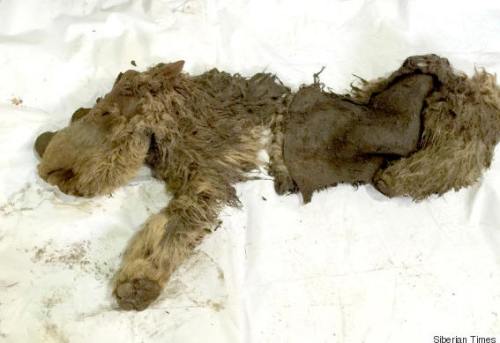
Scientists are going gaga over the recent discovery of a baby woolly rhino.
The pristine specimen of the tiny extinct rhino–the only one of its type ever found–was discovered in permafrost along the bank of a stream in Siberia’s Sakha Republic, The Siberian Times reported.
“At first we thought it was a reindeer’s carcass, but after it thawed and fell down we saw a horn on its upper jaw and realized it must be a rhino,” Alexander ‘Sasha’ Banderov, the hunter who made the discovery, told the Times. “The part of the carcass that stuck out of the ice was eaten by wild animals, but the rest of it was inside the permafrost and preserved well.”
.
 (Academy of Sciences Republic of Sakha/Siberian Times)
.
.
Click link below for story, video and slideshow:
http://www.huffingtonpost.com/2015/02/25/woolly-rhino-baby-siberia-photos_n_6752892.html?cps=gravity_2450_8475506239920379933
.
__________________________________________
November 7, 2014
Mohenjo
Science
Adocus Turtle, amazon, Ancient Turtle, business, Business News, Daily Discovery, Fossils, gray rocks, Hotels, huffingtonpost, human-rights, Jeff Dornbusch, medicine, mental-health, Microscopic Images, New Mexico, New Mexico Museum of Natural History, Prehistoric Turtle, Prehistory, research, Science, Science News, Slideshow, southern New Mexico desert, technology, Technology News, Tom Suazo, travel, Truth or Consequences, Turtle Fossil, Turtle Fossil New Mexico, vacation
Click link below picture
.
Jeff Dornbusch knew there was something odd about a pile of gray rocks he spotted more than a decade ago during a hike in the southern New Mexico desert, and a closer look confirms that he was right.
Dornbusch, a museum volunteer in Truth or Consequences, N.M., relocated those rocks in 2012 and notified local scientists, who identified the rocks as fragments of a 90-million-year-old turtle fossil, the Las Cruces Sun-News reported.
Since then, researchers have returned to the site where the rocks were found and excavated the rest of the turtle.
.
 Workers from the New Mexico Museum of Natural History (from left, Tom Suazo, fossil preparer; Amanda Cantrell, geosciences collections manager; Jake Sayler, volunteer; and Asher Lichtig, student researcher) excavating the 90-million-year-old turtle fossil on Oct. 29, 2014, about six miles east of Turtleback Mountain, a well-known peak near Truth or Consequences.
.
.
Click link below for story and slideshow:
.
__________________________________________
February 28, 2014
Mohenjo
Science
amazon, Biology Weird Science, business, Business News, chemistry, Chicken's Eye Matter, Daily Discovery, eye, Hotels, huffingtonpost, human-rights, Mathematics, medicine, mental-health, New Matter, New State of Matter, Physics, Princeton University, research, Science, Science News, Slideshow, state of matter, technology, Technology News, travel, vacation, Washington University in St. Louis
Click link below picture
.
Gaze deeply into the eye of a chicken, and what do you see? Some see terrifying stupidity. But researchers at Princeton University and Washington University in St. Louis say they see in the bird’s eye the first known biological occurrence of a strange state of matter known as “disordered hyperuniformity.”
The potentially new state of matter is the result of the way five photoreceptor cells of different sizes are packed into the retina, the light-sensitive layer at the back of chickens’ eyes, according to a written statement describing the research.
In other animals, these “cone” cells are often arranged in a regular pattern, according to LiveScience. Insect cones, for example, are arranged in a hexagonal grid.
.

Chicken eye | Nacivet via Getty Images
.
.
Click link below for story and slideshow:
.
__________________________________________

January 8, 2014
Mohenjo
Science
Alice in Wonderland, amazon, biology, business, Business News, Caterpillar, Caterpillar Breath, Caterpillar Nicotine, Caterpillar Tobacco, Caterpillars, chemistry, Daily Discovery, Hornworm Caterpillar, Hotels, huffingtonpost, human-rights, Lewis Carroll, medicine, mental-health, nicotine, research, Science, Science News, Slideshow, Smoking Caterpillar, technology, Technology News, travel, vacation, Video, Weird Science
FROM

Click link below picture
.
Ripped from the pages of Lewis Carroll’s “Alice in Wonderland,” scientists have discovered a smoking caterpillar of sorts.
While this find may not push Alice’s hookah-smoking insect from its psychedelic pedestal, this caterpillar is pretty snazzy, as it can use nicotine to ward off hungry wolf spiders.
The researchers found a gene in hornworm caterpillars that allows them to puff nicotine out through their spiracles (tiny holes in their sides), from the tobacco they consume, as a warning to their would-be predators. Researchers called this tactic “defensive halitosis.”
.
.
.
Click link below for story
.
__________________________________________
December 27, 2013
Mohenjo
Science
amazon, business, Business News, Daily Discovery, Flickr, Holmium, Hotels, huffingtonpost, human-rights, Karlsruhe Institute of Technology, medicine, mental-health, Physics, Quantum, quantum computer, Quantum Computers, quantum computing, quantum mechanics, Quantum Physics, research, Science, Science News, Slideshow, technology, Technology News, travel, vacation
FROM
Click link below picture
.
Quantum computers could crack codes and run more complex simulations than current machines, but actually building one is hard to do. The bits that store this complex data don’t last long, because they are made of single atoms that get knocked around by stray electrons and photons in the environment.
Enter a team of physicists at Germany’s Karlsruhe Institute of Technology. They found a way to get the bits to last long enough to do computations with, using the magnetic properties of a rare earth element called holmium and the symmetry of platinum. The experiment, detailed in tomorrow’s (Nov. 14) issue of the journal Nature, is an important step in creating quantum computers and making quantum memory useful.
What makes quantum computers powerful is the nature of the bit. Ordinary computers have bits that are 1 or 0, stored in the current in a circuit or the alignment of magnetic fields on a disk. Due to the weirdness of quantum physics, quantum bits, called qubits, can be both 0 and 1 at the same time. That means a quantum computer can do certain kinds of calculations much, much faster.
.

Quantum computers can process information much faster than current machines. This image depicts “ion trap” technology developed for quantum computing in a similar, unrelated study at Oxford. | Jeff Sherman | Flickr
.
.
Click link below for story and slideshow:
.
__________________________________________
December 21, 2013
Mohenjo
Science
amazon, Better Decisions, biology, business, Business News, Christian List, Daily Discovery, Decision Making, Decision-Making Study, Emotional Intelligence, Hotels, huffingtonpost, human-rights, Insects, Making-Better-Decisions, Mammals, medicine, Meerkats, mental-health, research, Science, Science News, Slideshow, social animals, swarm intelligence, technology, Technology News, travel, vacation
FROM
Click link below picture
.
What can humans learn from meerkats? More than you might imagine.
A provocative new study shows that, among meerkats and other social animals, conflict yields better decisions about shared goals, such as foraging and avoiding predators. And the researchers behind the study — in which existing scientific literature was used to create a complex model of decision-making — think something similar to this so-called “swarm intelligence” may play out in the human realm as well.
“Our results showed that shared decisions, made by animals without conflict, were often surprisingly poor,” study co-author Dr. Christian List, professor of political science and philosophy at the London School of Economics, said in a written statement. “It’s possible that this could be applicable to human collective decision making and would provide a strong argument for not excluding different or minority factions from collective decisions.”
.

Luke Horsten via Getty Images
.
.
Click link below for story and video:
.
__________________________________________
October 24, 2013
Mohenjo
Science
amazon, Ancient Human Skull, anthropology, Archaeology, biology, business, Business News, Daily Discovery, evolution, Health, Homo erectus, Homo ergaster, Homo habilis, Homo sapiens, Hotels, huffingtonpost, Human Ancestors, Human Evolution, human family tree, Human Skull Georgia, human species, human-rights, mental-health, Paleontology, Prehistoric Skull, Prehistory, research, Science, Science News, Skull 5, Skull 5 Humans, Slideshow, Smarter Ideas, technology, Technology News, travel, vacation, Video
FROM
Click link below picture
.
The earliest, now-extinct human lineages, once thought to be multiple species, may actually have been one species, researchers now controversially suggest.
Modern humans, Homo sapiens, are the only living member of the human lineage, Homo, which is thought to have arisen in Africa about 2 million years ago at the beginning of the ice age, also referred to as the Pleistocene Epoch. Many extinct human species were thought to once roam the Earth, such as Homo habilis, suspected to be among the first stone-tool makers; the relatively larger-brained Homo rudolfensis; the relatively slender Homo ergaster; and Homo erectus, the first to regularly keep tools it made.
To learn more about the roots of the human family tree, scientists investigated a completely intact, approximately 1.8-million-year-old skull excavated from the medieval hilltop town of Dmanisi in the Republic of Georgia. Archaeological excavations there about 30 years ago unexpectedly revealed that Dmanisi is one of the oldest-known sites for ancient human species out of Africa and the most complete collection of Homo erectus skulls and jaws found so far. The world’s largest, extinct cheetah species once lived in the area, and scientists cannot rule out whether it fed on these early humans.
.
 An artist’s conception revealing what “Skull 5” may have looked like some 1.8 million years ago when he (the scientists suspect the remains come from a male) lived.
.
.
Click link below for story, video and slideshow:
.
______________________________________________________________________________
October 12, 2013
Mohenjo
Science
Albert Einstein, Albert Einstein's Brain, amazon, Brain Science, business, Business News, celebrities, Daily Discovery, Dean Falk, Einstein, Einstein's Brain, Florida State University, Genius, Hotels, huffingtonpost, human-rights, intelligence, mental-health, research, Science, Science News, technology, Technology News, Thomas Harvey, travel, vacation
FROM
Click link below picture
.
While Albert Einstein, considered one of the foremost geniuses of the 20th century, has transformed scientists’ understanding of physics and astronomy with his theories, the intellect of Einstein himself has remained misunderstood.
Ever since pathologist Dr. Thomas Harvey harvested the scientist’s brain in 1955, researchers have tried to crack the mystery of Einstein’s genius by observing that brain.
Now scientists think they’ve found a clue. A new study, published in the journal Brain on September 24, 2013, suggests that the two hemispheres in Einstein’s brain were unusually well connected.
“This study, more than any other to date, really gets at the ‘inside’ of Einstein’s brain,” study co-author Dean Falk, an evolutionary anthropologist at Florida State University, said in a written statement. “It provides new information that helps make sense of what is known about the surface of Einstein’s brain.”
In the study, Falk and her colleagues looked at a series of unpublished photographs of the brain, taken from many angles. The team analyzed the thickness of the brain’s corpus callosum — the large bundle of fibers that connects the brain’s two cerebral hemispheres and allows them to communicate with each other. Then the researchers compared that part of Einstein’s brain to the same structure in 15 elderly males and 52 younger men from 1905.
.

Getty
Celebrated picture dated March 18, 1951, shows German-born Swiss-US physicist Albert Einstein (1879-1955), awarded the Nobel Prize for Physics in 1921, sticking out his tongue at photographers on his 72nd birthday. (ARTHUR SASSE/AFP/Getty Images)
.
.
Click link below for story, video and slideshow:
.
______________________________________________________________________________
Older Entries

 James' World 2