October 16, 2021
Mohenjo
Business, Food For Thought, Human Interest, Science, Technical
amazon, business, Business News, current-events, Future, Hotels, human-rights, medicine, mental-health, research, Science, Science News, technology, Technology News, travel, vacation

Click the link below the picture
.
If you’ve ever gazed at a model of the solar system, you’ve likely noticed that the sun, planets, moons and asteroids sit roughly on the same plane. But why is that?
To answer this question, we have to travel to the very beginning of the solar system, about 4.5 billion years ago.
Back then, the solar system was just a massive, spinning cloud of dust and gas, Nader Haghighipour, an astronomer at the University of Hawaii at Mānoa, told Live Science. That massive cloud measured 12,000 astronomical units (AU) across; 1 AU is the average distance between Earth and the sun, or about 93 million miles (150 million kilometers). That cloud became so big, that even though it was just filled with dust and gas molecules, the cloud itself started to collapse and shrink under its own mass, Haghighipour said.
As the spinning cloud of dust and gas started to collapse, it also flattened. Imagine a pizza maker throwing a spinning slab of dough into the air. As it spins, the dough expands but becomes increasingly thin and flat. That’s what happened to the very early solar system.
.
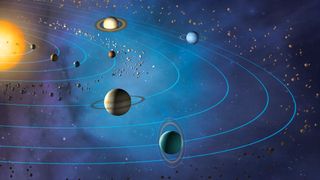 Artwork showing the planets orbiting the sun (from inner to outer): Mercury, Venus, Earth, Mars, Jupiter, Saturn, Uranus, and Neptune. (Image credit: Mark Garlick/Science Photo Library via Getty Images)
.
.
Click the link below for the article:
.
__________________________________________
October 16, 2021
Mohenjo
Finance, Food For Thought, Human Interest, Medical, missed News, Political, Science, Technical
amazon, business, Business News, current-events, Future, Hotels, human-rights, medicine, mental-health, research, Science, Science News, technology, Technology News, travel, vacation

.
News You might have missed!
Use your browser or smartphone back arrow (<-) to return to this table for your next selection.
.
__________________________________________
October 15, 2021
Mohenjo
Business, Enthralling, Human Interest, Photographs
amazon, business, Business News, current-events, Future, Hotels, human-rights, medicine, mental-health, research, Science, Science News, technology, Technology News, travel, vacation

Click the link below the picture
.
Cambridge is a university city and the county town of Cambridgeshire, England, on the River Cam approximately 55 miles (89 km) north of London. At the United Kingdom Census 2011, the population of the Cambridge built-up area (which is larger than the remit of Cambridge City Council) was 158,434 including 29,327 students. Cambridge became an important trading center during the Roman and Viking ages, and there is archaeological evidence of settlement in the area as early as the Bronze Age. The first town charters were granted in the 12th century, although modern city status was not officially conferred until 1951.
The University of Cambridge was founded in 1209. The buildings of the university include King’s College Chapel, Cavendish Laboratory, and the Cambridge University Library, one of the largest legal deposit libraries in the world. The city’s skyline is dominated by several college buildings, along with the spire of the Our Lady and the English Martyrs Church, and the chimney of Addenbrooke’s Hospital. Anglia Ruskin University, which evolved from the Cambridge School of Art and the Cambridgeshire College of Arts and Technology, also has its main campus in the city.
Cambridge is at the heart of the high-technology Silicon Fen with industries such as software and bioscience and many start-up companies born out of the university. Over 40 percent of the workforce have a higher education qualification, more than twice the national average. The Cambridge Biomedical Campus, one of the largest biomedical research clusters in the world includes the headquarters of AstraZeneca, a hotel, and the relocated Royal Papworth Hospital.
The first game of association football took place at Parker’s Piece. The Strawberry Fair music and arts festival and Midsummer Fair are held on Midsummer Common, and the annual Cambridge Beer Festival takes place on Jesus Green. The city is adjacent to the M11 and A14 roads. Cambridge station is less than an hour from London King’s Cross railway station. Wikipedia
.
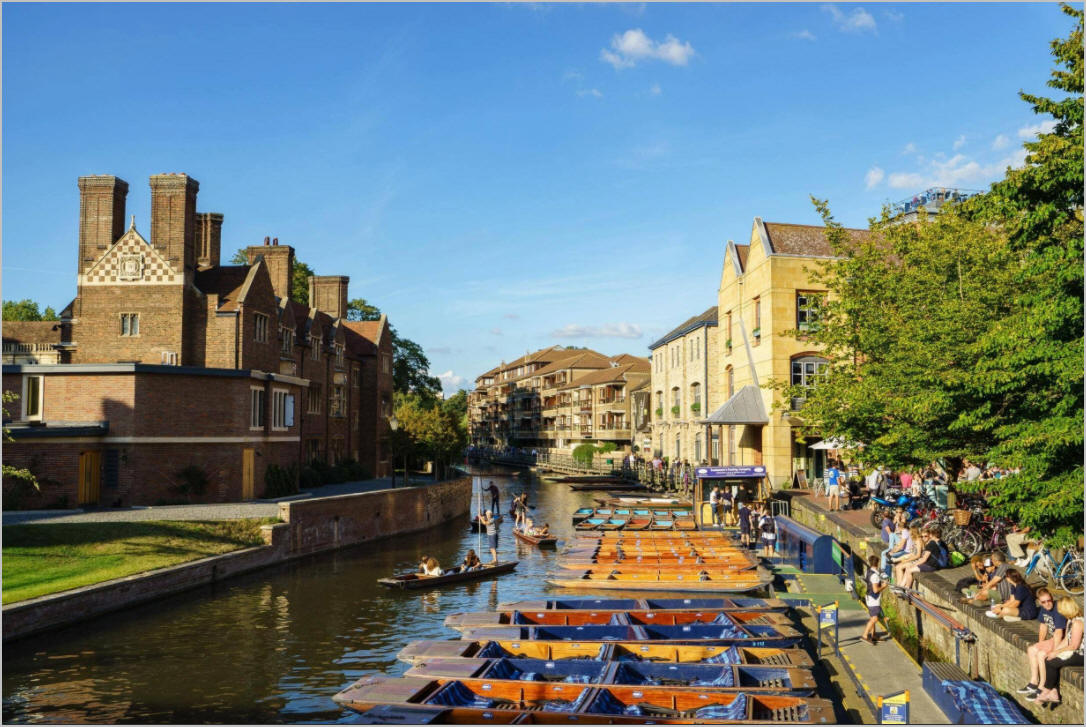 An image from Cambridge, UK
.
.
Click the link below for images:
.
__________________________________________
October 15, 2021
Mohenjo
Business, Food For Thought, Human Interest, Science, Technical
amazon, business, Business News, current-events, Future, Hotels, human-rights, medicine, mental-health, research, Science, Science News, technology, Technology News, travel, vacation

Click the link below the picture
.
Exploring strange new worlds. Understanding the origins of the universe. Searching for life in the galaxy. These are not the plot of a new science fiction movie, but the mission objectives of the James Webb Space Telescope, the long-awaited successor to the Hubble Space Telescope. NASA is building and launching the Webb in partnership with the European Space Agency and Canada.
The launch, which will propel the Webb to nearly a million miles away, is now scheduled for December 18, 2021. When it fully deploys in space, the Webb will usher in a new age of astronomy, scientists say, and show humanity things it has never seen before.
“The Webb represents the culmination of decades, if not centuries, of astronomy,” says Sara Seager, a planetary scientist, and astrophysicist at MIT. “We’ve been waiting for this a very long time.”
Scientists started thinking about a follow-up even before the Hubble Space Telescope launched in 1990. After more than three decades in space, it’s unclear how much longer this boundary-breaking satellite will be able to scan and photograph the universe.
.
/cdn.vox-cdn.com/uploads/chorus_image/image/69892662/33433274343_277deba9eb_o.0.jpg) The James Webb Space telescope under construction.NASA/Desiree Stover
The James Webb Space telescope under construction.NASA/Desiree Stover
.
.
Click the link below for the article:
.
__________________________________________
October 15, 2021
Mohenjo
Business, Food For Thought, Human Interest, Science, Technical
amazon, business, Business News, current-events, Future, Hotels, human-rights, medicine, mental-health, research, Science, Science News, technology, Technology News, travel, vacation

Click the link below the picture
.
Black holes are great at sucking up matter. So great, in fact, that not even light can escape their grasp (hence the name).
But given their talent for consumption, why don’t black holes just keep expanding and expanding and simply swallow the Universe? In 2018, one of the world’s top physicists came up with a dazzling explanation.
Conveniently, the idea could also unite the two biggest theories in all of physics.
The researcher behind this explanation is none other than Stanford University physicist Leonard Susskind, also known as one of the fathers of string theory.
He gave his two cents on the paradox in a series of papers, which basically suggest that black holes expand by increasing in complexity inwardly – a feature we just don’t see connected while watching from afar.
In other words, they expand in, not out.
Weirder still, this hypothesis might have a parallel in the expansion of our own Universe, which also seems to be growing in a counterintuitive way.
.
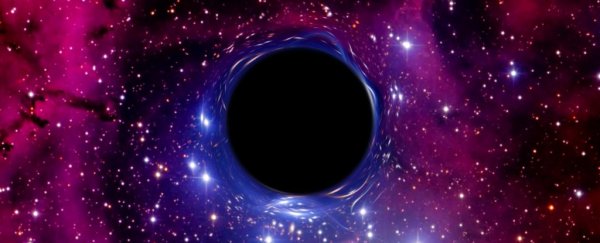 (GM Stock Films/iStock)
.
.
Click the link below for the article:
.
__________________________________________
October 15, 2021
Mohenjo
Crime, Human Interest, Medical, missed News, Political, Science, Technical
amazon, business, Business News, current-events, Future, Hotels, human-rights, medicine, mental-health, research, Science, Science News, technology, Technology News, travel, vacation
.
News You might have missed!
Use your browser or smartphone back arrow (<-) to return to this table for your next selection.
.
__________________________________________
October 14, 2021
Mohenjo
Business, Enthralling, Human Interest, Photographs
amazon, business, Business News, current-events, Future, Hotels, human-rights, medicine, mental-health, research, Science, Science News, technology, Technology News, travel, vacation
Click the link below the picture
.
Located close to Cabo da Roca cape, Ursa Beach is reached via dirt track along a twisting and steep route right through to this calm and sparsely populated beach.
The strains of the route are more than justified by the superb landscape that awaits with the enormous rocky formations dominating the beach. The beach itself was named after one such formation that takes a shape suggestive of an urso (bear).
.
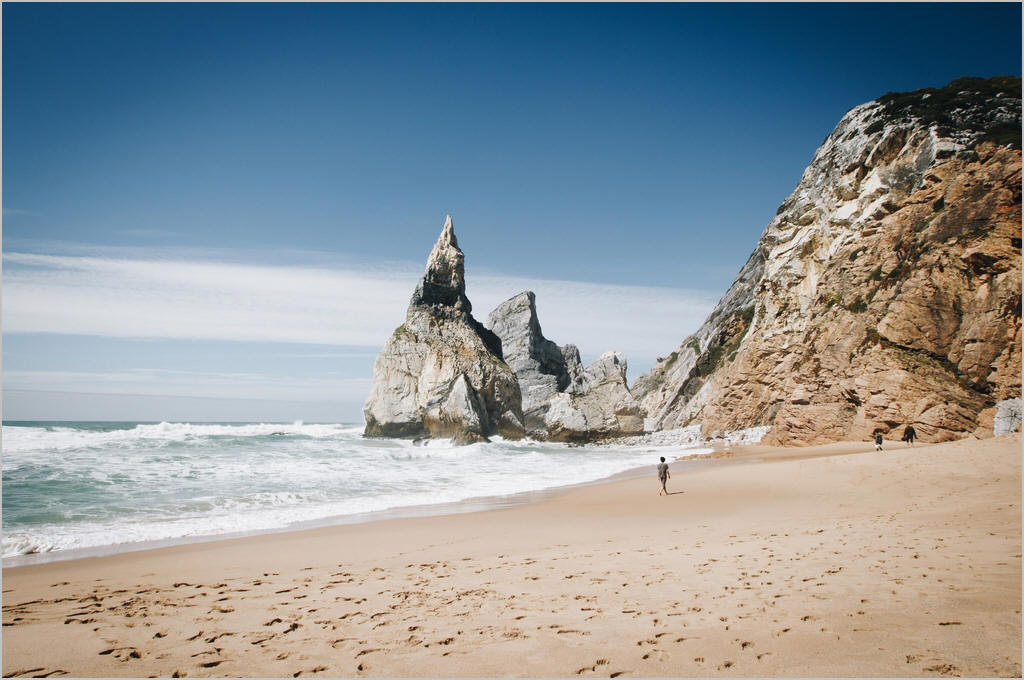 An image from Praia Da Ursa Portugal
.
.
Click the link below for images:
.
__________________________________________
October 14, 2021
Mohenjo
Business, Food For Thought, Human Interest, Medical, Science, Technical
amazon, business, Business News, current-events, Future, Hotels, human-rights, medicine, mental-health, research, Science, Science News, technology, Technology News, travel, vacation

Click the link below the picture
.
For millions of people, malaria creates a grim drumbeat of death, heartbreak, and loss: Every seven seconds, someone gets a case of malaria, and every two minutes, the disease claims another victim under the age of five. That’s why public health experts rejoiced yesterday when the World Health Organisation made a landmark decision to endorse the first vaccine against malaria.
Years of clinical trials have shown that this vaccine—known as RTS,S/AS01, or Mosquirix—is safe and helps protect against the disease, especially in concert with other malaria-fighting tools. With a 12-month efficacy of 56 percent, RTS,S lacks the eye-popping effectiveness of other modern vaccines. However, the vaccine’s target—the parasite Plasmodium falciparum—is orders of magnitude more complex than a virus.
“We have a number of things in our toolkit to fight malaria, and they’re all used together: bed nets, spraying, chemoprevention,” says Sean Murphy, a malaria vaccine developer at the University of Washington in Seattle. “This vaccine cannot replace all those tools.”
Also, the WHO recommendation doesn’t immediately usher in the widespread use of RTS,S. Rather, it marks the beginning of the vaccine’s broader rollout and paves the way for individual African countries to issue their own approvals of the vaccine, with WHO assistance. Scaling up to the necessary tens of millions of annual doses will require billions of dollars of government and philanthropic donations to the international nonprofit GAVI, the Vaccine Alliance, which coordinates the financing of vaccination programs in developing countries.
.

A health worker prepares a dose of malaria vaccine in western Kenya’s lakeside town of Ndhiwa, Homabay County, on September 13, 2019.
Photograph by Brian Ongoro, AFP via Getty Images
.
.
Click the link below for the article:
.
__________________________________________
October 14, 2021
Mohenjo
Business, Food For Thought, Human Interest, Science, Technical
amazon, business, Business News, current-events, Future, Hotels, human-rights, medicine, mental-health, research, Science, Science News, technology, Technology News, travel, vacation

Click the link below the picture
.
Remember domino theory? One country going Communist was supposed to topple the next, and then the next, and the next. The metaphor drove much of United States foreign policy in the middle of the 20th century. But it had the wrong name. From a physical point of view, it should have been called the “sandpile theory.”
Real-world political phase transitions tend to happen not in neat sequences, but in sudden coordinated fits, like the Arab Spring, or the collapse of the Eastern Bloc. These reflect quiet periods punctuated by crises—like a sandpile. You can add grains of sand to the top of a sandpile for a while, to no apparent effect. Then, all at once, an avalanche sweeps sand down from the top in an irregular pattern, possibly setting off little sub-avalanches as it goes.
This analogy doesn’t necessarily get us anywhere. After all, real sand is hard to analyze, just like real politics. But here’s the miracle. A kind of abstraction of a sandheap, known as the “abelian sandpile model,” created by physicists Per Bak, Chao Tang, and Kurt Wiesenfeld in 1987, seems to capture some of the rich, chaotic features of real sandpiles, not to mention other complex systems from biology, physics, and social science—while remaining simple enough to study mathematically.
.

Numbers Math
.
.
Click the link below for the article:
.
__________________________________________
October 14, 2021
Mohenjo
Arts, Crime, Food For Thought, Human Interest, Medical, missed News, Science, Technical
amazon, business, Business News, current-events, Future, Hotels, human-rights, medicine, mental-health, research, Science, Science News, technology, Technology News, travel, vacation
.
News You might have missed!
Use your browser or smartphone back arrow (<-) to return to this table for your next selection.
.
__________________________________________
Older Entries
Newer Entries
 James' World 2