January 25, 2022
Mohenjo
Business, Human Interest
amazon, business, Business News, current-events, Future, Hotels, human-rights, medicine, mental-health, research, Science, Science News, technology, Technology News, travel, vacation

Click the link below the picture
.
Observations from NASA’s Kepler spacecraft have uncovered a ’tilted’ solar system, a finding that gives clues as to how some planets come to orbit their stars on paths that are misaligned with the stars’ equators, astronomers report today in Science.
The planets of Earth’s Solar System formed from a flat disc of gas and dust revolving around the Sun’s equator, so they all started out in nearly the same plane. Earth’s orbit makes an angle of just 7.2 degrees with the plane of the Sun’s equator.
Five years ago, however, astronomers were shocked to find planets orbiting at steep angles to their stars’ equators. Some planets even went around their suns backward — they orbit in the opposite direction to the star’s rotation. But no one had seen a misaligned multi-planetary solar system until now.
For the latest study, astronomer Daniel Huber of NASA’s Ames Research Center in Moffett Field, California, and his colleagues looked at Kepler-56, a star roughly 860 parsecs (2,800 light-years) from Earth. It has two large planets that lie in the same plane and circle closer to their sun than Mercury does to ours. Kepler detected the planets as they blocked the star’s light, so their orbits are oriented edge-on to our line of sight.
.
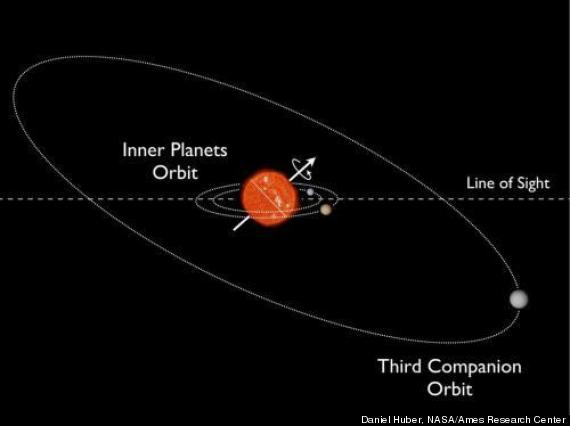 The Kepler-56 planetary system features two inner planets orbiting at a severe tilt to their host star — even though there’s no “hot Jupiter” in the system.
.
.
Click the link below for the article:
.
__________________________________________
January 25, 2022
Mohenjo
Crime, Food For Thought, Human Interest, Medical, missed News, Political, Science, Technical
amazon, business, Business News, current-events, Future, Hotels, human-rights, medicine, mental-health, research, Science, Science News, technology, Technology News, travel, vacation

.
News You might have missed!
Use your browser or smartphone back arrow (<-) to return to this table for your next selection.
.
__________________________________________
January 24, 2022
Mohenjo
Business, Enthralling, Human Interest, Photographs
amazon, business, Business News, current-events, Future, Hotels, human-rights, medicine, mental-health, research, Science, Science News, technology, Technology News, travel, vacation

Click the link below the picture
.
Bulgaria, officially the Republic of Bulgaria, is a country in Southeast Europe. It occupies the whole eastern part of the Balkans and is bordered by Romania to the north, Serbia and North Macedonia to the west, Greece and Turkey to the south, and the Black Sea to the east. Bulgaria covers a territory of 110,994 square kilometers (42,855 sq mi), and is the sixteenth largest country in Europe. Sofia is the nation’s capital and largest city; other major cities are Plovdiv, Varna, and Burgas.
One of the earliest societies in the lands of modern-day Bulgaria was the Neolithic Karanovo culture, which dates back to 6,500 BC. In the 6th to 3rd century BC, the region was a battleground for ancient Thracians, Persians, Celts, and Ancient Macedonians; stability came when the Roman Empire conquered the region in AD 45. After the Roman state splintered, tribal invasions in the region resumed. Around the 6th century, these territories were settled by the early Slavs. The Bulgars led by Asparuh of Bulgaria attacked from the lands of (Old Great) Bulgaria and permanently invaded the Balkans in the late 7th century. They established (Danubian) Bulgaria, victoriously recognized by treaty in AD 681 by the Eastern Roman Empire. It dominated most of the Balkans and significantly influenced Slavic cultures by developing the Cyrillic script. The First Bulgarian Empire lasted until the early 11th century when Byzantine emperor Basil II conquered and dismantled it. A successful Bulgarian revolt in 1185 established a Second Bulgarian Empire, which reached its apex under Ivan Asen II (1218–1241). After numerous exhausting wars and feudal strife, the empire disintegrated in 1396 and fell under Ottoman rule for nearly five centuries.
The Russo-Turkish War of 1877–78 resulted in the formation of the third and current Bulgarian state. Many ethnic Bulgarians were left outside the new nation’s borders, which stoked irredentist sentiments that led to several conflicts with its neighbors and alliances with Germany in both world wars. In 1946, Bulgaria came under the Soviet-led Eastern Bloc and became a socialist state. The ruling Communist Party gave up its monopoly on power after the revolutions of 1989 and allowed multiparty elections. Bulgaria then transitioned into a democracy and a market-based economy. Since adopting a democratic constitution in 1991, Bulgaria has been a unitary parliamentary republic composed of 28 provinces, with a high degree of political, administrative, and economic centralization.
Bulgaria is a developing country, with an upper-middle-income economy, ranking 56th in the Human Development Index. Its market economy is part of the European Single Market and is largely based on services, followed by industry—especially machine building and mining—and agriculture. Widespread corruption is a major socioeconomic issue; Bulgaria ranked as the most corrupt country in the European Union in 2018. The country also faces a demographic crisis, with its population shrinking annually since around 1990; it currently numbers roughly seven million, down from a peak of nearly nine million in 1988. Bulgaria is a member of the European Union, NATO, and the Council of Europe; it is also a founding member of the OSCE and has taken a seat on the United Nations Security Council three times. Wikipedia
.
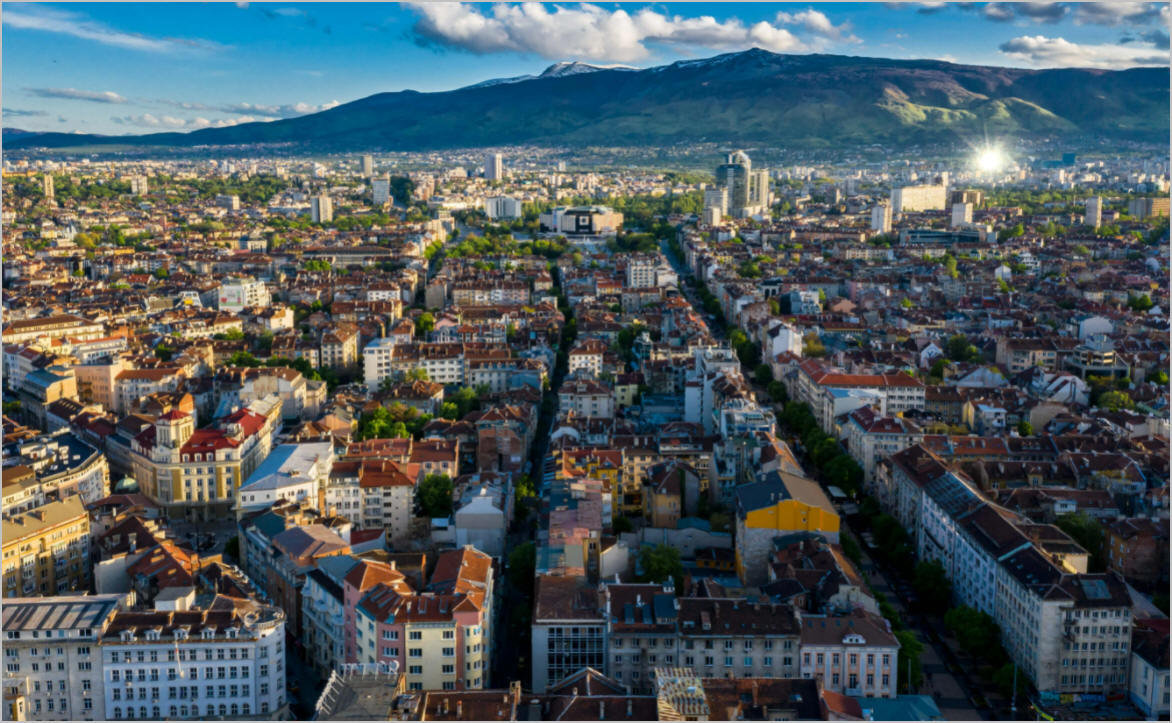 An image from Bulgaria
.
.
Click the link below for images:
.
__________________________________________
January 24, 2022
Mohenjo
Business, Human Interest
amazon, business, Business News, current-events, Future, Hotels, human-rights, medicine, mental-health, research, Science, Science News, technology, Technology News, travel, vacation

Click the link below the picture
.
For many people, ushering in a new year means ushering in a new diet. One study found that 20% of participants resolved to shed pounds beginning January 1, making weight loss the second most common category of resolutions after physical health. But study after study has found that diets don’t work long-term—the vast majority of people eventually gain back the weight they lose, if not even more—and that lower body weight isn’t a reliable indicator of better health anyway.
Trying to change your diet in the name of losing weight is, generally speaking, misguided at best, and can do your mind and body real harm. But that doesn’t mean you can’t benefit from eating differently.
If, come New Years, you’re not feeling physically well or your relationship with food feels off, it’s not a bad idea to change the way you eat, says Blair Burnette, a postdoctoral researcher in psychology at the University of Minnesota. Maybe you’re uncomfortably bloated or feeling low on energy. Maybe you notice yourself getting take-out more often than you’d like, or eating whenever you’re bored and sad. It’s possible to improve your physical and mental health by being more mindful about what you eat. Doing so may even lead to changes in your body composition. The key is to shed the misconception that losing weight should be your driving goal.
.
 Feeling like your diet isn’t quite working for you? Here’s what to do instead of counting calories. Unsplash
.
.
Click the link below for the article:
.
__________________________________________
January 24, 2022
Mohenjo
Business, Food For Thought, Human Interest, Science, Technical
amazon, business, Business News, current-events, Future, Hotels, human-rights, medicine, mental-health, research, Science, Science News, technology, Technology News, travel, vacation

Click the link below the picture
.
The Davis-Schrimpf seep field is located about 40 miles (64 kilometers) southeast of Palm Springs, Calif., at an elevation of 230 feet (70 meters) below sea level. Here, carbon dioxide gases gurgle to the surface as a result of a magma zone found 1 mile (1.6 km) below the Earth’s surface cooking the gas from carbonate minerals.
Over 50 mud volcanic features are found in this seep field, including gryphons, gas vents, salses, mudpots, and springs all located within a 2-square-mile (5-square-km) area.
Gryphons are small earthen mounds built by the eruptions of mud volcanoes. The fluids that create the gryphons are powered by hydrothermal carbon dioxide gas mixed with near-surface brines and are merely warm to the touch rather than hot.
The viscosity of the mud extruding from a specific mud volcanic vent will help determine the height that each gryphon grows to. The amount of escaping carbon dioxide gas also influences the erupting power of the mixture and thus how high the small mountain of mud will grow.
.
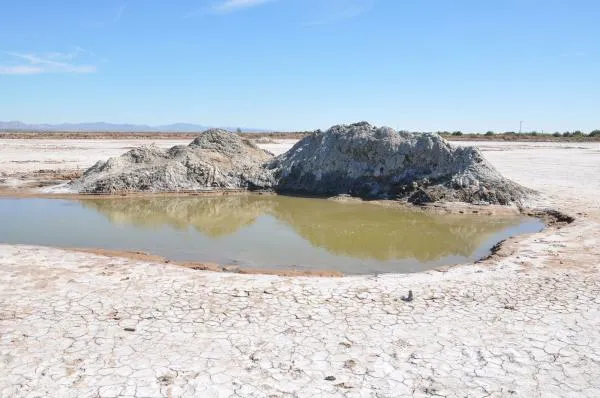 (Image credit: Linda and Dr. Dick Buscher.)
.
.
Click the link below for the article:
.
__________________________________________
January 24, 2022
Mohenjo
Business, Food For Thought, Human Interest, Science, Technical
amazon, business, Business News, current-events, Future, Hotels, human-rights, medicine, mental-health, research, Science, Science News, technology, Technology News, travel, vacation

Click the link below the picture
.
A new island emerged from the ocean offshore of the city of Gwadar, Pakistan, after a strong magnitude-7.7 earthquake shook the country on Sept. 24.
The mound appears to be 20 to 40 feet (6 to 12 meters) high and 100 feet (30 m) wide, DIG Gwadar Moazzam Jah, a district police officer, told Pakistan’s Geo News. It rose out of the sea at a spot located about 350 feet (100 m) from the coast, he said.
The news sparked lively chatter among geologists, who debated whether the hill was a landslide, a fault scarp or even a hoax. A fault scarp marks vertical displacement along a fault, anything from a small step to a huge, steep cliff.
Scientists are still far from consensus, but many think that Pakistan’s newest piece of land may be a mud volcano.
Geologist Bob Yeats, an expert on Pakistan’s earthquake hazards, said he’s waiting until he hears from his colleagues in Pakistan (it’s currently night there) before judging the case. The two most likely possibilities are a landslide or a mud volcano, Yeats told LiveScience’s OurAmazingPlanet.
.
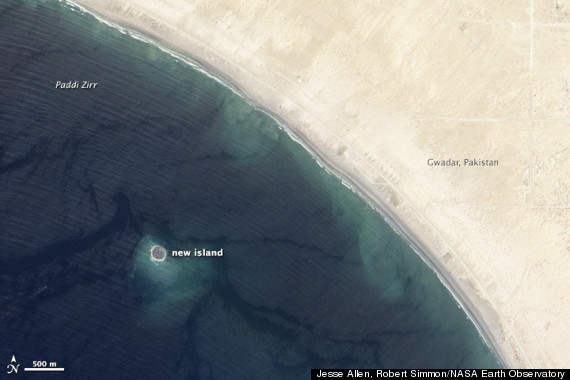 On September 26, 2013, NASA’s Earth Observing-1 (EO-1) satellite captured this image of a new island off the coast of Pakistan. The “mud island” rose from the seafloor near Gwadar on September 24, shortly after a magnitude 7.8 earthquake rattled the Balochistan province of northwestern Pakistan.
.
.
Click the link below for the article:
.
__________________________________________
January 24, 2022
Mohenjo
Crime, Food For Thought, Human Interest, Medical, missed News, Political, Science, Technical
amazon, business, Business News, current-events, Future, Hotels, human-rights, medicine, mental-health, research, Science, Science News, technology, Technology News, travel, vacation
.
News You might have missed!
Use your browser or smartphone back arrow (<-) to return to this table for your next selection.
.
__________________________________________
January 23, 2022
Mohenjo
Business, Food For Thought, Human Interest, Medical, Science, Technical
amazon, business, Business News, current-events, Future, Hotels, human-rights, medicine, mental-health, research, Science, Science News, technology, Technology News, travel, vacation

Click the link below the picture
.
Whether you’re feeling a bit overwhelmed by lockdown ending or are feeling sore from sitting at your desk for long hours throughout the working day, yoga can help.
However, the practice can feel intimidating to those who have never done it before. Plus, not everyone has the time to squeeze in a couple of 90-minute classes every week just to destress from a busy week. That doesn’t mean you have to miss out on what yoga can do for you. In fact, just by working some basic stretches into your routine, you can start to feel all the physical and mental health benefits the practice has to offer.
Donna Noble is a yoga teacher and the founder of Curvesomeyoga, an organization that aims to make yoga inclusive, diverse, and accessible for all. Here, she explains exactly why we should start incorporating simple yoga stretches into our day-to-day lives, and which to try first. There’s no better time than today to start.
.
 Photos by Getty Images
.
.
Click the link below for the article:
.
__________________________________________
January 23, 2022
Mohenjo
Business, Food For Thought, Human Interest, Overlooked Past Article, Science, Technical
amazon, business, Business News, current-events, Future, Hotels, human-rights, medicine, mental-health, research, Science, Science News, technology, Technology News, travel, vacation
Click the link below the picture
.
In rare cases, one of life’s important childhood lessons — always chew your food properly — becomes fossilized. And now, anyone can own one of these reminders in rock. A specimen containing the remains of a large, predatory amphibian choking on another creature is up for auction in October.
Nearly 300 million years ago, during the Paleozoic Era, this predator attempted to eat another, smaller amphibian. The larger creature died mid-meal with the smaller one’s body half-consumed. This type of fossil, in which a predator chokes on its prey, is known as an aspiration.
When a scene like this is captured forever by geology, the value of the fossil goes up, said Jim Walker, director of the nature and science department at the auction house Heritage Auctions. [See Photos of ‘Choking Predators’ and other Fossils for Auction]
“It affects it to the degree of eight or 10 times without any trouble at all,” Walker said. Heritage expects this specimen to sell for between $150,000 and $250,000.
The predator, in this case, is a 28-inch-long (71 centimeters) creature known as Sclerocephalus haeuseri. Artists’ representations of it depict an animal that looks like a cross between an alligator and a salamander, with a heavy skull and jaws, a streamlined body with a menacing-looking tail, and eyes on top of its head.
The resemblance to a crocodile or alligator is no coincidence. During the Permian Period — the last period of the Paleozoic lasting from 299 million to 251 million years ago — this ancient amphibian filled a similar ecological role to these modern aquatic predators, Walker said.
.
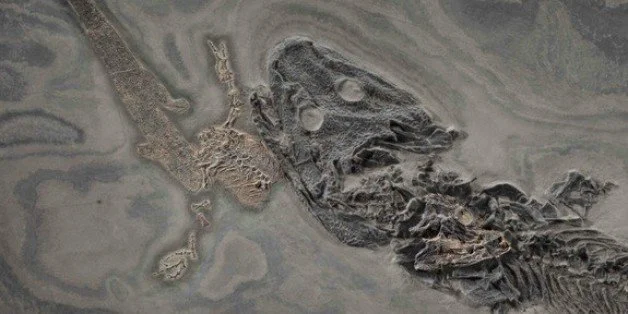 Choking
.
.
Click the link below for the article:
.
__________________________________________
January 22, 2022
Mohenjo
Business, Enthralling, Human Interest, Photographs
amazon, business, Business News, current-events, Future, Hotels, human-rights, medicine, mental-health, research, Science, Science News, technology, Technology News, travel, vacation
Click the link below the picture
.
Logan is a city in Hocking County, Ohio. The population was 7,152 at the time of the 2010 census. It is the county seat of Hocking County. Logan is located in southeast Ohio, on the Hocking River 48 miles southeast of Columbus. The current mayor of Logan is Republican Greg Fraunfelter, who began a four-year term in January 2016 and was re-elected in 2019.
Logan is the county seat of Hocking County, Ohio. Residents named the town in honor of Chief Logan of the Mingo Indian tribe. He and his band lived in this area at the time of European-American settlement. Ohio Governor Thomas Worthington established the community in 1816.
Logan was incorporated as a city in 1839.
Logan was the first city in the state of Ohio to install a double roundabout. Located at the interchange of Ohio State Route 664 and U.S. Route 33, the roundabouts were officially opened to traffic on December 4, 2013.
According to the United States Census Bureau, the city has a total area of 4.93 square miles (12.77 km2), of which 4.79 square miles (12.41 km2) is land and 0.14 square miles (0.36 km2) is water.
As of the census of 2010, there were 7,152 people, 2,982 households, and 1,831 families residing in the city. The population density was 1,493.1 inhabitants per square mile (576.5/km2). There were 3,374 housing units at an average density of 704.4 per square mile (272.0/km2). The racial makeup of the city was 97.5% White, 0.8% African American, 0.3% Native American, 0.2% Asian, 0.3% from other races, and 0.9% from two or more races. Hispanic or Latino of any race were 0.8% of the population. Wikipedia
.
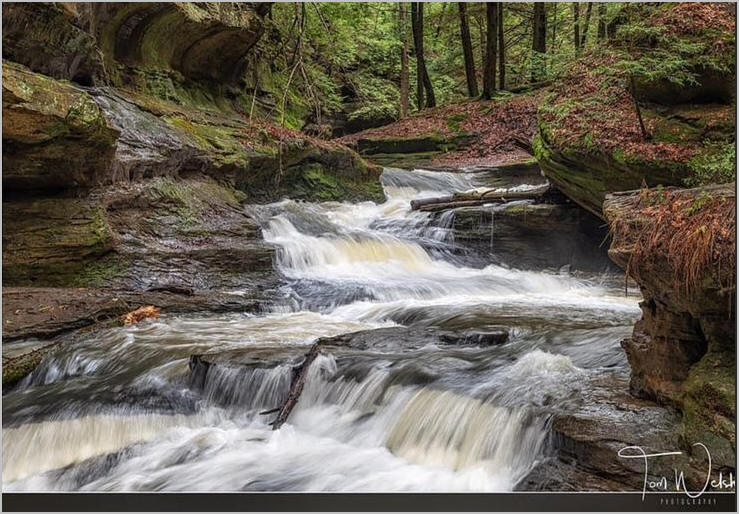 An image from Logan, Ohio
.
.
Click the link below for images:
.
__________________________________________
Older Entries
Newer Entries
 James' World 2