“moveForward(100);” may now be the most famous line of JavaScript in history — it’s what President Barack Obama wrote Monday as he reportedly became the first United States president to write a computer program.
The occasion was intended to mark the first day of 2014’s Computer Science Education Week, which provides opportunities for students to learn computer science.
Around 30 middle-school students from Newark, New Jersey and Brooklyn, New York were hosted at the White House for an “Hour of Code.”
.
Note: @ the paragraph (Interested parties can try it for themselveshere.) in the article, click the word here and try writing your first program if you have never written a program. It should be fun, don’t give up after your 1st try.
It may soon become commonplace to see people with robotic exoskeletons or bionic eyes.
Scientific research into bionic human parts has advanced impressively in recent years, driven by improvements in computer science, shrinking electronic components, and a growing understanding of the nervous system.
Some of these devices are simply meant to help people regain normal functions — like eye implants that provide sight for the blind.
But other researchers, particularly those interested in military technology, are looking for ways to make humans bigger, better, and stronger.
.
The i-Limb Ultra Revolution can be controlled with an iPhone.
.
.
Click link below for article (five of the most intriguing areas of research):
Scientists have created a swarm of over a thousand coin-sized robots that can assemble themselves into two-dimensional shapes by communicating with their neighbours.
At 1,024 members, this man-made flock — described in the 15 August issue of Science — is the largest yet to demonstrate collective behaviour. The self-organization techniques used by the tiny machines could aid the development of ‘transformer’ robots that reconfigure themselves, researchers say, and they might shed light on how complex swarms form in nature.
If a squat, cardboard-framed robot with a high-pitched voice started asking you questions, would you answer it? Would you share your troubles? Unload your concerns?
Many people would — at least, that’s what roboticist and artist Alex Reben has found. He unleashed the smiling bot Boxie in the halls of the Massachusetts Institute of Technology to see what people would share with a robot. His work and other research suggest we’re not so averse to bearing our souls to the bots. In some cases, we’ll even tell them things we wouldn’t admit to each other.
In fact, Reben suggests robots and dogs aren’t so different.
“Dogs are basically a human invention. They’re a technology,” Reben told HuffPost Live. “We’ve bred them to be companions over millennia, just like we’re designing robots, we’ve designed dogs to be companions.”
The largest prime number yet has been discovered — and it’s 17,425,170 digits long. The new prime number crushes the last one discovered in 2008, which was a paltry 12,978,189 digits long.
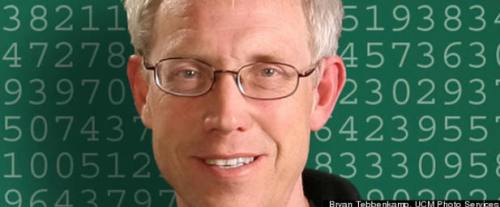
The number — 2 raised to the 57,885,161 power minus 1 — was discovered by University of Central Missouri mathematician Curtis Cooper as part of a giant network of volunteer computers devoted to finding primes, similar to projects like SETI@Home, which downloads and analyzes radio telescope data in the Search for Extraterrestrial Intelligence (SETI). The network, called the Great Internet Mersenne Prime Search (GIMPS) harnesses about 360,000 processors operating at 150 trillion calculations per second. This is the third prime number discovered by Cooper.
.
.
.Click link below for story, slideshow, and video:
Film and Writing Festival for Comedy. Showcasing best of comedy short films at the FEEDBACK Film Festival. Plus, showcasing best of comedy novels, short stories, poems, screenplays (TV, short, feature) at the festival performed by professional actors.



 The i-Limb Ultra Revolution can be controlled with an iPhone.


 James' World 2