Here’s a chilling statistic for you: According to the CDC, Up to 40 percent of annual deaths in the US are preventable. Their causes range from unintentional injuries to heart disease.
More terrifying still is that this percentage is estimated to increase in the future. And even if we manage to reach old age, perhaps we’ll have to endure diseases that significantly reduce the quality of our days. As Norman Lazarus, an octogenarian doctor famous for his enviable health, says in his book, The Lazarus Strategy, “the number of people living with four or more diseases will nearly double between the years of 2015 and 2035.”
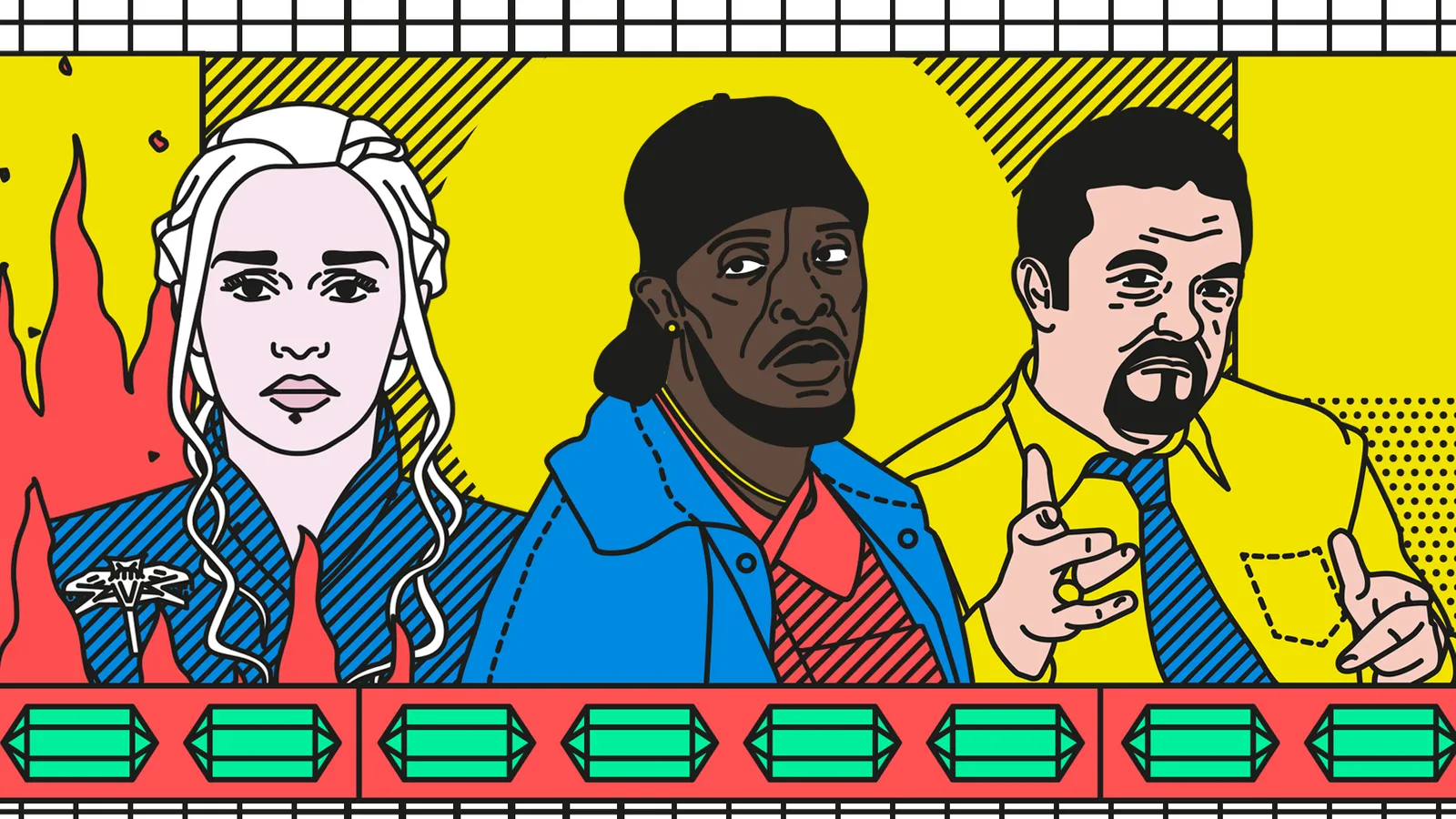
In recent years, BBC Culture has conducted an annual poll of film critics, experts, and industry figures from around the world to decide on the greatest films in a particular category: you may have come across our 100 greatest films directed by women list in 2019 and our 100 greatest non-English language films in 2018, among others. However, this year, it felt about time that we turned our attention to another art form: television. That’s in part because TV has played such a crucial role in many of our lives over the past 18 months when we have relied on it for information, entertainment, solace, and inspiration in equal measure.
But also it felt like the right time to survey the television landscape because arguably it has been the defining art form of the past 21 years: where once, rightly or wrongly, it was largely patronized as cinema’s younger, more rough-and-ready sibling, today its artistic credibility is unassailable, while the advent of streaming platforms has also given shows the ability to reach unprecedented global audiences all at once. And so, in order to mark TV’s ascendancy, we have decided to ask the question: what are the greatest TV series of the 21st Century?
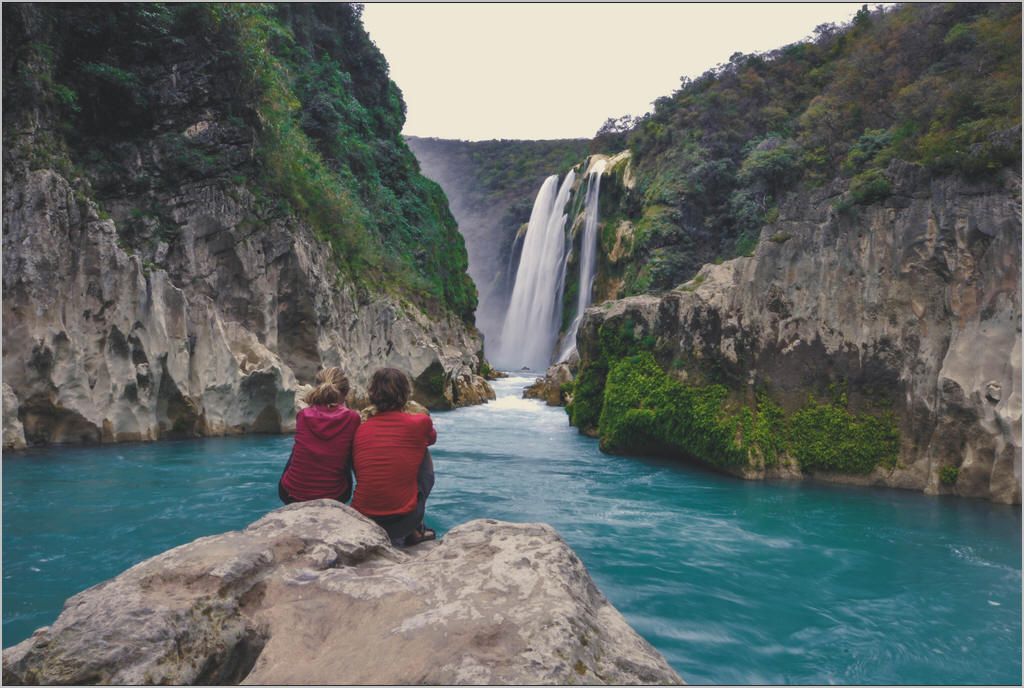
La Huasteca is a geographical and cultural region located partially along the Gulf of Mexico and including parts of the states of Tamaulipas, Veracruz, Puebla, Hidalgo, San Luis Potosí, Querétaro and Guanajuato. It is roughly defined as the area in which the Huastec people had influence when their civilization was at its height during the Mesoamerican period. Today, the Huastecs occupy only a fraction of this region with the Nahua people now the most numerous indigenous group. However, those who live in the region share a number of cultural traits such as a style of music and dance, along with religious festivals such as Xantolo.
Historically and ethnically, the Huasteca region is defined by the area dominated by the Huastecs at their height. The actual extension of the region is somewhat disputed as well as how it should be sub-divided. Geographically it has been defined as from the Sierra Madre Oriental to the Gulf of Mexico with the Sierra de Tamaulipas as the north border and the Cazones River as the south. It extends over the south of Tamaulipas, the southeast of San Luis Potosí, the northeast of Querétaro and Hidalgo, and the extreme north of Veracruz and Puebla and a very small portion of Guanajuato over an area of about 32,000km2. Wikipedia
Comedians Bobcat Goldthwait and Dana Gould were premiering their new documentary comedy special Joy Ride at the Moontower Comedy Festival in Austin, Texas, earlier this fall where “Jerry Seinfeld is a god,” and as the section of the film about Goldthwait’s decades-long feud with that iconic comedian approached, he started to get a little nervous.
“I was relieved when they burst into applause after I said, ‘Jerry Seinfeld finally has an opinion and it’s about me,’” Goldthwait tells me on this week’s episode of The Last Laugh podcast. “I was really happy to hear comedy nerds laughing at that.”
“Hot dog buns and Bobcat Goldthwait, the two things that get his goat,” Gould jokes.
Goldthwait goes on to explain in the film how Seinfeld used an episode of his show Comedians in Cars Getting Coffee—or “Rich Comedians in Cars Bitching About Their Diamond Shoes Being Too Tight,” as he calls it—to attack him during a conversation with the comedian Bridget Everett.
“If you’re funny, you win. If you’re not funny, you don’t,” Seinfeld says in the episode. “And he’s not funny. That’s why he had to do that stupid fucking voice. Because you have no fucking act!” Everett, who has to then tell Seinfeld she is good friends with Goldthwait, laughs uncomfortably throughout his rant.
You know what feels like a little bit of a rip-off? Sunday night prep. And I use that term liberally — I’m talking about meal planning, house cleaning, getting a jump-start on your work to-do list, even taking off chippy nail polish and replacing it with a fresh coat. Yes, I do all of these things because they are practical and they’re a good way to ease into Monday morning. I’m not disputing their usefulness — just that we have a limited number of weekend hours at our disposal, and yet we’ve all collectively decided to spend a chunk of them being weekday-style productive. Wouldn’t the weekend feel so much longer if we spent it, well, weekending?
Sort of. As it turns out, my bitterness is slightly, but not entirely, misplaced: Dedicating every Sunday evening to the same old routine really does make it seem like the weekend is rapidly disappearing from under you. But then again, lazing around in your pj’s has the same effect.
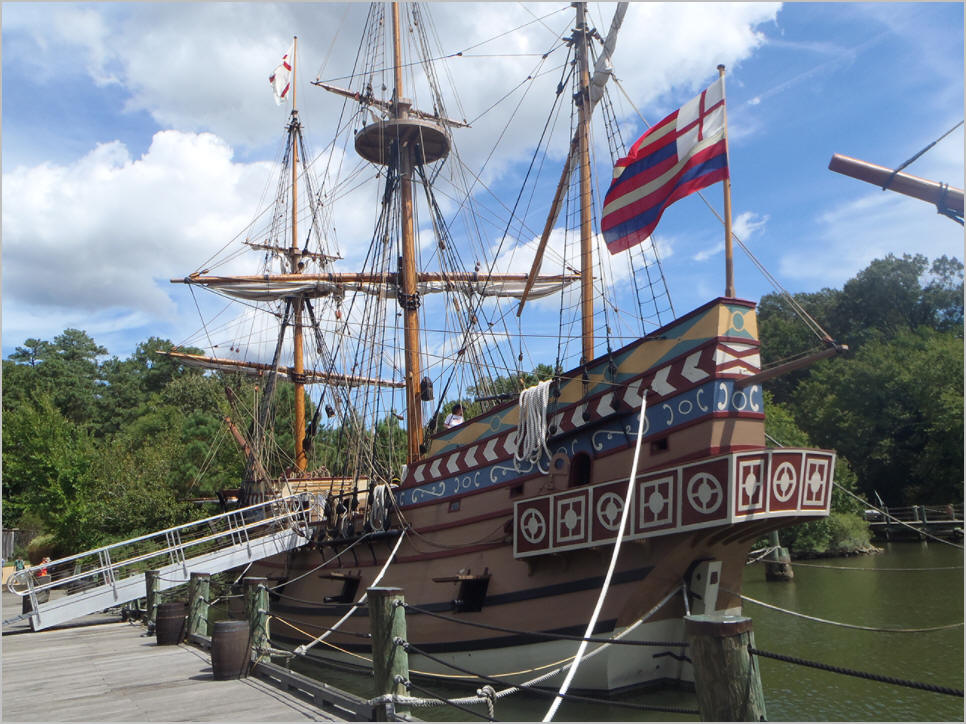
The Jamestown settlement in the Colony of Virginia was the first permanent English settlement in the Americas. It was located on the northeast bank of the James (Powhatan) River about 2.5 mi (4 km) southwest of the center of modern Williamsburg. It was established by the Virginia Company of London as “James Fort” on May 4, 1607, O.S. (May 14, 1607, N.S.), and was considered permanent after a brief abandonment in 1610. It followed several failed attempts, including the Lost Colony of Roanoke, established in 1585 on Roanoke Island, later part of North Carolina. Jamestown served as the colonial capital from 1616 until 1699. Despite the dispatch of more settlers and supplies, including the 1608 arrival of eight Polish and German colonists and the first two European women, more than 80 percent of the colonists died in 1609–10, mostly from starvation and disease. In mid-1610, the survivors abandoned Jamestown, though they returned after meeting a resupply convoy in the James River.
In August 1619, the first recorded slaves from Africa to British North America arrived in what is now Old Point Comfort near the Jamestown colony, on a British privateer ship flying a Dutch flag. The approximately 20 Africans from the present-day Angola had been removed by the British crew from a Portuguese slave ship, the “São João Bautista”. They most likely worked in the tobacco fields as slaves under a system of race-based indentured servitude. One of their number included Angela, who was purchased by William Peirce. The modern conception of slavery in the colonial United States was formalized in 1640 (the John Punch hearing) and was fully entrenched in Virginia by 1660.
The London Company’s second settlement in Bermuda claims to be the site of the oldest town in the English New World, as St. George’s, Bermuda, was officially established in 1612 as New London, whereas James Fort in Virginia was not converted into James Towne until 1619, and further did not survive to the present day.
In 1676, Jamestown was deliberately burned during Bacon’s Rebellion, though it was quickly rebuilt. In 1699, the colonial capital was moved to what is today Williamsburg, Virginia; Jamestown ceased to exist as a settlement and remains today only as an archaeological site, Jamestown Rediscovery.
Today, Jamestown is one of three locations composing the Historic Triangle of Colonial Virginia, along with Williamsburg and Yorktown, with two primary heritage sites. Historic Jamestowne is the archaeological site on Jamestown Island and is a cooperative effort by Jamestown National Historic Site (part of Colonial National Historical Park) and Preservation Virginia. Jamestown Settlement, a living history interpretive site, is operated by the Jamestown Yorktown Foundation, a state agency of the Commonwealth of Virginia. Wikipedia
Being a leader requires confidence, decisiveness, and quick thinking–none of which are served by overthinking every decision or scenario or worrying about every move you make. There’s a time to think, a time to act, a time to reflect, and a time to move forward.
Overthinking causes us to spend too much time thinking, getting stuck in a loop of inaction and turns positive reflection into debilitating worry. Not only does it not move us forward, it moves us backward and downward.
For three decades, I’ve been coaching employees and entrepreneurs with tendencies to overthink things, and I can share 11 mental tricks to dash the dissecting and stop the over scrutinizing.
“There is no such thing as conversation,” the novelist and literary critic Rebecca West famously wrote in her collection of stories, The Harsh Voice. “It is an illusion. There are intersecting monologues, that is all.” In her opinion, our own words simply pass over the words of others without any profound communication taking place.
Who has not been able to empathize with this sentiment at some point in their life? Whether we’re making small talk with a barista, or meeting up with a close friend, we may hope to make a connection, only to leave the conversation feeling that our minds have failed to meet.
The pandemic has surely heightened our awareness of these sensations. After long periods of isolation, our hunger for social contact is greater than ever – and it is even more disappointing to feel that a void remains between us and others, even when rules of physical distancing have been lifted.
If this rings true for you, help may be at hand. During the past few years, psychologists studying the art of conversation have identified many of the barriers that stand in the way of a deeper connection, and the ways to remove them. Read on for the top five steps to better conversation.
Film and Writing Festival for Comedy. Showcasing best of comedy short films at the FEEDBACK Film Festival. Plus, showcasing best of comedy novels, short stories, poems, screenplays (TV, short, feature) at the festival performed by professional actors.











 (Image credit: Getty)
 James' World 2