Last night’s near-total lunar eclipse did not disappoint. In the second and final lunar eclipse of the year, our natural satellite transformed into a stunning red-orange “blood moon” as almost all of it fell under Earth’s shadow.
During a lunar eclipse, Earth passes between the sun and moon, partially or totally obstructing sunlight on the latter. In this case, more than 96 percent of the moon was covered by Earth’s dark shadow, or umbra, according to NASA, making it a “deep partial eclipse.”
The reddish tone comes from the way Earth’s atmosphere filters light—reddish hues slip through to the other side, while other colors are refracted away, much like a sunset.
Last night’s eclipse began around 9:23 P.M. EDT on Thursday and lasted until about 3:02 A.M. EDT on Friday. The height of the eclipse occurred at 12:13 A.M. EDT, when the moon was 96.3 percent covered in shadow.
We collected some of the best pictures of the event from around the world.
The moon during the partial lunar eclipse on August 28, 2026, in Madrid. Angel Martinez/Getty Images
The partial lunar eclipse setting over the fortress Rocca Calascio is seen from Calascio, Italy, on August 28, 2026. Lorenzo Di Cola/NurPhoto/Getty Images
The partial lunar eclipse alongside the Nuruosmaniye Mosque in Istanbul on August 28, 2026. Ahmet Okatali/Anadolu/Getty Images
The partial lunar eclipse over Saint Louis, Mo., on August 27, 2026. David Carson/St. Louis Post-Dispatch/Getty Images
The partial lunar eclipse over the Washington Monument in Washington, D.C., on August 27, 2026. Austin DeSisto/NurPhoto/Getty Images
Do you want to catch the next eclipse? While 2027 will see three very subtle, or penumbral, lunar eclipses, the next total lunar eclipse won’t occur until December 31, 2028. But two solar eclipses—when the moon will pass between Earth and the sun—will take place in 2027: a “ring of fire” annular eclipse on February 6 and a total solar eclipse on August 2.
.
The partial lunar eclipse over Saint Louis, Mo., on August 27, 2026. David Carson/St. Louis Post-Dispatch/Getty Images
On Thursday, Miss Virginia Justus Kelley was crowned Miss USA, marking the first time in the pageant’s 75-year history that a mother — and a woman over 30 — has won.
“This opportunity means the world to me, and not only are we celebrating the 75th anniversary, but we made history tonight,” the new Miss USA said in a video posted on the organization’s Instagram page. “I’m the first married woman, first mom, and first woman in her 30s. It’s a great night.”
Kelley’s groundbreaking win comes three years after the Miss Universe and Miss USA organizations lifted the age cap on contestants and allowed mothers to participate in the pageant. Though Kelley is the first beauty queen to officially win since the rules changed, back in 1957 Mary Leona Gage was crowned Miss USA only for pageant officials to strip her of her title after they learned she was secretly married and had two children.
Kelley, 31, is an Indiana University graduate who currently works as a philanthropic adviser at St. Jude Children’s Research Hospital, the Miami Herald reported. The beauty queen and her husband, Tyler Kelley, are college sweethearts who decided to foster children early in their relationship. “Thirteen years later, we have welcomed children ranging from 7 months to 10 years old into our home,” she recently told People. They are currently fostering a baby boy and his sister.
Kelley is set to compete this November in the Miss Universe competition, which will be held in San Juan, Puerto Rico. “I know what it feels like to represent moms and be above the age where you’re told you can no longer compete,” she told the Herald. “I have a sense of responsibility to show all those women they can still chase their dream and raise families, plus take care of themselves. It’s a special message, and I’m honored to share it.”
What if there were a single metric that could capture every aspect of your health — how strong you are, how clear your vision is, how sharply you think?
That’s the goal of intrinsic capacity, a holistic measure of what someone’s body and mind are capable of.
“It’s not really a sexy term,” but it makes sense from a scientific perspective, said Dr. John Beard, a professor of productive aging at the Columbia University Mailman School of Public Health who helped to develop the concept. “‘Intrinsic’ means all those attributes that you can attribute to the individual from the skin in,” he said. “And ‘capacity’ is looking at their functioning.”
You can’t ask your doctor to test your intrinsic capacity just yet, but experts hope that physicians will eventually use it with older patients to track their health and well-being — and potentially with younger patients, too. More immediately, longevity scientists think it may be the key to demonstrating whether a medication or lifestyle change aimed at slowing aging actually works.
How does the metric work?
Intrinsic capacity was formally defined in 2015 by the World Health Organization as part of its healthy aging initiative, which in part aims to move doctors and scientists away from focusing on disease and toward maximizing and maintaining older adults’ functional abilities.
Experts derive someone’s intrinsic capacity score from their performance on five “subdomains”: cognition, locomotion (strength and mobility), sensory capacity (vision and hearing), psychological well-being and vitality (overall energy levels and resilience to physical stressors). Many of the tests that assess these subdomains are already used to evaluate older adults’ health, such as grip strength and walking speed.
Researchers have shown that intrinsic capacity correlates with older adults’ risk of disability and mortality. But experts say the real clinical value will come from following a person’s intrinsic capacity over time. That could enable doctors to identify any signs of decline early on and take steps to stop or slow the trajectory.
Even when people are “quite robust, and they don’t have any diseases, we can still detect changes in capacity,” Dr. Beard said. “And that allows you to start thinking about, well, OK, what’s making people’s capacity different, and how can we intervene much earlier to try and prevent the later life declines?”
For now, many of the tests that assess elements of intrinsic capacity, like ones to detect cognitive impairment, are useful only in older adults, since almost all younger, healthier people get a perfect or near-perfect score. But scientists are exploring whether other measures with more variability at every age could be used to assess intrinsic capacity in younger people, too.
How is the metric currently being used?
Intrinsic capacity is being studied in clinical trials, including a real-world experiment underway in France. In the study, older adults regularly fill out a questionnaire to assess their intrinsic capacity and receive personalized recommendations based on their score. If a person’s score starts to decline, they are quickly referred to their doctor or a trained geriatric nurse for follow-up testing and treatment.
The research is still preliminary, and scientists don’t yet know whether intervening early, informed by the intrinsic capacity score, will help someone to live longer. “We expect it will,” said David Furman, a professor at the Buck Institute for Research on Aging who has collaborated with the researchers leading the study, “but we don’t have the data yet.” (A similar study of intrinsic capacity, the first in the United States, just began in New Mexico.)
Intrinsic capacity is also the focus of a new research program funded by ARPA-H (the Advanced Research Projects Agency for Health), part of the U.S. Department of Health and Human Services. The program’s ultimate goal is to pave the way for drugs that extend health span to be approved by the Food and Drug Administration.
There aren’t yet any approved longevity drugs for a couple of reasons. For one, it’s very difficult for researchers to determine whether a drug increases life span because that would require a clinical trial running for several decades, which is prohibitively expensive. Scientists have been looking for proxies of aging they can use instead, and they think intrinsic capacity might be the one.
Another hurdle is that the F.D.A. doesn’t consider aging to be a disease, so it doesn’t evaluate drugs for their ability to alter the aging process. Andrew Brack, who is leading the ARPA-H program, thinks intrinsic capacity could be a way around this. This idea isn’t unprecedented: After a long debate over whether to designate old age as a disease, in 2022 the W.H.O. instead added “aging associated decline in intrinsic capacity” to the 11th edition of the International Classification of Diseases list. (Most countries, including the United States, still use the older I.C.D.-10.)
Through the ARPA-H project, scientists are trying to demonstrate two main things: First, that someone’s intrinsic capacity corresponds to how they feel or function, or how long they live; and second, that it’s possible to improve a person’s intrinsic capacity with lifestyle interventions like exercise, or with existing drugs that have been proposed to have a longevity benefit, like GLP-1s. If successful, intrinsic capacity could become a metric used to evaluate drugs that target aging, which could ultimately open the door for the first F.D.A.-approved longevity medication.
“We have to be clear, we don’t know if this will work,” Dr. Brack said. But, he added, “we’re scientists; we have to do the experiment.”
Plastic bottles and agricultural waste can be converted into consumable cookies via genetically engineered yeast. The team members behind the initiative are currently awaiting institutional approval so they can taste the product.
Plastic pollution and food scarcity are two of society’s thorniest problems. Sandhya Jayasekara and her colleagues from Southern Illinois University Carbondale hope to use the former to solve the latter – potentially eliminating both in the process.
The first stage of the process is to take used plastic bottles – sourced from a supermarket – and discarded sweetcorn plant stalks and leaves, and put them through a process called oxidative hydrothermal dissolution. This uses heat to break down the materials into components that microbes can digest.
Those components are then fed to yeast that has been genetically altered using CRISPR gene-editing technology. This allows the yeast to convert the components into a variety of useful ingredients, including proteins, fats and acids, as well as vanilla flavouring and beta-carotene, which the body can convert into vitamin A.
Finally, fibre, starch and sweetener are added to the mix, and the paste is extruded through a 3D printer into any desired shape. The resulting cookies have been dubbed µBites, pronounced microbites.
The researchers, who are presenting the work at the fall meeting of the American Chemical Society (ACS) in Chicago on Friday, are eager to try µBites for themselves as soon as their university approves the experiment. But they are confident that the cookies are both safe and tasty.
“I think it has a pleasant, appealing aroma,” says Jayasekara. “And it will taste good, too. We’ve not tasted it, but it smells good – that’s for sure – like a real cookie.”
Team member Lahiru Jayakody, also at Southern Illinois University Carbondale, says it will take 20 years of additional research before plastic waste can be pulled from oceans or landfills and converted to safe and appetising food, but that he hopes the process alone can inspire others to tackle the problem of plastic waste in innovative ways, leading to “a social shift” in the way we think about the problem.
But not everyone is convinced that µBites can make a meaningful impact on plastic pollution. Jason Hallett at Imperial College London says the research is fun and interesting, but also, in all likelihood, a practical dead end.
We produce 400 million tons a year of plastic waste. You’re not going to turn it all into cookies,” says Hallet. “So it’s not a solution to the plastic-waste crisis. There’s no way you could do this commercially. We’re not gonna be eating plastic cookies.”
The concept certainly faces challenges. In a time when there is growing concern about the amount of microplastics in our environment, food and even our brains, it could be difficult to sell the idea of food that is actually made from plastic. Add the stigma of genetic engineering to the mix, and manufacturers may find a limited appetite for µBites.
Hallett says the best solution to the plastic crisis is recycling through processes we already understand, but logistical problems with gathering such widely cast waste and the low cost of virgin plastic mean it isn’t being done on a large enough scale.
.
A cookie made using waste plastic and plant materials, SIU Carbondale Communications
Scientists disagree if lobsters feel pain, but many believe they do based on key criteria.
Boiling lobsters alive is illegal in some places, like Switzerland and New Zealand, for ethical reasons.
The most humane way to kill a lobster is using an electrocution device called the CrustaStun.
The traditional method for cooking a lobster—boiling it alive—raises the question of whether or not lobsters feel pain. This cooking technique (and others, such as storing the live lobster on ice) is used to improve humans’ dining experience. Lobsters decay very quickly after they die, and eating a dead lobster increases the risk of food-borne illness and reduces the quality of its flavor. However, if lobsters are capable of feeling pain, these cooking methods raise ethical questions for chefs and lobster eaters alike.
How Scientists Measure Pain
Until the 1980s, scientists and veterinarians were trained to ignore animal pain, based on the belief that the ability to feel pain was associated only with higher consciousness.
However, today, scientists view humans as a species of animal, and largely accept that many species (both vertebrates and invertebrate) are capable of learning and some level of self-awareness. The evolutionary advantage of feeling pain to avoid injury makes it likely that other species, even those with dissimilar physiology from humans, might have analogous systems that enable them to feel pain.
If you slap another person in the face, you can gauge their pain level by what they do or say in response. It’s more difficult to assess pain in other species because we cannot communicate as easily. Scientists have developed the following set of criteria to establish a pain response in non-human animals:
Demonstrating a physiological response to a negative stimulus.
Having a nervous system and sensory receptors.
Having opioid receptors and showing a reduced response the stimuli when given anesthetics or analgesics.
Demonstrating avoidance learning.
Displaying protective behavior of injured areas.
Electing to avoid a noxious stimulus over meeting some other need.
Possessing self-awareness or the ability to think.
Whether Lobsters Feel Pain
Scientists disagree over whether or not lobsters feel pain. Lobsters have a peripheral system like humans, but instead of a single brain, they possess segmented ganglia (nerve cluster). Because of these differences, some researchers argue lobsters are too dissimilar to vertebrates to feel pain and that their reaction to negative stimuli is simply a reflex.
Nonetheless, lobsters and other decapods, such as crabs and shrimp, do satisfy all of the criteria for a pain response. Lobsters guard their injuries, learn to avoid dangerous situations, possess nociceptors (receptors for chemical, thermal, and physical injury), possess opioid receptors, respond to anesthetics, and are believed to possess some level of consciousness. For these reasons, most scientists believe that injuring a lobster (e.g. storing it on ice or boiling it alive) inflicts physical pain.
Due to growing evidence that the decapods may feel pain, it is now becoming illegal to boil lobsters alive or keep them on ice. Currently, boiling lobsters alive is illegal in Switzerland, New Zealand, and the Italian city Reggio Emilia. Even in locations where boiling lobsters remains legal, many restaurants opt for more humane methods, both to appease customer consciences and because the chefs believe stress negatively affects the flavor of the meat.
A Humane Way to Cook a Lobster
While we cannot know definitively whether or not lobsters feel pain, research indicates that it’s likely. So, if you want to enjoy a lobster dinner, how should you go about it? The least humane ways to kill a lobster include:
Placing it in fresh water.
Placing it in boiling water or putting it in water that is then brought to boiling.
Microwaving it while alive.
Cutting off its limbs or separating its thorax from abdomen (because its “brain” isn’t just in its “head”).
This rules out most of the usual butchering and cooking methods. Stabbing a lobster in the head isn’t a good option, either, as it neither kills the lobster nor renders it unconscious.
The most humane tool for cooking a lobster is the CrustaStun. This device electrocutes a lobster, rendering it unconscious in less than half a second or killing it in 5 to 10 seconds, after which it can be cut apart or boiled. (In contrast, it takes about 2 minutes for a lobster to die from immersion in boiling water.)
Unfortunately, the CrustaStun is too expensive for most restaurants and people to afford. Some restaurants place a lobster in a plastic bag and place it in the freezer for a couple of hours, during which time the crustacean loses consciousness and dies. While this solution is not ideal, it is probably the most humane option for killing a lobster (or crab or shrimp) before cooking and eating it.
.
Lobsters and other decapods are different from vertebrates, but they likely feel pain.Credit: AlexRaths / Getty Images
During the COVID-19 pandemic, my father told me he was thinking about buying a gun. Like many Americans, he felt a vague but powerful sense that the social order was on the brink of collapse. His nightly news was filled with stories of hospitals at full capacity, empty shelves at grocery stores, gas shortages and Black Lives Matter protests turning violent. My father had lost his trust in the government’s and the police’s ability to protect him. Increasingly, he feared his fellow Americans.
At a glance, my father looks like the last guy who’d ever want a gun. He is Jewish, an immigrant, a politically liberal city dweller. He didn’t grow up around guns. Most of all, he believed America needed stricter gun control laws. In fact, on many occasions, my father had referred to gun owners as crazy. But I had spent the previous five years studying American gun culture, and I had seen first hand that my father’s position was not so unusual.
The first firearms class I took was in a remote part of central Texas. I had expected to find myself surrounded by men from one of Texas’ many red suburbs or rural towns. Instead, all seven of us had made the two-hour drive from Austin, the state’s liberal bastion. Even more surprising to me: Four students were women.
All were there because they were worried about their safety. These students didn’t seem to want to learn how to shoot a gun; they felt they had no choice but to learn how to shoot a gun. And nationwide, there were many more like them.
The percentage of Americans who own guns has remained mostly stable over the past quarter century, but the reasons people give for owning them have changed strikingly. Up until the late 1990s, people bought guns primarily for hunting or for sport. In 2023, however, the most recent year for which statistics are available, more than 70 percent of gun owners said that a major reason for their owning a gun was protection. Americans now bear arms not for trips into the woods but for trips to the grocery store or to pick up their children from school.
Those gun owners are an increasingly diverse group. Between 2021 and 2024, 11.2 million Americans bought a gun for the first time. Nearly half were women, a fifth were Black and another fifth were Hispanic, much closer to the demographics of the nation as a whole than gun owners of the past. In 2000, only a third of Americans believed having a gun at home made people safer. Today, almost twice as many — a significant majority — express this view.
As the number and the demographics of people who own guns has expanded, so too has our legal right to kill someone in self-defense. Historically, Americans’ right to use lethal force without a duty to retreat was restricted to defending themselves in their homes. But since 2005, “stand your ground” laws, which expand that right to most public spaces, have spread across the country. In my home state of Texas, you can kill someone if you believe it is necessary to prevent them from committing other crimes such as sexual assault or robbery. Texas also allows you to kill someone to recover something that person stole from you, if you “reasonably believe” it’s the only way to get it back.
Throughout my firearms training, my instructors taught us to shoot only when we think our life or the life of a loved one is in danger and that taking down the “bad guy” is the only viable option. They seemed to be counseling restraint — but the list of circumstances they enumerated as life-threatening was far longer than any I would have drawn up previously. As for holding fire, the reasons I was given were rarely about avoiding a terrible mistake or sparing a life, but rather about sparing myself the financial costs, time and stress of an investigation and legal proceedings that could ensue if I pulled the trigger.
Researchers and politicians on the left often cite statistics showing that guns do not make people safer, or that America’s cities are in fact safer now than they have been in a long time. Objectively, these statistics are correct. Research shows that states with higher gun ownership rates usually have higher levels of gun violence; that women who live in a home with a gun face increased risks of violence; that access to firearms greatly increases the risk of suicide, the leading cause of gun death.
What these researchers and politicians don’t seem to get — but my firearm instructors certainly did — is that people don’t experience the world as a statistic. They don’t process risk and safety like a computer.
Owning a gun is an emotional choice, and these days, for more and more kinds of Americans, it feels like empowerment. It feels like taking back control in a chaotic world.
It’s a vision of safety as a personal responsibility, not a public good. The political right may have arrived there first, but the left has quickly caught up. It was Kamala Harris, not Donald Trump, who went out of her way during the last presidential election to mention that she owned a Glock and that she would not hesitate to shoot someone who broke into her house.
Hmmmm … Shame on the Trump administration for these kids’ deaths. From a preventable disease!
Click the link below the picture
.
Two people who were not vaccinated against measles died of the disease in Pennsylvania, public health officials said on Tuesday—these are the first measles fatalities in the state in 35 years. The deaths have come as the number of measles cases across the U.S. has exploded, with 36 outbreaks recorded so far this year, according to the Centers for Disease Control and Prevention.
Both people were residents of Lancaster County. State health officials said no other details would be released to protect the privacy of the victims and their families.
So far, 2026 has seen 2,777 confirmed cases of measles, an increase from 2,289 cases for the whole of 2025, according to the CDC. This year, the Pennsylvania Department of Health has reported 393 cases so far; last year, Pennsylvania reported just 16 infections.
Measles is a preventable disease; the combined measles, mumps and rubella (MMR) vaccine effectively protects against infections—in fact, it has done such a good job of lowering measles incidence that, in 2000, the U.S. was declared to have eliminated the disease entirely. Now, as vaccine rates drop as a result of increased skepticism toward the shots, infections are back on the rise, and public health experts expect the nation will soon lose its elimination status.
That matters for public health: Measles is the most contagious human virus we know of. It has a fatality rate of one to three deaths per 1,000 cases in the U.S., and it can cause severe health issues, including pneumonia and brain swelling. Some 20 percent of people who contract the disease require hospitalization. Children and pregnant women are among the most at risk of severe disease; measles can also harm unborn fetuses.
Pennsylvania’s secretary of health, Debra Bogen, encouraged residents to get vaccinated against the disease in a statement. Nationwide, inoculations have been declining: New data from the CDC show the proportion of kindergarteners who received the MMR vaccine has fallen from 95 percent to 92.4 percent over the past decade.
“Because measles was largely eliminated in the Commonwealth for more than three decades, people are not familiar with this disease and don’t fully understand the potential severity of the illness,” Bogen said. “We want to ensure every Pennsylvanian has the information they need to protect themselves, their loved ones and their communities. As a physician, I want to make sure that people understand that the MMR vaccine is safe and provides the best protection we have against measles.”
The two deaths from measles were confirmed just weeks after President Donald Trump signed an executive order aimed at altering the childhood vaccine schedule, particularly by splitting the MMR vaccine into three separate shots. When announcing the order, Trump falsely claimed the MMR vaccine can be “lethal.” Members of his own administration made efforts to walk the pronouncement back: In an interview on Sunday, Centers for Medicare and Medicaid Services administrator Mehmet Oz said the MMR shot is not, in fact, “a lethal vaccine.” The overwhelming evidence shows the MMR vaccine is safe and effective, with a very low risk of serious side effects.
.
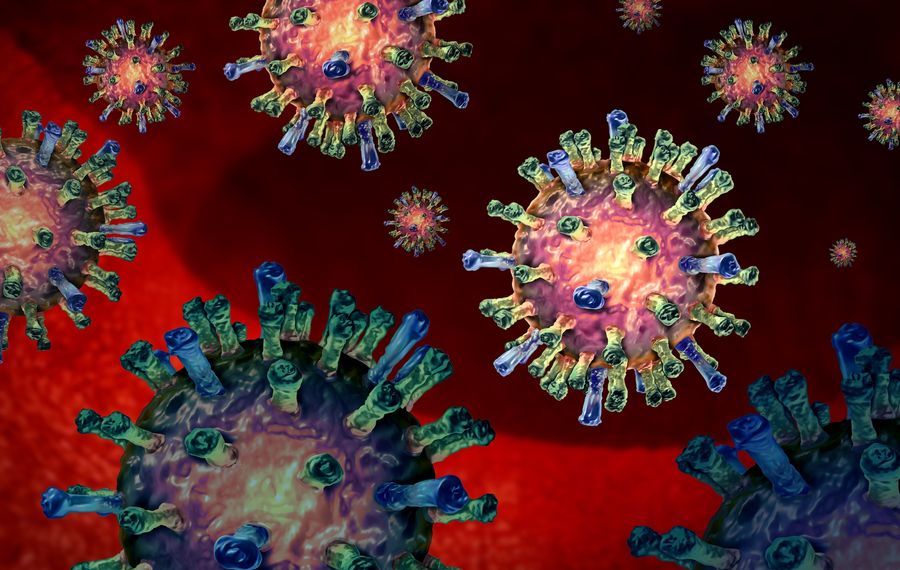
A three-dimensional illustration of measles virus particles. wildpixel
In a blockbuster settlement, Meta has agreed to pay up to $17.1 billion and overhaul how Instagram and Facebook work. The settlement resolves claims from 47 states, the District of Columbia and U.S. territories that Meta’s platforms were designed to be addictive and harmful to children, reports the New York Times.
The company will pay about $12 billion upfront, with the total rising to $17.1 billion if Snap, TikTok and YouTube also settle and agree to similar penalties and changes. It’s one of the largest settlements ever paid by a tech company.
Meta will make major changes to its platform, including imposing two-hour daily time limits on Instagram and Facebook for teens, restricting usage between midnight and 6 a.m. and silencing notifications between 10 p.m. and 7 a.m., when people are sleeping. It’s also limiting features linked to negative social comparison, like beauty filters and visible like counts, and strengthening age verification and parental controls.
“Meta wouldn’t settle unless it sees the writing on the wall and feels really exposed,” said Nora Freeman Engstrom, a law professor at Stanford University.
The settlement ends a federal bellwether trial in Oakland where four states were seeking roughly $200 billion, and comes as Meta faces mounting legal pressure. The company spent about $2 billion on legal challenges in a single quarter this year, and a New Mexico judge separately ordered it to pay nearly $1 billion in a related case this month. Meta still faces numerous other lawsuits, some headed to trial in the coming months.
A giant torrent of mud, water and ice that began high in the Himalayas tore a devastating path through a mountain valley on the border between Nepal and Tibet on Wednesday, smashing buildings and sweeping away fleeing people caught by surprise by its speed and destructive force.
At least 160 people were killed and hundreds more were missing after the flood, which snapped bridges into pieces and pulled multistory structures off their foundations. The deluge also engulfed dozens of men, women and children who were overtaken as they tried to run. The death toll was expected to rise.
Aug. 26, 2026, 4:35 p.m. ET3 hours ago
Mack Liederman
The International Federation of Red Cross is sending more than $1.2 million to the Red Cross in Nepal to help with relief efforts. The hardest-hit areas are extremely difficult to reach, particularly in the northern Rasuwa district, where bridges have been washed away and major roads cut off, making it hard to assess the full scale of the disaster, the federation said in a statement. “The priority now is to reach affected communities and get assistance to people who have lost their homes, suffered injuries or have been cut off,” said David Fisher, the head of the federation’s delegation for Nepal.
Jiban Ghimire, the managing director the expedition group Shangri-La Nepal, said he had been coordinating aerial rescue efforts with security officials. “We’ve never seen that high of a flood,” Ghimire said.
Aug. 26, 2026, 4:11 p.m. ET3 hours ago
Pranav Baskar
Ram Chandra Lamichhane, the founder of Dream Tibet Travel and Tours, a travel operator in the Himalayas, said in an interview that a group of about 35 people on one of his company’s tours were missing because of the flood. The travelers and their guides were in a town that has “completely collapsed,” making it hard to get information, he said, and the families of the tourists were reaching out in desperation. “We are still hoping,” he said.
Aug. 26, 2026, 2:06 p.m. ET5 hours ago
Binod Ghimire
Reporting from Kathmandu, Nepal
The death toll from the floods in Nepal has risen to 157, Nepal’s police said in a statement on Wednesday night. The Chinese state news agency Xinhua has reported only three deaths so far on the Chinese side of the border, after earlier reporting that there had been “significant” casualties at the Gyirong Port.
Floodwaters and mud crashed through Himalayan river valleys and swallowed villages on Wednesday, creating a cross-border crisis in Nepal and the Chinese territory of Tibet, with an unknown number of people swept away or buried.
Thousands of people live in riverside settlements downstream from the flooding, and hundreds are dead or missing, including foreign tourists. At least 19 vehicle bridges and 40 kilometers of roads have been swept away, according to a statement from Nepal’s prime minister.
Among the hundreds of tourists missing in the Nepal floods, the largest contingent — at least 100 people — are from India, according to a preliminary count from officials in Nepal and India.
Many of them were traveling to or from Mount Kailash, a Himalayan peak near the border between Nepal and Tibet, an autonomous region of China. Mount Kailash, which is part of a Hindu pilgrimage called the Kailash Mansarovar Yatra, is revered by many Hindus as the spiritual home of the god Shiva.
Aug. 26, 2026, 12:32 p.m. ET7 hours ago
Judson Jones
Reporter and meteorologist
“This is one of the most devastating floods I can remember seeing in this region,” said Tenzing Chogyal Sherpa, an expert in atmospheric and water processes at Utrecht University in the Netherlands.
While scientific consensus points to a glacier collapse in Nepal that caused a deluge of water and debris, Sherpa noted that the exact sequence of events would become clearer as satellite imagery and field observations emerged.
He added that the disaster serves as a “brutal reminder” for those living in the valleys, where current climate extremes mean that “events like this may happen again.”
.
Hundreds of people were missing in Nepal and the Tibet region of China, officials said, after waves of floodwaters ripped through river valleys and damaged settlements. Credit…Prabin Ranabhat/Agence France-Presse — Getty Images
The type 2 diabetes drug metformin may reduce the risk of dementia. A randomised study that followed people for more than 20 years found that it seems to halve the risk of developing the condition.
This offers “the available best evidence, short of a long-term randomised clinical trial, that metformin may decrease the risk of dementia”, says José Luchsinger at Columbia University in New York. However, the finding isn’t conclusive, and the potential mechanism behind it is unclear.
Metformin, which helps control blood sugar levels, is a go-to drug for treating type 2 diabetes, with 150 million people taking it daily in 2022. “I’ve been very interested in the question of whether metformin increases or decreases the risk of dementia,” says Luchsinger. “There have been reports either way.”
Some studies suggest metformin increases dementia risk, possibly by causing a deficiency in vitamin B12 that has knock-on effects on cognition. On the other hand, a 2022 meta-analysis found that, on average, metformin was associated with a lower dementia risk.
To clarify the situation, Luchsinger and his colleagues have followed up with people who took part in a clinical trial of metformin in the 1990s called the Diabetes Prevention Program (DPP). The trial showed that metformin was effective at preventing type 2 diabetes in people at risk of the condition. Since 2002, the participants have been followed by the DPP Outcomes Study.
This involved comparing 1483 people who, in the 1990s, were given either metformin, a lifestyle intervention to reduce the risk of type 2 diabetes (which included a low-fat diet and regular exercise), or a placebo. The participants did multiple cognitive tests, beginning in 2009, then an intensive battery of such tests more than a decade later.
The team found that the people who had started taking metformin in the 1990s had a significantly lower chance of dementia later in life: just 1.9 per cent of those given metformin developed dementia, compared with 4.2 per cent of those given the lifestyle intervention and 3.5 per cent of those given a placebo. The metformin group also showed significantly better memory performance.
Luchsinger flags that the participants weren’t initially recruited with the aim of studying dementia, so some of them could have had early signs of the condition or cognitive impairment at the start of the trial. What’s more, only 48 people developed dementia in the entire study.
Nevertheless, it adds to the evidence that metformin has a protective effect, says Miia Kivipelto at the Karolinska Institute in Sweden. It is rare and valuable to have the chance to follow participants over so many decades, she says.
A 2023 study of more than 210,000 people with type 2 diabetes also suggests that the reduction in risk of dementia is more pronounced among those who stay on metformin for longer. “One trial can answer some questions, but then if you put together evidence from different studies, then we really start to see the pattern more clearly,” says Kivipelto.
It is unclear how metformin may reduce dementia risk because it affects many organs and systems in the body, including hormone-producing glands and the immune system. “Does metformin decrease vascular disease in the brain, for example, or does it decrease inflammation in the brain?” says Luchsinger. “Does metformin decrease the risk of amyloid [the protein implicated in Alzheimer’s disease] in the brain?”
While the protective effect is still unclear, both Luchsinger and Kivipelto point out that the study didn’t find any evidence of metformin increasing dementia risk. “Given that it’s such a widely used medication, if we can at least establish that it’s not harmful, with conviction, I think that that, in itself, would be of really great public health importance,” says Luchsinger.
He is now running a randomised controlled trial called Metformin in Alzheimer’s Dementia Prevention, which is following participants for 18 months to see if the drug reduces the risk of Alzheimer’s disease, the most common form of dementia. Luchsinger hopes to report the results by the end of the year.
Meanwhile, Kivipelto is leading a study called MET-FINGER to find out if lifestyle changes alone, or a combination of lifestyle changes and metformin, can reduce the risk of dementia. Results are expected in 2028.
.
Metformin, a drug that helps control blood sugar levels, may also have a positive impact on the brain
In the world, human beings are facing various problems. People who are full of greed, anger, and ignorance are seen to be fighting with each other in words and deeds. As the fighting continues, various problems such as civil wars, wars of aggression, and wars of aggression are occurring. As world peace is being destroyed, humans are facing unbearable problems. Innocent children and women are not getting the rights they deserve and deserve. I can't think of one thing every time. What is it? The United Nations. If we look at the responsibilities and duties of the United Nations, I think it is not suitable for solving the problems that are happening in the world today. In fact, the United Nations and the World Security Council, such an organization must rule the world, must be able to give orders, and must have various ways to obey orders. There must be no organization that can influence more than that organization. There should be experts from each country. They can even dominate the superpowers like the US, China, and Britain. Only then will global peace be achieved quickly. Now, if a country with power develops more militarily, economically, or socially than its own country, then powerful countries will jealously seek out enemies and wage war. Or they will attack with fighter jets. In this, innocent people are losing their lives. No one understands the value of a life. You should think about how to achieve global peace by controlling these. If the US continues to be the permanent president of the UN, world peace will never be achieved. If you think carefully, no one sees that they are working for the common good, but for their own benefit, for the benefit of their own country. The permanent president of the UN and the Security Council has rejected this, As a young Rohingya, I have come to realize that only by electing the president and secretary from among the countries in the world through a secret ballot system and governing the world fairly can we achieve global peace. The United Nations and the Security Council are organizations in which any country must govern, give orders, and make them obey their orders. For example, only when a defendant is tried in court can we hold the leaders of the countries in check and control them, can we achieve global peace smoothly. Otherwise, it will not be easy for powerful countries to use various excuses to end this war every year, every year, for the benefit of themselves and their countries. No country's leaders pay any attention to the words of the United Nations and the Security Council. If we look at it in practice, look at the Rohingya issue. Myanmar is a small country. Even that country has been under siege for 8 years. What action can be taken? Why is the UN and the Security Council Powerless? Without such Power, how can the organization bring about global peace? Everyone should think about it. Whether there is a veto or a strong one, all countries in the world can only achieve global peace if they are subject to the UN and the Security Council. Seek peace in the quiet embrace of nature. Peace is an indispensable need of the human race. It is not as if one person can kill another person, and it is as if one country can attack another country, but instead of trying to build peace, we must try to destroy the peace now, and the world is getting hotter and is on the verge of collapse. I especially appeal to all the world experts to urgently try to bring about peace in all parts of the world. Mr, Noor Muhamed Arkhan Rohingya Youth Myanmar
Film and Writing Festival for Comedy. Showcasing best of comedy short films at the FEEDBACK Film Festival. Plus, showcasing best of comedy novels, short stories, poems, screenplays (TV, short, feature) at the festival performed by professional actors.













:max_bytes(150000):strip_icc()/common-lobster-467485253-5adc8c6ac5542e0036ce37c3.jpg)



 .
.