
Click the link below the bottom picture
.
Last night’s near-total lunar eclipse did not disappoint. In the second and final lunar eclipse of the year, our natural satellite transformed into a stunning red-orange “blood moon” as almost all of it fell under Earth’s shadow.
During a lunar eclipse, Earth passes between the sun and moon, partially or totally obstructing sunlight on the latter. In this case, more than 96 percent of the moon was covered by Earth’s dark shadow, or umbra, according to NASA, making it a “deep partial eclipse.”
The reddish tone comes from the way Earth’s atmosphere filters light—reddish hues slip through to the other side, while other colors are refracted away, much like a sunset.
Last night’s eclipse began around 9:23 P.M. EDT on Thursday and lasted until about 3:02 A.M. EDT on Friday. The height of the eclipse occurred at 12:13 A.M. EDT, when the moon was 96.3 percent covered in shadow.
We collected some of the best pictures of the event from around the world.
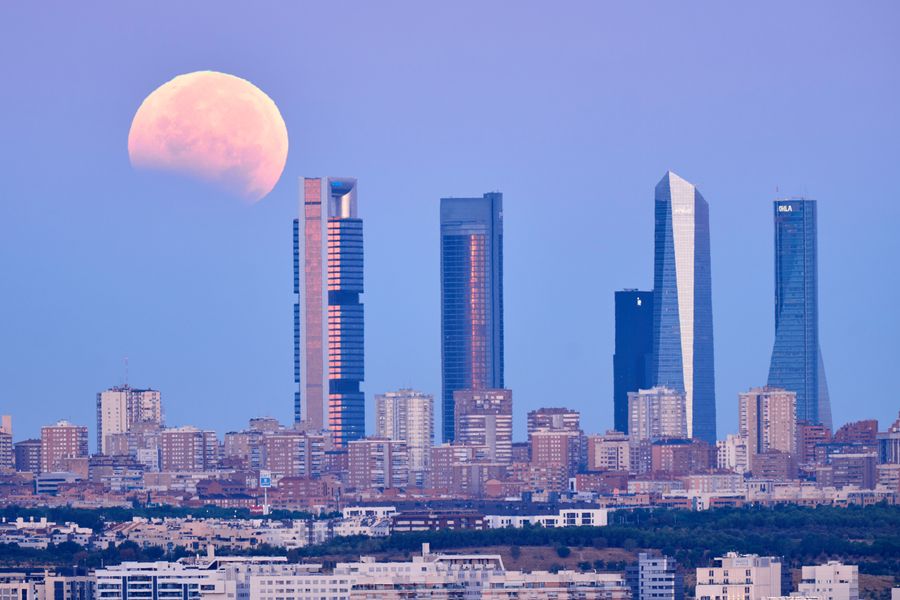
The moon during the partial lunar eclipse on August 28, 2026, in Madrid. Angel Martinez/Getty Images
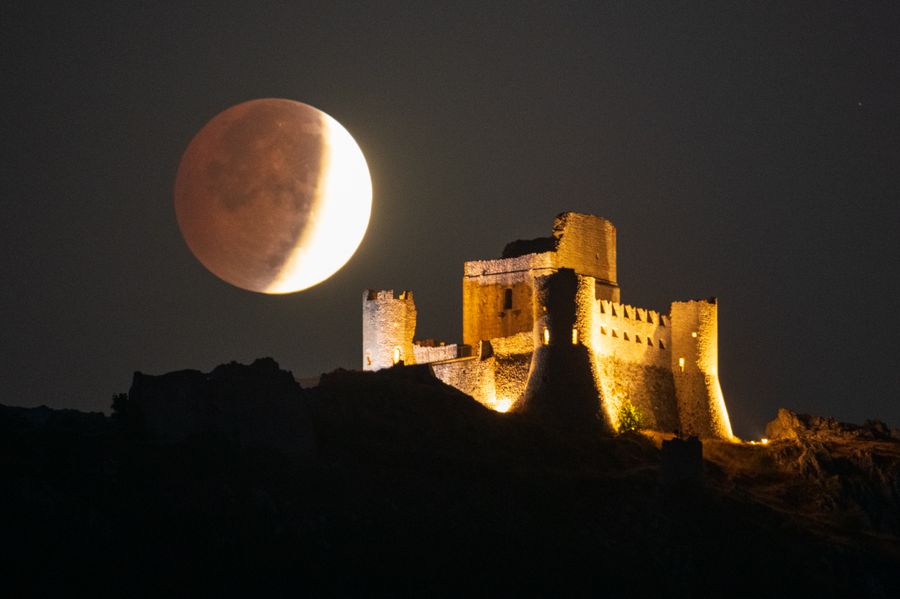
The partial lunar eclipse setting over the fortress Rocca Calascio is seen from Calascio, Italy, on August 28, 2026. Lorenzo Di Cola/NurPhoto/Getty Images
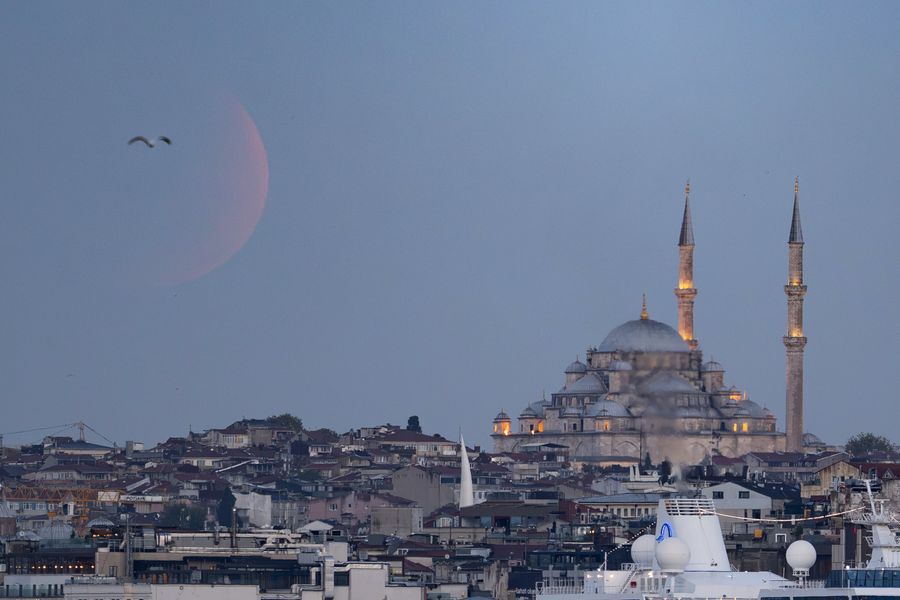
The partial lunar eclipse alongside the Nuruosmaniye Mosque in Istanbul on August 28, 2026. Ahmet Okatali/Anadolu/Getty Images
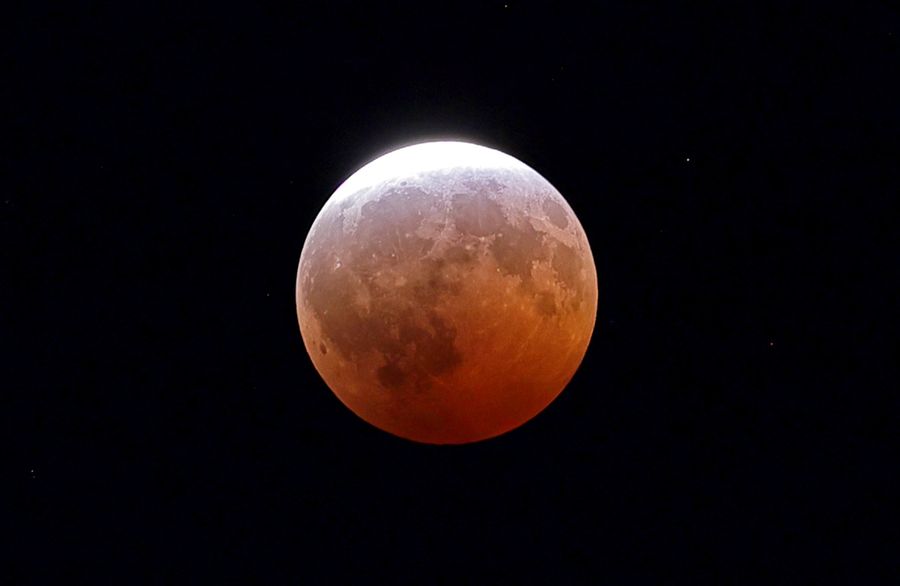
The partial lunar eclipse over Saint Louis, Mo., on August 27, 2026. David Carson/St. Louis Post-Dispatch/Getty Images
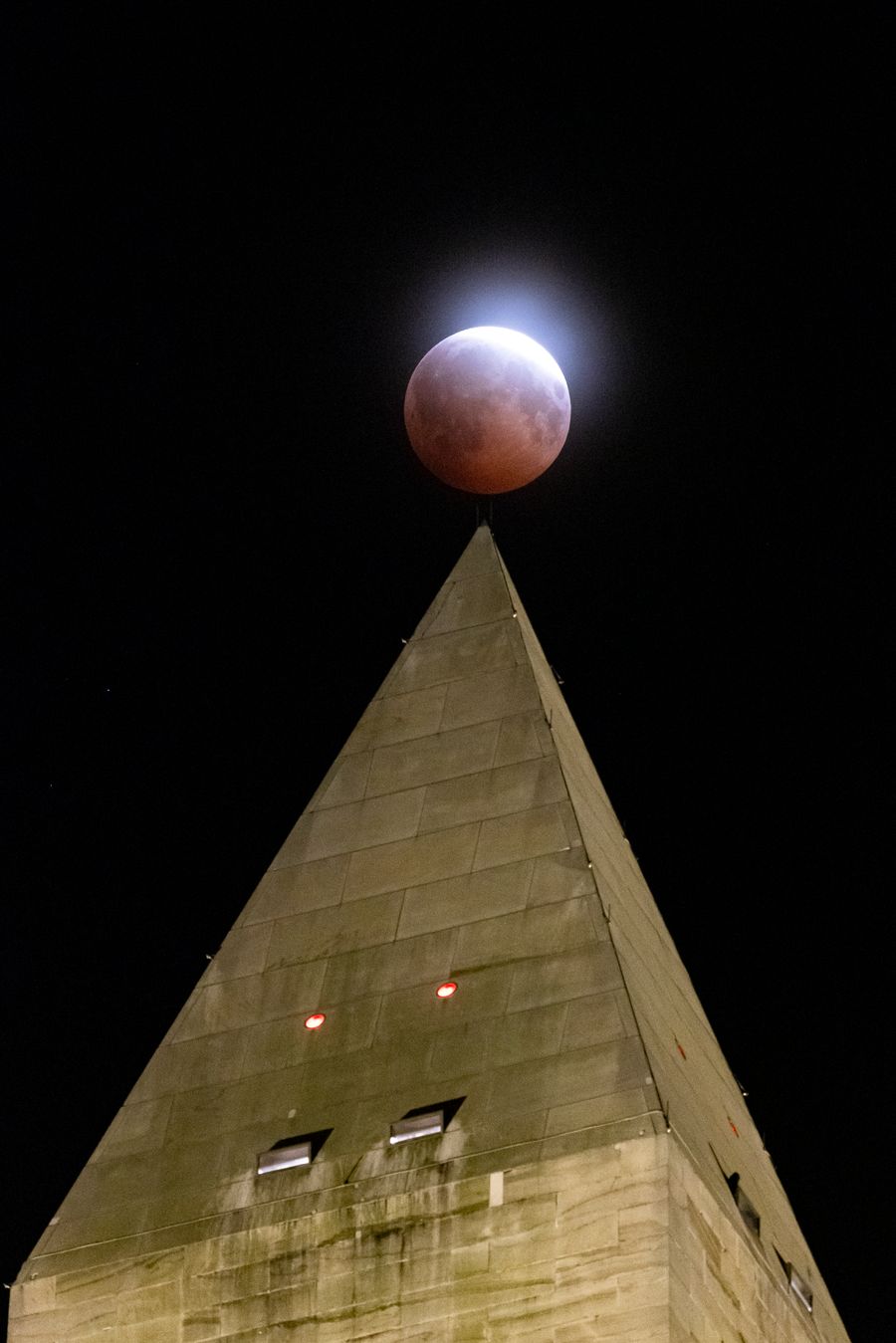
The partial lunar eclipse over the Washington Monument in Washington, D.C., on August 27, 2026. Austin DeSisto/NurPhoto/Getty Images
Do you want to catch the next eclipse? While 2027 will see three very subtle, or penumbral, lunar eclipses, the next total lunar eclipse won’t occur until December 31, 2028. But two solar eclipses—when the moon will pass between Earth and the sun—will take place in 2027: a “ring of fire” annular eclipse on February 6 and a total solar eclipse on August 2.
.
The partial lunar eclipse over Saint Louis, Mo., on August 27, 2026. David Carson/St. Louis Post-Dispatch/Getty Images
.
.
Click the link below for the complete article:
https://www.scientificamerican.com/article/see-last-nights-blood-moon-eclipse-from-around-the-world/
.
__________________________________________


Leave a comment