Staring through a swarm of photographers and television crews, self-described introvert Greta Thunberg took the stage at a Swiss university last week to pointedly reiterate a message that has captured the attention of leaders and like-minded young women around the globe: The world must take drastic action now to avert ecological and civilizational collapse.
“We know that our future is at risk,” the small, soft-spoken 16-year-old Swede tells journalists at the start of a weeklong youth summit at the University of Lausanne. “We would love to go back to school and continue with our everyday lives, but as crucial as this situation is, as serious as this situation is, we feel like we must do something about this now.”
Thunberg — whose central point is that humanity must immediately reduce greenhouse gas emissions that have unrelentingly increased since the start of the industrial revolution, resulting in global warming — is the driving force behind a movement that has seen more than 2 million teens around the world take part in Fridays for Future school strikes against climate change.
.
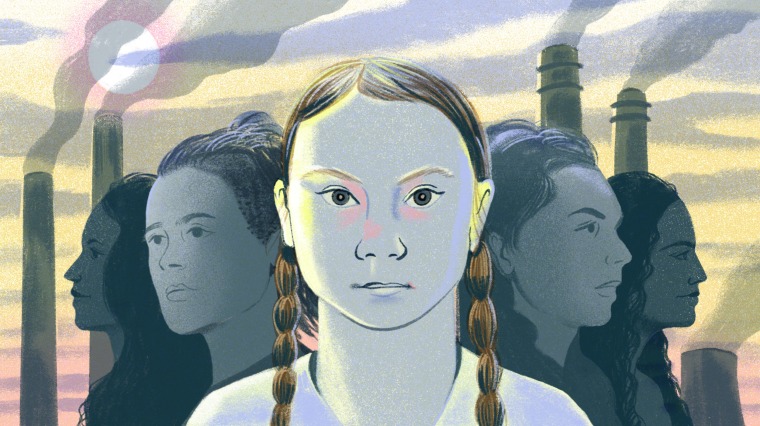
Greta Thunberg is the driving force behind a movement that has seen more than 2 million teens around the world take part in school strikes against climate change.Eleanor Taylor / for NBC News
Diabetics skipping regular checkups. Young asthmatics not getting preventive care. A surge in expensive emergency room visits.
Doctors and public health experts warn of poor health and rising costs they say will come from sweeping Trump administration changes that would deny green cards to many immigrants who use Medicaid, as well as food stamps and other forms of public assistance. Some advocates say they’re already seeing the fallout even before the complex 837-page rule takes effect in October.
President Donald Trump‘s administration trumpeted its aggressive approach this past week as a way to keep only self-sufficient immigrants in the country, but health experts argue it could force potentially millions of low-income migrants to choose between needed services and their bid to stay legally in the U.S.
It’s brutal out there for employers looking to hire.
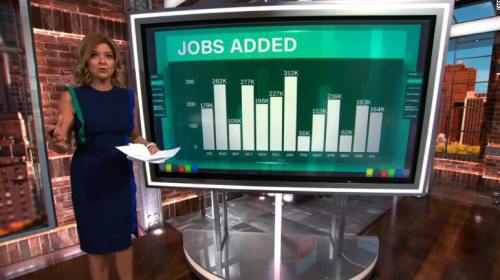
“America has a talent crunch,” said Steven Lindner, CEO of The WorkPlace Group. “This one, unlike past ones, is across all age groups. We also see it across all industries.”
.
So some companies are reducing hiring requirements — like drug testing, background checks and the amount of experience and education wanted.
.
When Bob Camire started working at New England Document Systems in 2010 he had no problem finding workers for the document management company — even for the entry-level production positions that paid $8 an hour.
Nothing prepares you for the view. From space, Earth is alive. The greenest greens and bluest blues, auroras dancing at the poles, lightning storms flashing like fireflies. Landmasses defined more by ancient, tectonic textures than any arbitrarily imposed border. The impossibly thin atmosphere protecting 7 billion people from the dark, unforgiving void beyond.
All seen while floating weightlessly.
Weightlessness — the experience is surreal, at least at first. Rookie astronauts bumble about like babies learning to walk and delight in sleeping on the ceiling. Arms come to rest in the zombie position. Hair stands on end as if electrocuted. Everything not pinned down floats away — glasses, tools, grains of rice scattering into a cloud of debris, while fugitive sauces paint stains on walls.
An episode of “Jimmy Kimmel Live” last year featured emergency tones in a sketch mocking the presidential alert system. And it’ll cost parent company ABC dearly.
In a statement Thursday, the Federal Communications Commission said it hit the show with a $395,000 fine for misusing the tone from the emergency alert system.
.
The emergency alert system (EAS) tone is used on television and cellphones to warn people of impending emergencies such as tornadoes and floods.
.
To protect the purpose of the warning system, the agency has a rule against use of EAS tones or their simulations — except in actual emergencies, authorized tests or qualified public service announcements.
It’s 7:20 p.m. when he rolls into Spicy Bite, one of the newest restaurants here in rural northwest New Mexico.
Locals in Milan, a town of 3,321, have barely heard of it.
The building is small, single-story, built of corrugated metal sheets. There are seats for 20. The only advertising is spray-painted on concrete roadblocks in English and Punjabi. Next door is a diner and gas station; the county jail is across the road.
Palwinder Singh orders creamy black lentils, chicken curry and roti, finishing it off with chai and cardamom rice pudding. After 13 hours on and off the road in his semi truck, he leans back in a booth as a Bollywood music video plays on TV.
“This is like home,” says Pal, the name he uses on the road (said like “Paul”).
.
Palwinder Singh hauls produce through New Mexico on Interstate 40 on the way to Indiana.
The marshmallow test is one of the most famous pieces of social-science research: Put a marshmallow in front of a child, tell her that she can have a second one if she can go 15 minutes without eating the first one, and then leave the room. Whether she’s patient enough to double her payout is supposedly indicative of a willpower that will pay dividends down the line, at school and eventually at work. Passing the test is, to many, a promising signal of future success.
But a new study has cast the whole concept into doubt. The researchers—NYU’s Tyler Watts and UC Irvine’s Greg Duncan and Hoanan Quan—restaged the classic marshmallow test, which was developed by the Stanford psychologist Walter Mischel in the 1960s. Mischel and his colleagues administered the test and then tracked how children went on to fare later in life. They described the results in a 1990 study, which suggested that delayed gratification had huge benefits, including on such measures as standardized test scores.
Film and Writing Festival for Comedy. Showcasing best of comedy short films at the FEEDBACK Film Festival. Plus, showcasing best of comedy novels, short stories, poems, screenplays (TV, short, feature) at the festival performed by professional actors.


 .
.
 Drug tests and background checks?
 Bewilder for The Washington Post
 Jimmy Kimmel


 James' World 2