February 15, 2021
Mohenjo
Business, Human Interest, Science, Technical
amazon, business, Business News, current-events, Future, Hotels, human-rights, medicine, mental-health, research, Science, Science News, technology, Technology News, travel, vacation

Click the link below the picture
.
By the spring of 2020, the high stakes involved in rigorous, timely, and honest statistics had suddenly become all too clear. A new coronavirus was sweeping the world. Politicians had to make their most consequential decisions in decades, and fast. Many of those decisions depended on data detective work that epidemiologists, medical statisticians, and economists were scrambling to conduct. Tens of millions of lives were potentially at risk. So were billions of people’s livelihoods.
In early April, countries around the world were a couple of weeks into lockdown, global deaths passed 60,000, and it was far from clear how the story would unfold. Perhaps the deepest economic depression since the 1930s was on its way, on the back of a mushrooming death toll. Perhaps, thanks to human ingenuity or good fortune, such apocalyptic fears would fade from memory. Many scenarios seemed plausible. And that’s the problem.
An epidemiologist, John Ioannidis, wrote in mid-March that Covid-19 “might be a once-in-a-century evidence fiasco”. The data detectives are doing their best – but they’re having to work with data that’s patchy, inconsistent, and woefully inadequate for making life-and-death decisions with the confidence we would like.
.
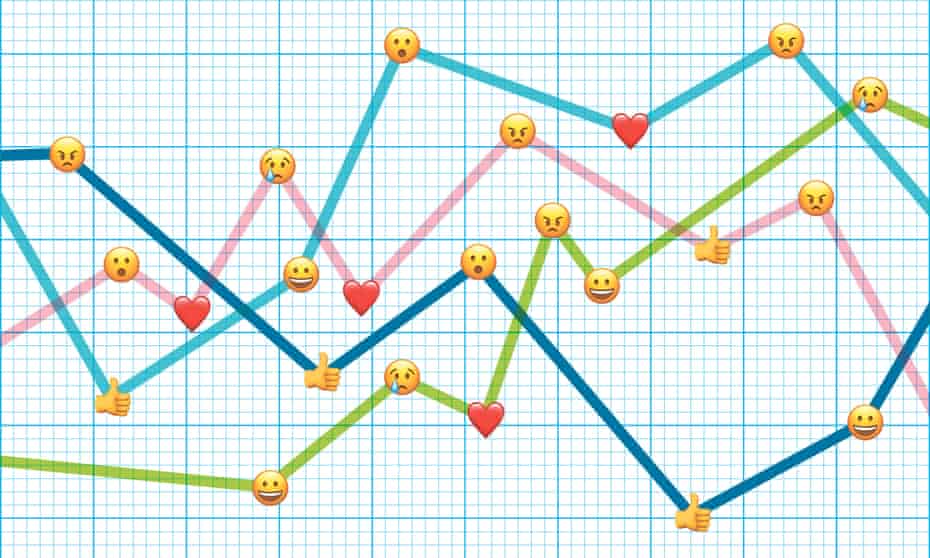 Illustration Guardian Design
.
.
Click the link below for the article:
.
__________________________________________
February 15, 2021
Mohenjo
Business, Human Interest, Science, Technical
amazon, business, Business News, current-events, Future, Hotels, human-rights, medicine, mental-health, research, Science, Science News, technology, Technology News, travel, vacation

Click the link below the picture
.
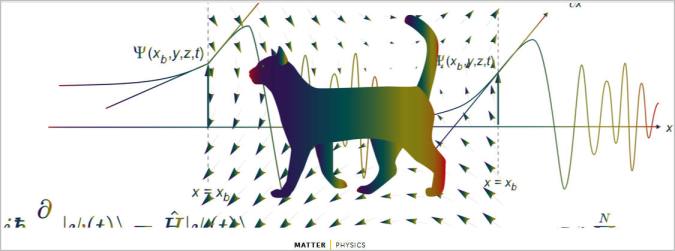
Some of the most perplexing topics in physics revolve around quantum theory. The quandary is seen most famously in the Schrödinger’s cat question and the issue of information loss in black hole evaporation. Richard Feynman said, “I think that I can safely say that nobody understands quantum mechanics.” Most physicists have just gotten used to it. There’s no doubt quantum theory is successful at the practical level. But when considering it as more than a tool for calculating probabilities for possible outcomes of experiments in the laboratory, and taking it as a fundamental description of the “world out there,” it faces serious conceptual problems.
The basic problem is that quantum theory seems to be about what we measure and not about what is out there in the world. One might think this is just fine, as the theory represents just “our information” about the world. But that would make sense only if there were something about the world that we can be informed of, which must be, in general situations, specified by the theory. Understanding how to deal with this conceptual problem requires us to look at the theory in more detail.
.
.
.
Click the link below for the article:
.
__________________________________________
February 15, 2021
Mohenjo
Arts, Crime, Food For Thought, Human Interest, Made Me Laugh, Medical, missed News, Political, Science, sports, Technical
amazon, business, Business News, current-events, Future, Hotels, human-rights, medicine, mental-health, research, Science, Science News, technology, Technology News, travel, vacation

.
News You might have missed!
Use your browser or smartphone back arrow (<-) to return to this table for your next selection.
.
__________________________________________
February 13, 2021
Mohenjo
Business, Human Interest, Science, Technical
amazon, business, Business News, current-events, Future, Hotels, human-rights, medicine, mental-health, research, Science, Science News, technology, Technology News, travel, vacation

Click the link below the picture
.
It is not often that a comedian gives an astrophysicist goosebumps when discussing the laws of physics. But comic Chuck Nice managed to do just that in a recent episode of the podcast StarTalk. The show’s host Neil deGrasse Tyson had just explained the simulation argument—the idea that we could be virtual beings living in a computer simulation. If so, the simulation would most likely create perceptions of reality on demand rather than simulate all of the reality all the time—much like a video game optimized to render only the parts of a scene visible to a player. “Maybe that’s why we can’t travel faster than the speed of light because if we could, we’d be able to get to another galaxy,” said Nice, the show’s co-host, prompting Tyson to gleefully interrupt. “Before they can program it,” the astrophysicist said, delighting at the thought. “So the programmer put in that limit.”
Such conversations may seem flippant. But ever since Nick Bostrom of the University of Oxford wrote a seminal paper about the simulation argument in 2003, philosophers, physicists, technologists and, yes, comedians have been grappling with the idea of our reality being a simulacrum. Some have tried to identify ways in which we can discern if we are simulated beings. Others have attempted to calculate the chance of us being virtual entities. Now a new analysis shows that the odds that we are living in base reality—meaning an existence that is not simulated—are pretty much even. But the study also demonstrates that if humans were to ever develop the ability to simulate conscious beings, the chances would overwhelmingly tilt in favor of us, too, being virtual denizens inside someone else’s computer. (A caveat to that conclusion is that there is little agreement about what the term “consciousness” means, let alone how one might go about simulating it.)
.
Credit: Getty Images
.
.
Click the link below for the article:
.
__________________________________________
February 13, 2021
Mohenjo
Business, Human Interest, Science, Technical
amazon, business, Business News, current-events, Future, Hotels, human-rights, medicine, mental-health, research, Science, Science News, technology, Technology News, travel, vacation

Click the link below the picture
.
Far from the protective embrace of the Sun, the edge of our Solar System would seem to be a cold, empty, and dark place. The yawning space between us and the nearest stars was for a long time thought to be a frighteningly vast expanse of nothingness.
Until recently, it was somewhere that humankind could only peer into from afar. Astronomers paid it only passing attention, preferring instead to focus their telescopes on the glowing masses of our neighboring stars, galaxies, and nebula.
But two spacecraft, built and launched in the 1970s, have for the past few years been beaming back our first glimpses from this strange region we call interstellar space. As the first man-made objects to leave our Solar System, they are venturing into uncharted territory, billions of miles from home. No other spacecraft has traveled as far.
.
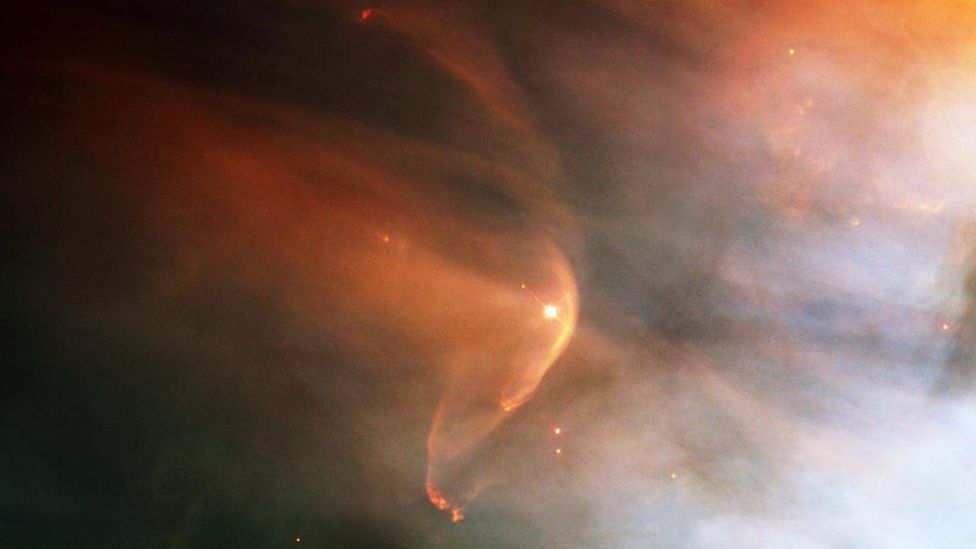
By Patchen Barss8th September 2020
.
.
Click the link below for the article:
.
__________________________________________
February 13, 2021
Mohenjo
Arts, Crime, Enthralling, Food For Thought, Human Interest, missed News, Political, Science, Technical
amazon, business, Business News, current-events, Future, Hotels, human-rights, medicine, mental-health, research, Science, Science News, technology, Technology News, travel, vacation
.
News You might have missed!
Use your browser or smartphone back arrow (<-) to return to this table for your next selection.
.
__________________________________________
February 12, 2021
Mohenjo
Business, Human Interest, Science, Technical
amazon, business, Business News, current-events, Future, Hotels, human-rights, medicine, mental-health, research, Science, Science News, technology, Technology News, travel, vacation
Click the link below the picture
.
A team of physicists in New York has discovered a material that conducts electricity with perfect efficiency at room temperature — a long-sought scientific milestone. The hydrogen, carbon, and sulfur compound operates as a superconductor at up to 59 degrees Fahrenheit, the team reported today in Nature. That’s more than 50 degrees hotter than the previous high-temperature superconductivity record set last year.
“This is the first time we can really claim that room-temperature superconductivity has been found,” said Ion Errea, a condensed matter theorist at the University of the Basque Country in Spain who was not involved in the work.
“It’s clearly a landmark,” said Chris Pickard, a materials scientist at the University of Cambridge. “That’s a chilly room, maybe a British Victorian cottage,” he said of the 59-degree temperature.
Yet while researchers celebrate the achievement, they stress that the newfound compound — created by a team led by Ranga Dias of the University of Rochester — will never find its way into lossless power lines, frictionless high-speed trains, or any of the revolutionary technologies that could become ubiquitous if the fragile quantum effect underlying superconductivity could be maintained in truly ambient conditions. That’s because the substance superconducts at room temperature only while being crushed between a pair of diamonds to pressures roughly 75% as extreme as those found in the Earth’s core.
.

A novel metallic compound of hydrogen, carbon, and sulfur exhibited superconductivity at a balmy 59 degrees Fahrenheit when pressurized between a pair of diamond anvils. J. Adam Fenster / University of Rochester
.
.
Click the link below for the article:
.
__________________________________________
February 12, 2021
Mohenjo
Business, Human Interest, Science, Technical
amazon, business, Business News, current-events, Future, Hotels, human-rights, medicine, mental-health, research, Science, Science News, technology, Technology News, travel, vacation

Click the link below the picture
.
Long ago, in lands that were always warm, people got ice from the heavens.
At sunset, they poured water into shallow earthen pits or ceramic trays insulated with reeds. All through the night, the water would radiate its heat into the chilly void of space. By morning, it turned to ice — even though the air temperature never dropped below freezing.
This wasn’t magic; it was science.
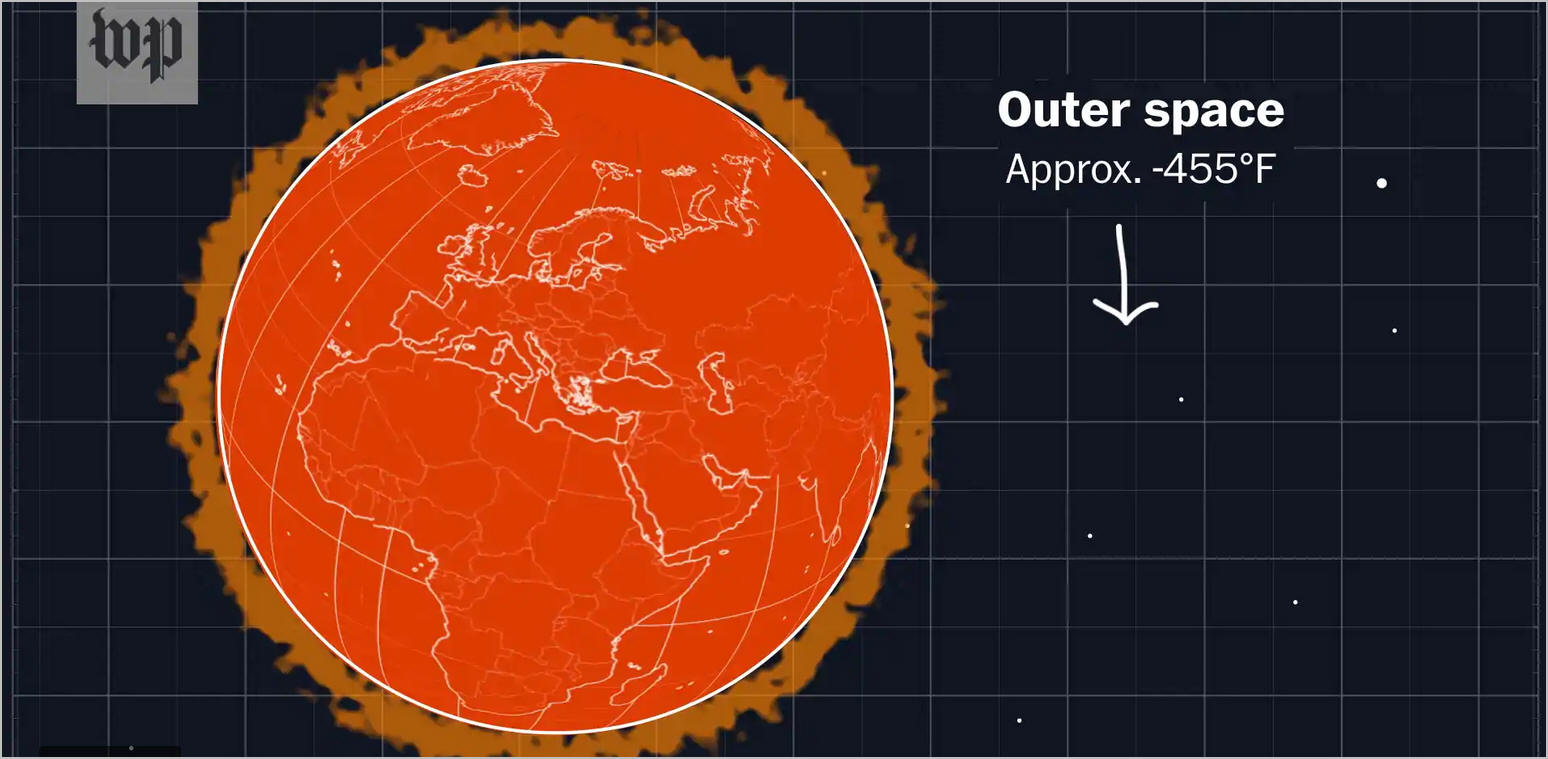
For centuries, desert dwellers in North Africa, India, and Iran tapped into the law of physics called radiative cooling. All objects — people, plants, buildings, planets — give off heat in waves of invisible light. On a clear, starry night, that radiation can rise through the atmosphere until it escapes Earth entirely. Coldness, which is really the absence of heat, is created through this invisible connection to the cosmos.
The world now cools off with the help of more than 3.5 billion refrigerators and air conditioners, a number that is quickly growing. But those appliances are also a major source of greenhouse gas emissions. In seeking relief from the heat, humans are making the globe even hotter, compounding the demand for cooling.
To break that cycle, University of California at Los Angeles materials scientist Aaswath Raman wants to turn ancient technology into a 21st-century tool.
.
 By Sarah Kaplan
.
.
Click the link below for the article:
.
__________________________________________
February 11, 2021
Mohenjo
Business, Human Interest, Science, Technical
amazon, business, Business News, current-events, Future, Hotels, human-rights, medicine, mental-health, research, Science, Science News, technology, Technology News, travel, vacation

Click the link below the picture
.
The Cold War had been concluded for less than a decade when NASA astronaut Bill Shepherd and two Russian cosmonauts, Sergei Krikalev and Yuri Gidzenko, crammed themselves into a Soyuz spacecraft and blasted into orbit on Halloween, 20 years ago.
Two days later their small spacecraft docked with the International Space Station, then a fraction of the size it is today. Their arrival would herald the beginning of what has since become 20 years of continuous habitation of the laboratory that NASA, leading an international partnership, would continue to build for another decade.
Born of a desire to smooth geopolitical tensions in the aftermath of the great conflict between the United States and the Soviet Union, the space station partnership has more or less succeeded—the station has remained inhabited despite the space shuttle Columbia disaster in 2003, and later, nearly a decade of no US space transportation. NASA, Roscosmos, and the European, Japanese, and Canadian partners have been able to rely on one another.
Not that it has been easy. Tensions have existed from those very first moments on the station. Shepherd, who would serve as the first ISS commander over his more experienced cosmonaut counterparts, wanted to nickname the station “Alpha.” He had support for this from Krikalev, but some Russian space officials believed their earlier Mir space station had earned that honor. The new station, they believed, ought to be named “Beta.” NASA, too, had not signed off on this designation.
.
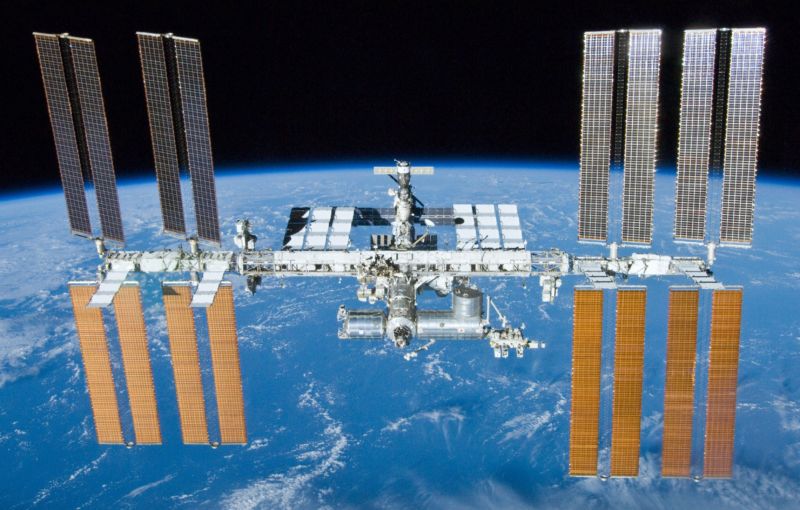 The essentially complete International Space Station in 2010, as seen by space shuttle Atlantis.
.
.
Click the link below for the article:
.
__________________________________________
February 11, 2021
Mohenjo
Business, Food For Thought, Human Interest, Science, Technical
amazon, business, Business News, current-events, Future, Hotels, human-rights, medicine, mental-health, research, Science, Science News, technology, Technology News, travel, vacation

Click the link below the picture
.
An astrophysicist at the University of Bologna and a neurosurgeon at the University of Verona compared the network of neuronal cells in the human brain with the cosmic network of galaxies… and surprising similarities emerged.
In their paper published in Frontiers in Physics, Franco Vazza (astrophysicist at the University of Bologna) and Alberto Feletti (neurosurgeon at the University of Verona) investigated the similarities between two of the most challenging and complex systems in nature: the cosmic network of galaxies and the network of neuronal cells in the human brain.
Despite the substantial difference in scale between the two networks (more than 27 orders of magnitude), their quantitative analysis, which sits at the crossroads of cosmology and neurosurgery, suggests that diverse physical processes can build structures characterized by similar levels of complexity and self-organization.
The human brain functions thanks to its wide neuronal network that is deemed to contain approximately 69 billion neurons. On the other hand, the observable universe is composed of a cosmic web of at least 100 billion galaxies. Within both systems, only 30% of their masses are composed of galaxies and neurons. Within both systems, galaxies and neurons arrange themselves in long filaments or nodes between the filaments. Finally, within both systems, 70% of the distribution of mass or energy is composed of components playing an apparently passive role: water in the brain and dark energy in the observable Universe.
.
 Left: section of cerebellum, with magnification factor 40x, obtained with electron microscopy (Dr. E. Zunarelli, University Hospital of Modena); right: section of a cosmological simulation, with an extension of 300 million light-years on each side (Vazza et al. 2019 A&A). Credit: University of Bologna
.
.
Click the link below for the article:
.
__________________________________________
Older Entries
Newer Entries
 James' World 2