February 18, 2021
Mohenjo
Business, Human Interest, Science, Technical
amazon, business, Business News, current-events, Future, Hotels, human-rights, medicine, mental-health, research, Science, Science News, technology, Technology News, travel, vacation

Click the link below the picture
.
In late 2019, paleontologists reported finding the fossil of a flattened turtle shell that “was possibly trodden on” by a dinosaur, whose footprints spanned the rock layer directly above. The rare discovery of correlated fossils potentially traces two bygone species to the same time and place. “It’s only by doing that that we’re able to reconstruct ancient ecosystems,” one paleontologist told The New York Times.
The approach parallels the way cosmologists go about inferring the history of the universe. Like fossils, astronomical objects are not randomly strewn throughout space. Rather, spatial correlations between the positions of objects such as galaxies tell a detailed story of the ancient past. “Paleontologists infer the existence of dinosaurs to give a rational accounting of strange patterns of bones,” said Nima Arkani-Hamed, a physicist and cosmologist at the Institute for Advanced Study in Princeton, New Jersey. “We look at patterns in space today, and we infer a cosmological history in order to explain them.”
.
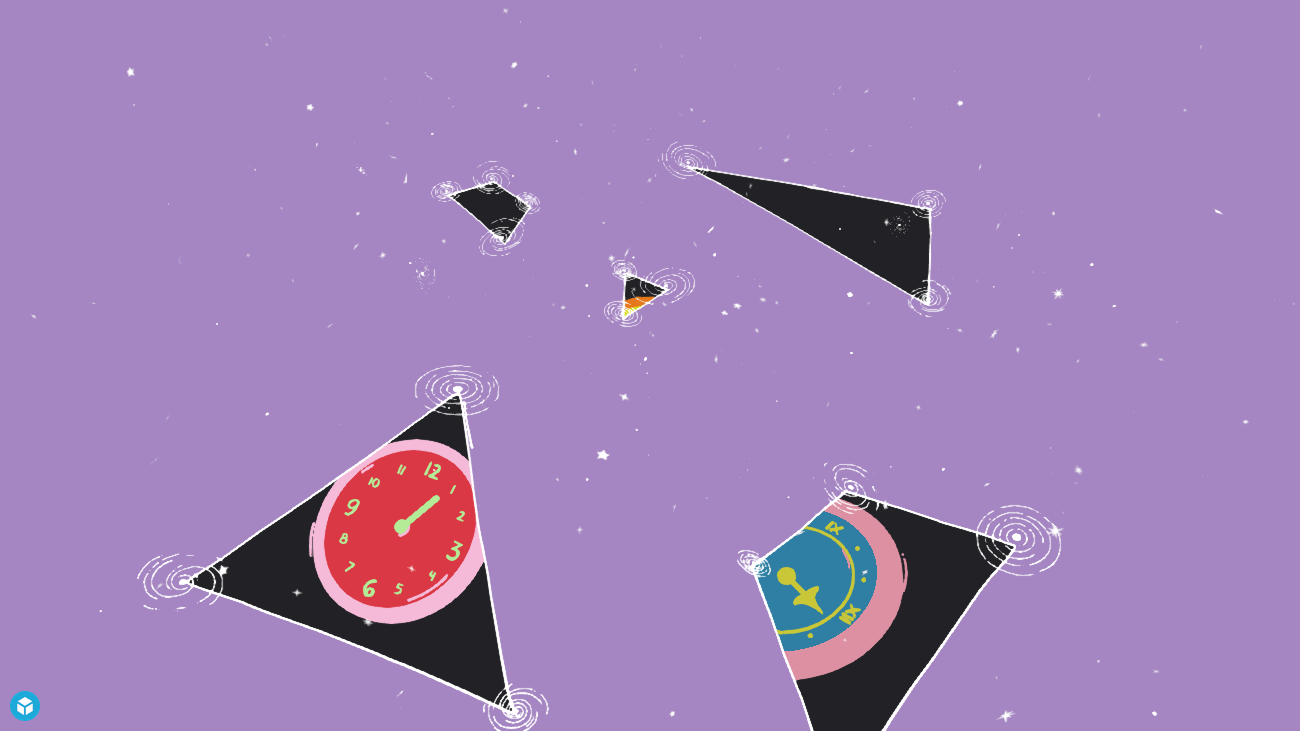
Shapes made by objects in the sky may hold clues about the nature of time. Click and drag on the image to move around; scroll to zoom in and out. Credit: Olena Shmahalo/Quanta Magazine.
.
.
Click the link below for the article:
.
__________________________________________
February 18, 2021
Mohenjo
Business, Human Interest, Science, Technical
amazon, business, Business News, current-events, Future, Hotels, human-rights, medicine, mental-health, research, Science, Science News, technology, Technology News, travel, vacation

Click the link below the picture
.
If you ask her husband, Dr. Lisa Feldman Barrett has just written the first neuroscience beach read. But Dr. Barrett considers her new book, Seven and a Half Lessons About the Brain, more of a choose-your-own-adventure, a chance to distill her favorite dinner party stories about the mind—from how our big gray blobs evolved to the myth of the “lizard brain”—into a witty and information-packed page-turner.
“At a time where science is under attack in some political circles, I wanted to show people that it can be useful and interesting. Science may not be a perfect endeavor, but it’s still the best way we have for learning about ourselves and the world.”
That’s part of why she challenged herself to turn her typical scientific writing—“extremely technical, filled with gazillions of references”—into a series of essays that reflect a more conversational approach.
.
 The brain
.
.
Click the link below for the article:
.
__________________________________________
February 18, 2021
Mohenjo
Business, Human Interest, Science, Technical
amazon, business, Business News, current-events, Future, Hotels, human-rights, medicine, mental-health, research, Science, Science News, technology, Technology News, travel, vacation
Click the link below the picture
.
Score one for the human brain. In a 2018 study, computer scientists found that artificial intelligence systems fail a vision test a child could accomplish with ease.
“It’s a clever and important study that reminds us that ‘deep learning’ isn’t really that deep,” said Gary Marcus, a neuroscientist at New York University who was not affiliated with the work.
The result takes place in the field of computer vision, where artificial intelligence systems attempt to detect and categorize objects. They might try to find all the pedestrians in a street scene, or just distinguish a bird from a bicycle (which is a notoriously difficult task). The stakes are high: As computers take over critical tasks like automated surveillance and autonomous driving, we’ll want their visual processing to be at least as good as the human eyes they’re replacing.
.
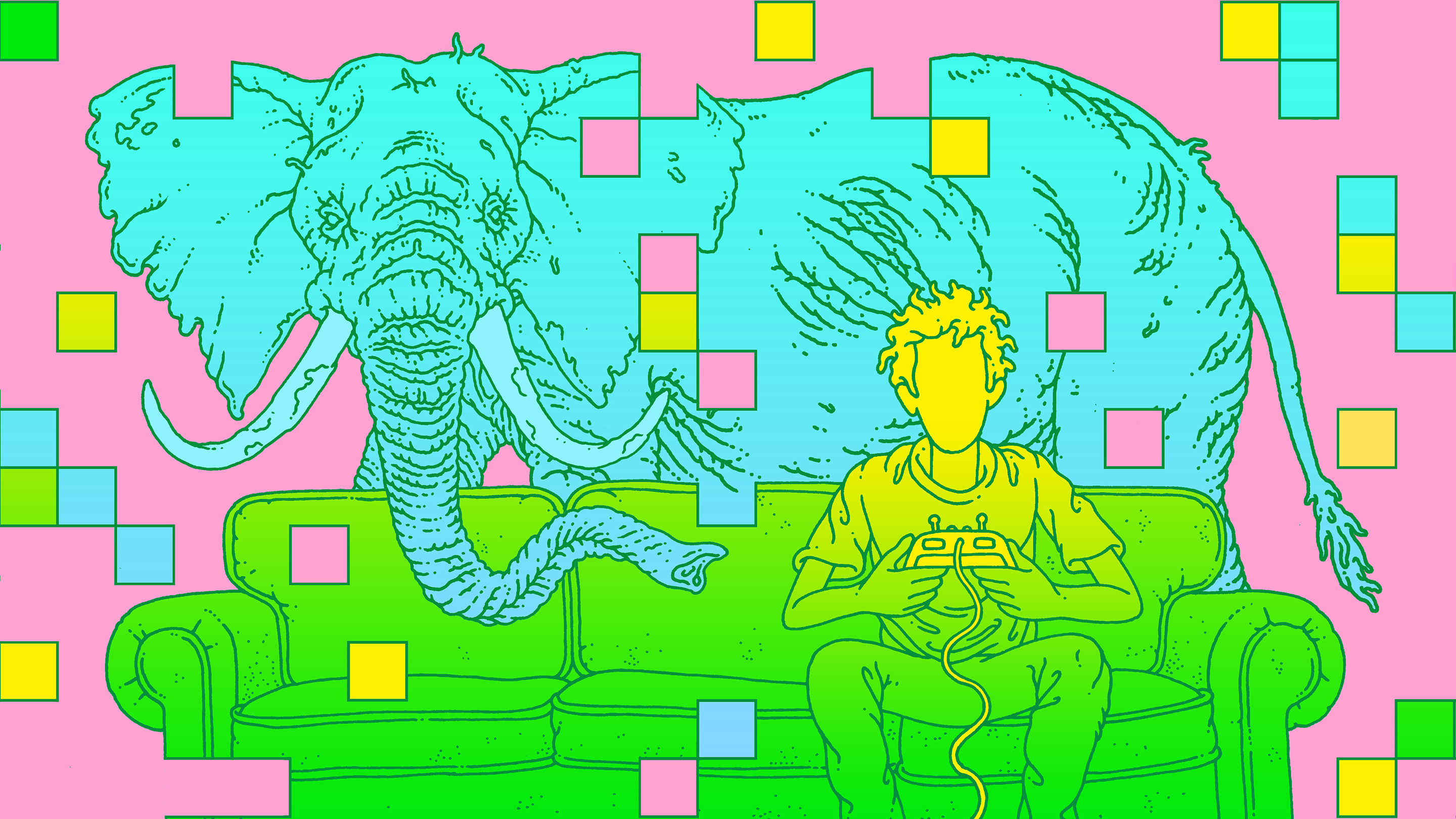
Credit: Eric Nyquist for Quanta Magazine.
.
.
Click the link below for the article:
.
__________________________________________
February 18, 2021
Mohenjo
Arts, Food For Thought, Human Interest, Medical, missed News, Political, Science, Technical
amazon, business, Business News, current-events, Future, Hotels, human-rights, medicine, mental-health, research, Science, Science News, technology, Technology News, travel, vacation

.
News You might have missed!
Use your browser or smartphone back arrow (<-) to return to this table for your next selection.
.
__________________________________________
February 17, 2021
Mohenjo
Business, Human Interest, Science, Technical
amazon, business, Business News, current-events, Future, Hotels, human-rights, medicine, mental-health, research, Science, Science News, technology, Technology News, travel, vacation

Click the link below the picture
.
Wisdom is full of paradoxes. It is one of the oldest topics in the intellectual history of humanity, and yet talking about wisdom can feel odd and disingenuous. People seem to have intuitions about who is and isn’t wise, but if you press them to define wisdom, they will hesitate. Wisdom, with its mystical qualities, sits on a pedestal, inspiring awe and trepidation, a bit of hushed reverence thrown in. It’s easy to distill wisdom’s archetypes in history (druids, Sufi sages) or popular culture (Star Wars’ Yoda, or Harry Potter’s Dumbledore), but harder to apply to the person on the street. Most people would agree that wisdom is desirable, yet what exactly is it?
It’s tempting to claim that the interest in wisdom emerged with the advent of particular Far Eastern philosophical traditions such as Buddhism, Hinduism, Taoism, each emphasizing lives of sages and ways to make sense of one’s existence in the ever-changing world. Of course, neither the concept of sages nor the process of making sense of the world is specific to a particular school of thought – most religions and ideologies have their own sages and saints, and attempt to provide a certain worldview. The truth is, the concept of wisdom is incredibly ancient, and not unique to any specific culture or way of being.
For instance, more than 5,000 years ago in ancient Mesopotamia, the Moon-god Nanna, the Lord of Wisdom, symbolized the sum of all other Sumerian deities’ powers, including foresight, justice, fertility, and love. Wisdom was a prominent topic in ancient Egyptian and Jewish texts and featured as a requirement in advising professions such as divinity, sorcery, or at the pharaoh’s court. In his Maxims, the ancient Egyptian vizier Ptahhotep described guidelines for sustaining social order, achieving political success, and cultivating self-control – in other words, the skills of wisdom. In the Old Testament’s Book of Ecclesiastes, where life is beyond comprehension, wisdom recognizes the limits of knowledge.
.
 Wisdom
.
.
Click the link below for the article:
.
__________________________________________
February 17, 2021
Mohenjo
Business, Human Interest, Science, Technical
amazon, business, Business News, current-events, Future, Hotels, human-rights, medicine, mental-health, research, Science, Science News, technology, Technology News, travel, vacation

Click the link below the picture
.
What does it feel like to be both alive and dead?
That question irked and inspired Hungarian-American physicist Eugene Wigner in the 1960s. He was frustrated by the paradoxes arising from the vagaries of quantum mechanics—the theory governing the microscopic realm that suggests, among many other counterintuitive things, that until a quantum system is observed, it does not necessarily have definite properties. Take his fellow physicist Erwin Schrödinger’s famous thought experiment in which a cat is trapped in a box with poison that will be released if a radioactive atom decays. Radioactivity is a quantum process, so before the box is opened, the story goes, the atom has both decayed and not decayed, leaving the unfortunate cat in limbo—a so-called superposition between life and death. But does the cat experience being in superposition?
Wigner sharpened the paradox by imagining a (human) friend of his shut in a lab, measuring a quantum system. He argued it was absurd to say his friend exists in a superposition of having seen and not seen a decay unless and until Wigner opens the lab door. “The ‘Wigner’s friend’ thought experiment shows that things can become very weird if the observer is also observed,” says Nora Tischler, a quantum physicist at Griffith University in Brisbane, Australia.
.
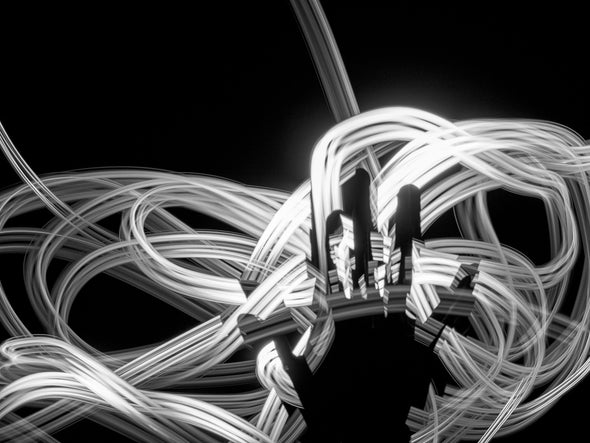
Credit: Getty Images
.
.
Click the link below for the article:
.
__________________________________________
February 17, 2021
Mohenjo
Crime, Human Interest, Medical, missed News, Political, Science, sports, Technical
amazon, business, Business News, current-events, Future, Hotels, human-rights, medicine, mental-health, research, Science, Science News, technology, Technology News, travel, vacation
.
News You might have missed!
Use your browser or smartphone back arrow (<-) to return to this table for your next selection.
.
__________________________________________
February 16, 2021
Mohenjo
Business, Food For Thought, Human Interest, Science, Technical
amazon, business, Business News, current-events, Future, Hotels, human-rights, medicine, mental-health, research, Science, Science News, technology, Technology News, travel, vacation

Click the link below the picture
.
“Look to your left, look to your right. One of you won’t be here in the next semester.”
It’s a typical lecture delivered at the start of a semester in the sciences, and one that Ainissa Ramirez remembered hearing early during her undergraduate studies at Brown University.
Now a successful materials scientist and science writer, Dr. Ramirez recalls that she was almost pushed out of pursuing a career in science because of her weed-out classes. As their name suggests, the classes are common especially in the sciences and mathematics at American universities and are designed to demarcate students who are likely to do well in a given subject from those who are not.
Those who excel in these introductory classes can proceed with completing a major on the topic if they wish. But there’s evidence that weed-out classes disproportionately hinder underrepresented groups including women as well as Black, Native American, and Hispanic people from pursuing STEM degrees.
.
 Credit…Simone Noronha
.
.
Click the link below for the article:
.
__________________________________________
February 16, 2021
Mohenjo
Business, Human Interest, Medical, Science, Technical
amazon, business, Business News, current-events, Future, Hotels, human-rights, medicine, mental-health, research, Science, Science News, technology, Technology News, travel, vacation
Click the link below the picture
.
As I opened my copy of Science at home one night, an unfamiliar word in the title of a new study caught my eye: dopaminylation. The term refers to the brain chemical dopamine’s ability, in addition to transmitting signals across synapses, to enter a cell’s nucleus and control specific genes. As I read the paper, I realized that it completely upends our understanding of genetics and drug addiction. The intense craving for addictive drugs like alcohol and cocaine may be caused by dopamine controlling genes that alter the brain circuitry underlying addiction. Intriguingly, the results also suggest an answer to why drugs that treat major depression must typically be taken for weeks before they’re effective. I was shocked by the dramatic discovery, but to really understand it, I first had to unlearn some things.
“Half of what you learned in college is wrong,” my biology professor, David Lange, once said. “Problem is, we don’t know which half.” How right he was. I was taught to scoff at Jean-Baptiste Lamarck and his theory that traits acquired through life experience could be passed on to the next generation. The silly traditional example is the mama giraffe stretching her neck to reach food high in trees, resulting in baby giraffes with extra-long necks. Then biologists discovered we really can inherit traits our parents acquired in life, without any change to the DNA sequence of our genes. It’s all thanks to a process called epigenetics — a form of gene expression that can be inherited but isn’t actually part of the genetic code. This is where it turns out that brain chemicals like dopamine play a role.
.
 James O’Brien for Quanta Magazine
.
.
Click the link below for the article:
.
__________________________________________
February 16, 2021
Mohenjo
Arts, Business, Food For Thought, Human Interest, Medical, missed News, Political, Science, Technical
amazon, business, Business News, current-events, Future, Hotels, human-rights, medicine, mental-health, research, Science, Science News, technology, Technology News, travel, vacation
.
News You might have missed!
Use your browser or smartphone back arrow (<-) to return to this table for your next selection.
.
__________________________________________
Older Entries
Newer Entries
 James' World 2