Garlic is a ubiquitous, ever-present ingredient in most kitchens, and for many good reasons. Depending on how you treat it, it can bring heat, pungency, sweetness, and/or umami to your delicious dishes.
While always adding more garlic is one of the ultimate cooking hacks, over the years we’ve explored a ton of other ways to put this flavor bomb to good use.
.
Illustration: Vicky Leta
.
.
Click the link belowfor the article and slideshow:
No one told them the song was gonna blow up this way.
The Rembrandts were putting finishing touches on their third album, “L.P.,” when a sidestep into television drastically altered their course in 1994. Now, 26 years since “I’ll Be There for You” debuted on “Friends,” band member Phil Solem is reflecting on the ups and downs caused by the track, how a few beers led to its iconic claps, and witnessing Brad Pitt enjoy a performance of the hit more than the cast.
Solem and bandmate Danny Wilde, who previously had a hit with 1990’s “Just the Way It Is, Baby,” will forever be associated with “Friends,” yet they initially asked to remain anonymous while working on the tune after viewing the pilot. “In those days, it was uncool for a band like ours to be involved in television,” Solem explains.
You’re catching up with your aunt when you look over to see your three-year-old grab a toy away from another child. After you send your toddler off for a time-out, a cousin pulls you aside and says, “I think you could have handled that better” and gives you a lesson in disciplining children.
How would you feel?
Odds are, you wouldn’t be grateful. No one likes to be lectured.
What’s ironic is even though we can all see that receiving this kind of unsolicited advice is a giant downer, most of us have done this. It’s common to give out advice when we see someone struggling.
Meritocracy has become a leading social ideal. Politicians across the ideological spectrum continually return to the theme that the rewards of life – money, power, jobs, university admission – should be distributed according to skill and effort. The most common metaphor is the ‘even playing field’ upon which players can rise to the position that fits their merit. Conceptually and morally, meritocracy is presented as the opposite of systems such as hereditary aristocracy, in which one’s social position is determined by the lottery of birth. Under meritocracy, wealth and advantage are merit’s rightful compensation, not the fortuitous windfall of external events.
Most people don’t just think the world should be run meritocratically, they think it is meritocratic. In the UK, 84 percent of respondents to the 2009 British Social Attitudes survey stated that hard work is either ‘essential’ or ‘very important when it comes to getting ahead, and in 2016 the Brookings Institute found that 69 percent of Americans believe that people are rewarded for intelligence and skill. Respondents in both countries believe that external factors, such as luck and coming from a wealthy family, are much less important. While these ideas are most pronounced in these two countries, they are popular across the globe.
.
Photo by D. Sharon Pruitt Pink Sherbet Photography / Getty Images.
One of the quickest and least expensive ways to upgrade the looks of your home—indoors and out—is by adding a handsome planter box or two. These three designs shown here are built from redwood. California redwood is an excellent choice for planters. It boasts the unbeatable combination of natural beauty and good durability. Redwood is resistant to decay and to attack by insects.
To determine durability against such attack, redwood is graded by its color and other factors. The reddish-brown heartwood from the inner portion of the tree contains extractives, which render it durable. The cream-colored sapwood that develops in the outer growth layer of the tree, like most whitewoods, doesn’t have the same degree of resistance to decay and insects as the heartwood does.
When building a planter, choose one of the all-heartwood grades. There are also grades available containing some sapwood, which will be a bit cheaper.
The story of the American pandemic has unfolded in three chapters. The first began last January when the coronavirus emerged and the world was plunged into uncertainty about how COVID-19 could be treated, how the virus spread, and when it might be defeated. The second started on the morning of November 9, 2020, when Pfizer-BioNTech announced the extraordinary efficacy of its vaccine. Those results made clear that this pandemic would end not through infection but vaccination. Our goals shifted from merely slowing the spread to beginning immunization as quickly as possible. In America, much of the past half-year has been devoted to administering vaccines and gathering evidence on how well they work in the real world.
Earlier this month, the Centers for Disease Control and Prevention ushered in the American pandemic’s third chapter. The agency announced that vaccinated people could go without masks or social distancing indoors and outside, in crowds large and small. It carved out a few exceptions—for hospitals, public transportation, and the like—and noted that people still needed to obey federal and local laws. But the broad message was that vaccinated Americans could resume their pre-pandemic lives. The C.D.C. is an agency known for caution, and its new guidance shocked many public-health experts; just two weeks earlier, it had issued far more restrictive recommendations. During the same period, a survey of nearly six hundred epidemiologists found that more than three-quarters of them believed that indoor mask-wearing might remain necessary for another year or more. Still, immediately after the announcement, a number of states lifted their mask mandates. Others will surely follow, as the pressure to return to normal grows. America is now moving swiftly toward reopening.
.
The pandemic’s final chapter will come to a close not through official decree but with a gradual realization that COVID-19 no longer dominates our lives. Illustration by Jeremy Leung
Most people have heard it by now: Our meat habit is bad for the world. Polling suggests that tens of millions of people are taking this message seriously: One in four Americans said they tried to cut back on meat in the last year, and half of those cited environmental concerns as a major reason. The popular food site Epicurious recently announced they’ve stopped publishing recipes with beef in them, because of beef’s climate impacts, setting off the latest round of discussion on meat’s effects on the environment.
Cutting meat consumption is as smart an idea as advertised. Industrial farming — the source of 99 percent of the meat Americans eat — provides the world with cheap meat, but it does so at a terrible environmental and moral cost.
Where it gets complicated is when people decide which meat, exactly, they’ll be cutting back on. Often, it’s beef that loses out in that calculus. And often, the messaging is that we can save the world by switching out our beef consumption for chicken.
Film and Writing Festival for Comedy. Showcasing best of comedy short films at the FEEDBACK Film Festival. Plus, showcasing best of comedy novels, short stories, poems, screenplays (TV, short, feature) at the festival performed by professional actors.

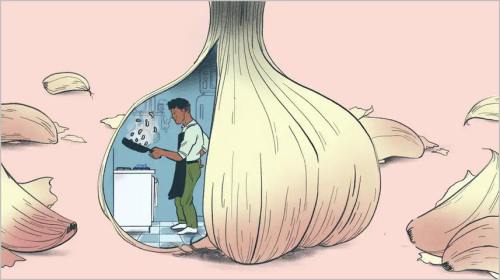 Illustration: Vicky Leta
 The Rembrandts








/cdn.vox-cdn.com/uploads/chorus_image/image/69327810/fp_chicken_draft.0.jpg)
 James' World 2