A simple tap from your finger may be enough to charge your portable device thanks to a discovery made at RMIT University and Australian National University.
In a crucial step towards the development of self-powering portable electronics, researchers at RMIT University in Melbourne have for the first time characterised the ability of piezoelectric thin films to turn mechanical pressure into electricity. The pioneering result is published in the 21 June Issue of the leading materials science journal, Advanced Functional Materials.
Lead co-author Dr Madhu Bhaskaran said the research combined the potential of piezoelectrics – materials capable of converting pressure into electrical energy – and the cornerstone of microchip manufacturing, thin film technology. “The power of piezoelectrics could be integrated into running shoes to charge mobile phones, enable laptops to be powered through typing or even used to convert blood pressure into a power source for pacemakers – essentially creating an everlasting battery,” she said.
.
Let your fingers do the charging. Photo by James Giggacher.
Who programs the programmers? Soon enough, it might not be people behind the development of advanced machine learning and artificial intelligence tech, but other AI. MIT looks at the most recent work done by a range of different organizations, including Google Brain, who are working on AI that can develop machine learning software – and finds that in many cases, the results that come from machines coding other machines match or even exceed equivalent work done by humans.
Does that mean even machine learning programmers are facing employment extinction? Not exactly, and not yet – efforts to create machine learning programs that best their human-designed equivalent require a lot of computing firepower thrown at the problem; Google Brain’s person-besting experiment in building image recognition systems via AI development used 800 ugh-powered graphics processors working together, which is a costly endeavor to be sure.
Israel successfully launched into space Wednesday a new nanosatellite, the first for Israeli academia, that will conduct scientific missions for Ben Gurion University of the Negev.
BGUSAT is the result of a five-year joint project between BGU, Israel Aerospace Industries Ltd. (IAI) and Israel’s Ministry of Science, Technology and Space.
The satellite, 10x10x30 centimeters (4x4x12 inches) — a little larger than a milk carton — and weighing just five kilograms (11 lbs), is outfitted with innovative cameras that can photograph a large array of weather phenomena and a guidance system that allows operators to choose the areas to research through a dedicated ground station at BGU. Researchers will be able to position the satellite to take a variety of pictures from different angles.
.
Installing the satellite dish that will receive the data transmitted from BGUSAT and send it to the ground station at Ben-Gurion University’s Earth and Planetary Image Facility, March 2016. (Dani Machlis/BGU)
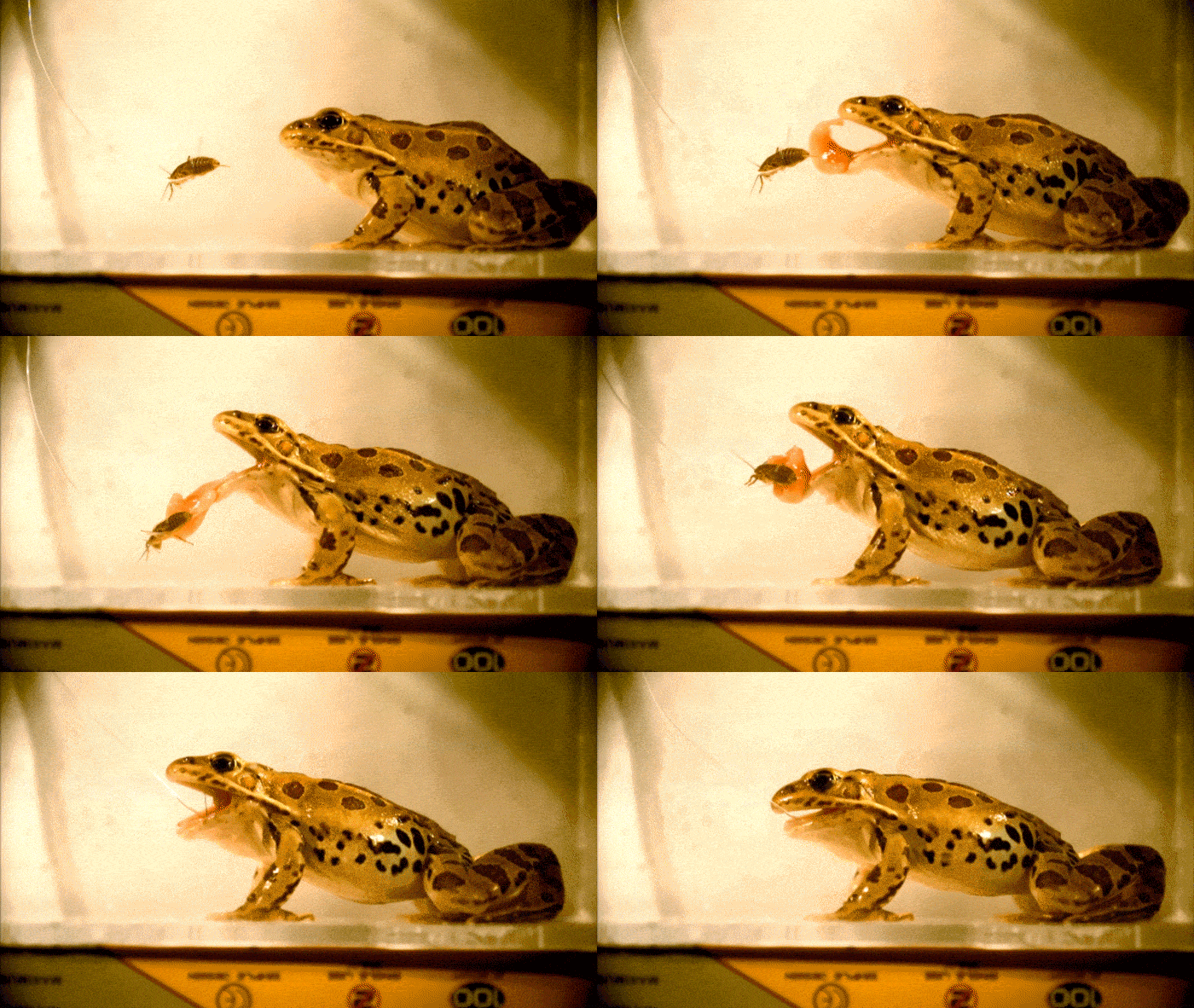
New research showed that frog saliva is tailor-made to catch bugs. It’s sticky and perfectly designed to keep frog prey on its tongue and it could lead to creating better adhesives.
Frogs snatch prey out of the air at incredible speeds, hanging on to them with only their tongues. Researchers have been wondering for quite a while how the frog manages to do that without losing hold of the bugs and now they’ve found the answer: it’s a combination of unique reversible saliva in combination with a super soft tongue.
.
Frog attack captured using high-speed photography. Image credits: Alexis Noel et al, 2017.
(GMA News Online)-Scientists have discovered a unique adaptation of the barbeled dragonfish: a functional, flexible head joint, the first and only example of its kind known to exist among fishes.
The joint connects the skull and vertebral column and allows the fish a much larger degree of maneuverability to ingest prey—as much as 120 degrees. That expanse allows the barbeled dragonfish to wholly ingest fish that are nearly identical in size.
The discovery was made after scientists studied specimens from the Smithsonian’s National Museum of Natural History and five other natural history collections around the world. Their findings were published in the journal PLOS ONE on Wednesday (February 01).
An international team, led by a scientist from the University of Sussex, have today unveiled the first practical blueprint for how to build a quantum computer, the most powerful computer on Earth.
This huge leap forward towards creating a universal quantum computer is published today (1 February 2017) in the influential journal Science Advances (1). It has long been known that such a computer would revolutionise industry, science and commerce on a similar scale as the invention of ordinary computers. But this new work features the actual industrial blueprint to construct such a large-scale machine, more powerful in solving certain problems than any computer ever constructed before.
Once built, the computer’s capabilities mean it would have the potential to answer many questions in science; create new, lifesaving medicines; solve the most mind-boggling scientific problems; unravel the yet unknown mysteries of the furthest reaches of deepest space; and solve some problems that an ordinary computer would take billions of years to compute.
.
Prototype of the core of a trapped ion quantum computer. Credit: Ion Quantum Technology Group, University of Sussex.
Respiratory conditions could be better targeted and treated, thanks to the discovery of the vital molecule which regulates breathing – according to research by the University of Warwick.
Professor Nicholas Dale at the School of Life Sciences has exploited evolutionary principles to identify Connexin26 (Cx26) as a key molecule that reacts to CO2 in our bodies and activates breathing.
Cx26 molecules detect levels of CO2 in the blood-stream, and when levels reach a certain point, they tell our bodies to excrete the CO2 and take in oxygen – the vital life-preserving process that allows us to breathe, and creates blood flow to the brain.
Without this essential molecular function, harmful levels of CO2 would remain in the bloodstream, making breathing difficult or impossible.
Mutations in Cx26 are directly connected to a number of serious conditions – ranging from congenital deafness, to respiratory conditions, and serious syndromes that affect skin, vision and hearing. As Cx26 is vital to breathing well, people carrying these mutations may be at risk of sleep apnoea.
In its international development efforts, the US sends more than a billion dollars’ worth of food assistance across the world. America’s food aid shipments sometimes spoil, resulting in food going to waste where it could be most needed. A group of researchers at MIT may have found a way to save over $10 million while feeding thousands of the world’s poorest people.
Shipping agricultural commodities like grains and legumes to the developing world raises considerable challenges for the nation’s food assistance programs. Procurement officials need to know when to ship, where, and when the food is expected to arrive. After all, food can—and all too often does—spoil.
The researchers from MIT’s Comprehensive Initiative on Technology Evaluation have found that much of the loss is potentially preventable. Now, they have embarked on a pilot project to improve the way America aids the world.
Many people believe math is boring, but in reality – it’s anything but. Here, we’ll be looking at some of the most intriguing mathematical facts, the kind of facts which just make you tilt your head and wonder how it can be even possible.
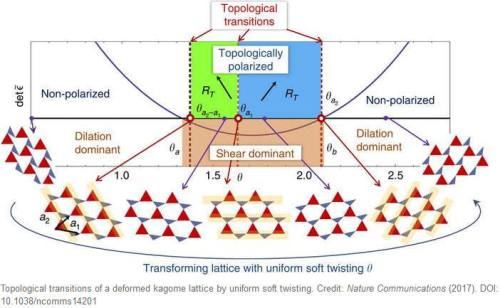
When a material is made, you typically cannot change whether that material is hard or soft. But a group of University of Michigan researchers have developed a new way to design a “metamaterial” that allows the material to switch between being hard and soft without damaging or altering the material itself.
Metamaterials are man-made materials that get their properties—in this case, whether a material is hard or soft—from the way the material is constructed rather than the material that constructs it. This allows researchers to manipulate a metamaterial’s structure in order to make the material exhibit a certain property.
In the group’s study, published in the journal Nature Communications, the U-M researchers discovered a way to compose a metamaterial that can be easily manipulated to increase the stiffness of its surface by orders of magnitude—the difference between rubber and steel.
Since these properties are “topologically protected,” meaning that the material’s properties come from its total structure, they’re easily maintained even as the material shifts repeatedly between its hard and soft states.
Film and Writing Festival for Comedy. Showcasing best of comedy short films at the FEEDBACK Film Festival. Plus, showcasing best of comedy novels, short stories, poems, screenplays (TV, short, feature) at the festival performed by professional actors.

 Let your fingers do the charging. Photo by James Giggacher.




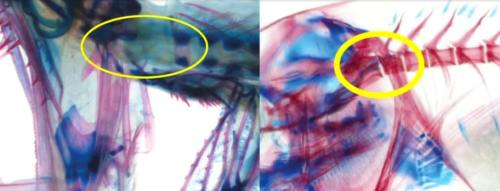 On left Dragonfish’s flexible head joint
 Prototype of the core of a trapped ion quantum computer. Credit: Ion Quantum Technology Group, University of Sussex.
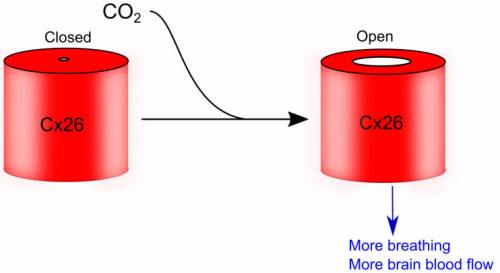 Credit: University of Warwick



 .
. James' World 2