It sounds wild. But the idea that we live in a multiverse — a cosmos where an infinite number of universes exist beside our own — is no longer confined to science fiction. It’s a respectable theory among scientists, so much so that some are on the hunt for proof of a nearby universe.
Now, scientists might be one step closer. A study recently submitted to “Monthly Notices of the Royal Astronomical Society” actually places the multiverse theory on firmer ground. Ruari Mackenzie, a graduate student at England’s University of Durham, took a deeper look at a region in the sky that’s so frigid and so large that most scientists don’t think it can be a statistical fluke. Instead, some astronomers think this so-called “cold spot” is an optical illusion produced by a lack of intervening galaxies. But Mackenzie and his colleagues found that those galaxies are no less dense than anywhere else in the universe, disproving that theory.
.
The belief that there might be an infinite number of universes is no longer confined to science fiction. | Victor De Schwanberg | Science Photo Library/Getty Images
For the first time ever, scientists have captured a single DNA molecule replicating on video — and it’s changing the way we think about the entire process. One of the most surprising findings is how much randomness characterizes the process.
“It’s a different way of thinking about replication that raises new questions,” Stephen Kowalczykowski, molecular genetics professor at University of California, Davis, said in a press release. “It’s a real paradigm shift, and undermines a great deal of what’s in the textbooks.”
The researchers watched replicating DNA from E. coli bacteria. The first step in the process always sees the double helix “unzipping” into two strands — a “leading strand” and a “lagging strand.” Each of these become a template for a new strand that is made to match it, leaving two complete DNA molecules when the process has reached the end. The researchers wanted to measure how fast the enzyme machinery moving along the different strands in opposite directions worked.
Mars and the Earth may have more in common than we thought. NASA just revealed photos of Mars taken by its Mars Reconnaissance Orbiter. The images look strikingly similar to planet Earth.
The MRO, which has sent thousands of vibrant images back to scientists, has documented everything from dust storms to mineral hills since its launch nearly 12 years ago. The landscapes are somewhat like red deserts or canyons. “Earth has more in common with Mars than you might think,” NASA wrote in a recent video uploaded to YouTube.
MRO is used to better understand materials, subsurface water, dust and weather on Mars, according to NASA’s website. It’s also great at supplying us with gorgeous photos of the red planet.
The robots may soon take one of the best jobs of them all: whiskey taste-testing.
Scientists recently designed a set of sensors, playfully called a “tongue,” that can analyze the chemical composition of whiskey and tell us about its age, country of origin and malt status.
The sensors are made of glowing solutions that change brightness when drops of whiskey are added to them. The result ultimately indicates different properties of the liquor — which may be noticeable to a whiskey master, but without the chemical certainty.
For centuries, modern science has been shrinking the gap between humans and the rest of the universe, from Isaac Newton showing that one set of laws applies equally to falling apples and orbiting moons to Carl Sagan intoning that “we are made of star stuff” — that the atoms of our bodies were literally forged in the nuclear furnaces of other stars.
Even in that context, Gregory Matloff’s ideas are shocking. The veteran physicist at New York City College of Technology recently published a paper arguing that humans may be like the rest of the universe in substance and in spirit. A “proto-consciousness field” could extend through all of space, he argues. Stars may be thinking entities that deliberately control their paths. Put more bluntly, the entire cosmos may be self-aware.
.
Physicist Gregory Matloff argues that a “proto-consciousness field” could extend through all of space. | NASA via Reuters
Get ready for a show. NASA’s launching a rocket Monday night that will leave a trail of colorful, fake clouds looming over the East Coast.
The clouds, which will possibly take over skies from New York to California, will also be visible from a live broadcast from NASA starting at 8:30 p.m. Eastern.
Skies will be painted glowing blue-green and red colors by a sounding rocket, which will release 10 soda can-sized canisters into the air to form the clouds. The rocket will launch from the Wallops Flight Facility in Virginia sometime between 9:04 and 9:19 p.m. Eastern, if all goes as planned, and the flight will last just eight minutes.
.
A rocket studying the ionosphere will launch colorful clouds into the sky on Monday.
The Cuban solenodon, a nocturnal, football-sized mammal that resembles a chunky shrew, has an abundance of peculiar qualities.It has a long cartilaginous snout and venomous saliva, which it uses to catch and kill insects and worms. It has terrible eyesight and may be capable of echolocation. The few people who have handled one say that it smells like a goat, and when it is startled it runs on its toes, usually in awkward zigzags that do little to help it avoid capture. Like its cousin the Hispaniolan solenodon, whose snout sits on a ball-and-socket joint, it is an evolutionary curiosity. Most plant and animal species share a history with multiple close relatives—kangaroos with wallabies, eagles with hawks, peach trees with cherry trees, and so on. But the solenodons’ lonely lineage diverged from the rest of the mammals’ back in the Cretaceous period, when the dinosaurs still had more than ten million years left on Earth. In a paper published in this week’s issue of Nature, three researchers argue that the protection of outlier species like the solenodon could have disproportionate—and, to a large extent, untapped—benefits for global biodiversity.
.
In a new paper, researchers argue that oddball animals like the Cuban solenodon should be more aggressively protected.COURTESY NEW YORK ZOOLOGICAL SOCIETY / WIKIMEDIA COMMONS
It’s a dim bulb of a star, but its weak light may fall on living beings.
TRAPPIST-1, a red dwarf star that’s a short 39 light-years distant, is hitting the headlines again. It was in the news last year because of the discovery of three accompanying planets. Now a team of astronomers has found four additional worlds in orbit around this ruddy sun.
Remarkably, these planets are of a type that would make them candidates for hosting the dirty chemistry we call “life.” All are roughly the size of Earth, and all receive an amount of sunlight that might make for tolerable temperatures, depending on their atmospheres (if any).
Mind you, this is a planetary system rather unlike our own. It’s more compact than a bonsai bush, and if we could arrange to move all seven of these worlds to our own solar system, they would fit within the orbit of Mercury with oodles of room to spare.
.
Artist’s impression of a planet orbiting a red dwarf star. Seth Shostak
We’ve often heard that if you want to succeed in life, you need to subscribe to the idea of “survival of the fittest.” Success, we are commonly told, has to be grabbed; it has to be taken or someone else will get it.
.
When I initially presented some of my ideas about the power of compassion in success and achievement, my critics pointed out that Darwinism made my argument weak: It was, in their way of thinking, the Jenga piece that would crash my faulty tower of compassion. I quickly acquired as many of Charles Darwin’s works as possible and carefully read through them searching for the Jenga pieces that could take down my argument.
Instead, I found that most of Charles Darwin’s work, especially “The Descent of Man,” not only supports the general argument of this book; it doesn’t support the idea of what most call Darwinism. Darwin’s research shows that “survival of the kindest” is more correct for explaining which species climb the evolutionary ladder efficiently and effectively.
According to biologists from Darwin to E. O. Wilson, cooperation has been more important than competition in humanity’s evolutionary success. Compassion is the reason for both the human race’s survival and its ability to continue to thrive as a species.
.
Close up of two people clasping hands Portra Images / Getty Images
Two Harvard University scientists are suggesting that mysterious fast radio bursts, detected in faraway galaxies, may be evidence of aliens traveling through the cosmos.
FRBs are extremely bright flashes of radio waves that last for only a thousandth of a second and are detected by earthbound telescopes. Since the first one was observed 10 years ago, 17 have actually been reported, although scientists think there are thousands of them a day.
At first, Abraham “Avi” Loeb said, he took a conservative approach to explaining them.
“It looked like the simplest explanation would be flares from stars in the Milky Way galaxy,” said Loeb, a theoretical astrophysicist and chair of Harvard’s astronomy department.
But then “one of the FRBs was localized to reside in a small galaxy at a distance of about a billion light-years away,” Loeb told The Huffington Post. (One light-year is about 6 trillion miles.)
.
M Weiss/CfA
An artist’s illustration of a light sail powered by a radio beam from the surface of a planet. The leakage from such beams as they sweep across the sky would appear as fast radio bursts.
Film and Writing Festival for Comedy. Showcasing best of comedy short films at the FEEDBACK Film Festival. Plus, showcasing best of comedy novels, short stories, poems, screenplays (TV, short, feature) at the festival performed by professional actors.

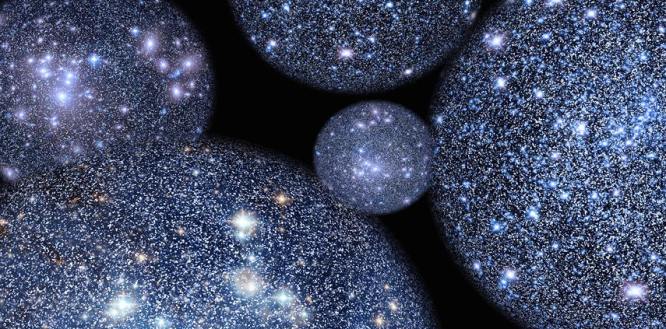 The belief that there might be an infinite number of universes is no longer confined to science fiction. | Victor De Schwanberg | Science Photo Library/Getty Images


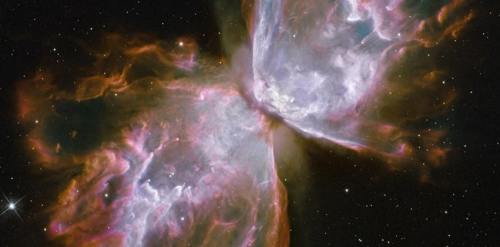 Physicist Gregory Matloff argues that a “proto-consciousness field” could extend through all of space.





 James' World 2