For Jon Lubecky, the scars on his wrists are a reminder of the years he spent in mental purgatory.
He returned from an Army deployment in Iraq a broken man. He heard mortar shells and helicopters where there were none. He couldn’t sleep and drank until he passed out. He got every treatment offered by Veterans Affairs for post-traumatic stress disorder. But they didn’t stop him from trying to kill himself — five times.
Finally, he signed up for an experimental therapy and was given a little green capsule. The anguish stopped.
.
Jonathan Lubecky, a Marine Corps and Army veteran, returned from a deployment to Iraq with severe PTSD. His participation in a study of MDMA, the drug commonly known as ecstasy, proved life-saving. (Travis Dove/For The Washington Post)
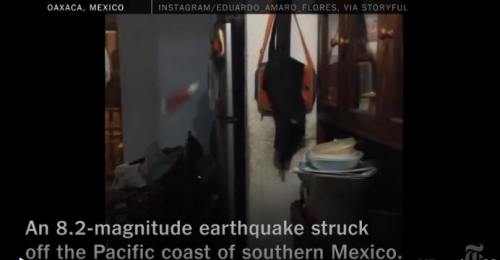
The most powerful earthquake to hit Mexico in 100 years struck off the nation’s Pacific Coast late Thursday, rattling millions of residents in Mexico City with its violent tremors, killing at least 32 people and leveling some areas in the southern part of the country closest to where the quake occurred.
About 50 million people across Mexico felt the earthquake, which had a magnitude of 8.2, the government said. In the capital, the force of the temblor sent residents of the megacity fleeing into the streets at midnight, shaken by the alarms blaring over loudspeakers and a full minute of tremors. Windows broke, walls collapsed, and the city seemed to convulse in terrifying waves; the quake even rocked the city’s landmark Angel of Independence monument.
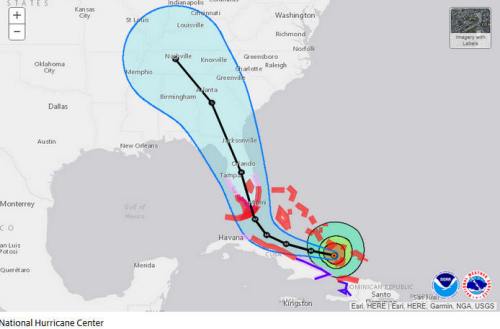
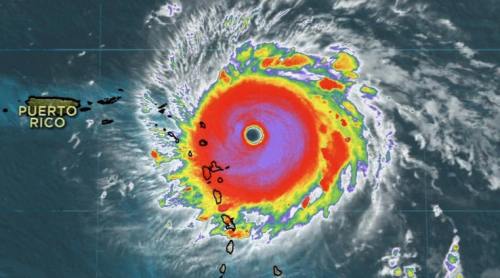
Hurricane Irma is an extremely dangerous Category 4 hurricane and will continue to bring life-threatening wind, storm surge, and rainfall hazards to the Turks and Caicos Islands and the Bahamas through Saturday. It’s tracking toward South Florida, where a hurricane warning was implemented Thursday night.
Irma devastated the island of Barbuda Tuesday night and Wednesday morning. A Barbuda weather station reported a 155-mph wind gust just before it failed. Reports suggest the island may have suffered a nearly-total loss.
On Wednesday, the storm battered Puerto Rico as the eye tracked to the north of San Juan. Intense wind gusts were reported, including 111 mph on Culebra Island and 131 mph on Buck Island in the U.S. Virgin Islands.
From clot-busting drugs to bypass surgery, cardiologists have many options for treating the 700,000-plus Americans who suffer a heart attack each year. But treatment options remain limited for the 5.7 million or so Americans who suffer from heart failure, an often debilitating condition in which damage to the heart (often resulting from a heart attack) compromises its ability to pump blood.
“Severe heart damage can pretty much incapacitate people,” says Dr. Timothy Henry, director of cardiology at the Cedars-Sinai Medical Center in Los Angeles. “You can’t climb a flight of stairs, you’re fatigued all the time, and you’re at risk of sudden cardiac arrest.”
Medication is available to treat heart failure, but it’s no panacea. And some heart failure patients undergo heart transplantation, but it remains an iffy proposition even 50 years after the first human heart was transplanted in 1967.
IN BRIEF: In the pursuit of renewable and cleaner energy sources, nuclear power remains one of the viable options.To make it an even safer choice, a Dutch nuclear research firm began experiments with a kind of nuclear fission that uses thorium salts.
Erasing Nuclear Fears
Until such time that scientists figure out how to stabilize nuclear fusion, the most powerful energy source available remains its relatively less powerful cousin, fission. While there are already a number of countries using nuclear fission reactor plants, there’s still a lingering shadow of fear over the technology, thanks to several cases of nuclear meltdowns in the past.
Reports of fatalities and widespread damage in northern Caribbean islands began to emerge Wednesday night after Hurricane Irma blasted through, packing devastating winds and rain.
“Barbuda right now is literally a rubble,” Prime Minister Gaston Browne of Antigua and Barbuda told an interviewer with ABS TV/Radio Antigua.
.
“The entire housing stock was damaged,” Browne said after visiting the island of 1,800. “It is just a total devastation.”
Irma killed at least three people, destroyed government buildings, tore roofs from houses and left islands without power or communications. St. Martin/St. Maarten and St. Barts also felt the fury of the Category 5 storm, one of the strongest ever recorded in the Atlantic, according to updates from the region.
.
Browne said there currently is no water or phone service for Barbuda residents. He said one fatality, an infant, had been confirmed.
Clothing today is mostly about covering up. In the future, it might also be about powering up — literally.
Researchers across the country are working to develop fabrics that harvest energy from your body movements and use it to provide a bit of extra juice for your cellphone or a fitness tracker — or maybe to change the color or pattern of the fabric itself. “Something that’s kind of snazzy,” says Dr. Cary Pint, assistant professor of mechanical engineering at Vanderbilt University in Nashville, Tennessee and a leading researcher in the field.
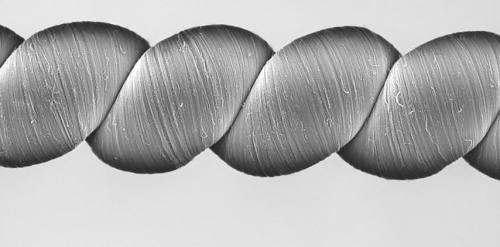
One group of researchers at the University of Texas at Dallas has developed an energy-harvesting yarn made of carbon nanotubes, hollow cylinders 10,000 times thinner than a human hair. The tubes are bound into larger yarns and twisted so much that they coil. Experiments show that when these tightly coiled “twistron” yarns are placed side by side and then stretched, they generate a tiny electrical current.
The US military has ordered the evacuation of over five thousand personnel from a Naval Air Station in Florida in preparation for Hurricane Irma.
Irma is now a Category 5 storm and one of the strongest ever recorded in the Atlantic.
.
Currently, it is threatening to slam into Caribbean islands including Puerto Rico and the Virgin Islands with “potentially catastrophic” force on Wednesday, the National Hurricane Center said.
The military is braced for it to hit the US mainland and the current forecast suggests it could strike Florida over the weekend.
Just days after Hurricane Harvey devastated parts of Texas and Louisiana, another storm, Hurricane Irma, has strengthened over the Atlantic Ocean, threatening to batter the Caribbean this week as “an extremely dangerous” Category 5 storm, the National Weather Service said on Tuesday.
Irma is expected to retain Category 4 or 5 status for days as it makes its way through the Caribbean, probably hitting the islands of Barbuda and Antigua first, as soon as Tuesday night. Florida, where some residents and tourists are already being forced to evacuate, is also increasingly likely to feel Irma’s effects later this week and during the weekend, though the storm’s potential impact is not yet clear.
“It is too early to determine what direct impacts Irma might have on the continental United States,” the National Weather Service said on Tuesday. But, it added, “everyone in hurricane-prone areas should ensure that they have their hurricane plan in place.”
.
Hurricane Irma grew into a Category 5 storm as it headed west toward the Caribbean Islands. It could make landfall in the northern Leeward Islands as early as Tuesday night.Credit NASA
Film and Writing Festival for Comedy. Showcasing best of comedy short films at the FEEDBACK Film Festival. Plus, showcasing best of comedy novels, short stories, poems, screenplays (TV, short, feature) at the festival performed by professional actors.

 Jonathan Lubecky, a Marine Corps and Army veteran, returned from a deployment to Iraq with severe PTSD. His participation in a study of MDMA, the drug commonly known as ecstasy, proved life-saving. (Travis Dove/For The Washington Post)


 .
.
 Irma’s track
 ‘Beating Heart’ Patch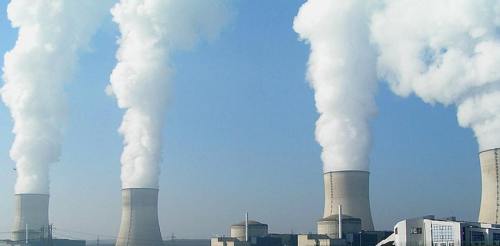

 .
.

 Hurricane Irma hits Caribbean island of Barbuda

 James' World 2