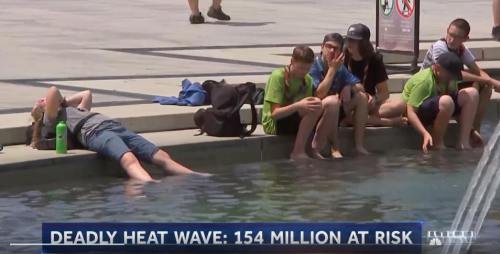
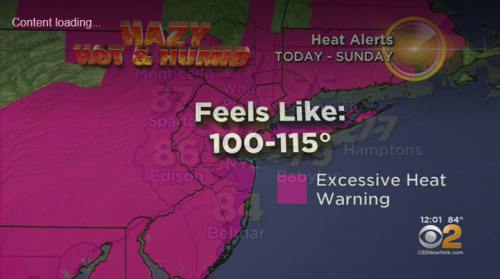
The heat wave gripping large swaths of the Midwest and Northeast has killed at least three people, forced the evacuation of about 250 residents from a retirement home, and sparked the cancellation of major public events.
Other severe weather in the upper Midwest meanwhile left more than 200,000 households and businesses in Michigan without power Saturday morning. High winds and storms in the state on Friday knocked out power lines, with utility crews working to repair the outages as quickly as possible.
In Maryland, health officials said a Prince George’s County man and a Worcester County woman died this week from extreme heat. Earlier this month, a Baltimore City man and an Anne Arundel County woman died.
Kudos to the fans. One of the nominees for the Hugo Awards this year is Archive of Our Own, a fanfiction archive containing nearly 5 million fanworks—about the size of the English Wikipedia, and several years younger. It’s not just the fanfic, fanart, fanvids, and other fanworks, impressive as they are, that make Archive of Our Own worthy of one of the biggest honors in science fiction and fantasy. It’s also the architecture of the site itself.
At a time when we’re trying to figure out how to make the internet livable for humans, without exploiting other humans in the process, AO3 (AO3, to its friends) offers something the rest of tech could learn from.
Here’s a problem that AO3 users, like the rest of the internet, encounter every day: How do you find a particular thing you’re interested in, while filtering out all the other stuff you don’t care about? Most websites end up with tags of some sort. I might look through a medical journal database for articles tagged “cataracts,” search a stock photo site for pictures tagged “businesspeople,” or click on a social media hashtag to see what people are saying about the latest episode of #GameOfThrones.
.
Archive of Our Own, the fanfiction database recently nominated for a Hugo, has perfected a system of tagging that the rest of the web could emulate.
Extreme heat is a leading cause of weather-related deaths in the United States, resulting in an average 658 fatalities each year, according to the Centers for Disease Control and Prevention. Thousands more suffer from heat-related illnesses, including heat exhaustion and stroke. The elderly, children, poor people and people who have manual labor jobs outdoors are among the most vulnerable during heatwaves.
On Tuesday, as sweltering heat began to take hold of the central and eastern U.S., the Union of Concerned Scientists published a report saying that without swift action to rein in greenhouse gas emissions, the number of days per year in the U.S. when the heat index exceeds 100 degrees could more than double by 2050 and quadruple by the end of the century.
“Our analysis shows a hotter future that’s hard to imagine today,” Kristina Dahl, a senior climate scientist at UCS and a co-author of the report, said in a statement. “Nearly everywhere, people will experience more days of dangerous heat even in the next few decades.”
The security employee monitoring the smoke alarm panel at Notre-Dame cathedral was just three days on the job when the red warning light flashed on the evening of April 15: “Feu.” Fire.
It was 6:18 on a Monday, the week before Easter. The Rev. Jean-Pierre Caveau was celebrating Mass before hundreds of worshipers and visitors, and the employee radioed a church guard who was standing just a few feet from the altar.
Go check for fire, the guard was told. He did and found nothing.
It took nearly 30 minutes before they realized their mistake: The guard had gone to the wrong building. The fire was in the attic of the cathedral, the famed latticework of ancient timbers known as “the forest.”
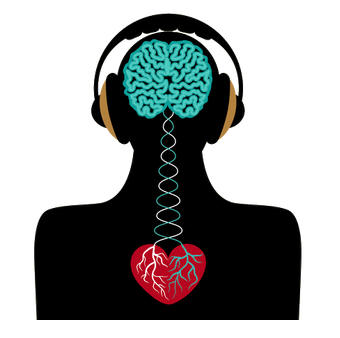
Have you ever been torn between “what your head is telling you” and “what your heart is telling you”? If so, you might be surprised at just how much your heart does have to say. It’s a little-known fact outside of scientific circles, but your heart actually contains some 40,000 neurons — the same cells which make up the bulk of your brain.
And they don’t just respond to directions from the brain. The heart also sends messages to the brain — messages that go beyond basic messages like pain signals and other unconscious data. It also sends messages to the parts of the brain which process thoughts and emotions. This means that your heart really can affect your decisions and feelings.
The phrase “listen to your heart” takes on a whole new meaning when you consider this information.
.
The term “heart-mind” was coined in 1991 to describe the neural network of the heart.
For Markus Heilig, the years of dead ends were starting to grate.
A seasoned psychiatrist, Heilig joined the National Institutes of Health in 2004 with grand ambitions of finding new ways to treat addiction and alcoholism. “It was the age of the neuroscience revolution, and all this new tech gave us many ways of manipulating animal brains,” he recalls. By studying addictive behavior in laboratory rats and mice, he would pinpoint crucial genes, molecules, and brain regions that could be targeted to curtail the equivalent behaviors in people.
It wasn’t to be. The insights from rodent studies repeatedly proved to be irrelevant. Many researchers and pharmaceutical companies became disillusioned. “We cured alcoholism in every rat we ever tried,” says Heilig, who is now at Linköping University in Sweden. “And at the end of every paper, we wrote: This will lead to an exciting treatment. But everything we took from these animal models to the clinic failed. We needed to go back to the drawing board.”
.
Only 15% of regular drinkers become dependent on alcohol. Photo by Axel Bueckert / Shutterstock.
On a hot morning in Bloom, a time period that those who don’t work with tree fruit might call early May, the subject of this profile was in the midst of a busy couple of weeks, bursting into fuzzy green being somewhere on the order of tens of millions of times over.
The leap from flower to fruit is a subtle one: By the time the bees have stopped by and the corolla of petals and pollen has dropped away, the ovary beneath the flower begins to swell into appledom. Bloom wore on, and the long rows of trees that march endlessly across the hillsides and river valleys of central Washington slowly lost their blanket of blossoms. The great hope of the state’s apple industry was born, and born, and born.
.
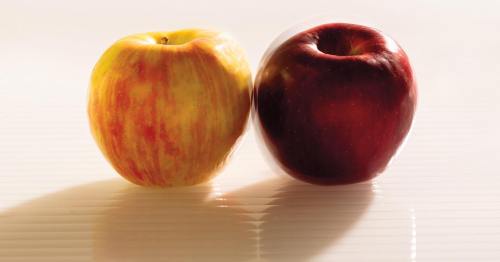
The Cosmic Crisp (right) is the result of crossbreeding two varieties: the Honeycrisp (left), which growers find finicky but which gives the Cosmic Crisp its texture and juiciness, and Enterprise, a late-ripening, long-storing apple.
Film and Writing Festival for Comedy. Showcasing best of comedy short films at the FEEDBACK Film Festival. Plus, showcasing best of comedy novels, short stories, poems, screenplays (TV, short, feature) at the festival performed by professional actors.

 .
.
 Archive of Our Own, the fanfiction database recently nominated for a Hugo, has perfected a system of tagging that the rest of the web could emulate.
 To the moon
 .
.

 Notre-dame fire




 James' World 2