It was a simple experiment. Lucia Alcala, a psychologist, built a tiny model grocery store with aisles and different items that she could put on a family’s dining room table.
She and her colleagues brought the model store to 43 family’s homes along California’s Central Coast. Each family had a pair of siblings, ages 6 to 10.
She gave the siblings clear instructions: Find an efficient route through the store to pick up a list of grocery items and — this was made clear — “work together, collaborate and help each other,” says Alcala, of California State University, Fullerton. “We gave them very specific instructions.”
Alcala and her colleagues logged what happened. Did the siblings help each other? Did they boss each other around? Did the older ones exclude the younger ones from the task?
For decades, scientists have documented a surprising phenomenon: In many cultures around the world, parents don’t struggle to raise helpful, kind kids. From ages 2 to 18, kids want to help their families. They wake up in the morning and voluntarily do the dishes. They hop off their bikes to help their dad carry groceries into the house. And when somebody hands them a muffin, they share it with a younger sibling before taking a bite themselves.
.
The author’s daughter, Rosy, at age 2 she does dishes — voluntarily. Getting her involved in chores did lead to the kitchen being flooded and dishes being broken. But she is still eager to help.
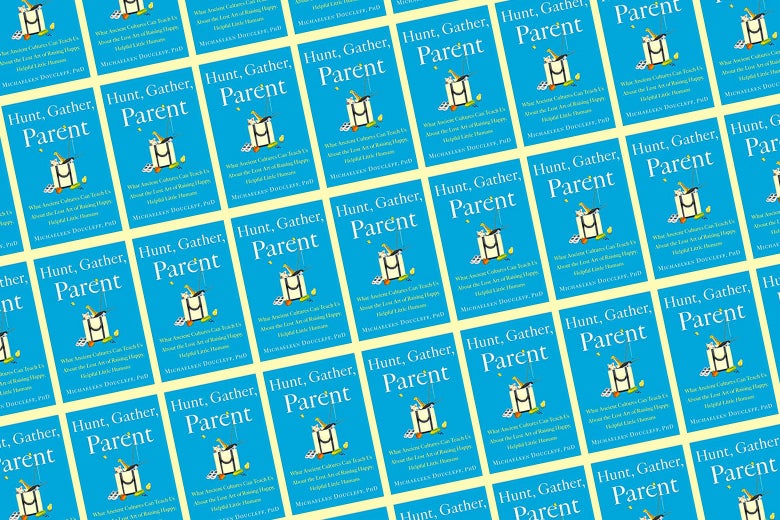
The setup to the newest “parenting is better, anywhere but here” book goes like this: When reporter Michaeleen Doucleff, who lives in San Francisco, reached peak frustration with her spirited 3-year-old daughter, Rosy, she wondered if other people out there might have the answers. She visited a few places that seemed sufficiently different to be enlightening—the Mayan village of Chan Kajaal, the Inuit town of Kugaaruk, and the Hadzabe tribe in northern Tanzania. She packed Rosy along and asked local parents for their help. The result is Hunt, Gather, Parent: What Ancient Cultures Can Teach Us About the Lost Art of Raising Happy, Helpful Little Humans. This is a heartfelt book that’s full of perfectly fine advice, wrapped in a story of some experiences that obviously changed this particular mother’s life, all built on a premise that should make us feel very queasy.
I say the advice is “fine” because almost every bit of it is something I’d heard before, coming out of the interconnected worlds of Western parenting guidance that self-describe as “respectful,” “gentle,” “peaceful,” “unconditional,” and “Montessori-” or “Waldorf-inspired.” Inuit parents (Doucleff generalizes!) try not to issue too many commands and avoid at all costs getting into power struggles with their children? I think of the concepts of “dropping the rope,” or “modeling graciousness,” both of which I learned from respectful-parenting bloggers and podcasters. Mayan mothers don’t overpraise, and their kids retain internal motivation much better? Psychologist Alfie Kohn wrote the book on it, more than 20 years ago, and you can find Montessori memes with suggestions for things you could say instead of “Good job,” ready to print and put on your refrigerator. Hadzabe parents give their kids a lot of physical freedom? Google “natural gross motor development” + “Emmi Pikler.” Mayan mothers do everyday household chores alongside their kids as they play, finding ways for them to participate as they can? That’s straight out of Waldorf and Montessori.
Spotting patterns, trends, and formulas make our work (and life) easier. But I never thought I’d see someone unlocking the formula for the hardest job of all: raising super-successful children.
Harvard professor Ronald Ferguson, author of “The Formula: Unlocking the Secrets to Raising Highly Successful Children,” recently told the Harvard Gazette he’s done exactly that.
Ferguson was fascinated with what parents did to shape his talented students. So he and co-author Tatsha Robertson comprehensively studied how different parenting styles shape children’s success. Test subjects included the youngest statewide elected official in the country and the mother of the CEOs of YouTube and the genetics company 23andMe.
.
The ‘early learning partner’ is the most important role of the eight. kali9/Getty Images
The studio audience showered me with hisses, “nuh-uh’s,” and boos as I answered questions about my parenting. I was on an episode of a nationally syndicated talk show that aired on March 3, 2020, just weeks before parenting became a fuller-time job for millions of American women.
My sin? I let my 10-year-old ride public transportation without me. I reassured those at the show’s taping that the regular drivers and riders of my daughter’s route would be there to help in an emergency that she and/or her travel companions — two other fifth-graders — couldn’t handle. Mel Robbins, the life-coach-turned-TV-personality who hosted the show, responded with a chilling judgment: “You’re outsourcing your parenting.”
This, I thought, as I burned with studio lighting and the insecure indignation of the accused, is why so many mothers I know are dependent on anti-anxiety meds, alcohol, and other substances. It’s also why colleges have instituted hand-holding measures that would have been unthinkable two decades ago, including text messages reminding students about professors’ office hours and even where to find food.
We’ve heard about rising rates of maternal anxiety. We’ve heard about rising rates of young adult anxiety. Screens often take the blame, and they may yet play a role (especially when considering their impact on sleep), but there’s another culprit driving these phenomena: this common take on parental “outsourcing.”
The rise of intensive parenting belief that children must be attended—or even attended to—at all times by their parents or a direct proxy came to dominate America’s child-rearing philosophy from the last decade of the 20th century forward. My style, which revolves around limiting kids’ independence only to the extent necessary to protect them from risks that are both serious and fairly likely to materialize, is now known as “free-range parenting” in the United States, despite the fact that much of the world—including the majority in countries like Germany, the Netherlands, Finland, France, and Israel—just calls it “parenting.”
The escape of a trip into mountains or a day lying by the beach may feel like an extravagance to city dwellers confined by a traditional work schedule. But exposure to green and blue spaces is far more than just a luxury. For kids, growing up without regular exposure to nature seems to have ripple effects that persist into adulthood, according to research published in the International Journal of Environmental Health and Public Health.
Using data from 3,585 people collected across four cities in Europe, scientists from the Barcelona Institute for Global Health (also called IS Global) report a strong relationship between growing up away from the natural world and mental health in adulthood. Overall, they found a strong correlation between low exposure to nature during childhood and higher levels of nervousness and feelings of depression in adulthood. Co-author Mark Nieuwenhuijsen, Ph.D., director of IS Global’s urban planning, environment, and health initiative, tells Inverse that the relationship between nature and mental health remained strong, even when he adjusted for confounding factors.
“What we found is that the childhood experience of green space can actually predict mental health in later life,” Nieuwenhuijsen says. “The people that reported more exposure to nature actually have better mental health than those that don’t even after we adjust for exposure at the time of the interview when they are adults.”
Film and Writing Festival for Comedy. Showcasing best of comedy short films at the FEEDBACK Film Festival. Plus, showcasing best of comedy novels, short stories, poems, screenplays (TV, short, feature) at the festival performed by professional actors.




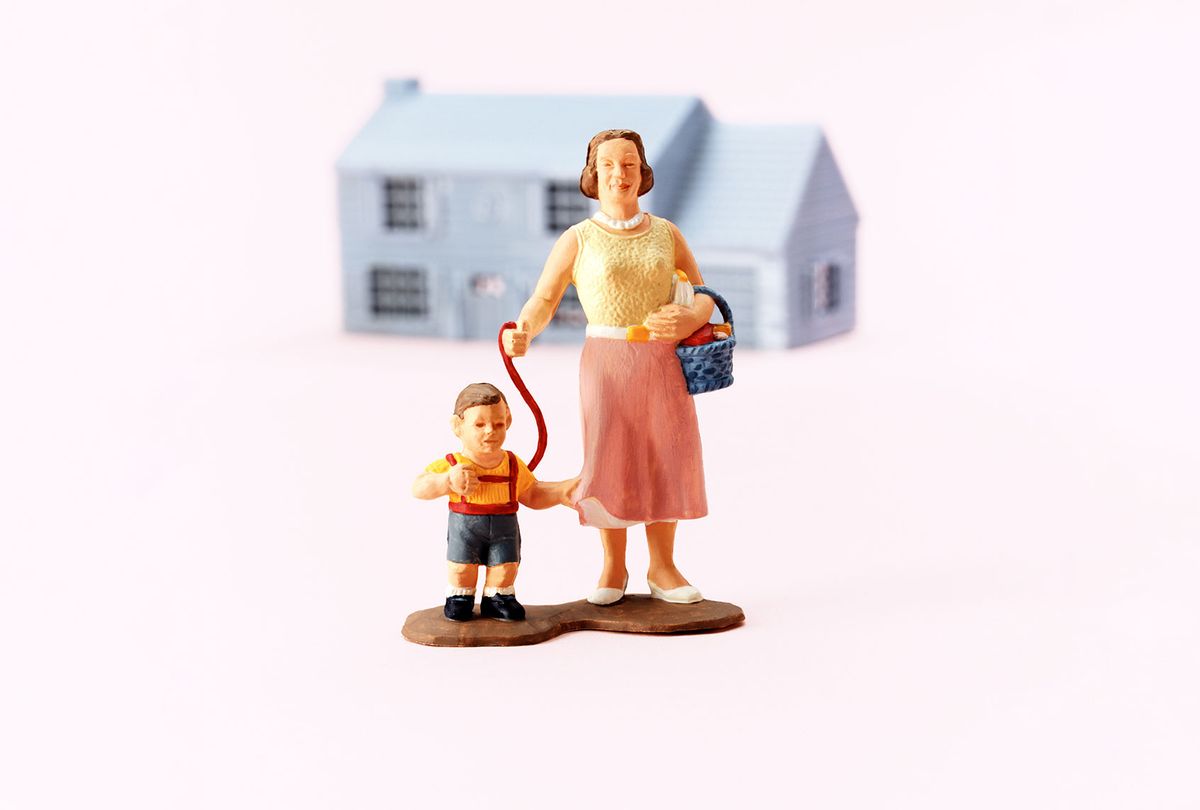 Woman with Child on Leash (Getty Images)

 James' World 2