Recently, I’ve been spending money like a robber baron’s wayward son. I’m buying flamboyant leather boots, limited-print-run poetry collections on thick paper, tiny statuettes from the local thrift store. My pent-up energy has been directly channeled into frivolity. If you’re selling me a drink with a wild garnish (ramps, sure!), I will order one for me and one for you! This is a marked change. I used to be a woman of simple tastes: a whiskey neat with lemon, literally zero statuettes.
It seems as if many of us experienced a tidal shift in how we think about spending during the pandemic. But as fun as it is to talk about what we are buying, I also wondered what people have decided to forego. Asking around, I found that even people who feel as spendy as I do have also isolated things they never want to buy ever again. The homesteaders gained skills they never knew they could possess: They could do their own spa treatments, they could make their own pickled delicacies. The aesthetes realized they’d rather have the weird, special, real thing and never settle for substitutes. And the previously buttoned-up discovered the deep pleasures in avoiding bras.
After talking to 12 people about their budget cuts, I saw that it wasn’t astringency or asceticism that changed them: It was making sure that what they were buying was as fun, comfortable, lively, and joyful as possible. The answers below might be about giving things up, but only in the name of pleasure.
.
Photo-Illustration: by The Cut; Photos: Getty Images
Imagine you’re lying in bed at 1 a.m., relentlessly tossing and turning in the dark. You roll over on your side to check the time and realize you’ll be running on the bare minimum: a pathetic five hours of sleep to get you through the day ahead. You might start to plan a coping strategy — maybe three pumps of espresso and an ice-cold shower to boot. But here’s the good news: Technically, five hours of sleep is enough to function. However, experts don’t recommend actively pulling an all-nighter just because you can. The U.S. Department of Health and Human Services recommends the average adult clock in seven to eight hours of sleep per night, but for some people, less is apparently more.
Seriously, who runs the world? Sleep, that’s who. It’s been scientifically proven time and again that how you function both mentally and physically throughout the day heavily relies on how much and how well you slept the night before, but this whole timing detail is still up for debate. According to ScienceAlert, a mere one percent of the population is made up of “short sleepers,” people who only require four to six hours of sleep instead of the recommended seven to eight.
One of our children’s deepest needs is to feel heard, and by listening carefully and expressing empathy, parents can help fill this need.
More importantly, research has found that if someone feels empathy, even if it’s just from watching a touching video, it can make them feel more connected to — and generous toward — others. In other words, practicing empathy with your kids can help them grow up to be emotionally intelligent adults.
This might not seem hard, but it is. If our kids aren’t doing well, parents often feel the need to be disapproving — otherwise, they reason, the kid will think they’re okay with the behavior.
Also, when kids are upset, their distress induces what’s called a “righting reflex” in parents, or the desire to fix whatever the problem is for the child by using logic. But logic doesn’t calm emotions — empathy and validation do.
Based on our 60 years of combined experience working with parents and their kids, here are some of the most effective ways to teach children empathy:
How do most of us learn how to use our money wisely and well? When we’re growing up, we’re given special instruction in important subjects — swimming, driving, sex — to arm us with info and keep us from harm.
Yet when it comes to managing our money — an activity that every one of us needs to do, every day — we receive surprisingly little preparation. We’re not taught much about it in school, because education systems leave it to us to learn from our families and friends. However, those people often don’t fill in the gaps because money can be such a loaded or taboo topic.
Natalie Torres-Haddad, who grew up in southern California, saw many people around her struggling with debt and financial instability. She was determined to be the exception, and she purchased her first rental property in her early 20s and earned an MPA in Finance & International Business. In the process, however, she became buried in debt. Only by teaching herself the basics of money — basics that she’d never learned — was she able to steady herself and her finances.
The 73rd annual Primetime Emmy Awards is in the books.
Netflix was the big winner this year with 44 trophies, including a leading 10 at the primetime ceremony and 34 at the Creative Arts Emmy ceremonies last weekend, to wipe out the competition. The combined HBO/HBO Max was next with 19, including 10 wins tonight, followed by Disney+ with 14, including one tonight. Apple TV+ is next with 10, including four tonight. NBC has eight, and VH1 took six; both took home one statuette Sunday night.
Bertrand Russell (May 18, 1872–February 2, 1970) endures as one of humanity’s most lucid and luminous minds — an oracle of timeless wisdom on everything from what “the good life” really means to why “fruitful monotony” is essential for happiness to love, sex, and our moral superstitions. In 1950, he was awarded the Nobel Prize in Literature for “his varied and significant writings in which he champions humanitarian ideals and freedom of thought.” On December 11 of that year, 78-year-old Russell took the podium in Stockholm to receive the grand accolade. Later included in Nobel Writers
on Writing (public library) — which also gave us Pearl S. Buck, the youngest woman to receive the Nobel Prize in Literature, on art, writing, and the nature of creativity — his acceptance speech is one of the finest packets of human thought ever delivered from a stage.
Russell begins by considering the central motive driving human behavior:
All human activity is prompted by desire. There is a wholly fallacious theory advanced by some earnest moralists to the effect that it is possible to resist desire in the interests of duty and moral principle. I say this is fallacious, not because no man ever acts from a sense of duty, but because duty has no hold on him unless he desires to be dutiful. If you wish to know what men will do, you must know not only, or principally, their material circumstances, but rather the whole system of their desires with their relative strengths.
Last month, the New York Times Magazine published an in-depth look at the increasing flooding problems faced by New Jersey’s coastal cities and towns and said that the sea level has risen 18 inches in the past century, which is twice as fast as the global average, with incidences of nuisance flooding (which is associated with high tides) more than doubling in the past 20 years.
This followed closely on the heels of the latest report from the Intergovernmental Panel on Climate Change, which found that global warming is accelerating, and “unless there are immediate, rapid and large-scale reductions in greenhouse gas emissions, limiting warming to close to 1.5°C or even 2°C will be beyond reach.” The window of opportunity for decisive action is closing, as the long life of greenhouse gases in the atmosphere means that a certain amount of further warming is already baked into the system. Upon publication of a special report in 2018, IPCC co-chair Debra Roberts said ominously, “The next few years are probably the most important in our history.”
.
The B.L. England plant is seen in this file photo. Andrew Mills/The Star-Ledger
Communities across New Jersey are suffering from respiratory diseases and other health impacts because of dangerously high levels of air pollution. Most of our counties have failing levels of ozone and particulate matter, both of which are emitted in large amounts by diesel trucks. This pollution increases the incidence of asthma, heart disease, heart attacks, cancers, chronic lung diseases, and premature deaths, with a disproportionate impact on communities of color. One out of every four children in Newark has asthma, a rate three times the national average. Trenton has four times more asthma-related emergency room visits than the state average.
There is a critical need for improving air quality and meeting our climate targets in New Jersey. Not only does diesel pollution directly impact the health of our communities, but it also contributes to climate-related impacts. Extreme heat can lead to heat-related illness or make existing health conditions worse. Storms and sea-level rise lead to flooding, impacting some of our most vulnerable communities.
Film and Writing Festival for Comedy. Showcasing best of comedy short films at the FEEDBACK Film Festival. Plus, showcasing best of comedy novels, short stories, poems, screenplays (TV, short, feature) at the festival performed by professional actors.

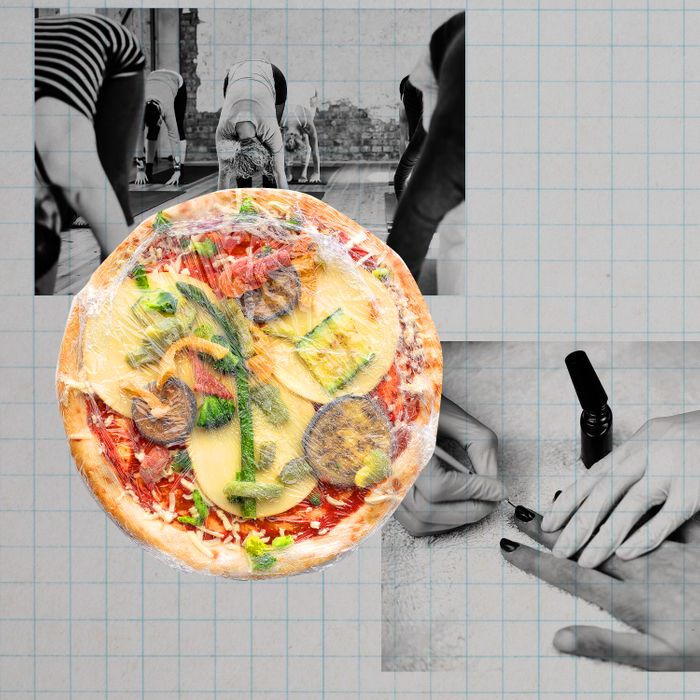 Photo-Illustration: by The Cut; Photos: Getty Images

 Thais Ramos Varela
 d3sign | Getty



 Bertrand Russell


 Renée Pollard and Bill Beren
 James' World 2