January 13, 2022
Mohenjo
Arts, Business, Food For Thought, Human Interest, Science, Technical
amazon, business, Business News, current-events, Future, Hotels, human-rights, medicine, mental-health, research, Science, Science News, technology, Technology News, travel, vacation

Click the link below the picture
.
Drawing is a powerful tool of communication. It helps build self-understanding and can boost mental health.
But our current focus on productivity, outcomes, and “talent” has us thinking about it the wrong way. Too many believe the myth of “I can’t draw”, when in fact it’s a skill built through practice.
Dedicated practice is hard, however, if you’re constantly asking yourself: “What’s the point of drawing?”
As I argue in a 2021 paper in Closure E-Journal for Comic Studies, we need to reframe our concept of what it means to draw, and why we should do it – especially if you think you can’t.
Devoting a little time to drawing each day may make you happier, more employable, and sustainably productive.
.
 Photo by Darren C. Fisher
 Darren Fisher, Author provided
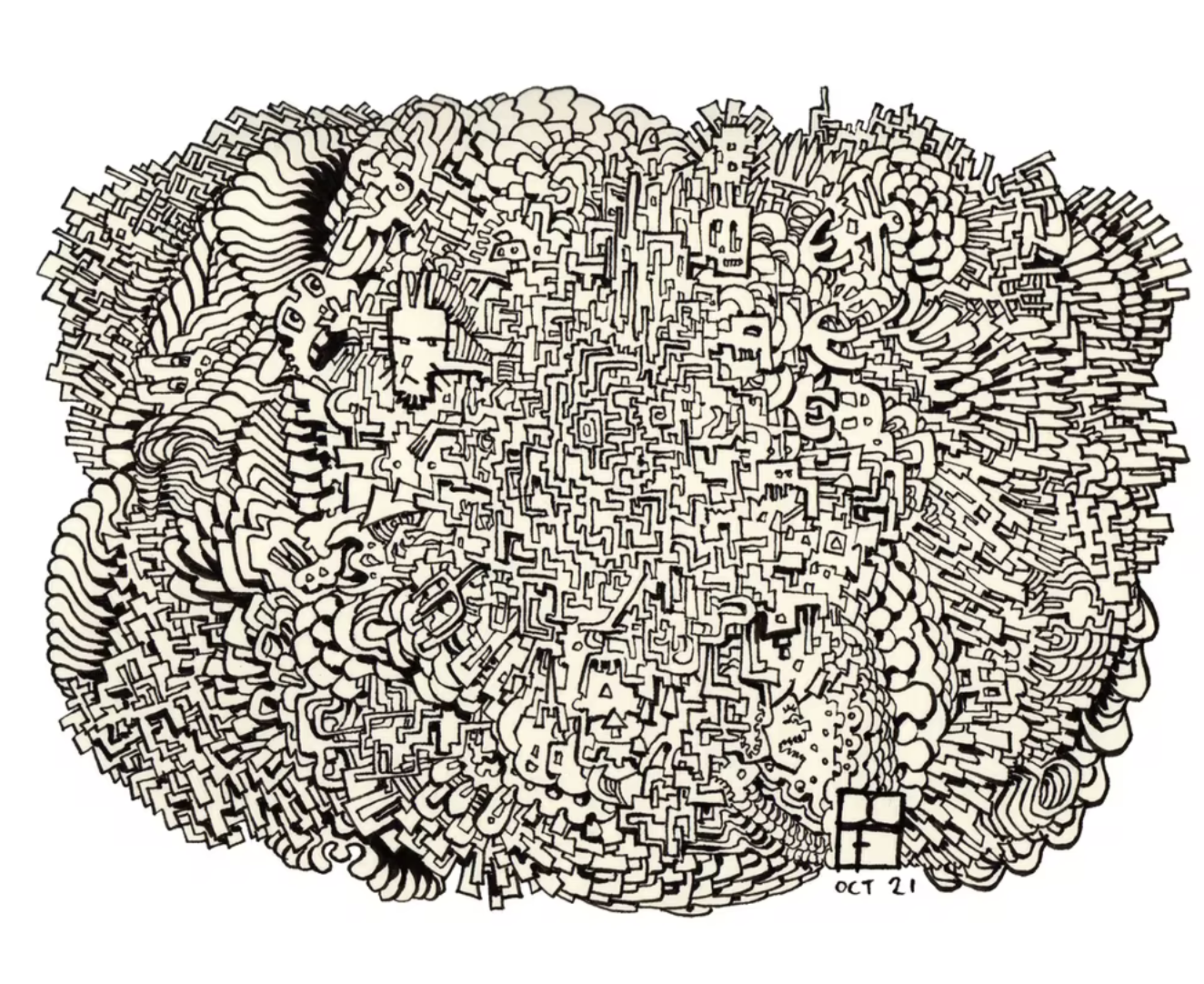 Automatic drawing – where one doodles without a specific aim – is a way to tap into flow states and become mindfully absorbed. Darren C. Fisher, Author provided
.
.
Click the link below for the article:
.
__________________________________________
January 13, 2022
Mohenjo
Crime, Food For Thought, Human Interest, Medical, missed News, Political, Science, Technical
amazon, business, Business News, current-events, Future, Hotels, human-rights, medicine, mental-health, research, Science, Science News, technology, Technology News, travel, vacation

.
News You might have missed!
Use your browser or smartphone back arrow (<-) to return to this table for your next selection.
.
__________________________________________
January 12, 2022
Mohenjo
Business, Food For Thought, Human Interest, Science, Technical
amazon, business, Business News, current-events, Future, Hotels, human-rights, medicine, mental-health, research, Science, Science News, technology, Technology News, travel, vacation
Some content on this page was disabled on April 15, 2025 as a result of a DMCA takedown notice from Guardian Media Group. You can learn more about the DMCA here:
https://wordpress.com/support/copyright-and-the-dmca/
January 12, 2022
Mohenjo
Business, Food For Thought, Human Interest, Science, Technical
amazon, business, Business News, current-events, Future, Hotels, human-rights, medicine, mental-health, research, Science, Science News, technology, Technology News, travel, vacation

Click the link below the picture
.
Most of us have been told to “Cheer up” or “Look on the bright side” by well-meaning family and friends. Sometimes, it’s because they see us looking sad, angry, anxious, or frustrated, but it can also happen because we look pensive, uncertain, or just about any state other than joyful. While we may be tempted to tell them “Stuff it,” we don’t because, well, feelings.
Next time, feel free to do so (but please be polite). “Being positive has become a new form of moral correctness,” says psychologist Susan David, founder, and co-director of the Institute of Coaching at McLean Hospital of Harvard University Medical School, an instructor in psychology at Harvard, and author of Emotional Agility (read an excerpt here).
Suppressing or turning away from our difficult emotions is not healthy or helpful, says David. “What happens is, it undermines our ability to deal with the world as it is, not as we wish it to be,” she says. “This is associated with lower levels of resilience, lower levels of wellbeing, and higher levels of depression and anxiety. And it also impacts our relationships and our ability to achieve our goals.”
.
 Illustration by Rose Wong
.
.
Click the link below for the article:
.
__________________________________________
January 12, 2022
Mohenjo
Arts, Crime, Food For Thought, Human Interest, Medical, missed News, Political, Science, Technical
amazon, business, Business News, current-events, Future, Hotels, human-rights, medicine, mental-health, research, Science, Science News, technology, Technology News, travel, vacation
.
News You might have missed!
Use your browser or smartphone back arrow (<-) to return to this table for your next selection.
.
__________________________________________
January 11, 2022
Mohenjo
Business, Food For Thought, Human Interest, Science, Technical
amazon, business, Business News, current-events, Future, Hotels, human-rights, medicine, mental-health, research, Science, Science News, technology, Technology News, travel, vacation

Click the link below the picture
.
There’s one question I hear as a personal finance writer more than any other. It’s not how to game the stock market, or become a billionaire—it’s simply how to make a budget work while still saving enough to retire comfortably.
And of course, it’s simple: Change your habits so you can put money aside for the things that matter to you. But that’s also really, really hard to do.
That’s because understanding personal finance is an uphill battle for many Americans. We’re not taught about the practicalities of money in school, because the truth is many industries profit from our ignorance. While wages have hardly budged in decades, shareholders and CEOs have never been richer. The cost of living in many major cities is prohibitive to just about anyone but the super privileged, or those willing to take on a lot of debt or make enormous sacrifices. While the stock market soars, just 52% of U.S. adults actually owned stock in 2016, according to Gallup, and the wealthiest 1% of households owned 38% of all stock shares in 2013. The government is actively working against consumers to make it easier for financial institutions to prey on its citizens, and a single medical bill can send a person into debt for the rest of their life.
.
 Paramount
.
.
Click the link below for the article:
.
__________________________________________
January 11, 2022
Mohenjo
Crime, Food For Thought, Human Interest, Medical, missed News, Political, Science, Technical
amazon, business, Business News, current-events, Future, Hotels, human-rights, medicine, mental-health, research, Science, Science News, technology, Technology News, travel, vacation
.
News You might have missed!
Use your browser or smartphone back arrow (<-) to return to this table for your next selection.
.
__________________________________________
January 10, 2022
Mohenjo
Business, Food For Thought, Human Interest, Science, Technical
amazon, business, Business News, current-events, Future, Hotels, human-rights, medicine, mental-health, research, Science, Science News, technology, Technology News, travel, vacation
Some content on this page was disabled on April 15, 2025 as a result of a DMCA takedown notice from Guardian Media Group. You can learn more about the DMCA here:
https://wordpress.com/support/copyright-and-the-dmca/
January 10, 2022
Mohenjo
Business, Food For Thought, Human Interest, Political, Science, Technical
amazon, business, Business News, current-events, Future, Hotels, human-rights, medicine, mental-health, research, Science, Science News, technology, Technology News, travel, vacation

Click the link below the picture
.
At the outset of the pandemic, millions of Americans with federal student loans were granted a brief reprieve: Donald Trump’s administration waived interest rates and allowed borrowers to pause their payments, initially for 60 days and then until January 2021. The pause was extended by President Joe Biden, first through January 2022 and now through May 1.
Some 45 million Americans owe more than $1.7 trillion in private and public student loan debt, according to the Federal Reserve. Most student loans are federal, but an estimated $140 billion — about 8 percent of loans owed — are private. The average student debt for a bachelor’s degree hovers around $29,000, according to NerdWallet, and around $71,000 for a graduate degree. Based on data from the New York Fed, the average balance overall, regardless of degree, is about $35,000.
Until recently, the student loan freeze was set to expire at the end of January 2022. The White House initially resisted pressure from Democrats to extend it, declaring that it’s time for business to get back to normal. On December 10, White House press secretary Jen Psaki said at a press briefing that “a smooth transition back into repayment is a high priority for the administration.” However, on December 22, the Biden administration reversed course under continued pressure. In the coming months, the administration said, it will make sure borrowers “have the support they need to transition smoothly back into repayment” in May.
President Biden has resisted calls for him to cancel student debt through executive action — some Democrats on the Hill have urged him to forgive up to $50,000. And while Biden has publicly expressed his support for student loan forgiveness on the campaign trail, the president wants Congress to take the first step.
.
:format(webp)/cdn.vox-cdn.com/uploads/chorus_image/image/70329900/GettyImages_515705750.0.jpg) Getty Images/iStockphoto
Getty Images/iStockphoto
.
.
Click the link below for the article:
.
__________________________________________
January 10, 2022
Mohenjo
Crime, Food For Thought, Human Interest, Medical, missed News, Political, Science, Technical
amazon, business, Business News, current-events, Future, Hotels, human-rights, medicine, mental-health, research, Science, Science News, technology, Technology News, travel, vacation
.
News You might have missed!
Use your browser or smartphone back arrow (<-) to return to this table for your next selection.
.
__________________________________________
Older Entries
Newer Entries

