February 4, 2022
Mohenjo
Business, Food For Thought, Human Interest, Science, Technical
amazon, business, Business News, current-events, Future, Hotels, human-rights, medicine, mental-health, research, Science, Science News, technology, Technology News, travel, vacation

Click the link below the picture
.
Last November in the cavernous Amazon Room of Las Vegas’s Rio casino, two dozen men dressed mostly in sweatshirts and baseball caps sat around three well-worn poker tables playing Texas Hold ’em. Occasionally a few passers-by stopped to watch the action, but otherwise the players pushed their chips back and forth in dingy obscurity. Except for the taut, electric stillness with which they held themselves during a hand, there was no outward sign that these were the greatest poker players in the world, nor that they were, as the poker saying goes, “playing for houses,” or at least hefty down payments. This was the first day of a three-day tournament whose official name was the World Series of Poker Super High Roller, though the participants simply called it “the 250K,” after the $250,000 each had put up to enter it.
At one table, a professional player named Seth Davies covertly peeled up the edges of his cards to consider the hand he had just been dealt: the six and seven of diamonds. Over several hours of play, Davies had managed to grow his starting stack of 1.5 million in tournament chips to well over two million, some of which he now slid forward as a raise. A 33-year-old former college baseball player with a trimmed light brown beard, Davies sat upright, intensely following the action as it moved around the table. Two men called his bet before Dan Smith, a fellow pro with a round face, mustache and whimsically worn cowboy hat, put in a hefty reraise. Only Davies called.
.
 Illustration by Patricia Doria
.
.
Click the link below for the article:
.
__________________________________________
February 3, 2022
Mohenjo
Business, Food For Thought, Human Interest, Science, Technical
amazon, business, Business News, current-events, Future, Hotels, human-rights, medicine, mental-health, research, Science, Science News, technology, Technology News, travel, vacation

Click the link below the picture
.
In almost every regard, new cars are better than they’ve been at any time in their history. They’re safer than they used to be—though that is less true for women. Powertrains, particularly battery-electric ones, are more powerful and more efficient, which helps to compensate for the extra weight of that added safety equipment. Vehicles are far more reliable, at least for their first 100,000 miles, and even cheap cars come with standard equipment that would seem like science fiction to drivers from just a few decades ago.
They ride better; they stop better—so everything’s great, right? The problem is that modern cars almost invariably feel a bit boring to drive. The issue is more acute the longer you’ve been driving, as you might expect since the cause is technological progression—specifically, power steering.
What happened to steering feel?
For much of the car’s existence, steering was entirely unassisted. The driver turns the wheel connected to a steering column that, through links and pivots and usually a gear, turns the front wheels in either direction. That setup was marvelous for feedback, but it wasn’t great in terms of the effort required to turn the wheel, particularly at lower speeds.
.
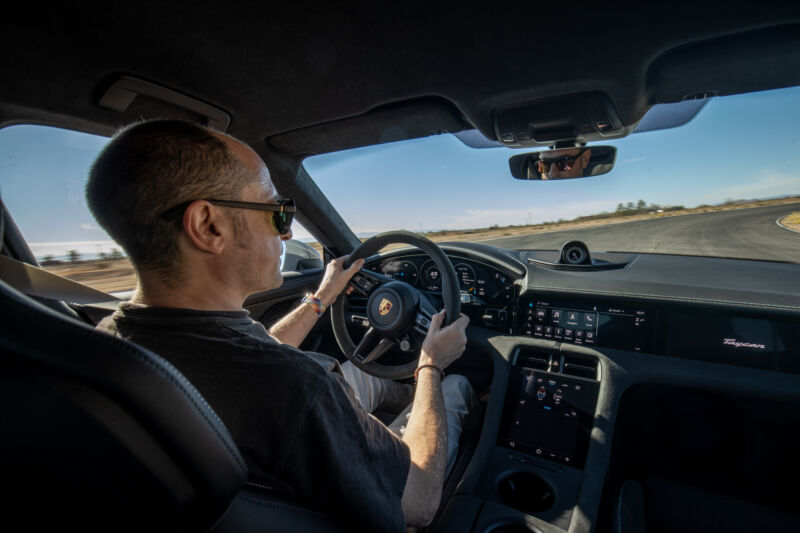 The Porsche Taycan is one of the few new cars to exhibit anything we might recognize as steering feel. That wasn’t always the case.
.
.
Click the link below for the article:
.
__________________________________________
February 2, 2022
Mohenjo
Business, Food For Thought, Human Interest, Science, Technical
amazon, business, Business News, current-events, Future, Hotels, human-rights, medicine, mental-health, research, Science, Science News, technology, Technology News, travel, vacation

Click the link below the picture
.
If you’ve ever been tempted by a flutter, you’ll know how bookmakers and casinos stack the odds against you. The clearest example is roulette, where there are 36 red and black numbers plus the green numbers 0 and (in the U.S.) 00. So that’s 38 possibilities in total. When betting on red or black, the odds of choosing correctly are 18/38, and a fair payout for a $1 stake is $2.111. However, the house pays only $2 and keeps the difference. In that way, it guarantees itself a profit.
A similar bias occurs in bookmakers’ odds on horse races, soccer, and every other sporting event. The bookies always ensure that the odds are in their favor. But setting these odds is harder than those for roulette because the calculations are trickier.
And that raises a tantalizing possibility. Is it possible to come up with a better way to calculate the odds, and thus beat the bookies?
.
 Photo by humonia / Getty Images.
.
.
Click the link below for the article:
.
__________________________________________
February 2, 2022
Mohenjo
Business, Food For Thought, Human Interest, Overlooked Past Article, Science, Technical
amazon, business, Business News, current-events, Future, Hotels, human-rights, medicine, mental-health, research, Science, Science News, technology, Technology News, travel, vacation

Click the link below the picture
.
Updated December 6, 2017
Without Spock, there would be no “Star Trek.” The Starship Enterprise’s part-Vulcan officer always captivated audiences with his wit and logic while knowing exactly how to keep Captain Kirk in check.
On Friday, Leonard Nimoy, the actor who made Spock famous, died at the age of 83. Now, looking back on his career, we fondly remember the times no one could have said it better than Spock.
.
 LOS ANGELES – SEPTEMBER 15: Leonard Nimoy as Mr. Spock in the STAR TREK episode, ‘Charlie X.’ Season 1, episode, 2. Original air date September 15, 1966. Image is a screen grab. (Photo by CBS via Getty Images)
.
.
Click the link below for the article:
.
__________________________________________
February 2, 2022
Mohenjo
Crime, Food For Thought, Human Interest, Medical, missed News, Political, Science, Technical
amazon, business, Business News, current-events, Future, Hotels, human-rights, medicine, mental-health, research, Science, Science News, technology, Technology News, travel, vacation

.
News You might have missed!
Use your browser or smartphone back arrow (<-) to return to this table for your next selection.
.
__________________________________________
February 1, 2022
Mohenjo
Business, Food For Thought, Human Interest, Science, Technical
amazon, business, Business News, current-events, Future, Hotels, human-rights, medicine, mental-health, research, Science, Science News, technology, Technology News, travel, vacation

Click the link below the picture
.
Forget doomsday asteroids, global plagues, and supervolcanoes. British theoretical physicist and cosmologist Stephen Hawking says we’re facing a much more immediate threat — and it’s our own behavior.
“The human failing I would most like to correct is aggression,” Hawking told contest winner Adaeze Uyanwah, according to the Independent. “It may have had survival advantage in caveman days, to get more food, territory or a partner with whom to reproduce, but now it threatens to destroy us all.”
Uyanwah, a 24-year-old from California, won the “Guest of Honor” contest from VisitLondon.com. The prize package included a tour of London’s Science Museum with Hawking.
While being shown around, Uyanwah asked Hawking which human shortcoming he would most like to change, and which trait he’d enhance.
Hawking chose aggression and warned that a nuclear war could end civilization and possibly the human race. We need to replace aggression with empathy, which “brings us together in a peaceful loving state,” he said.
The subject of “The Theory of Everything” also told her that the future of man lies beyond Earth.
.

Stephen Hawking arrives for the British Academy Film and Television Awards 2015, The BAFTAs, at the Royal Opera House, in London, Sunday, Feb. 8, 2015. (Photo by Jonathan Short/Invision/AP)
.
.
Click the link below for the article:
.
__________________________________________
February 1, 2022
Mohenjo
Business, Food For Thought, Human Interest, Science, Technical
amazon, business, Business News, current-events, Future, Hotels, human-rights, medicine, mental-health, research, Science, Science News, technology, Technology News, travel, vacation

Click the link below the picture
.
Take a tweet from the week after the Capitol riot in January 2021: “A Liberal insurrection would have looked very different. We would have escorted the original Broadway cast of Hamilton into the galleries. They would softly sing … as members of the GOP spewed their lies.” This was apparently intended as satire of a certain type of extremely online and cringe-inducing liberal smugness, but it came off as the thing itself and then produced more of the same. “I’ve literally been listening to the Hamilton soundtrack at work for days now,” wrote one woman. “This is EXACTLY what would’ve happened. ALL the theater kids everywhere” wrote another.
Then the joke became real. Last week, as part of a series of public events marking one year since the January 6 riot, Speaker of the House Nancy Pelosi introduced a prerecorded performance by the cast of Hamilton, singing “Dear Theodosia.” Pelosi read aloud from the song’s lyrics: “We’ll make it right for you. If we lay a strong enough foundation, we’ll pass it on to you; we’ll give the world to you.” There was no need to debate whether this was cringe (which is now an adjective, as well as a noun and verb), because cringe is a you-know-it-when-you-see-it type of thing. And these days, you can see it everywhere.
As a term, cringe took off in forums in the early aughts, when the practice of humiliating oneself online was still somewhat novel. If it’s now mainstream—as a meme and an entertainment genre and an incredibly cutting insult—that’s not because human beings have become more cringe as a group. It’s because we’ve been given more opportunities to display our cringeworthy characteristics, and also to point out the cringe-worthy behavior of others. Whereas people used to feel secondhand embarrassment on behalf of their friends and family, or wince at their own awkward behavior, they are now exposed to the potentially embarrassing behavior of entire social networks.
After spending years in that environment, our sense of cringe has been heightened to truffle-pig levels of sensitivity. We can sniff out the tiniest flaws in someone else’s public performance, dig them up, share them around. We’re connoisseurs of cringe. Maybe we’re even gluttons for it. Wikipedia
.
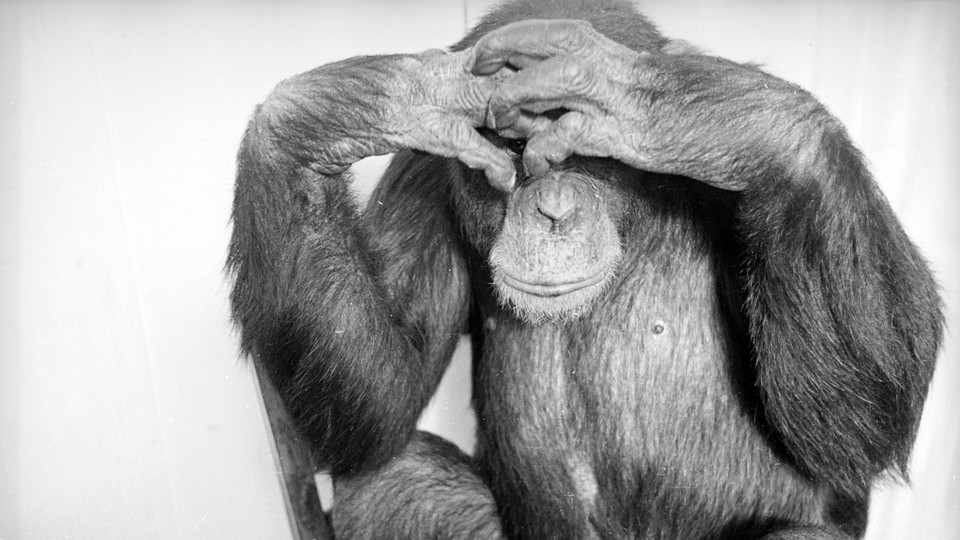 Fox Photos / Getty
.
.
Click the link below for the article:
.
__________________________________________
February 1, 2022
Mohenjo
Crime, Food For Thought, Human Interest, Medical, missed News, Political, Science, Technical
amazon, business, Business News, current-events, Future, Hotels, human-rights, medicine, mental-health, research, Science, Science News, technology, Technology News, travel, vacation
.
News You might have missed!
Use your browser or smartphone back arrow (<-) to return to this table for your next selection.
.
__________________________________________
January 31, 2022
Mohenjo
Business, Food For Thought, Human Interest, Science, Technical
amazon, business, Business News, current-events, Future, Hotels, human-rights, medicine, mental-health, research, Science, Science News, technology, Technology News, travel, vacation

Click the link below the picture
.
In August, chipmaker Intel revealed new details about its plan to build a “mega-fab” on US soil, a $100 billion factory where 10,000 workers will make a new generation of powerful processors studded with billions of transistors. The same month, 22-year-old Sam Zeloof announced his own semiconductor milestone. It was achieved alone in his family’s New Jersey garage, about 30 miles from where the first transistor was made at Bell Labs in 1947.
With a collection of salvaged and homemade equipment, Zeloof produced a chip with 1,200 transistors. He had sliced up wafers of silicon, patterned them with microscopic designs using ultraviolet light, and dunked them in acid by hand, documenting the process on YouTube and his blog. “Maybe it’s overconfidence, but I have a mentality that another human figured it out, so I can too, even if maybe it takes me longer,” he says.
Zeloof’s chip was his second. He made the first, much smaller one as a high school senior in 2018; he started making individual transistors a year before that. His chips lag Intel’s by technological eons, but Zeloof argues only half-jokingly that he’s making faster progress than the semiconductor industry did in its early days. His second chip has 200 times as many transistors as his first, a growth rate outpacing Moore’s law, the rule of thumb coined by an Intel cofounder that says the number of transistors on a chip doubles roughly every two years.
Zeloof now hopes to match the scale of Intel’s breakthrough 4004 chip from 1971, the first commercial microprocessor, which had 2,300 transistors and was used in calculators and other business machines. In December, he started work on an interim circuit design that can perform simple addition.
.
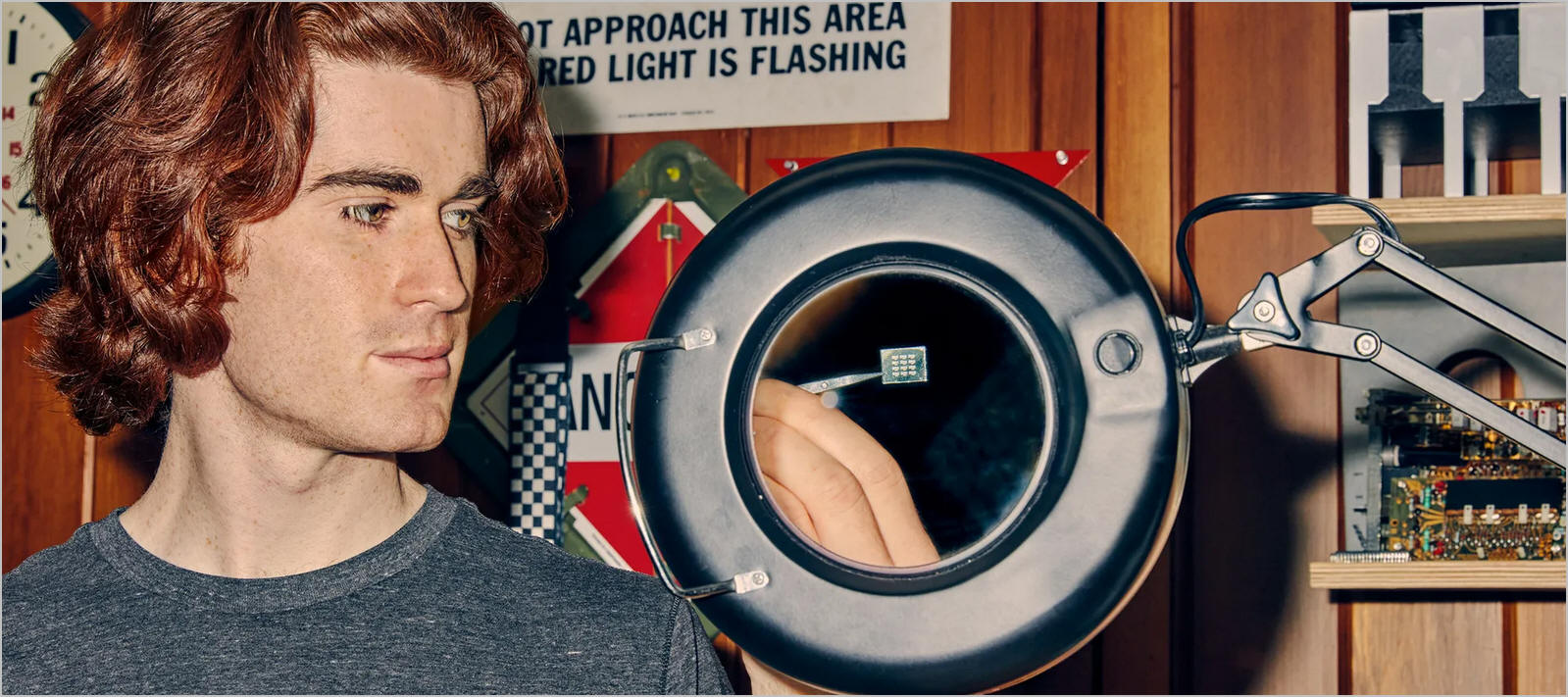 Sam Zeloof completed this homemade computer chip with 1,200 transistors, seen under a magnifying glass, in August 2021.Photograph: Sam Kang
.
.
Click the link below for the article:
.
__________________________________________
January 31, 2022
Mohenjo
Business, Food For Thought, Human Interest, Overlooked Past Article, Science, Technical
amazon, business, Business News, current-events, Future, Hotels, human-rights, medicine, mental-health, research, Science, Science News, technology, Technology News, travel, vacation

Click the link below the picture
.
NASA’s Curiosity rover has detected a strange burst of methane gas in the atmosphere on Mars, along with other organic chemicals in rocks on the planet’s surface. The findings are raising new questions about the planet’s habitability–today as well as in the past.
“That we detect methane in the atmosphere on Mars is not an argument that we have found evidence of life on Mars, but it is one of the few hypotheses that we can propose that we must consider as we go forward in the future,” Dr. John Grotzinger, Curiosity project scientist at the California Institute of Technology in Pasadena, said on Dec. 16 in a news briefing at the American Geophysical Union’s convention in San Francisco.
Using its onboard Sample Analysis at Mars (SAM) laboratory, the rover “sniffed” more than a dozen samples of the Martian atmosphere over a 20-month period. Grotzinger and his team found that methane levels shot up tenfold to an average of seven parts per billion over two months in late 2013 and early 2014, according to NASA.
The researchers aren’t sure what caused the burst, but they’ve offered two potential explanations: an interaction between water and rocks called serpentization, or methane-belching microbes. Anaerobic bacteria produce around 95 percent of the methane on Earth.
.
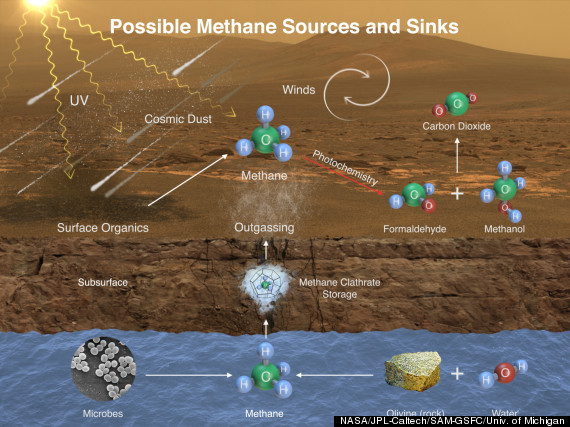 This image illustrates possible ways methane might be added to Mars’ atmosphere (sources) and removed from the atmosphere (sinks). NASA’s Curiosity Mars rover has detected fluctuations in methane concentration in the atmosphere, implying both types of activity occur on modern Mars.
.
.
Click the link below for the article:
.
__________________________________________
Older Entries
Newer Entries

