March 13, 2024
Mohenjo
Business, Food For Thought, Human Interest, Political, Science, Technical
amazon, business, Business News, current-events, Future, Hotels, human-rights, medicine, mental-health, research, Science, Science News, technology, Technology News, travel, vacation

Click the link below the picture
.
While plenty of health conditions make you painfully aware of their presence via any number of impossible-to-ignore symptoms, high blood pressure (a.k.a. hypertension) can be a sneakier beast. You can literally walk around all day, every day, without a clue that your blood pressure numbers are higher than they should be—many people don’t have physical symptoms that they can feel. Although people who have high blood pressure (which is nearly half of adults in the US) might not have any discomfort from it most of the time, it’s really serious. High blood pressure significantly ups your risk of heart attack and stroke, makes you more likely to develop kidney disease, and can even mess with your sex drive.
Rampant as high blood pressure is, getting it under control can be a tricky business. Kathryn Harris, MD, a cardiology fellow and the fellows representative for the Association of Black Cardiologists, tells SELF that more than half of people treated for high BP don’t have it under control, meaning that it stays high despite treatment like medication. While the ideal reading is less than 120/80 mmHg (the top number is your systolic pressure and the bottom number is your diastolic pressure), BP that lingers above 140/90 mmHg typically requires both medication and lifestyle changes to rein it in, according to the American Heart Association (AHA).
If you’re one of the many people struggling to keep the beast of high blood pressure on a leash, let us make one thing crystal clear: Significantly lowering blood pressure is tough—and often requires taking medication (in many cases, more than one) and making some pretty serious changes to your lifestyle. It’s complicated stuff, and can take some trial and error.
Finding the right balance of medications and switching up your behaviors around food, exercise, and other key parts of the way you live your life can feel challenging for even those who can afford any prescriptions they need, shop at the health food store, and try out the latest fitness studio in town. And yet, many of the people with the greatest risk of high BP and its downstream effects live with limited access to heart-healthy food or medication that’s within their budgets, Estelle Darlyse Jean, MD, a board-certified non-invasive cardiologist with MedStar Heart & Vascular Institute, tells SELF.
.
.png)
.
.
Click the link below for the article:
.
__________________________________________
March 12, 2024
Mohenjo
Business, Food For Thought, Human Interest, Political, Science, Technical
amazon, business, Business News, current-events, Future, Hotels, human-rights, medicine, mental-health, research, Science, Science News, technology, Technology News, travel, vacation
Some content on this page was disabled on April 15, 2025 as a result of a DMCA takedown notice from Guardian Media Group. You can learn more about the DMCA here:
https://wordpress.com/support/copyright-and-the-dmca/
March 12, 2024
Mohenjo
Business, Food For Thought, Human Interest, Political, Science, Technical
amazon, business, Business News, current-events, Future, Hotels, human-rights, medicine, mental-health, research, Science, Science News, technology, Technology News, travel, vacation
Some content on this page was disabled on April 15, 2025 as a result of a DMCA takedown notice from Guardian Media Group. You can learn more about the DMCA here:
https://wordpress.com/support/copyright-and-the-dmca/
March 11, 2024
Mohenjo
Business, Food For Thought, Human Interest, Political, Science, Technical
amazon, business, Business News, current-events, Future, Hotels, human-rights, medicine, mental-health, research, Science, Science News, technology, Technology News, travel, vacation

Click the link below the picture
.
COVID-19 is becoming more like the flu and, as such, no longer requires its own virus-specific health rules, the Centers for Disease Control and Prevention said Friday alongside the release of a unified “respiratory virus guide.”
In a lengthy background document, the agency laid out its rationale for consolidating COVID-19 guidance into general guidance for respiratory viruses—including influenza, RSV, adenoviruses, rhinoviruses, enteroviruses, and others, though specifically not measles. The agency also noted the guidance does not apply to health care settings and outbreak scenarios.
“COVID-19 remains an important public health threat, but it is no longer the emergency that it once was, and its health impacts increasingly resemble those of other respiratory viral illnesses, including influenza and RSV,” the agency wrote.
The most notable change in the new guidance is the previously reported decision to no longer recommend a minimum five-day isolation period for those infected with the pandemic coronavirus, SARS-CoV-2. Instead, the new isolation guidance is based on symptoms, which matches long-standing isolation guidance for other respiratory viruses, including influenza.
“The updated Respiratory Virus Guidance recommends people with respiratory virus symptoms that are not better explained by another cause stay home and away from others until at least 24 hours after both resolution of fever AND overall symptom are getting better,” the document states. “This recommendation addresses the period of greatest infectiousness and highest viral load for most people, which is typically in the first few days of illness and when symptoms, including fever, are worst.”
“Residual risk”
The CDC acknowledged that the eased isolation guidance will create “residual risk of SARS-CoV-2 transmission,” and that most people are no longer infectious only after 8 to 10 days. As such, the agency urged people to follow additional interventions—including masking, testing, distancing, hygiene, and improving air quality—for five additional days after their isolation period.
.
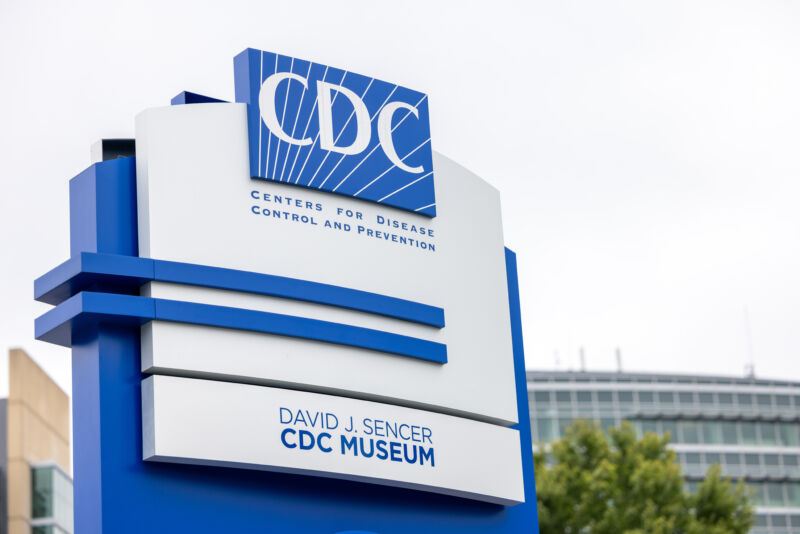 A view of the Centers for Disease Control and Prevention headquarters in Atlanta.
.
.
Click the link below for the article:
.
__________________________________________
March 11, 2024
Mohenjo
Business, Food For Thought, Human Interest, Political, Science, Technical
amazon, business, Business News, current-events, Future, Hotels, human-rights, medicine, mental-health, research, Science, Science News, technology, Technology News, travel, vacation

Click the link below the picture
.
Sociopaths are modern-day boogeymen, and the word “sociopath” is casually tossed around to describe the worst, most amoral among us. But they are not boogeymen; they are real people and, according to Patric Gagne, widely misunderstood. Gagne wrote “Sociopath,” her buzzy forthcoming memoir, to try to correct some of those misunderstandings and provide a fuller picture of sociopathy, which is now more frequently referred to as antisocial personality disorder. As a child, Gagne found herself compelled toward violent outbursts in an effort to try to compensate for the emotional apathy that was her default. As she got older, those compulsive behaviors turned into criminal ones like trespassing and theft. Eventually, she discovered that there was a name — that dreaded word — that could be used to describe and explain her experiences of remorselessness, criminality, and lack of empathy. The desire to destigmatize her experience and also to help others who may share it (Gagne previously worked as a therapist to those with the disorder and has also written about sociopathy) put Gagne on a path that led to “Sociopath.” “I’m not trying to say, ‘Sometimes we do bad things, but we’re really sweet on the inside,’” says Gagne, who is 48. “I’m saying there is more to this personality type.”
When I hear the word “sociopath,” I think of an antisocial, uncaring person who is interested only in satisfying his or her own desires. What’s a clearer picture? Sociopathy is a perilous mental disorder; the traits associated with sociopathy aren’t great. But that only tells part of the story. The part that’s missing is you can be a sociopath and have a healthy relationship. You can be a sociopath and be educated. That’s a very uncomfortable reality for some people. People want to believe that all sociopaths are monsters and that all monsters are easy to spot.
In the book, you write about stabbing a classmate with a pencil when you were a kid, and then as you got older, trespassing and stealing cars. You don’t succumb to those sociopathic compulsions anymore. How did you learn to control these urges? As a kid, I didn’t understand why I was acting out the way that I was. All I knew was I felt this pressure, and something in my brain was telling me, Punch that kid, and you’ll feel better. As I got older I understood, OK, there’s a name for this, there is a whole group of people who share this diagnosis. Once I understood that I wasn’t out in space untethered and going crazy, I was on the path to understanding that when I had those feelings of “go steal a car,” I could go, Yes, I could do that, but now I understand what’s going on. That understanding helped break the cycle — or at least redirect the compulsion toward something less destructive.
.
 By David Marchese Photo Illustration by Bráulio Amado
.
.
Click the link below for the article:
.
__________________________________________
March 10, 2024
Mohenjo
Business, Food For Thought, Human Interest, Political, Science, Technical
amazon, business, Business News, current-events, Future, Hotels, human-rights, medicine, mental-health, research, Science, Science News, technology, Technology News, travel, vacation

Click the link below the picture
.
Whether you are a seasoned gym-goer or are brand new to exercise, having a weekly workout plan can help you stay consistent and ensure you continue progressing towards your fitness goals.
And while life can sometimes get in the way of your scheduled workout program—for instance, maybe childcare falls through, and you have to skip yoga to watch your toddler, or a work meeting runs late so you can’t fit in the dumbbell weight lifting routine you had planned—having a set structure week-to-week can go a long way in helping fitness become an ingrained part of your lifestyle.
As for what your weekly gym workout plan should look like? Well, that answer is really going to vary from person to person. Factors like your baseline fitness level, current health status, exercise goals, and how much room you have in your schedule to exercise will all dictate the best workout schedule for you. For example, the right exercise routine for an avid runner trying to set a new PR is probably going to be a whole lot different than the best workout schedule for muscle gain and muscle growth.
All that said, if you’re looking for some general info to get you started, there are some broad guidelines that can give you a good sense of what comprises a well-rounded weekly workout plan. With that in mind, we spoke with four experts to get some basic guidance on how often you should work out, the components of a good workout routine, how you can make it a lasting habit, and how much exercise is too much. Right this way for all the need-to-know intel.
.
 Monika Jurczyk via Adobe Images
.
.
Click the link below for the article:
.
__________________________________________
March 10, 2024
Mohenjo
Business, Human Interest, Political, Science, Technical
amazon, business, Business News, current-events, Future, Hotels, human-rights, medicine, mental-health, research, Science, Science News, technology, Technology News, travel, vacation

Click the link below the picture
.
This Wednesday marks the beginning of the penitential period of Lent: one of the most important, and most misunderstood, periods in the Christian religious calendar.
While many non-Christians participate in Christmas festivities, even if just vaguely related to the occasion — Lent remains unobserved even by many Christians.
Lent is the approximately monthlong period that leads up to Easter, commemorating Jesus Christ’s temptation by the devil in the wilderness, his subsequent crucifixion, and finally, on Easter Sunday, his resurrection.
It is a period of fasting, penitence, and prayer for Christians around the world. It is predominately observed by Catholics (and the Orthodox, albeit on a slightly different calendar), but Christians of all denominations can and do participate.
About a quarter of Americans observe Lent (including 61 percent of Catholics, and 20 percent of Protestants), according to a 2017 Lifeway poll. But at the same time, in some corners of the Internet, Lent has become secularized, reimagined as another opportunity for a kind of spiritual wellness “cleanse” (whether of food, drink, or social media habits), a second chance at kickstarting those neglected New Year’s resolutions.
Lent is, in other words, simultaneously sidelined by many ostensibly practicing Christians and appropriated by the secular world.
.
:format(webp)/cdn.vox-cdn.com/uploads/chorus_image/image/58683965/647003270.jpg.0.jpg) Ash Wednesday is a time of penance, prayer, and reflection. Evelyn Hockstein/Washington Post/Getty Images
Ash Wednesday is a time of penance, prayer, and reflection. Evelyn Hockstein/Washington Post/Getty Images
.
.
Click the link below for the article:
.
__________________________________________
March 9, 2024
Mohenjo
Business, Food For Thought, Human Interest, Political, Science, Technical
amazon, business, Business News, current-events, Future, Hotels, human-rights, medicine, mental-health, research, Science, Science News, technology, Technology News, travel, vacation

Click the link below the picture
.
Even if you’re not Christian, you’ve probably at least heard of Lent — the 40 (really 46, since Sundays don’t count) days between Ash Wednesday and Easter. But what is Lent really about?
It’s about introspection. “Lent is a time of putting aside what we normally do to reevaluate our lives. It’s a time to ask, ‘Am I really being the person I intend to be?’” says Father Mark Morozowich, dean of the school of theology and religious studies at the Catholic University of America in Washington, DC.
It’s about connecting with others. “Lent is a journey people can take together. Even if you don’t identify as Christian or identify as religious, you can take part in the journey with friends or family members,” says Corey MacPherson, university chaplain at Colgate University in Hamilton, NY.
It’s about slowing down. In the Orthodox tradition, Lent is considered a return to normalcy. “It’s being more mindful, and more involved, and bathing yourself in the rituals of the church, so you can see your own needs. It’s a beautiful time of year,” says Jeff Citro, licensed social worker, a Massachusetts-based counselor with broad experience in the Christian denominations.
Giving something up
Fasting and sacrifice are cornerstones of Lent. But if you just, say, stop eating chocolate for Lent, you’re missing the point. You need to reflect on the sacrifice. “Why have you been eating so much chocolate anyway? What are you trying to heal from, or medicate?” asks Citro. “Giving up something in and of itself is useless. It’s only meaningful in the context of your spiritual journey.”
.
 Lent can set a pattern that transforms you and puts your life back in balance. Julia Davila-Lampe / Getty Images
.
.
Click the link below for the article:
.
__________________________________________
March 9, 2024
Mohenjo
Business, Food For Thought, Human Interest, Political, Science, Technical
amazon, business, Business News, current-events, Future, Hotels, human-rights, medicine, mental-health, research, Science, Science News, technology, Technology News, travel, vacation

Click the link below the picture
.
If you’re already crushing your cardio sessions and going hard in the weight room (which we hope you are!), it’s time to add another, often-overlooked layer to your workout routine. Enter: our March 2024 Movement of the Month Club, a monthlong mobility training program focusing on improving your entire body’s movement.
Looking to take your workouts to the next level and prevent injury while weaving in some oh-so-crucial self-care? Mobility is for you. Looking to feel better and move easier every day? Mobility is for you. The goal isn’t just to get more bendy, but to leave you feeling less achy and better primed for your workouts—and the rest of your daily routine, too.
Over the next four weeks, we’ll explore feel-good mobility exercises that fit into your busy days—as in, you only need 5 minutes! You’ll be guided through the month by Alicia Rios, certified personal trainer and programming manager for Bold, an at-home, digital fitness platform.
“Early in my career I realized that quality of life and independence are two important life goals for many aging individuals,” she says. “However, a lot of us take those things for granted until we start to notice they’re in decline—and then it becomes much harder to change.”
.
 Workouts
.
.
Click the link below for the article:
.
__________________________________________
March 8, 2024
Mohenjo
Business, Food For Thought, Human Interest, Political, Science, Technical
amazon, business, Business News, current-events, Future, Hotels, human-rights, medicine, mental-health, research, Science, Science News, technology, Technology News, travel, vacation

Click the link below the picture
.
On a recent Monday evening, at an event called “Doing Theology: Jesus and Carbon Neutrality,” I sat in a circle around a large bowl of Cheez-Its with twelve parishioners from Circle of Hope, a progressive Anabaptist church in South Philadelphia. The church occupies a former Italian funeral home that was featured on the show “Mob Wives,” and the room was hung with black netting to symbolize Lent, the Christian liturgical season that began on Ash Wednesday, in late February, and ends forty days later, on Easter. Lent is historically a period of atonement and reflection, and these people had come together to discuss the church’s carbon footprint and their own.
“I feel like I’ve woken up in the ocean, and I’m trying not to get wet,” Jeremy Avellino, a forty-four-year-old architect who was leading the discussion, said. In 2010, Avellino had learned that buildings were responsible for thirty-nine percent of global carbon emissions, and considered leaving architecture completely, but God had told him not to. “I didn’t hear God audibly say, ‘Hey, man, you’ve got to stay in this and make it better,’ ” he clarified, but he had had a brush with the Holy Spirit. In 2011, Avellino created Bright Common, an architecture studio that practices high-concept, low-carbon design. (Recently, during the panic shopping brought on by the coronavirus outbreak, he bought a Tushy, a seventy-nine-dollar bidet, to reduce his use of toilet paper.) Avellino finds solace in the energy-efficient houses and apartment buildings he builds. “But sometimes, when I zoom out on Google Earth and see the millions of other homes built, I sometimes slip into despair,” he said.
Sara Robbins, a thirty-three-year-old social worker who grew up in a conservative church, talked about trying to unlearn the idea that stories about humans damaging the planet, including through overpopulation, were fake news. “I grew up thinking that we had to have more children so that there were more Christians on the planet,” she said. She has started composting and using fewer single-use plastics. “I’m trying in the day to be more aware of how my actions have larger positive and negative impacts,” she said.
Many Christians observe the period of Lent by giving something up, often in the name of self-improvement. (Carbohydrates, say, or alcohol.) Over the past several years, however, some left-leaning Christians have made the commitment to limit their consumption in service of the Earth, rather than themselves. Last year, a group of nuns in Pennsylvania sent out a newsletter advising people on how to cut back on electricity usage during Lent. This year, the young adults of the Evangelical Lutheran Church in America, across the country, are fasting from single-use plastics, and other local sustainability practices. “It’s just way harder than I thought,” Savanna Sullivan, the twenty-seven-year-old national director of young-adult ministries, told me. “Yogurt, for instance: it’s healthy, but it’s in plastic, so I’ve given it up.” In St. Louis, the members of the University United Methodist Church are fasting from carbon. They recently shared a forty-day calendar that offers directives for each day, advising followers, for example, to collect their food waste to see how much they create and to keep it out of the garbage, where it produces greenhouse gases. The Church of England has devoted its annual #livelent campaign to “care for Creation,” and has advised practitioners to, among other things, plant a tree, turn their thermostats down, and eat less meat. “The individual actions are easy,” Jo Chamberlain, the national environmental officer for the Church, told me. “The ones that involve other people, like having my family eat more vegetables, are trickier.”
.

Some Christians have made the Lenten commitment to limit their consumption in service of the Earth, rather than themselves. Photograph from Alamy
.
.
Click the link below for the article:
.
__________________________________________
Older Entries
Newer Entries

