Nearly a week has gone by since the Supreme Court’s unexpected decision to enlist in the latest effort to destroy the Affordable Care Act, and the shock remains unabated. “This is Bush v. Gore all over again,” one friend said as we struggled to absorb the news last Friday afternoon. “No,” I replied. “It’s worse.”
What I meant was this: In the inconclusive aftermath of the 2000 presidential election, a growing sense of urgency, even crisis, gave rise to a plausible argument that someone had better do something soon to find out who would be the next president. True, a federal statute on the books defined the “someone” as Congress, but the Bush forces got to the Supreme Court first with a case that fell within the court’s jurisdiction. The 5-to-4 decision to stop the Florida recount had the effect of calling the election for the governor of Texas, George W. Bush. I disagreed with the decision and considered the contorted way the majority deployed the Constitution’s equal-protection guarantee to be ludicrous. But in the years since, I’ve often felt like the last progressive willing to defend the court for getting involved when it did.
Four former Blackwater security guards were convicted Wednesday in the 2007 shootings of more than 30 Iraqis in Baghdad, an incident that inflamed anti-American sentiment around the globe and was denounced by critics as an illustration of a war gone horribly wrong.
The men claimed self-defense, but federal prosecutors argued that they had shown “a grave indifference” to the carnage their actions would cause. All four were ordered immediately to jail.
Their lawyers are promising to file appeals. The judge did not immediately set a sentencing date.
Although the U.S. Supreme Court was “once a leader in the world” in the battle for racial equality, recent decisions by the high court undermine its role in solving a “real racial problem” in America, Justice Ruth Bader Ginsburg explained in an interview with The National Law Journal on Wednesday.
Citing recent events in Ferguson, Missouri, and racially biased stop-and-frisk policies, Ginsburg reflected on the perpetuation of racial segregation in America, comparing the challenges with those of the lesbian, gay, bisexual and transgender community.
.
Supreme Court Justice Ruth Bader Ginsburg said recent decisions by the high court undermine its role in solving a “real racial problem” in America. (Photo by Nikki Kahn/The Washington Post via Getty Images)
Problem: Your right-wing brother-in-law is plugged into the FOX-Limbaugh lie machine, and keeps sending you emails about “Obama spending” and “Obama deficits” and how the “stimulus” just made things worse.
Solution: Here are three “reality-based” charts to send to him.
.
Government spending increased dramatically under President Bush. It has not increased much under President Obama. This is just a fact.
Two Republican judges on the D.C. Circuit Court have ruled that the equivalent of a typo is enough to strip health care subsidies from up to five million people, dealing what would be a death blow to the Affordable Care Act if the decision is allowed to stand. The one Democrat on the panel dissented.
The three-judge panel ruled in Halbig v. Burwell that people in the 36 states that use the federal health insurance exchange are ineligible for subsidized insurance. The decision would also affect those who purchased insurance through the exchange but don’t receive subsidies, as reneging on the payments would lead to a rapid increase in insurance rates for everyone.
The White House said Tuesday the decision will be appealed to the entire D.C. circuit court — what’s known as an en banc review — where Democrats hold a majority that is nearly certain to overturn the GOP judges’ aggressive move. The next step could be the Supreme Court, which already upheld the Affordable Care Act in a separate case two years ago.
.
The ruling against Obamacare subsidies would affect anyone using a federally facilitated marketplace or partnership marketplace. Source: Henry J. Kaiser Family Foundation
The Memorial Day weekend saw a community eviscerated by gun violence that left several dead and many more injured.
But it wasn’t UC Santa Barbara that witnessed this particular round of bloodshed. It was New Orleans. By weekend’s end, the city had seen 19 people shot, four fatally. On Friday, a fight broke out at a high school graduation party that resulted in one person being killed and seven wounded. On Sunday, three men were shot with an assault rifle. That night, a murder took place at a Cajun seafood joint. On Monday morning, a triple shooting happened right outside a hospital, where people sitting in a car were hit with bullets in their backs, arms and legs. All survived. That same day, a 17-year-old died after being shot multiple times. Even earlier, a man riding his bike was shot under an overpass. The day ended with a homicide in the Lower Ninth Ward.
Colorado’s second-highest court ruled Thursday that some people convicted of possessing small amounts of marijuana can ask for those convictions to be thrown out under the law that legalized recreational marijuana in the state.
The Colorado Court of Appeals said people whose cases were under appeal when Amendment 64 took effect in December 2012 are eligible to have their convictions reversed.
A spokeswoman for the Attorney General John Suthers said prosecutors are reviewing the opinion to determine any next steps.
Following a 2012 Supreme Court ruling that made Medicaid expansion under the Affordable Care Act optional for states, 20 states have opted out of the reform, rejecting billions of dollars of federal funding for low-income residents. Texas and Florida will lose more than $9 billion and $5 billion, respectively.
Film and Writing Festival for Comedy. Showcasing best of comedy short films at the FEEDBACK Film Festival. Plus, showcasing best of comedy novels, short stories, poems, screenplays (TV, short, feature) at the festival performed by professional actors.

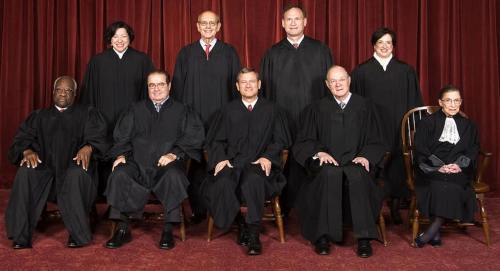 The Supreme Court





 Getty
Getty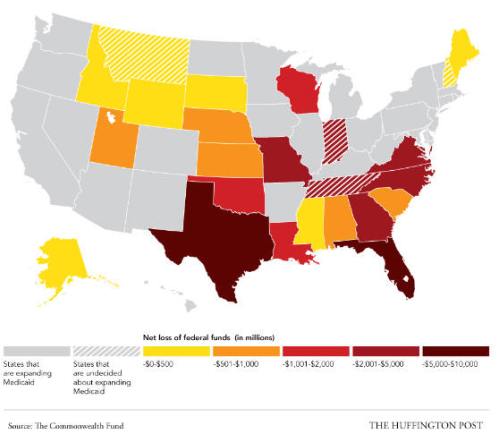 .
.

 James' World 2