April 5, 2021
Mohenjo
Business, Human Interest, Political, sports
amazon, business, Business News, current-events, Future, Hotels, human-rights, medicine, mental-health, research, Science, Science News, technology, Technology News, travel, vacation

Click the link below the picture
.
There was no need to pipe in crowd noise at Globe Life Field on Monday, as the Texas Rangers hosted the Toronto Blue Jays in front of the largest crowd at a sporting event in the United States in more than a year.
From the long lines of fans waiting to get into the stadium to the persistent buzz of the spectators during quiet moments, the game in Arlington, Texas, was a throwback to a time before the coronavirus crippled the country.
The state’s lifting of capacity restrictions made the enormous crowd possible. And for Major League Baseball, which claims its teams collectively lost billions during a largely fanless 2020 season, it was a hopeful sign that large crowds can return to all of the league’s games before too long. The open question is whether such events can be safe as the pandemic continues.
The Rangers announced in March that the team would sell tickets for every seat of their home opener in a stadium that opened last season. And on Monday that came to fruition, with an official crowd of 38,238 fans. That total, which was announced as a sellout, represented 94.8 percent of the stadium’s 40,300-seat capacity, and it topped the Daytona 500 (which allowed slightly more than 30,000 fans) and the Super Bowl (24,835), both of which were held in February, as the largest crowd at a U.S. sporting event since the pandemic began last year.
.
 © Jeffrey Mcwhorter/Associated Press Lines stretched out to the parking lot at Globe Life Field before the Texas Rangers’ home opener against the Toronto Blue Jays on Monday.
.
.
Click the link below for the article:
.
__________________________________________
April 5, 2021
Mohenjo
Business, Human Interest, Political
amazon, business, Business News, current-events, Future, Hotels, human-rights, medicine, mental-health, research, Science, Science News, technology, Technology News, travel, vacation

Click the link below the picture
.
A few weeks ago, Florida Gov. Ron DeSantis was the subject of a glowing profile in Politico that was built around an absurd premise: “How Ron DeSantis won the pandemic.” The story suggested that the number of deaths in Florida from the Covid-19 virus — at least 32,000 at the time — was a victory for DeSantis and his defiant, performative right-wing decision-making. Somehow, this qualified as a win:
Now, though, it’s a year into the pandemic—and the apocalypse has yet to arrive. It’s been, no doubt, a wrenching year. Approximately 2 million Floridians have tested positive for the coronavirus and more than 32,000 have died, the disbursement of unemployment benefits has been stingy and uneven, the vaccine rollout has been pockmarked by tales of lengthy waits, balky websites and numerous charges of socioeconomic inequities and political favoritism. Ominous variants lurk.
We’ll get into those various disasters in a minute, but I want to focus first on the vaccine rollout bit. The “numerous charges of socioeconomic inequities and political favoritism” line is putting it lightly. DeSantis’s administration has heavily favored white, wealthy, politically connected communities in Florida’s roll-out,
.

.
.
Click the link below for the article:
.
__________________________________________
April 5, 2021
Mohenjo
Arts, Crime, Food For Thought, Human Interest, Medical, missed News, Political, Science, Technical
amazon, business, Business News, current-events, Future, Hotels, human-rights, medicine, mental-health, research, Science, Science News, technology, Technology News, travel, vacation

.
News You might have missed!
Use your browser or smartphone back arrow (<-) to return to this table for your next selection.
.
__________________________________________
April 3, 2021
Mohenjo
Business, Food For Thought, Human Interest, Political, Technical
amazon, business, Business News, current-events, Future, Hotels, human-rights, medicine, mental-health, research, Science, Science News, technology, Technology News, travel, vacation

Click the link below the picture
.
Within the span of a few decades, the United States has utterly transformed its military or at least the military that is actively fighting. This has taken place with little fanfare and little public scrutiny. But without any conscious plan, I have seen some of the evolution firsthand. One of my early books, Black Hawk Down, was about a disastrous U.S. Special Ops mission in Somalia. Another, Guests of the Ayatollah, about the Iran hostage crisis, detailed an abortive but pivotal Special Ops rescue mission. U.S. Special Operators were involved in the successful hunt for the drug lord Pablo Escobar, the subject of Killing Pablo, and they conducted the raid that ended the career of Osama bin Laden, the subject of The Finish. By seeking out dramatic military missions, I have chronicled the movement of Special Ops from the wings to center stage.
Big ships, strategic bombers, nuclear submarines, flaring missiles, mass armies—these still represent the conventional imagery of American power, and they absorb about 98 percent of the Pentagon’s budget. Special Ops forces, in contrast, are astonishingly small. And yet they are now responsible for much of the military’s on-the-ground engagement in real or potential trouble spots around the world. Special Ops is lodged today under the Special Operations Command, or SOCOM, a “combatant command” that reports directly to the secretary of defense. It has acquired its central role despite initially stiff resistance from the conventional military branches, and without most of us even noticing.
It happened out of necessity. We now live in an open-ended world of “competition short of conflict,” to use a phrase from military doctrine. “There’s the continuum of absolute peace, which has never existed on the planet, up to toe-to-toe full-scale warfare,” General Raymond A. “Tony” Thomas, a former head of SOCOM, told me last year. “Then there’s that difficult in-between space.”
.
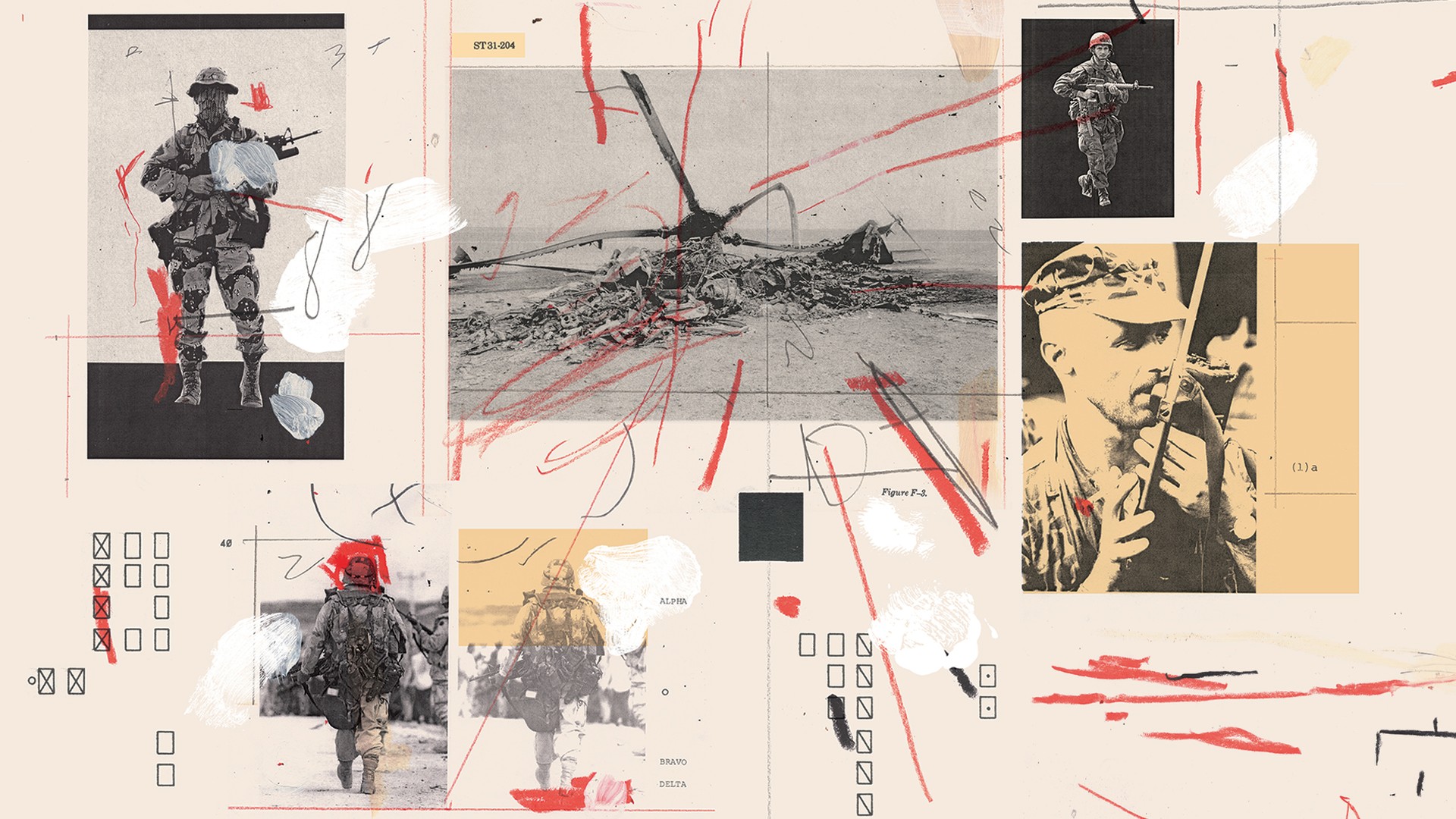 Special Ops Illustrations by Mike McQuade
.
.
Click the link below for the article:
.
__________________________________________
April 2, 2021
Mohenjo
Crime, Human Interest, Medical, missed News, Political, sports
amazon, business, Business News, current-events, Future, Hotels, human-rights, medicine, mental-health, research, Science, Science News, technology, Technology News, travel, vacation
.
News You might have missed!
Use your browser or smartphone back arrow (<-) to return to this table for your next selection.
.
__________________________________________
April 1, 2021
Mohenjo
Business, Human Interest, Political, Science, Technical
amazon, business, Business News, current-events, Future, Hotels, human-rights, medicine, mental-health, research, Science, Science News, technology, Technology News, travel, vacation

Click the link below the picture
.
On a sunny day in early 2017, Sundar Pichai, Alphabet Inc.’s chief executive officer, returned to his alma mater, the Indian Institute of Technology Kharagpur, in West Bengal, to speak before 3,500 students. Welcomed as the “rock star” leader of the “world’s most innovative company,” he reminisced about skipping classes and meeting his college girlfriend—now his wife. He also pitched Google to the soon-to-be-graduates in attendance. How many wanted to work there, the interviewer asked. Hundreds of hands went up. “Wow, maybe we should open a campus in Kharagpur,” Pichai joked.
As far as feeder schools go, it doesn’t get much better for Google than the network of 23 ultracompetitive, government-funded IITs. Every year hundreds of their graduates join the world’s biggest tech companies. In 2003, when the school system celebrated its 50th anniversary, Bill Gates delivered a keynote speech praising grads who’d come to work at Microsoft Corp. over the years, noting that the company had, in turn, invested more money in the IITs than in any other institution outside the U.S. and the U.K.
.
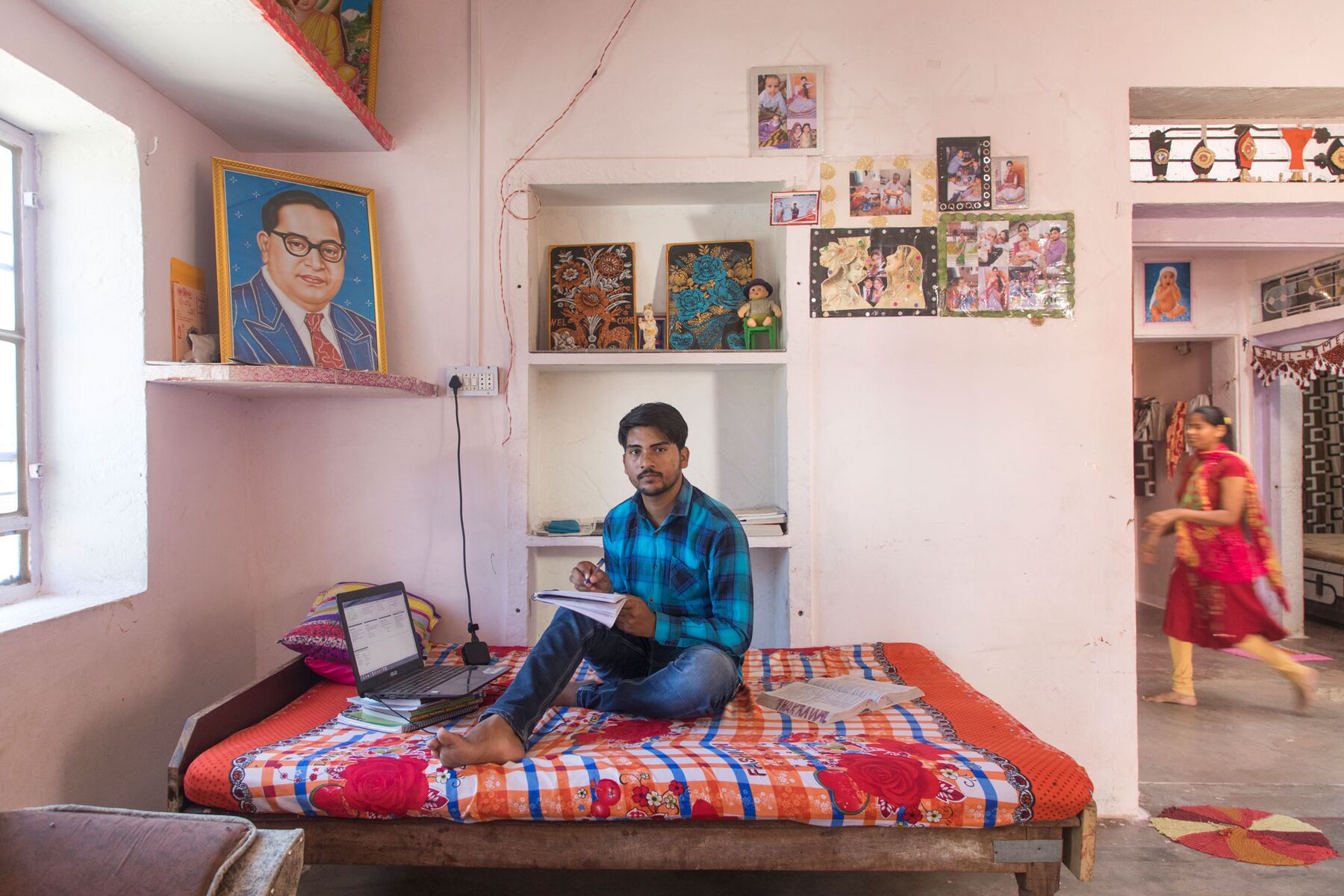
Amit Jatav at home as he tried to continue his studies with his university, IIT Delhi, going online. Behind him is a portrait of B.R. Ambedkar, a Dalit thinker, and activist who led the drafting of the Constitution of India and is responsible for the fight against caste discrimination in the country.
Photographer: Anshika Varma for Bloomberg Businessweek
.
.
Click the link below for the article:
.
__________________________________________
April 1, 2021
Mohenjo
Crime, Food For Thought, Human Interest, Medical, missed News, Political, Science, Technical
amazon, business, Business News, current-events, Future, Hotels, human-rights, medicine, mental-health, research, Science, Science News, technology, Technology News, travel, vacation
.
News You might have missed!
Use your browser or smartphone back arrow (<-) to return to this table for your next selection.
.
__________________________________________
March 31, 2021
Mohenjo
Crime, Food For Thought, Human Interest, Medical, missed News, Political, Science, sports, Technical
amazon, business, Business News, current-events, Future, Hotels, human-rights, medicine, mental-health, research, Science, Science News, technology, Technology News, travel, vacation
.
News You might have missed!
Use your browser or smartphone back arrow (<-) to return to this table for your next selection.
.
__________________________________________
March 30, 2021
Mohenjo
Crime, Food For Thought, Human Interest, Medical, missed News, Political, Science, Technical
amazon, business, Business News, current-events, Future, Hotels, human-rights, medicine, mental-health, research, Science, Science News, technology, Technology News, travel, vacation
.
News You might have missed!
Use your browser or smartphone back arrow (<-) to return to this table for your next selection.
.
__________________________________________
March 29, 2021
Mohenjo
Business, Crime, Food For Thought, Human Interest, Medical, missed News, Political, Science, Technical
amazon, business, Business News, current-events, Future, Hotels, human-rights, medicine, mental-health, research, Science, Science News, technology, Technology News, travel, vacation
.
News You might have missed!
Use your browser or smartphone back arrow (<-) to return to this table for your next selection.
.
__________________________________________
Older Entries
Newer Entries
 James' World 2