August 22, 2022
Mohenjo
Business, Food For Thought, Human Interest, Medical, Political, Science, Technical
amazon, business, Business News, current-events, Future, Hotels, human-rights, medicine, mental-health, research, Science, Science News, technology, Technology News, travel, vacation

Click the link below the picture
.
As a man of a certain age, I know that everything slows down as it gets older. But with computers, that decline can be especially precipitous. After just a couple of years, bootups can grow sluggish, apps may take longer to load, and the spinning wheel of death can become a more frequent feature of your user experience.
Eventually, the frustrations become so great that people buy a new system. Sometimes that’s the right decision. Sometimes the hardware is so old (and possibly damaged) that it can’t keep up with modern software and ever-more complex websites.
But often enough, those computers don’t need to be put out to pasture. In fact, many elderly computers are still out there cranking, perhaps with inexpensive upgrades. “The 2012 MacBook Pro is probably our largest seller,” says Nick Bratskeir, owner of Flipmacs, a company that sells refurbished Macs and PCs on marketplaces like Back Market, eBay, and Swappa. And those 2012 models, with upgrades to solid-state hard drives, sell for about $150.
So what’s the magic that brings an old Mac or PC back to life? Let’s look at what goes wrong as a system ages, and how to fix it. (For a quick overview of all the tips in this article, scroll down to the end.)
.
 Photo: Howard Bouchevereau/Unsplash]
.
.
Click the link below for the article:
.
__________________________________________
August 22, 2022
Mohenjo
Business, Food For Thought, Human Interest, Medical, Political, Science, Technical
amazon, business, Business News, current-events, Future, Hotels, human-rights, medicine, mental-health, research, Science, Science News, technology, Technology News, travel, vacation

Click the link below the picture
.
Ivana Trump, former president Donald Trump’s first wife, died on July 14 at the age of 73, owing to injuries she suffered in an accidental fall on the “grand curving staircase” at her Upper East Side townhouse. Her funeral drew about 400 people and featured a gold-hued coffin, Secret Service agents, and loving remembrances from her three adult children as well as several friends. Then this icon of ’80s glamour and New York tabloid drama was laid to rest … at a New Jersey golf course?
Many found the decision to bury Ivana at Trump National Golf Club Bedminster puzzling. She is the first person to be buried at the former president’s New Jersey property, and the ground had to be consecrated so she could have a traditional Catholic burial. A New York Post photographer scoped out the site and found that while Ivana’s grave isn’t literally on the golf course, the whole vibe is surprisingly understated:
Photos taken by The Post Thursday show Trump’s grave alone against a bucolic scenery of trees and shrubbery. The grave looks upon a sprawling green space upon the country club’s vast estate.
The plot where Ivana was buried has a bouquet of more than two dozen white flowers and a plaque that reads in all capital letters Ivana Trump with the dates she was born and died.
The grave is in a place where golfers would not see it as they tee off for a round of golf. The small section of the club is below the backside of the first tee.
.
 Dave Kotinsky/Getty Images Donald Trump and Ivana Trump
.
.
Click the link below for the article:
.
__________________________________________
August 22, 2022
Mohenjo
Crime, Food For Thought, Human Interest, Medical, missed News, Political, Science, Technical
amazon, business, Business News, current-events, Future, Hotels, human-rights, medicine, mental-health, research, Science, Science News, technology, Technology News, travel, vacation

.
News You might have missed!
Use your browser or smartphone back arrow (<-) to return to this table for your next selection.
.
__________________________________________
August 21, 2022
Mohenjo
Business, Food For Thought, Human Interest, Medical, Political, Science, Technical
amazon, business, Business News, current-events, Future, Hotels, human-rights, medicine, mental-health, research, Science, Science News, technology, Technology News, travel, vacation

Click the link below the picture
.
In Pittsburgh, Memphis, and Los Angeles, massive billboards recently popped up declaring, “Birds Aren’t Real.”
On Instagram and TikTok, Birds Aren’t Real accounts have racked up hundreds of thousands of followers, and YouTube videos about it have gone viral.
Last month, Birds Aren’t Real adherents even protested outside Twitter’s headquarters in San Francisco to demand that the company change its bird logo.
The events were all connected by a Gen Z-fueled conspiracy theory, which posits that birds don’t exist and are really drone replicas installed by the U.S. government to spy on Americans. Hundreds of thousands of young people have joined the movement, wearing Birds Aren’t Real T-shirts, swarming rallies, and spreading the slogan.
It might smack of QAnon, the conspiracy theory that the world is controlled by an elite cabal of child-trafficking Democrats. Except that the creator of Birds Aren’t Real and the movement’s followers are in on a joke: They know that birds are, in fact, real and that their theory is made up.
What Birds Aren’t Real truly is, they say, is a parody social movement with a purpose. In a post-truth world dominated by online conspiracy theories, young people have coalesced around the effort to thumb their nose at, fight, and poke fun at misinformation. It’s Gen Z’s attempt to upend the rabbit hole with absurdism.
.

Peter McIndoe, the 23-year-old creator of the Birds Aren’t Real movement, with his van in Fayetteville, Ark.Credit…Rana Young for The New York Times
.
.
Click the link below for the article:
.
__________________________________________
August 20, 2022
Mohenjo
Business, Food For Thought, Human Interest, Medical, Political, Science, Technical
amazon, business, Business News, current-events, Future, Hotels, human-rights, medicine, mental-health, research, Science, Science News, technology, Technology News, travel, vacation

Click the link below the picture
.
How one man was drawn into online conspiracies and how they led to his death – an investigation by the BBC’s disinformation reporter Marianna Spring.
.
 Gary Matthews
.
.
Click the link below for the article:
.
__________________________________________
August 20, 2022
Mohenjo
Business, Food For Thought, Human Interest, Medical, Political, Science, Technical
amazon, business, Business News, current-events, Future, Hotels, human-rights, medicine, mental-health, research, Science, Science News, technology, Technology News, travel, vacation

Click the link below the picture
.
Alzheimer’s has been reversed in mice after scientists boosted the formation of new brain cells.
A gene therapy fueled neurons in the hippocampus – a region vital for learning and remembering.
The breakthrough could lead to new treatments. The number of dementia cases worldwide will triple to 150 million by 2050. There is no cure.
Lead author Professor Orly Lazarov, of the University of Illinois, Chicago, said: “Taken together, our results suggest augmenting neurogenesis may be of therapeutic value.”
Experiments have shown the process is impaired in patients and mice with mutations linked to Alzheimer’s – particularly in the hippocampus.
.
 © Provided by talker (Pixabay via Pexels)
.
.
Click the link below for the article:
.
__________________________________________
August 20, 2022
Mohenjo
Crime, Food For Thought, Human Interest, Medical, missed News, Political, Science, Technical
amazon, business, Business News, current-events, Future, Hotels, human-rights, medicine, mental-health, research, Science, Science News, technology, Technology News, travel, vacation
.
News You might have missed!
Use your browser or smartphone back arrow (<-) to return to this table for your next selection.
.
__________________________________________
August 19, 2022
Mohenjo
Business, Food For Thought, Human Interest, Medical, Political, Science, Technical
amazon, business, Business News, current-events, Future, Hotels, human-rights, medicine, mental-health, research, Science, Science News, technology, Technology News, travel, vacation

Click the link below the picture
.
By the time Rebecca Bell applied for a job at Amazon, she was willing to do “literally anything” to get pregnant. The problem was money. After four miscarriages, she and her husband had already spent more than $10,000 on donor embryos, medication, and a few IVF transfers. Neither of their jobs — hers at FedEx, his in the military — offered insurance that covered the treatments she has needed since being diagnosed with PCOS, a hormonal condition that can lead to infertility. The couple even resorted to selling some of their stuff, like a chainsaw and a moped, to help with payments. Last fall, when a doctor suggested further testing that would cost yet more thousands of dollars, Bell knew she needed another solution.
The 28-year-old joined Facebook support groups, where she found women who took jobs at Amazon warehouses for the first-rate fertility benefits. This could be my last hope, she thought, scrolling through posts about how the company covers at least two full IVF cycles. The work seemed grueling, but she only needed to survive a few weeks to foot the testing bill. How bad could it really be?
In October, Bell started working overnight shifts at a North Carolina warehouse, where she spent ten hours on her feet sorting packages before lugging them on a cart that could weigh up to 200 pounds at the end of her shift. Soon, she began feeling a searing pain in her legs that became so bad she could barely stand. Then she’d wake up in the middle of the night with a jabbing sensation in her hips, which a doctor later diagnosed as bursitis, a condition that causes swelling around joints. Bell took painkillers and gave herself pep talks: Keep pushing through. There is no other option. After a week of agony, she took the next one off, then quit. It was enough time to both cover the necessary testing and make her feel like an “80-year-old woman.” “It’s terrifying,” she says. “It’s like, ‘We have great benefits, but we’re going to break your body.’”
The U.S. healthcare system treats IVF and egg freezing as luxuries for the rich. Yet unlike nose jobs and face-lifts, they are treatments for infertility, a condition that plagues up to one in six couples and affects men and women at roughly the same rate. There is no federal mandate to provide infertility coverage — a bill requiring private health insurers to do so has stalled in Congress — and at the state level, coverage is sporadic. A single full IVF cycle can cost up to $30,000, and most people are stuck paying for treatments out of pocket.
.
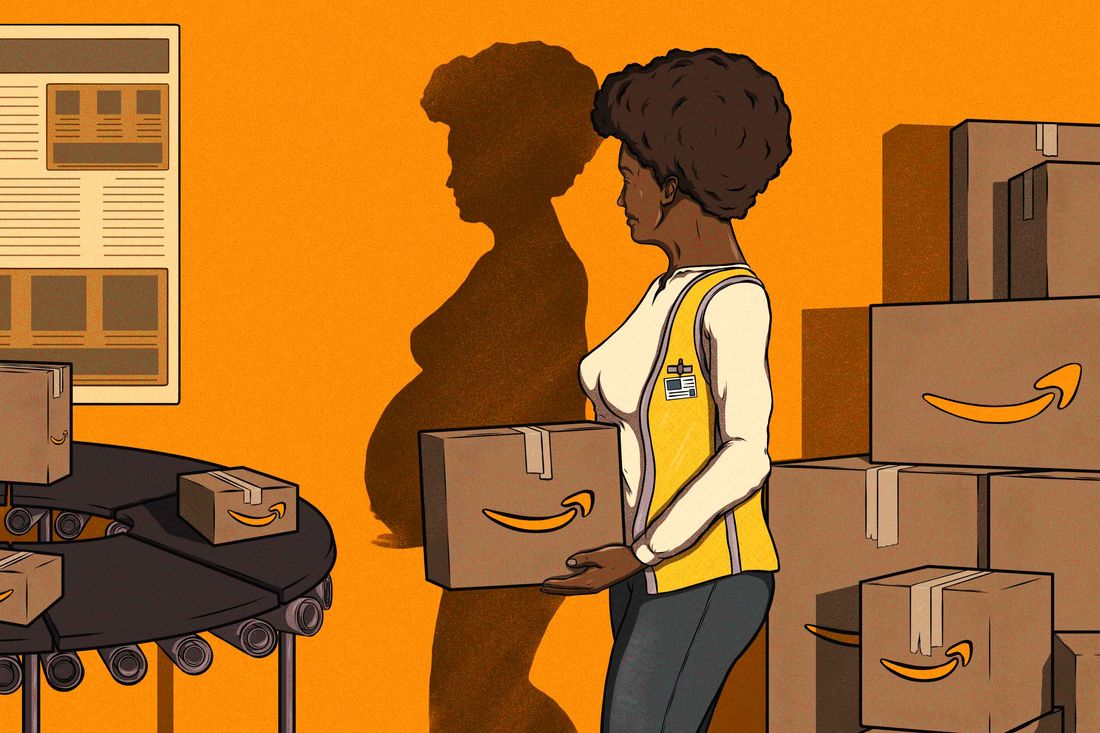
Illustration: Maxwell Erwin
.
.
Click the link below for the article:
.
__________________________________________
August 19, 2022
Mohenjo
Business, Food For Thought, Human Interest, Medical, Political, Science, Technical
amazon, business, Business News, current-events, Future, Hotels, human-rights, medicine, mental-health, research, Science, Science News, technology, Technology News, travel, vacation

Click the link below the picture
.
In the 19th century, when European thinkers began developing the economic principle of diminishing marginal utility, they probably weren’t dwelling on its implications for the best strategy for ordering food at a restaurant. But nearly 200 years later, their work informs what I get for dinner.
The basic concept that these early economists were getting at is that as you consume more and more of a thing, each successive unit of that thing tends to bring you less satisfaction—or, to use the economic term, utility—than the previous one.
Recently, Adam Mastroianni, a postdoctoral research scholar at Columbia Business School, invoked this idea in his newsletter, Experimental History, to explain why a flight of beer can be more satisfying than a larger glass of a single brew. “The first sip is always the best sip,” he wrote, “and a flight allows you to have several first sips instead of just one.”
The same principle, I’d argue, applies to first bites: If the first half of a dish tends to be more satisfying than the second half, why not have the first half of two dishes instead of one whole dish? In other words, when you go to a restaurant, just share every dish with whomever you’re with. That way, you get more first bites.
Diversification can free you from indecision when you’re torn between menu items that sound equally awesome. For instance, it is the answer to the classic conundrum of brunch: sweet or savory? As Mastroianni put it to me, “Do you really want to choke down three French-toast dulce de leche pancakes? No, you want one and a half of those, and then you want half of some kind of scrambled thing.”
.
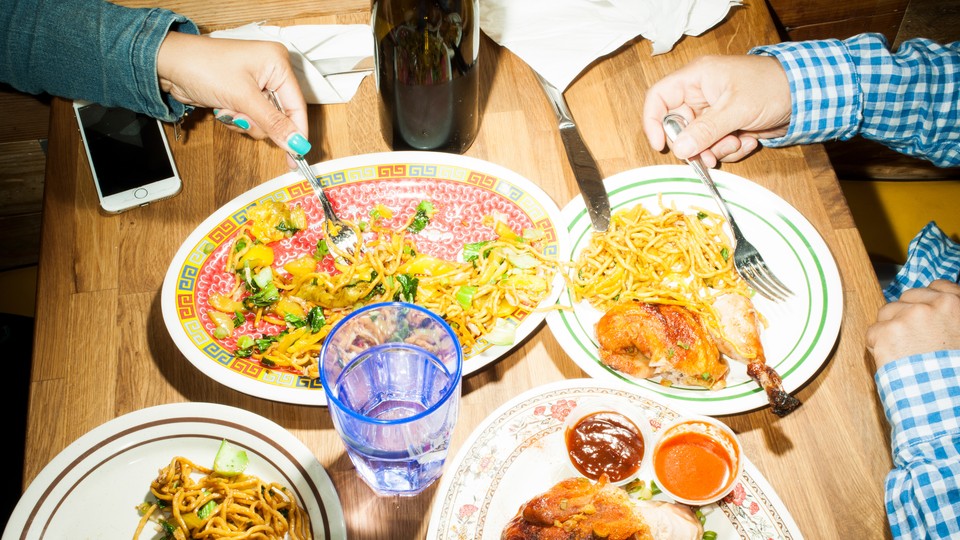
Brian Finke / Gallery Stock
.
.
Click the link below for the article:
.
__________________________________________
August 19, 2022
Mohenjo
Crime, Food For Thought, Human Interest, Medical, missed News, Political, Science, Technical
amazon, business, Business News, current-events, Future, Hotels, human-rights, medicine, mental-health, research, Science, Science News, technology, Technology News, travel, vacation
.
News You might have missed!
Use your browser or smartphone back arrow (<-) to return to this table for your next selection.
.
__________________________________________
Older Entries
Newer Entries
 James' World 2