If you were a wrestling fan on May 23rd, 1999, you were probably doing one of three things.One of those was watching WWE’s latest pay-per-view event, Over the Edge. Another was using “scramblevision” to listen to that event by tuning a TV or VCR without a cable box to the pay-per-view channel. Some fans were probably also watching The Jesse Ventura Story on NBC, which they doubtless regretted instantly. The low-budget Ventura biopic, made with cooperation for WWE’s rival promotion WCW, was an absolute catastrophe of a film and a rushed, obvious cash-in on Ventura’s upset win in the Minnesota gubernatorial election six months earlier. While bad and stupid in every possible way, the movie’s most enduring artistic legacy is the absurd amount of “creative license” it took, most famously through making Ventura a central figure of a scenario that was clearly based on Bret Hart’s last night in WWE.
.
Owen Hart with his beloved Slammy Award statue in a 1996 WWE promotional image.
Sleep scientist Matthew Walker has observed that “human beings are the only species that deliberately deprive themselves of sleep for no apparent gain.” We stay up late to watch our favorite TV shows. We wake up early to get to work or school on time. And twice a year we change our clocks, to the bewilderment of our circadian rhythms.
We also set up conflicts between our natural and social clocks in other, less obvious ways, a fact underscored in research published this month in the Journal of Health Economics. It turns out, the study found, that living on the wrong side of a time zone’s boundary can have negative consequences on a person’s health and wallet.
The culprit? More natural light in the evening hours.
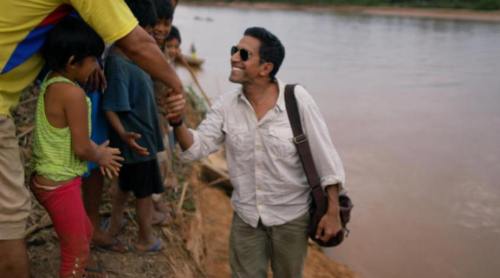
A few years ago, I read reports of an indigenous tribe living deep in the Amazon rainforest whose members had hardly any evidence of heart disease. In fact, the researchers concluded after a year-long study that the Tsimane, as they are called, had the healthiest hearts in the world, a title previously held by Japanese women.
Preventing heart disease is a topic I think about all the time, given my own significant family history of heart disease. Like many people, I worried that it was inevitable for me. So last summer, I decided to travel to Bolivia, one of the poorest countries in South America, to learn what they could teach me and the rest of the world about preventing heart disease.
.
Getting to the Tsimane wasn’t easy. After flying into La Paz, the highest capital city in the world at nearly 12,000 feet above sea level, we took a small prop plane to Rurrenabaque, a small town in the lowlands of northern Bolivia, along the Beni River and at the edge of the Amazon rainforest. We drove 4×4 trucks as far as we could into the forest and then jumped into dug-out canoes and made our way down the rivers and streams of the Amazon.
.
Sanjay Gupta discovers the surprising secret to this tribe’s health
It was 2014. I was 20 and struggling at my new job as a receptionist in a law firm. My boyfriend, with whom I lived, was becoming increasingly abusive. I concealed my tears by pretending to search under my desk while I cried. Fortunately, I made a friendly acquaintance.
He would frequently stop by my desk and eventually we started hanging out ― we stopped for dinner after work (Indian food); I played him a new single I liked (“Came Back Haunted” by Nine Inch Nails). I grew to trust him as a mentor and friend.
One night, I sat in his living room, crying into a microbrew about my home life. I had never been drunk before, so red flags did not go off when I began stumbling to get to the bathroom after only two and a half drinks. I soon began fading in and out of consciousness.
People rarely follow a doctor’s orders to the letter.
We often seek treatments that meet our preferences, and bend them around our personal routines and responsibilities.
This isn’t necessarily a problem. A treatment you don’t (or can’t) follow won’t help you, so the odds are better if you pick one you can.
In addition, not every treatment works for everyone — sometimes the best treatment we have works for just one of 10 people.
These truths came to mind as I recently addressed my plantar fasciitis — an injury to the tissue in the underside of the foot causing heel pain and afflicting about 10 percent of the population. I’d unwisely been trying for about six months to ignore the condition in both my feet. I kept walking to work and standing once I got there (by choice — I have a desk job) despite the discomfort.
.
About 10 percent of the population experiences plantar fasciitis, an injury to the underside of the foot that causes heel pain.CreditCreditJanet Worne for The New York Times
It was clear from the very beginning that rapper Nipsey Hussle was going to make it a priority to talk about investing in South Los Angeles.
In what is perhaps his first on-camera interview, at the Russell Simmons’ Get Your Money Right summit in 2006, Hussle spoke plainly about leaving behind the material things synonymous with hip-hop lifestyle — the diamonds, the flashy cars — to secure the financial future of his family and people in his community.
“How come you not blingin‘ and having all kind of crazy diamonds and all that,” hip-hop journalist Davey D asked Hussle, who if you squint and think back to 1993, might remind you of a young Snoop Dogg. “I guess you here to get your money, right?”
“I’d rather invest in some real estate,” Hussle said.
“So you trying to get land?” Davey D asked.
“Exactly, homie, a real asset to take care of my people,” Hussle said matter-of-factly.
.
Nipsey Hussle performs onstage at the STAPLES Center Concert during the 2018 BET Experience on June 23, 2018 in Los Angeles.Ser Baffo / Getty Images for BET file
Back in the 1960s, a Harvard graduate student made a landmark discovery about the nature of human anger.
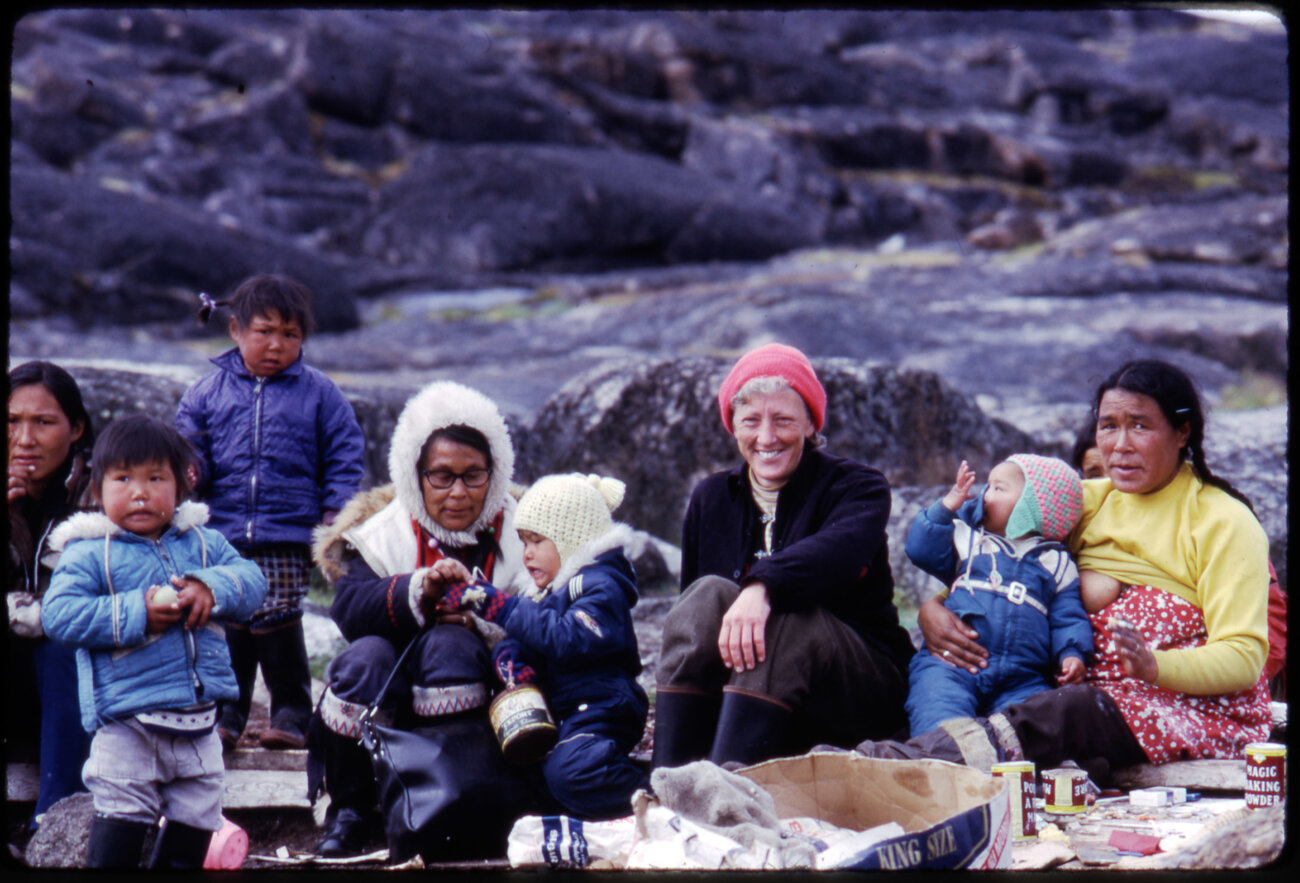
At age 34, Jean Briggs traveled above the Arctic Circle and lived out on the tundra for 17 months. There were no roads, no heating systems, no grocery stores. Winter temperatures could easily dip below minus 40 degrees Fahrenheit.
Briggs persuaded an Inuit family to “adopt” her and “try to keep her alive,” as the anthropologist wrote in 1970.
At the time, many Inuit families lived similar to the way their ancestors had for thousands of years. They built igloos in the winter and tents in the summer. “And we ate only what the animals provided, such as fish, seal and caribou,” says Myna Ishulutak, a film producer and language teacher who lived a similar lifestyle as a young girl.
.
For more than 30 years, the Inuit welcomed anthropologist Jean Briggs into their lives so she could study how they raise their children. Briggs is pictured during a 1974 visit to Baffin Island.
Jean Briggs Collection / American Philosophical Society
The Wisconsin man who admitted to kidnapping 13-year-old Jayme Closs and holding her captive for almost three months after murdering her parents was sentenced to life behind bars Friday.
Jake Patterson — wearing an orange jumpsuit, shackled at the midsection — looked down or straight ahead throughout much of the hearing before Barron County Circuit Court Judge James Babler, who called him the “embodiment of evil.”
“He stole my parents from me. He stole almost everything I loved from me,” Jayme said in a statement read in court by her lawyer, Chris Gramstrup.
“For 88 days he tried to steal me and he didn’t care who he hurt or who he killed to do that. He should stay locked up forever.”
.
The home where 13-year-old Jayme Closs lived with her parents, James and Denise, in Barron, Wisconsin.Jerry Holt / AP
President Donald Trump’s administration proposed a new regulation on Friday that would wipe out Obama-era health care protections for transgender Americans.
President Barack Obama’s administration issued a rule in 2016 that health care providers receiving federal funding could not discriminate on the basis of sex and expanded the term “sex discrimination” to include gender identity — though a federal judge later blocked enforcement on the latter of these rules.
The Department of Health and Human Services said its proposal aims to align its definition with “the plain understanding recognized by the court.”
“The American people want vigorous protection of civil rights and faithfulness to the text of the laws passed by their representatives,” said Roger Severino, director of the Office of Civil Rights at HHS. “The proposed rule would accomplish both goals.”
Film and Writing Festival for Comedy. Showcasing best of comedy short films at the FEEDBACK Film Festival. Plus, showcasing best of comedy novels, short stories, poems, screenplays (TV, short, feature) at the festival performed by professional actors.



 The wrong side of a time zone










 .
.
