June 5, 2019
Mohenjo
Business, Enthralling, Food For Thought, Human Interest, Science, Technical
amazon, business, Business News, current-events, Future, Hotels, human-rights, medicine, mental-health, research, Science, Science News, technology, Technology News, travel, vacation

Click the link below the picture
.
Though some of us consider ourselves to be “clean” people, there are parts of our homes and spaces that end up being neglected. While lots of us clean regularly, most of us avoid doing a “deep clean” until we have company or there is some sort of special occasion.
But you don’t have to keep avoiding cleaning up those cracks and crevices. Get the job done quickly and easily with these deep cleaning tricks.
.
 Tips For The Deepest Clean
.
.
Click the link below for article:
.
__________________________________________
June 5, 2019
Mohenjo
Business, Enthralling, Food For Thought, Human Interest, Science, Weird
amazon, business, Business News, current-events, Future, Hotels, human-rights, medicine, mental-health, research, Science, Science News, technology, Technology News, travel, vacation
Received This Video From A Friend
Click the link below the picture
.
A seal climbs onto a boat to escape the whales!
.
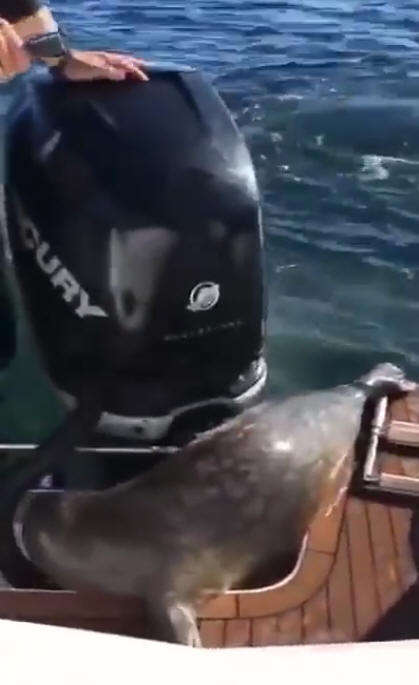
A seal finds a safe haven!
.
.
Click the link below for article:
.
__________________________________________
June 4, 2019
Mohenjo
Business, Enthralling, Human Interest, Photographs
amazon, business, Business News, current-events, Future, Hotels, human-rights, medicine, mental-health, research, Science, Science News, technology, Technology News, travel, vacation

Click the link below the picture
.
The southern right whale is a baleen whale, one of three species classified as right whales belonging to the genus Eubalaena. Approximately 10,000 southern right whales are spread throughout the southern part of the Southern Hemisphere.
.
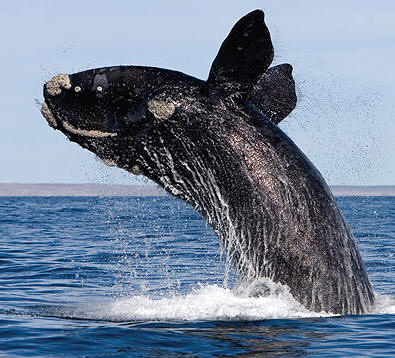 Southern Right Whale
.
.
Click the link below for the article:
https://www.bing.com/images/search?q=southern+right+whales&form=hpbap1&first=1&cw=1325&ch=758
.
__________________________________________
June 4, 2019
Mohenjo
Breaking News, Business, Enthralling, Food For Thought, Human Interest, Science, Technical
amazon, business, Business News, current-events, Future, Hotels, human-rights, medicine, mental-health, research, Science, Science News, technology, Technology News, travel, vacation

Click the link below the picture
.
In America, the conventional wisdom of how to live healthily is full of axioms that long ago shed their origins. Drink eight glasses of water a day. Get eight hours of sleep. Breakfast is the most important meal of the day. Two thousand calories a day is normal. Even people who don’t regularly see a doctor are likely to have encountered this information, which forms the basis of a cultural shorthand. Tick these boxes, and you’re a healthy person.
In the past decade, as pedometers have proliferated in smartphone apps and wearable fitness trackers, another benchmark has entered the lexicon: Take at least 10,000 steps a day, which is about five miles of walking for most people. As with many other American fitness norms, where this particular number came from has always been a little hazy. But that hasn’t stopped it from becoming a default daily goal for some of the most popular activity trackers on the market.
Now new research is calling the usefulness of the 10,000-step standard into question—and with it, the way many Americans think about their daily activities. While basic guidelines can be helpful when they’re accurate, human health is far too complicated to be reduced to a long chain of numerical imperatives. For some people, these rules can even do more harm than good.
.
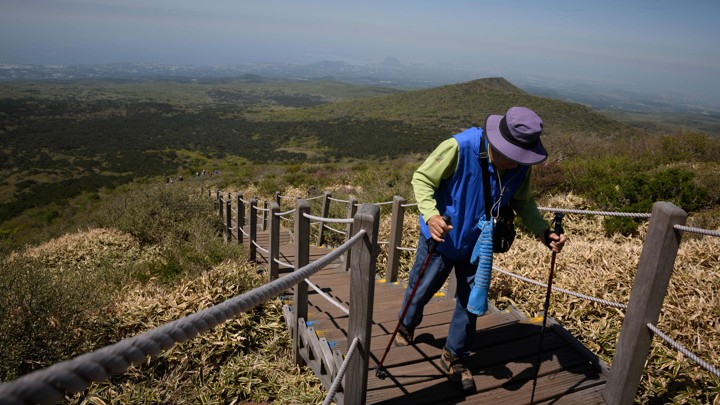 Ed Jones / AFP / Getty
.
.
Click the link below for article:
.
__________________________________________
June 4, 2019
Mohenjo
Breaking News, Business, Food For Thought, Human Interest, Medical, Science, Technical
amazon, business, Business News, current-events, Future, Hotels, human-rights, medicine, mental-health, research, Science, Science News, technology, Technology News, travel, vacation

Click the link below the picture
.
Mosquitoes and ticks can spoil a beautiful day and make people sick. Beyond buzzing, biting, sucking and stinging, they can carry serious diseases. Tiny blacklegged ticks carry Lyme disease. Nighttime biting Culex mosquitoes can transmit West Nile virus and Japanese encephalitis. And the aggressive Aedes mosquitoes — happy to bite any time — can cause Zika, dengue fever and chikungunya. And that’s just a sampling of the troubles they bring.
Little wonder we look for ways to protect ourselves from mosquitoes and ticks, especially this time of the year, when we spend more time outside. With a little thought and care, though, we can do so in ways that are healthier for us — and for the world around us — than using toxic chemicals.
Insecticides kill all insects, not just ticks and mosquitoes. They also kill important pollinators such as bees, butterflies and moths. Insecticides harm the animals that eat these insects such as bats and birds. And they wash into waterways, where they can kill aquatic invertebrates that provide critical food for fish, frogs and other stream dwellers.
.
 Mosquitoes in a cage in a laboratory in Brazil. There are ways you can prevent bites from these flying insects and ticks without using chemicals that could harm the environment and other creatures. (Paulo Fridman/Bloomberg News)
.
.
Click the link below for article:
.
__________________________________________
June 4, 2019
Mohenjo
Business, Food For Thought, Human Interest, Technical
amazon, business, Business News, current-events, Future, Hotels, human-rights, medicine, mental-health, research, Science, Science News, technology, Technology News, travel, vacation

Click the link below the picture
.
Whenever I think of my Aunt Rachna, I imagine her making aloo paratha, a fluffy, savory Indian bread stuffed to the brim with potatoes.
In her big, open kitchen in Dallas, she tosses a few rough-edged russets into a pot of boiling water, and as soon as the potatoes are soft enough to be easily pierced with a fork, she plucks them out, peels them and mashes them in a bowl until they’re smooth and satiny, mixing in salt, red chile powder and crushed fennel seeds, which fill the room with a heady, sweet aroma. She divides them into baseball-size spheres and then, in a separate bowl, combines wheat flour, oil and water to make small circles of dough. The next step is like magic: She encloses one of the enormous potato balls into a disc of dough, like a parcel, rolls it all out, and the two become one — a paper-thin layer of dough outlining a bulky, piquant layer of potatoes. She quickly pan-fries the parathas, basting them with oil until they are blistered and glistening, and sets them on a plate, ready for me to devour while they’re still steaming.
.
 FROM LEFT: Dosa Potatoes with Lime and Ketchup; Red Chile Potatoes; and Red Pepper, Potato and Peanut Sabzi. (Photos by Stacy Zarin Goldberg for The Washington Post; food styling by Lisa Cherkasky for The Washington Post)
.
.
Click the link below for article:
.
__________________________________________
June 4, 2019
Mohenjo
Business, Human Interest, Political, Science, Technical
amazon, business, Business News, current-events, Future, Hotels, human-rights, medicine, mental-health, research, Science, Science News, technology, Technology News, travel, vacation

Click the link below the picture
.
On a cold, miserable morning in May, Stan Gehrt trod across an open field as wind and rain blew in his face. He was leading a team of wildlife biologists on a mission to find an animal with a gift for not being seen.
The team didn’t have to travel far from its headquarters for the search. A female coyote had made a den within sight of Chicago’s skyline. They were only “about five kilometers” from America’s busiest airport, O’Hare International, Gehrt said as he advanced toward the den, wind howling through his cellphone microphone during an interview.
Like every state east of the Mississippi, Illinois is worried about its growing population of city-slicker coyotes. The animals surged from their original habitat in the West after what many now consider a colossal mistake — government-sanctioned predator removal programs that virtually wiped out red and gray wolves.
.

A coyote in a field. (Karen Nichols/AP)
.
.
Click the link below for article:
.
__________________________________________
June 4, 2019
Mohenjo
Business, Food For Thought, Human Interest, Political
amazon, business, Business News, current-events, Future, Hotels, human-rights, medicine, mental-health, research, Science, Science News, technology, Technology News, travel, vacation
Received This artlcle From Philadelphia Inquirer – May 7th fram A Friend

Click the link below the picture
.

.
__________________________________________
June 4, 2019
Mohenjo
Arts, Business, Human Interest, Medical, missed News, Science, Technical
amazon, business, Business News, current-events, Future, Hotels, human-rights, medicine, mental-health, research, Science, Science News, technology, Technology News, travel, vacation

.
News You might have missed!
Use your browser or smartphone back arrow (<-) to return to this table for your next selection.
.
__________________________________________
June 4, 2019
Mohenjo
Breaking News, Business, Enthralling, Food For Thought, Human Interest, Technical
amazon, business, Business News, current-events, Future, Hotels, human-rights, medicine, mental-health, research, Science, Science News, technology, Technology News, travel, vacation

Click the link below the picture
.
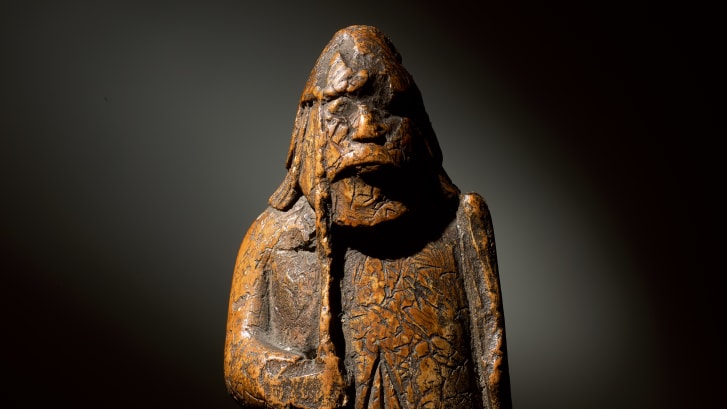
When an antiques dealer in Scotland bought an ivory chessman for £5 ($6) in 1964, he probably had no inkling that he had taken possession of one of the most famous chess pieces in the world.
.
Stored in a drawer for 55 years, the Lewis Warder, as the piece is known, could now fetch up to £1 million ($1.3 million) at auction after the late owner’s family took it to Sotheby’s auction house in London for assessment.
The Lewis Chessmen were found on the Isle of Lewis in Scotland’s Outer Hebrides in 1831, but the circumstances of their discovery are shrouded in mystery. With 93 pieces found — the majority carved from walrus ivory — the set was missing one knight and four “warders.”
.
The chessman was recorded in the owner’s ledger as ‘Antique Walrus Tusk Warrior Chessman.’ Credit: Courtesy of Sotheby’s
Chessman worth over $1 million found in a drawer
.
.
Click the link below for the article:
https://www.cnn.com/style/article/lost-lewis-chessman-scli-intl/index.html
.
__________________________________________
Older Entries
Newer Entries