October 25, 2021
Mohenjo
Business, Food For Thought, Human Interest, Political, Science, Technical
amazon, business, Business News, current-events, Future, Hotels, human-rights, medicine, mental-health, research, Science, Science News, technology, Technology News, travel, vacation

Click the link below the picture
.
Seven years ago, the Wu-Tang Clan’s one-of-a-kind album “Once Upon a Time in Shaolin” was created as a protest against the devaluation of music in the digital era. Before long it got caught up in a tale of capitalist villainy when it was purchased by Martin Shkreli, the price-gouging young pharmaceutical speculator who was later convicted of securities fraud.
Now the album has found yet another life on the frontier of digital art and cryptocurrency, having been sold for $4 million to PleasrDAO, a collective that has existed for less than a year but has already built a reputation for acquiring high-profile digital works.
In a complex deal with multiple parties, one of whom remains unidentified, PleasrDAO acquired “Once Upon a Time” after its sale in July by the federal government, which had seized the album to satisfy the balance of a $7.4 million forfeiture money judgment against Mr. Shkreli that was part of his sentencing in 2018. (Mr. Shkreli is still serving out a seven-year prison sentence.)
When the United States Attorney’s Office for the Eastern District of New York, in Brooklyn, announced the sale of “Once Upon a Time in Shaolin” this summer, no details about the buyer, or price, were disclosed; prosecutors said that information was confidential.
.
 Martin Shkreli was said to have paid $2 million to own the Wu-Tang Clan’s one-of-a-kind album, “Once Upon a Time in Shaolin.” Its new buyers paid $4 million.Credit…Jamis Johnson
.
.
Click the link below for the article:
.
__________________________________________
October 25, 2021
Mohenjo
Business, Food For Thought, Human Interest, Science, Technical
amazon, business, Business News, current-events, Future, Hotels, human-rights, medicine, mental-health, research, Science, Science News, technology, Technology News, travel, vacation

Click the link below the picture
.
Your TV’s picture settings menu can be overwhelming, but that doesn’t mean you can’t make a few small changes to make watching your favorite shows, enjoying 4K HDR movies and playing video games even better. With a couple easy tweaks to your TV picture settings, colors can look more accurate, motion can look more natural and brightness can be adjusted for comfortable day and nighttime viewing. It only takes a few seconds to change your picture mode. You can even give TV calibration a try, if you want more options for optimal TV watching.
A word of warning before we begin: Picture setting names are all over the place. A setting one TV-maker calls “brightness” could control something totally different on another set, for example. We tackle a lot of the variations below, but we can’t account for every TV-maker, especially on older models, so your mileage may vary.
.

The default color on many TVs is too blue, but a quick tweak can improve accuracy. David Katzmaier/CNET
.
.
Click the link below for the article:
.
__________________________________________
October 25, 2021
Mohenjo
Crime, Food For Thought, Human Interest, Medical, missed News, Political, Science, Technical
amazon, business, Business News, current-events, Future, Hotels, human-rights, medicine, mental-health, research, Science, Science News, technology, Technology News, travel, vacation

.
News You might have missed!
Use your browser or smartphone back arrow (<-) to return to this table for your next selection.
.
__________________________________________
October 24, 2021
Mohenjo
Arts, Business, Food For Thought, Human Interest, Science, Technical
amazon, business, Business News, current-events, Future, Hotels, human-rights, medicine, mental-health, research, Science, Science News, technology, Technology News, travel, vacation

Click the link below the picture
.
Frank Herbert’s 1965 sci-fi novel Dune gets a new film adaptation—this one helmed by Denis Villeneuve (Arrival, Blade Runner 2049)—later this month. But before Ars Technica reviews the movie, there’s the matter of its predecessor: 1984’s Dune, made by a then up-and-coming filmmaker named David Lynch.
Detractors call Lynch’s saga—a tale of two noble space families 8,000 years in the future, fighting over the most valuable resource in the universe amidst sandworms the size of aircraft carriers—incomprehensible, stilted, and ridiculous. It lost piles of money. Yet fans, especially in recent years, have reclaimed Lynch’s film as a magnificent folly, a work of holy, glorious madness.
So which group am I in? Both. Am I about to describe Dune as “so bad it’s good”? No, that’s a loser take for cowards.
I once half-heard a radio interview with someone speculating that the then-current artistic moment was not “so bad it’s good,” and it wasn’t “ironic” either—it was actually “awesome.” (I didn’t catch who he was, so if any of this sounds familiar, hit me up in the comments.) Art can speak to you while at the same time being absurd. The relatable can sometimes be reached only by going through the ridiculous. The two can be inseparable, like the gravitational pull between a gas giant and its moon—or Riggs and Murtaugh.
The example the radio interviewee gave was of Evel Knievel, the ’70s daredevil who wore a cape and jumped dirt bikes over rows of buses. Absurd? Heavens, yes. A feat of motorcycling and physicality? Absolutely. But beyond that, we can relate to Knievel’s need to achieve transcendence at such a, shall we say, niche skill. We might also marvel at our own ability to be impressed by something that should be objectively useless but is instead actually awesome.
.
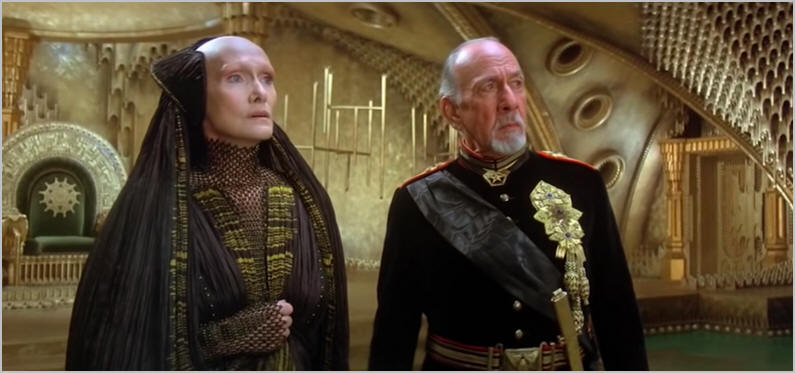 Jose Ferrer is more subdued than the moniker “Emperor of the Known Universe” might lead you to believe. His son Miguel was on Twin Peaks. Siân Phillips plays his personal space nun.
.
.
Click the link below for the article:
.
__________________________________________
October 24, 2021
Mohenjo
Business, Food For Thought, Human Interest, sports, Technical
amazon, business, Business News, current-events, Future, Hotels, human-rights, medicine, mental-health, research, Science, Science News, technology, Technology News, travel, vacation

Click the link below the picture
.
Less than three months ago, Giannis Antetokounmpo and the Milwaukee Bucks were hoisting the Larry O’Brien Trophy after winning Game 6 of the NBA Finals over the Phoenix Suns. After somehow squeezing in the NBA draft, free agency, summer league, and preseason into another truncated offseason, the league is ready to roll for 2021-22.
Are the Bucks on the road to a repeat, or will the star-studded Brooklyn Nets exact revenge? How will the Ben Simmons saga end for the Philadelphia 76ers? Are the reloaded Miami Heat Finals contenders again?
Can the Atlanta Hawks make another magical run? Was the Chicago Bulls’ flurry of offseason moves worth it?
Speaking of moves, the Los Angeles Lakers made a few.
This summer, LeBron James and Anthony Davis welcomed in Russell Westbrook and Carmelo Anthony and welcomed back Rajon Rondo and Dwight Howard. After a disappointing seventh-place finish and first-round postseason exit, are the Lakers destined to return to glory this season? The rest of the West — the conference is as stacked as ever — sure hopes not.
.
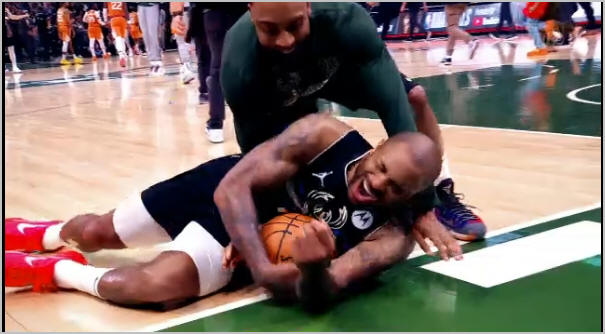 The 2021-22 NBA season is here!
.
.
Click the link below for the article:
.
__________________________________________
October 23, 2021
Mohenjo
Business, Enthralling, Human Interest, Photographs
amazon, business, Business News, current-events, Future, Hotels, human-rights, medicine, mental-health, research, Science, Science News, technology, Technology News, travel, vacation

Click the link below the picture
.
Windsor is a historic market town and unparished area in the Royal Borough of Windsor and Maidenhead in Berkshire, England, close to London. It is the site of Windsor Castle, one of the official residences of the British monarch.
The town is situated 21.7 miles (34.9 km) west of Charing Cross, central London, 5.8 miles (9.3 km) southeast of Maidenhead, and 15.8 miles (25.4 km) east of the county town of Reading. It is immediately south of the River Thames, which forms its boundary with its smaller, ancient twin town of Eton. The village of Old Windsor, just over 2 miles (3 km) to the south, predates what is now called Windsor by around 300 years; in the past Windsor was formally referred to as New Windsor to distinguish the two.
Windlesora is first mentioned in the Anglo-Saxon Chronicle. (The settlement had an earlier name but this is unknown.) The name originates from old English Windles-ore or winch by the riverside. By 1110, meetings of the Great Council, which had previously taken place at Windlesora, were noted as taking place at the Castle, referred to as New Windsor. By the late 12th century the settlement at Windelsora had been renamed, Old Windsor. Wikipedia
.
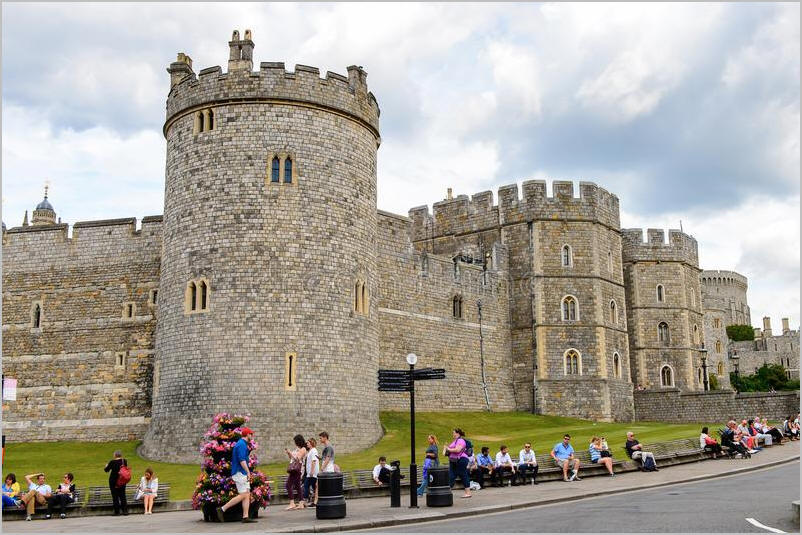
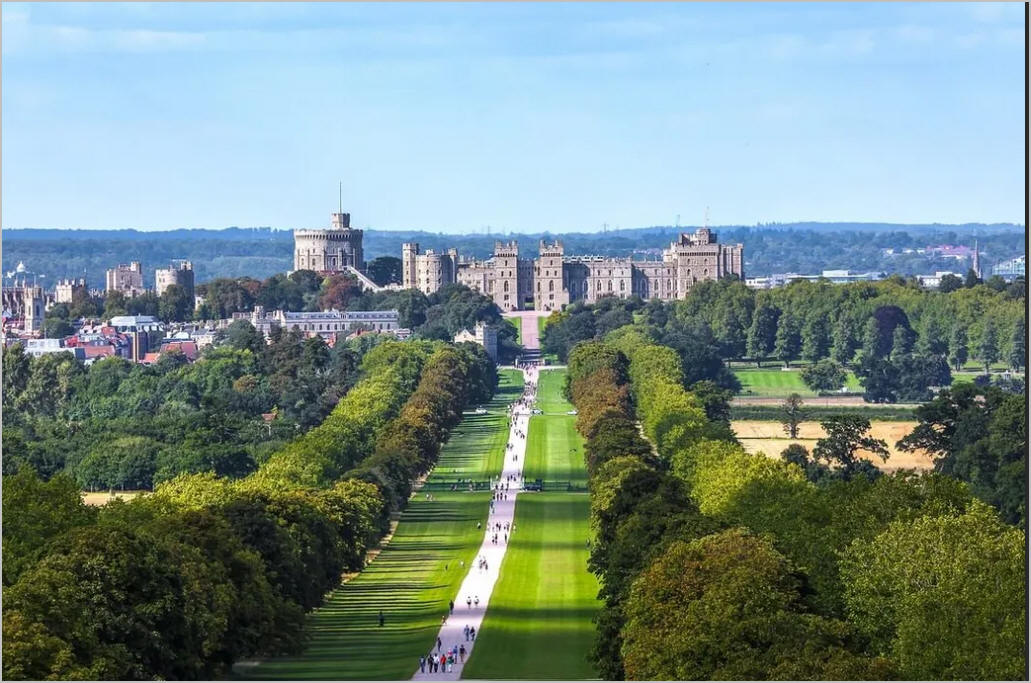 Images of Windsor, Berkshire, United Kingdom
.
.
Click the link below for images:
.
__________________________________________
October 23, 2021
Mohenjo
Business, Food For Thought, Human Interest, Science, Technical
amazon, business, Business News, current-events, Future, Hotels, human-rights, medicine, mental-health, research, Science, Science News, technology, Technology News, travel, vacation
Click the link below the picture
.
In 1974, Stephen Hawking calculated that black holes’ secrets die with them. Random quantum jitter on the spherical outer boundary, or “event horizon,” of a black hole will cause the hole to radiate particles and slowly shrink to nothing. Any record of the star whose violent contraction formed the black hole — and whatever else got swallowed up after — then seemed to be permanently lost.
Hawking’s calculation posed a paradox — the infamous “black hole information paradox” — that has motivated research in fundamental physics ever since. On the one hand, quantum mechanics, the rulebook for particles, says that information about particles’ past states gets carried forward as they evolve — a bedrock principle called “unitarity.” But black holes take their cues from general relativity, the theory that space and time form a bendy fabric and gravity is the fabric’s curves. Hawking had tried to apply quantum mechanics to particles near a black hole’s periphery and saw unitarity break down.
So do evaporating black holes really destroy information, meaning unitarity is not a true principle of nature? Or does information escape as a black hole evaporates? Solving the information paradox quickly came to be seen as a route to discovering the truth, quantum theory of gravity, which general relativity approximates well everywhere except black holes.
.
 Netta Engelhardt puzzles over the fates of black holes in her office at the Massachusetts Institute of Technology. Ira Khan for Quanta Magazine
.
.
Click the link below for the article:
.
__________________________________________
October 23, 2021
Mohenjo
Business, Food For Thought, Human Interest, Science, Technical
amazon, business, Business News, current-events, Future, Hotels, human-rights, medicine, mental-health, research, Science, Science News, technology, Technology News, travel, vacation

Click the link below the picture
.
There’s a trailer out for a new science fiction film called Moonfall, to be released in early 2022, in which the moon is about to crash into Earth. It features several shots of a reddish moon hovering extremely close to the planet, crumbling apart while sucking the oceans toward it, the debris flying into spacecraft and mountains. It doesn’t actually show a collision—you know, it’s just a trailer and they don’t want to spoil everything.
This isn’t the first movie to stretch the bounds of believable physics. (Remember Sharknado?) But just because it’s science fiction doesn’t mean it’s totally wrong. That’s why I’m here: I’m going to go over the actual physics that would apply if the moon ever got too close to us.
How Could the Moon Crash Into Earth?
According to the movie’s official IMDB entry, “a mysterious force knocks the moon from its orbit,” precipitating its plunge toward Earth. That’s not a lot to go on. Would there really be a way to make that happen?
Let’s start with a basic model of how the planet and its satellite act on each other. A gravitational force pulls Earth and the moon toward each other. This force depends on the mass of both objects and has a magnitude inversely proportional to the square of the distance between the centers of the two bodies.
.
 Photograph: Nasa
.
.
Click the link below for the article:
.
__________________________________________
October 23, 2021
Mohenjo
Crime, Finance, Food For Thought, Human Interest, Medical, missed News, Political, Science, Technical
amazon, business, Business News, current-events, Future, Hotels, human-rights, medicine, mental-health, research, Science, Science News, technology, Technology News, travel, vacation
.
News You might have missed!
Use your browser or smartphone back arrow (<-) to return to this table for your next selection.
.
__________________________________________
October 22, 2021
Mohenjo
Business, Enthralling, Human Interest, Photographs
amazon, business, Business News, current-events, Future, Hotels, human-rights, medicine, mental-health, research, Science, Science News, technology, Technology News, travel, vacation
Click the link below the picture
.
Daytona Beach or simply Daytona is a city in Volusia County, Florida, United States. It lies approximately 51 miles (82.1 km) northeast of Orlando, 86 miles (138.4 km) southeast of Jacksonville, and 265 miles (426.5 km) northwest of Miami. As of the 2010 U.S. Census, it had a population of 61,005. It is a principal city of the Deltona–Daytona Beach–Ormond Beach metropolitan area, which was home to 600,756 people as of 2013. Daytona Beach is also a principal city of the Fun Coast region of Florida.
The city is historically known for its beach, where the hard-packed sand allows motorized vehicles to drive on the beach in restricted areas. This hard-packed sand made Daytona Beach a mecca for motorsports, and the old Daytona Beach Road Course hosted races for over 50 years. This was replaced in 1959 by Daytona International Speedway. The city is also the headquarters for NASCAR.
Daytona Beach hosts large groups of out-of-towners during the year, who visit the city for various events, notably Speedweeks in early February when over 200,000 NASCAR fans come to attend the season-opening Daytona 500. Other events include the NASCAR Coke Zero Sugar 400 race in August, Bike Week in early March, Biketoberfest in late October, and the 24 Hours of Daytona endurance race in January.
The area where Daytona Beach is located was once inhabited by the indigenous Timucuan Indians who lived in fortified villages. The Timucuas were nearly exterminated by contact with Europeans through war, enslavement, and disease and became extinct as a racial entity through assimilation and attrition during the 18th century. The Seminole Indians, descendants of Creek Indians from Georgia and Alabama, frequented the area prior to the Second Seminole War.
.
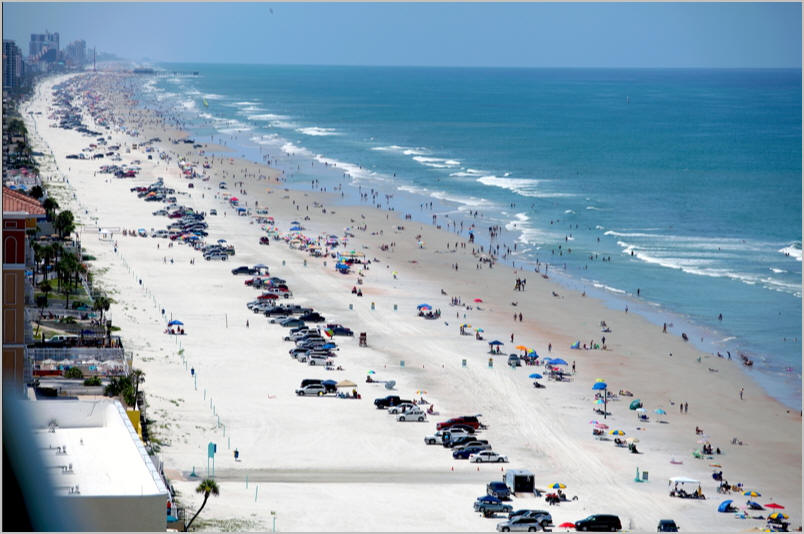 An image from Daytona Beach, FL, USA
.
.
Click the link below for images:
.
__________________________________________
Older Entries
Newer Entries

