November 9, 2021
Mohenjo
Business, Food For Thought, Human Interest, Science, Technical
amazon, business, Business News, current-events, Future, Hotels, human-rights, medicine, mental-health, research, Science, Science News, technology, Technology News, travel, vacation

Click the link below the picture
.
The most curious subplot in the news right now is the admission, at the most senior levels of the United States government, that the military services have collected visuals, data, and testimonials recording flying objects they cannot explain; that they are investigating these phenomena seriously; and that they will, in the coming months, report at least some of their findings to the public. It feels, at times, like the beginning of a film where everyone is going about their lives, even as the earthshaking events unfurl on a silenced television in the background.
A number of stories in The New York Times over the past few years have confirmed the existence of a military program on “Advanced Aerospace Threat Identification” and revealed videos in which trained pilots marvel over unidentified craft apparently defying the limits of known technology.
On April 30, The New Yorker published a revelatory article by Gideon Lewis-Kraus tracking the rise of congressional, military, and media interest in U.F.O.s. Harry Reid, the former Senate majority leader from Nevada, emerges as the key actor. In the middle of his decades-long career in government, he pushed to fund these investigations, and since retiring he’s been relentless in voicing his conviction that the military has information on U.F.O.s that the public deserves to know. He told Lewis-Kraus that he believed there was crash debris held by Lockheed Martin, but when he asked the Pentagon to see it, he was refused access. “I tried to get, as I recall, a classified approval by the Pentagon to have me go look at the stuff,” he said. “They would not approve that.”
.
 Igor Trushkin/EyeEm, via Getty Images
.
.
Click the link below for the article:
.
__________________________________________
November 9, 2021
Mohenjo
Business, Food For Thought, Human Interest, Science, Technical
amazon, business, Business News, current-events, Future, Hotels, human-rights, medicine, mental-health, research, Science, Science News, technology, Technology News, travel, vacation

Click the link below the picture
.
Memorial Day weekend kicks off the unofficial summer on Monday, which means you might have a vacation planned soon. But, most of us have become glued to our screens and, if you work a lot, you might find yourself tempted to bring along a business laptop or answer emails, even when you’re at the beach or on a road trip with your kids.
If your workplace allows you to truly disconnect — some managers even encourage it to prevent burnout — here are some tips that can help you get in the right mindset to really enjoy your time off.
Remove work apps like Slack from your phone that constantly draw you back in. Don’t worry, you can reinstall it in a matter of seconds when you return. With it available, you may find yourself habitually peaking in, even when nobody needs or wants to chat with you, rather than enjoying dinner with your family.
Those notifications can ping you on certain keywords or if a co-worker wants you to see something. As long as your managers know you’re out — and know how to reach you in case of emergency — there’s no need to leave Slack or other corporate chat apps installed.
.
Aleksandar Nakic | Getty Images
.
.
Click the link below for the article:
.
__________________________________________
November 9, 2021
Mohenjo
Food For Thought, Human Interest, Medical, missed News, Political, Science, sports, Technical
amazon, business, Business News, current-events, Future, Hotels, human-rights, medicine, mental-health, research, Science, Science News, technology, Technology News, travel, vacation

.
News You might have missed!
Use your browser or smartphone back arrow (<-) to return to this table for your next selection.
.
__________________________________________
November 8, 2021
Mohenjo
Business, Enthralling, Human Interest, Photographs
amazon, business, Business News, current-events, Future, Hotels, human-rights, medicine, mental-health, research, Science, Science News, technology, Technology News, travel, vacation

Click the link below the picture
.
Budapest is the capital and most populous city of Hungary. It is the ninth-largest city in the European Union by population within city limits; the city has an estimated population of 1,752,286 over a land area of about 525 square kilometers (203 square miles). Budapest, which is both a city and county, forms the center of the Budapest metropolitan area, which has an area of 7,626 square kilometers (2,944 square miles) and a population of 3,303,786, comprising 33% of the population of Hungary.
The history of Budapest began when an early Celtic settlement transformed into the Roman town of Aquincum, the capital of Lower Pannonia. The Hungarians arrived in the territory in the late 9th century, but the area was pillaged by the Mongols in 1241–42. Re-established Buda became one of the centers of Renaissance humanist culture by the 15th century. The Battle of Mohács, in 1526, was followed by nearly 150 years of Ottoman rule. After the reconquest of Buda in 1686, the region entered a new age of prosperity, with Pest-Buda becoming a global city after the unification of Buda, Óbuda, and Pest on 17 November 1873, with the name ‘Budapest’ given to the new capital. Budapest also became the co-capital of the Austro-Hungarian Empire, a great power that dissolved in 1918, following World War I. The city was the focal point of the Hungarian Revolution of 1848, the Battle of Budapest in 1945, as well as the Hungarian Revolution of 1956.
Budapest is a Beta + global city with strengths in commerce, finance, media, art, fashion, research, technology, education, and entertainment. Hungary’s financial center, it was ranked as the second fastest-developing urban economy in Europe in 2014. Budapest is the headquarters of the European Institute of Innovation and Technology, the European Police College, and the first foreign office of the China Investment Promotion Agency. Over 40 colleges and universities are located in Budapest, including the Eötvös Loránd University, the Corvinus University, Semmelweis University, and the Budapest University of Technology and Economics. Opened in 1896, the city’s subway system, the Budapest Metro, serves 1.27 million, while the Budapest Tram Network serves 1.08 million passengers daily.
The central area of Budapest along the Danube River is classified as a UNESCO World Heritage Site and has several notable monuments of classical architecture, including the Hungarian Parliament and the Buda Castle. The city also has around 80 geothermal springs, the largest thermal water cave system, second largest synagogue, and third largest Parliament building in the world. Budapest attracts around 12 million international tourists per year, making it a highly popular destination in Europe. It also topped the Best European Destinations 2020 list by Big7Media. Budapest also ranks as the third-best European city in a similar poll conducted by Which?. Wikipedia
.
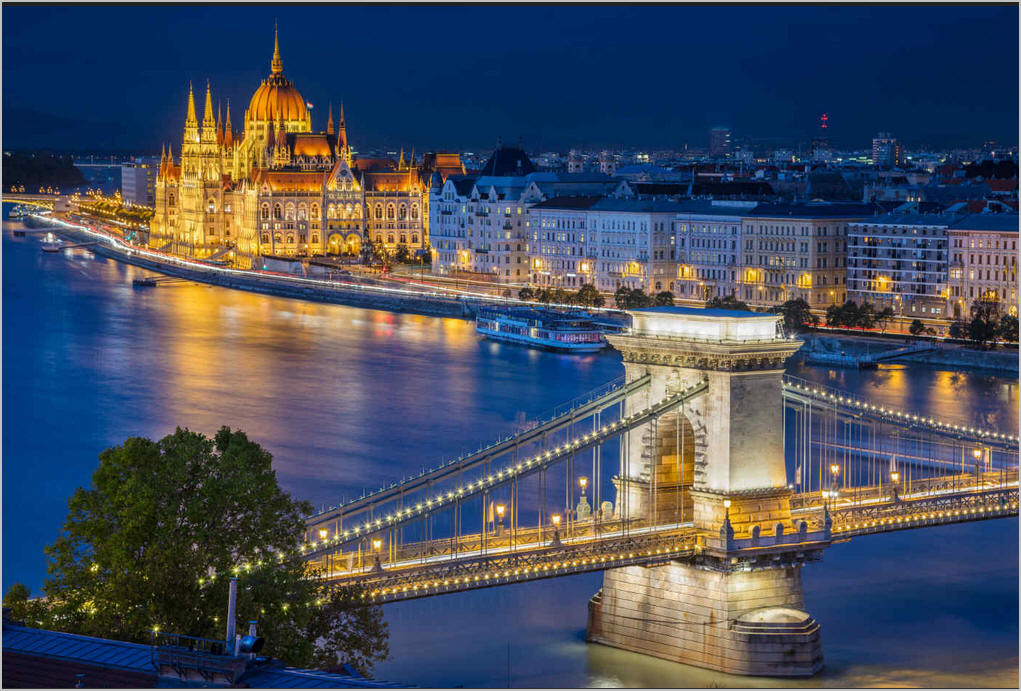 An image from Budapest Hungary
.
.
Click the link below for images:
.
__________________________________________
November 8, 2021
Mohenjo
Business, Food For Thought, Human Interest, Science, Technical
amazon, business, Business News, current-events, Future, Hotels, human-rights, medicine, mental-health, research, Science, Science News, technology, Technology News, travel, vacation

Click the link below the picture
.
Earlier this year, the Pentagon released three videos of UFOs recorded by the Navy — one taken in 2004 and the other two in 2015. The videos, which first leaked a couple of years ago, show … well, it’s not exactly clear.
There are various objects — two of which look like aircraft — spinning through the sky and moving in ways that defy easy explanation. As the images bop across the screen, you can hear the pilots’ excitement and confusion in real-time as they track whatever it is they’re seeing.
I’m not what you would call a UFO enthusiast, but the videos are the most compelling I’ve ever seen. They seem to confirm, at the very least, that UFOs are real — not that aliens exist, but that there are unidentified objects buzzing around the sky.
Now, do I think aliens are real? Yeah, probably. Are they flying spaceships into our atmosphere? Who the hell knows?
.
:format(webp)/cdn.vox-cdn.com/uploads/chorus_image/image/66769671/GettyImages_1175977697.0.jpg) The “Area 51 Basecamp” event at the Alien Research Center in Hiko, Nevada, on September 20, 2019.Mario Tama/Getty Images
The “Area 51 Basecamp” event at the Alien Research Center in Hiko, Nevada, on September 20, 2019.Mario Tama/Getty Images
.
.
Click the link below for the article:
.
__________________________________________
November 8, 2021
Mohenjo
Business, Food For Thought, Human Interest, Science, Technical
amazon, business, Business News, current-events, Future, Hotels, human-rights, medicine, mental-health, research, Science, Science News, technology, Technology News, travel, vacation

Click the link below the picture
.
Lucky for Edna Murphey, people attending an exposition in Atlantic City during the summer of 1912 got hot and sweaty.
For two years, the high school student from Cincinnati had been trying unsuccessfully to promote an antiperspirant that her father, a surgeon, had invented to keep his hands sweat-free in the operating room.
Murphey had tried her dad’s liquid antiperspirant in her armpits, discovered that it thwarted wetness and smell, named the antiperspirant Odorono (Odor? Oh No!) and decided to start a company.
But business didn’t go well—initially—for this young entrepreneur. Borrowing $150 from her grandfather, she rented an office workshop but then had to move the operation to her parents’ basement because her team of door-to-door saleswomen didn’t pull in enough revenue. Murphey approached drugstore retailers who either refused to stock the product or who returned the bottles of Odorono back, unsold.
.
 Photo by sergeyryzhov / Getty Images.
.
.
Click the link below for the article:
.
__________________________________________
November 8, 2021
Mohenjo
Arts, Crime, Food For Thought, Human Interest, Medical, missed News, Political, Science, Technical
amazon, business, Business News, current-events, Future, Hotels, human-rights, medicine, mental-health, research, Science, Science News, technology, Technology News, travel, vacation
.
News You might have missed!
Use your browser or smartphone back arrow (<-) to return to this table for your next selection.
.
__________________________________________
November 7, 2021
Mohenjo
Business, Food For Thought, Human Interest, Science, Technical
amazon, business, Business News, current-events, Future, Hotels, human-rights, medicine, mental-health, research, Science, Science News, technology, Technology News, travel, vacation

Click the link below the picture
.
MURIEL WILKINS: I’m Muriel Wilkins, and this is Coaching Real Leaders. Part of the HBR Presents network. I’m a long-time executive coach who works with highly successful leaders who’ve had a bump in the road. My job is to help them get over that bump by clarifying their goals and figuring out a way to reach them so that hopefully they can lead with a little more ease. I typically work with clients over the course of several months, but on this show, we have a one-time coaching meeting focusing on a specific leadership challenge they’re facing.
MURIEL WILKINS: Today’s guest is someone we’ll call, “Naomi,” to protect her confidentiality. She’s a lawyer and has followed a pretty traditional career trajectory from law school to a big firm to an in-house counsel job. But even though she acknowledges she’s done well for herself, she’s feeling unsettled.
.

.
.
Click the link below for the article (read or listen (49:47)):
.
__________________________________________
November 7, 2021
Mohenjo
Business, Food For Thought, Human Interest, Science, Technical
amazon, business, Business News, current-events, Future, Hotels, human-rights, medicine, mental-health, research, Science, Science News, technology, Technology News, travel, vacation

Click the link below the picture
.
There’s one line from Twitter power user Chrissy Teigen’s latest mea culpa that I haven’t been able to get out of my head. Teigen, who recently returned to the platform less than a month after announcing she was quitting it forever, tweeted an apology to media personality Courtney Stodden, who had accused her of harassing them online when they were just 16 years old.
“I’m mortified and sad at who I used to be,” Teigen wrote to her 13.6 million followers last week. “I was an insecure, attention-seeking troll. I am ashamed and completely embarrassed at my behavior but that is nothing compared to how I made Courtney feel.”
It was the next bit, though, that’s been haunting me: “I have worked so hard to give you guys joy and be beloved and the feeling of letting you down is nearly unbearable.” There’s something deeply telling about Teigen’s admission that she works hard to “be beloved” — which, as writer Bolu Babalola notes, “is not the same as working to be a good person.”
.

.
.
Click the link below for the article:
.
__________________________________________
November 6, 2021
Mohenjo
Business, Enthralling, Human Interest, Photographs
amazon, business, Business News, current-events, Future, Hotels, human-rights, medicine, mental-health, research, Science, Science News, technology, Technology News, travel, vacation
Click the link below the picture
.
Romania is a country at the confluence of Central, Eastern, and Southeastern Europe. It borders Bulgaria to the south, Ukraine to the north, Hungary to the west, Serbia to the southwest, Moldova to the east, and the Black Sea to the southeast. It has a predominantly temperate-continental climate, and an area of 238,397 km2 (92,046 sq mi), with a population of around 19 million. Romania is the twelfth-largest country in Europe and the sixth-most populous member state of the European Union. Its capital and largest city is Bucharest; other major urban areas include Iași, Cluj-Napoca, Timișoara, Constanța, Craiova, Brașov, and Galați.
The Danube, Europe’s second-longest river, rises in Germany’s Black Forest and flows in a southeasterly direction for 2,857 km (1,775 mi), before emptying into Romania’s Danube Delta. The Carpathian Mountains, which cross Romania from the north to the southwest, include Moldoveanu Peak, at an altitude of 2,544 m (8,346 ft).
Romania was formed in 1859 through a personal union of the Danubian Principalities of Moldavia and Wallachia. The new state, officially named Romania since 1866, gained independence from the Ottoman Empire in 1877. During World War I, after declaring its neutrality in 1914, Romania fought together with the Allied Powers from 1916. In the aftermath of the war, Bukovina, Bessarabia, Transylvania, and parts of Banat, Crișana, and Maramureș became part of the Kingdom of Romania. In June–August 1940, as a consequence of the Molotov–Ribbentrop Pact and Second Vienna Award, Romania was compelled to cede Bessarabia and Northern Bukovina to the Soviet Union, and Northern Transylvania to Hungary. In November 1940, Romania signed the Tripartite Pact and, consequently, in June 1941 entered World War II on the Axis side, fighting against the Soviet Union until August 1944, when it joined the Allies and recovered Northern Transylvania. Following the war and occupation by the Red Army, Romania became a socialist republic and a member of the Warsaw Pact. After the 1989 Revolution, Romania began a transition towards democracy and a market economy.
Romania is a developing country, with a high-income economy, ranking 49th in the Human Development Index. It has the world’s 45th largest economy by nominal GDP. Romania experienced rapid economic growth in the early 2000s; its economy is now based predominantly on services. It is a producer and net exporter of machines and electric energy through companies such as Automobile Dacia and OMV Petrom. Romania has been a member of the United Nations since 1955, NATO since 2004, and the European Union since 2007. The majority of Romania’s population are ethnic Romanian and Eastern Orthodox Christians, speaking Romanian, a Romance language. Wikipedia
.
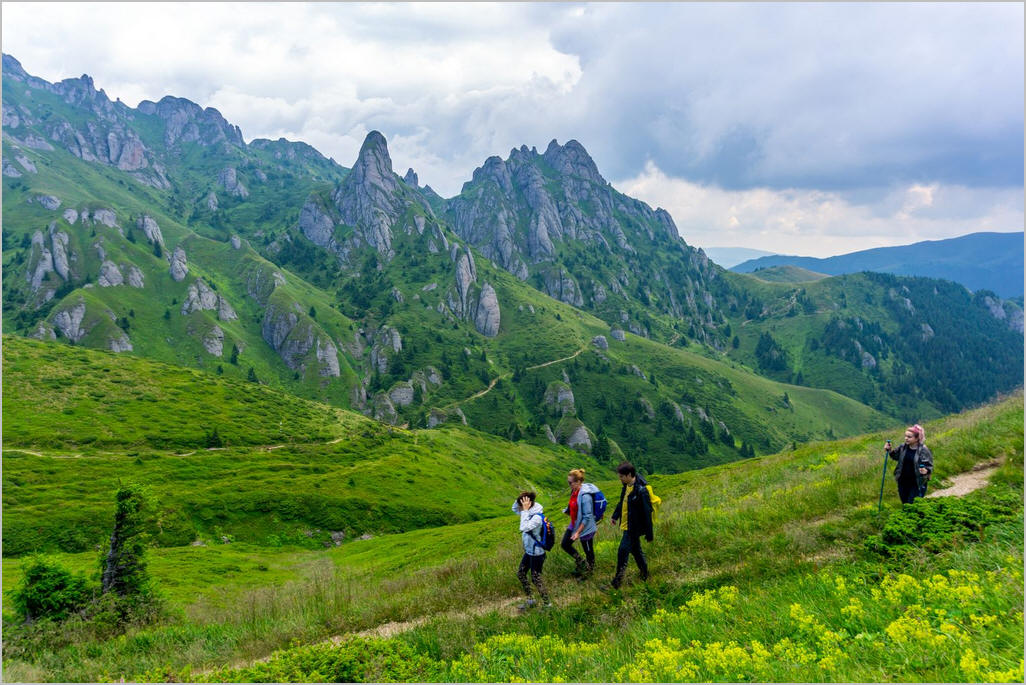
.
.
Click the link below for images:
.
__________________________________________
Older Entries
Newer Entries


