April 27, 2022
Mohenjo
Business, Enthralling, Human Interest, Photographs
amazon, business, Business News, current-events, Future, Hotels, human-rights, medicine, mental-health, research, Science, Science News, technology, Technology News, travel, vacation

Click the link below the picture
.
Argentines are people identified with the country of Argentina. This connection may be residential, legal, historical, or cultural. For most Argentines, several (or all) of these connections exist and are collectively the source of their being Argentine.
Argentina is a multiethnic and multilingual society, home to people of various ethnic, religious, and national origins, with the majority of the population made up of Old World immigrants and their descendants. As a result, Argentines do not equate their nationality with ethnicity, but with citizenship and allegiance to Argentina. Aside from the indigenous population, nearly all Argentines or their ancestors immigrated within the past five centuries. Among countries in the world that have received the most immigrants in modern history, Argentina, with 6.6 million, ranks second to the United States (27 million), and ahead of other immigrant destinations such as Canada, Brazil, and Australia.
Argentina is a multiethnic society, which means that it is home to people of many different ethnic backgrounds. Argentina is a melting pot of different peoples.
In the mid-19th century a large wave of immigration started to arrive in Argentina due to new Constitutional policies that encouraged immigration, and issues in the countries the immigrants came from, such as wars, poverty, hunger, and famines. The main immigration sources were from Europe, the countries from the Near and the Middle East, Russia, and Japan. Eventually, Argentina became the country with the second-largest number of immigrants in the period, with 6.6 million, second only to the United States with 27 million.
Therefore, most Argentines are of European descent (with a significant Native component), and are either descendants of colonial-era settlers and/or of the 19th and 20th-century immigrants from Europe, with about 65% of the population being of ethnic European descent.
The most common ethnic groups are a mix between Spanish (including Galicians and Basques), Italian and Native American. It is estimated that up to 30 million Argentines, up to 62.5% of the total population, have Italian ancestry, wholly or in part. There are also some Germanic, Slavic, Irish, and French populations. Smaller Jewish, Arab, Asian, Romani, and African communities contribute to the melting pot.
Immigration of recent decades includes mainly Paraguayans, Bolivians, and Peruvians, among other Latin Americans, Eastern Europeans, Africans, and Asians. Wikipedia
.
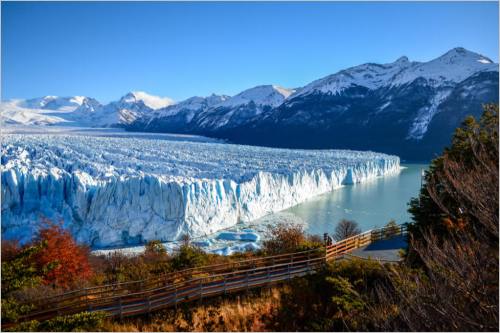 An image from Argentina
.
.
Click the link below for images:
.
__________________________________________
April 27, 2022
Mohenjo
Business, Human Interest
amazon, business, Business News, current-events, Future, Hotels, human-rights, medicine, mental-health, research, Science, Science News, technology, Technology News, travel, vacation

Click the link below the picture
.
If you only look at one “space photo” this year then this one has to be it.
Here it is to download—the Sun, our life-giver, in stunning 83-megapixel glory. You can zoom in like never before to see a close-up its filaments and flares.
Taken from halfway between Earth and the Sun, it was created on March 7, 2022, by the camera onboard the European Space Agency’s Solar Orbiter spacecraft.
A mosaic of 25 individual 10-minute exposures taken one after the other, it took the spacecraft four hours to create it.
The image measures a whopping 9148 x 9112 pixels. That’s 83 megapixels. For comparison, a 4K TV has 3840 x 2160 pixels, which is 8 megapixels.
Here’s that image (though you need to download the bigger version to appreciate how detailed it is).
Not at all surprisingly it’s the highest resolution image of the Sun’s full disc ever taken, though special cameras were used so it could also include its outer, hotter atmosphere, the solar corona that’s normally only visible during a total solar eclipse on Earth.
.
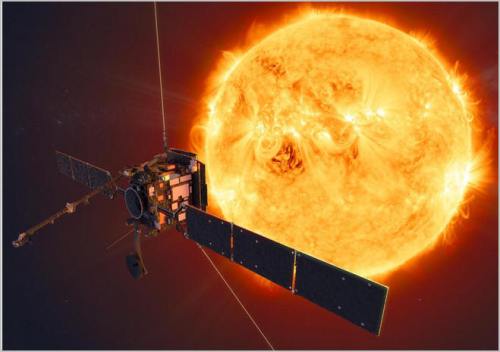
The European Space Agency’s Solar Orbiter has returned an incredible 83-megapixel image of the Sun. ESA/ATG medialab
.
.
Click the link below for the article:
.
__________________________________________
April 27, 2022
Mohenjo
Business, Human Interest
amazon, business, Business News, current-events, Future, Hotels, human-rights, medicine, mental-health, research, Science, Science News, technology, Technology News, travel, vacation

Click the link below the picture
.
Sadness. Disappointment. Frustration. Anger. These are some of the reactions from LGBTQ+ astronomers over the latest revelations regarding NASA’s decision not to rename the James Webb Space Telescope (JWST), given that the agency long had evidence suggesting its Apollo-era administrator James Webb was involved in the persecution of gay and lesbian federal employees during the 1950s and 1960s.
The new information came to light late last month when nearly 400 pages of e-mails were posted online by the journal Nature, which obtained the exchanges under a Freedom of Information Act (FOIA) request. Since early last year, four researchers have been leading the charge for NASA to alter the name of the $10-billion flagship mission, launched in December 2021, which will provide unparalleled views of the universe. The e-mails make clear that, behind the scenes, NASA was well aware of Webb’s problematic legacy even as the agency’s leadership declined to take his name off the project.
“Reading through the exchanges, it seems that LGBTQ+ scientists and the concern we raised are not really what they care about,” says Yao-Yuan Mao of Rutgers University, who maintains the online Astronomy and Astrophysics Outlist of openly LGBTQ+ researchers.
.
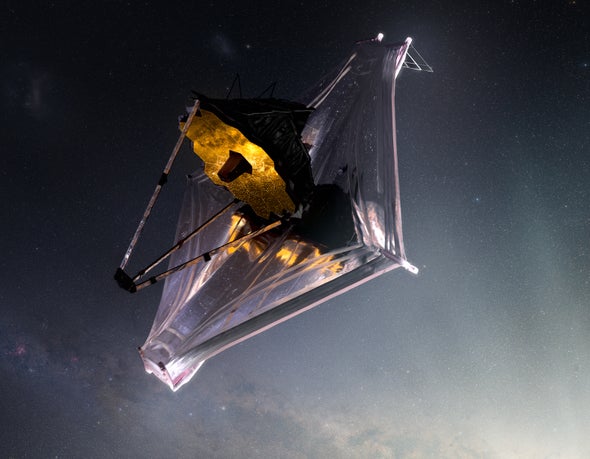 Artist’s conception of the James Webb Space Telescope. Credit: NASA GSFC/CIL/Adriana Manrique Gutierrez (CC BY 2.0)
.
.
Click the link below for the article:
.
__________________________________________
April 27, 2022
Mohenjo
Arts, Crime, Food For Thought, Human Interest, Medical, missed News, Political, Science, Technical
amazon, business, Business News, current-events, Future, Hotels, human-rights, medicine, mental-health, research, Science, Science News, technology, Technology News, travel, vacation

.
News You might have missed!
Use your browser or smartphone back arrow (<-) to return to this table for your next selection.
.
__________________________________________
April 26, 2022
Mohenjo
Business, Enthralling, Human Interest, Photographs
amazon, business, Business News, current-events, Future, Hotels, human-rights, medicine, mental-health, research, Science, Science News, technology, Technology News, travel, vacation

Click the link below the picture
.
The Bavarian Rhön Nature Park straddles the junction of the German states of Bavaria, Hesse, and Thuringia. 70 km2 of the total 125 km2 area of the nature park has been recognized by UNESCO as part of the Rhön Biosphere Reserve. The organization for the promotion of the Bavarian Rhön Nature Park (Zweckverband Naturpark Bayerische Rhön) was founded in 1967. On 26 November 1982 the regulation for the Naturpark Bayerische Rhön was issued and, in 1997, the Zweckverband became the Society for the Bavarian Rhön Nature Park and Biosphere Reserve (Naturpark und Biosphärenreservat Bayer. Rhön e.V.).
The nature park lies between the Spessart, Vogelsberg, Thuringian Forest, Haßberge and Steigerwald forest. It is characterized by mixed forests, streams of flowing water, moors, grassland, and arid habitats. Wikipedia
.
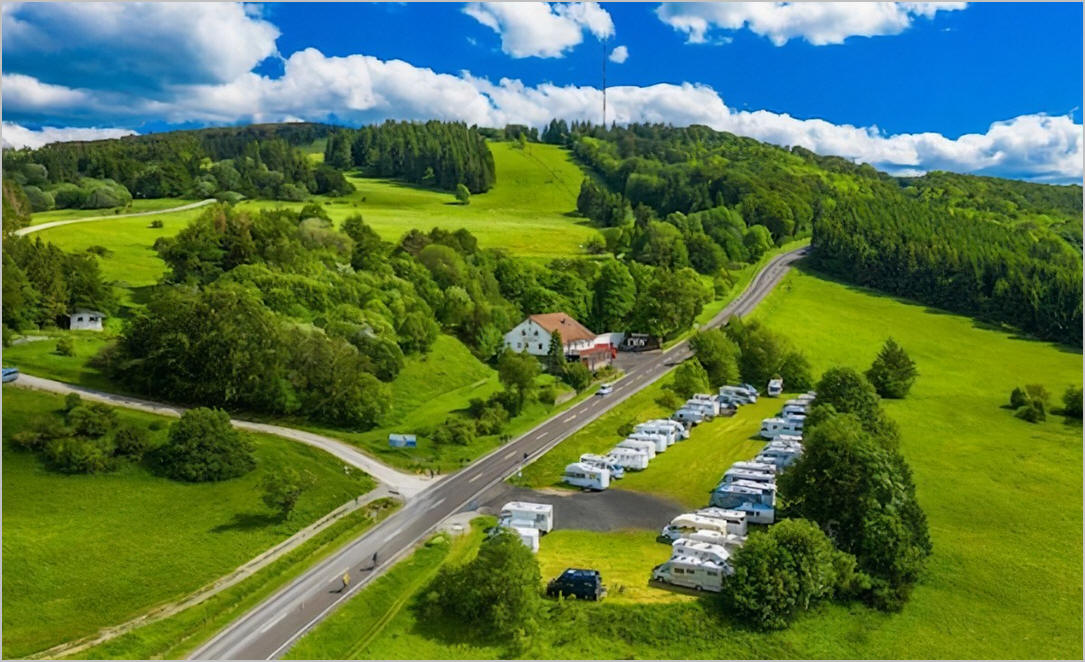 An image from Bavarian Rhön Nature Park
.
.
Click the link below for images:
.
__________________________________________
April 26, 2022
Mohenjo
Business, Food For Thought, Human Interest, Science, Technical
amazon, business, Business News, current-events, Future, Hotels, human-rights, medicine, mental-health, research, Science, Science News, technology, Technology News, travel, vacation

Click the link below the picture
.
Beneath the fluffy backsides of Valerie Robson’s two male golden retrievers is an unusual sight: intact anatomy. Neither dog is neutered.
This presents occasional challenges. Astro and Rumble are barred from most doggy daycares, and many boarding kennels won’t take them. But although Robson has no intention of breeding the dogs, she says she has no regrets. Research that suggests neutering could be linked to cancers and joint disorders persuaded her that skipping sterilization was best for her pets.
“Sometimes people notice,” said Robson, a county government employee in Conifer, Colo. “I just explain that we chose to do this for health and wellness, and he’s a good boy, and it’s never been an issue.”
.
 Photo by Christina Reichl Photography/Getty Images
.
.
Click the link below for the article:
.
__________________________________________
April 26, 2022
Mohenjo
Business, Food For Thought, Human Interest, Science, Technical
amazon, business, Business News, current-events, Future, Hotels, human-rights, medicine, mental-health, research, Science, Science News, technology, Technology News, travel, vacation

lick the link below the picture
.
Across the globe, millions of people believe the Earth — that whirling blue sphere, spinning through space — is, in fact, a flat plane. Believers diverge on the specifics but tend to understand that we all live beneath a dome that floats through space, or perhaps, hovers above primordial waters.
It’s unclear how many people believe some version of Flat Earth theory. Tens of thousands of people belong to social media accounts dedicated to these theories, and popular videos explaining the theory have hundreds of thousands of views. Some high-profile figures, including NBA star Kyrie Irving and rapper B.o.B., have flirted with or even openly endorsed the theory. Flat Earth believers held conferences before the covid-19 pandemic and showed up at anti-mask and anti-vaccine protests throughout it.
And polling gives us some sense of the scale of this belief system: As many as 1 percent of Americans (that’s more than 3 million people) and 7 percent of Brazilians (11 million people) say they believe the Earth is flat, for example.
The modern Flat Earth movement has its origins in a snake oil salesman and utopian named Samuel Rowbotham, said Kelly Weill, a journalist who covers fringe movements for the Daily Beast and spent years researching this movement and its adherents. In her book, “Off the Edge: Flat Earthers, Conspiracy Culture, and Why People Will Believe Anything,” she traces the conspiracy theory’s resurgence in about 2015, when it began spreading across social media.
.
:quality(100)/cloudfront-us-east-1.images.arcpublishing.com/thesummit/UNCYRFSGV5GYHDSDHVZXBN5Y7I.jpg) Illustration: Mae Decena
Illustration: Mae Decena
.
.
Click the link below for the article:
.
__________________________________________
April 26, 2022
Mohenjo
Crime, Food For Thought, Human Interest, Medical, missed News, Political, Science, Technical
amazon, business, Business News, current-events, Future, Hotels, human-rights, medicine, mental-health, research, Science, Science News, technology, Technology News, travel, vacation
.
News You might have missed!
Use your browser or smartphone back arrow (<-) to return to this table for your next selection.
.
__________________________________________
April 25, 2022
Mohenjo
Business, Enthralling, Human Interest, Photographs
amazon, business, Business News, current-events, Future, Hotels, human-rights, medicine, mental-health, research, Science, Science News, technology, Technology News, travel, vacation
Click the link below the picture
.
South Africa, officially the Republic of South Africa (RSA), is the southernmost country in Africa. With over 60 million people, the country is the world’s 23rd-most populous nation and covers an area of 1,221,037 square kilometers (471,445 square miles). South Africa has three capital cities, with the executive, judicial and legislative branches of government based in Pretoria, Bloemfontein, and Cape Town respectively. The largest city is Johannesburg. About 80% of the population are Black South Africans. The remaining population consists of Africa’s largest communities of European (White South Africans), Asian (Indian South Africans and Chinese South Africans), and Multiracial (Coloured South Africans) ancestry.
South Africa is bounded to the south by 2,798 kilometers (1,739 mi) of coastline that stretch along the South Atlantic and Indian Oceans; to the north by the neighboring countries of Namibia, Botswana, and Zimbabwe; and to the east and northeast by Mozambique and Eswatini and it surrounds the enclaved country of Lesotho. It is the southernmost country on the mainland of the Old World, and the most populous country located entirely south of the equator. South Africa is a biodiversity hotspot, with a diversity of unique biomes and plant and animal life.
South Africa is a multiethnic society encompassing a wide variety of cultures, languages, and religions. Its pluralistic makeup is reflected in the constitution’s recognition of 11 official languages, the fourth-highest number in the world. According to the 2011 census, the two most spoken first languages are Zulu (22.7%) and Xhosa (16.0%). The two next ones are of European origin: Afrikaans (13.5%) developed from Dutch and serves as the first language of most Coloured and White South Africans; English (9.6%) reflects the legacy of British colonialism and is commonly used in public and commercial life. The country is one of the few in Africa never to have had a coup d’état, and regular elections have been held for almost a century. However, the vast majority of black South Africans were not enfranchised until 1994.
During the 20th century, the black majority sought to claim more rights from the dominant white minority, which played a large role in the country’s recent history and politics. The National Party imposed apartheid in 1948, institutionalizing previous racial segregation. After a long and sometimes violent struggle by the African National Congress (ANC) and other anti-apartheid activists both inside and outside the country, the repeal of discriminatory laws began in the mid-1980s. Since 1994, all ethnic and linguistic groups have held political representation in the country’s liberal democracy, which comprises a parliamentary republic and nine provinces. South Africa is often referred to as the “rainbow nation” to describe the country’s multicultural diversity, especially in the wake of apartheid.
South Africa is an upper-middle power in international affairs; it maintains significant regional influence and is a member of both the Commonwealth of Nations and G20. It is a developing country, ranking 114th on the Human Development Index. It has been classified by the World Bank as a newly industrialized country, with the second-largest economy in Africa, and the 33rd-largest in the world. South Africa also has the most UNESCO World Heritage Sites in Africa. Since the end of apartheid, government accountability and quality of life have substantially improved in South Africa. However, crime, poverty, and inequality remain widespread, with about a quarter of the population unemployed and living on less than US$1.25 a day as of 2008. Wikipedia
.
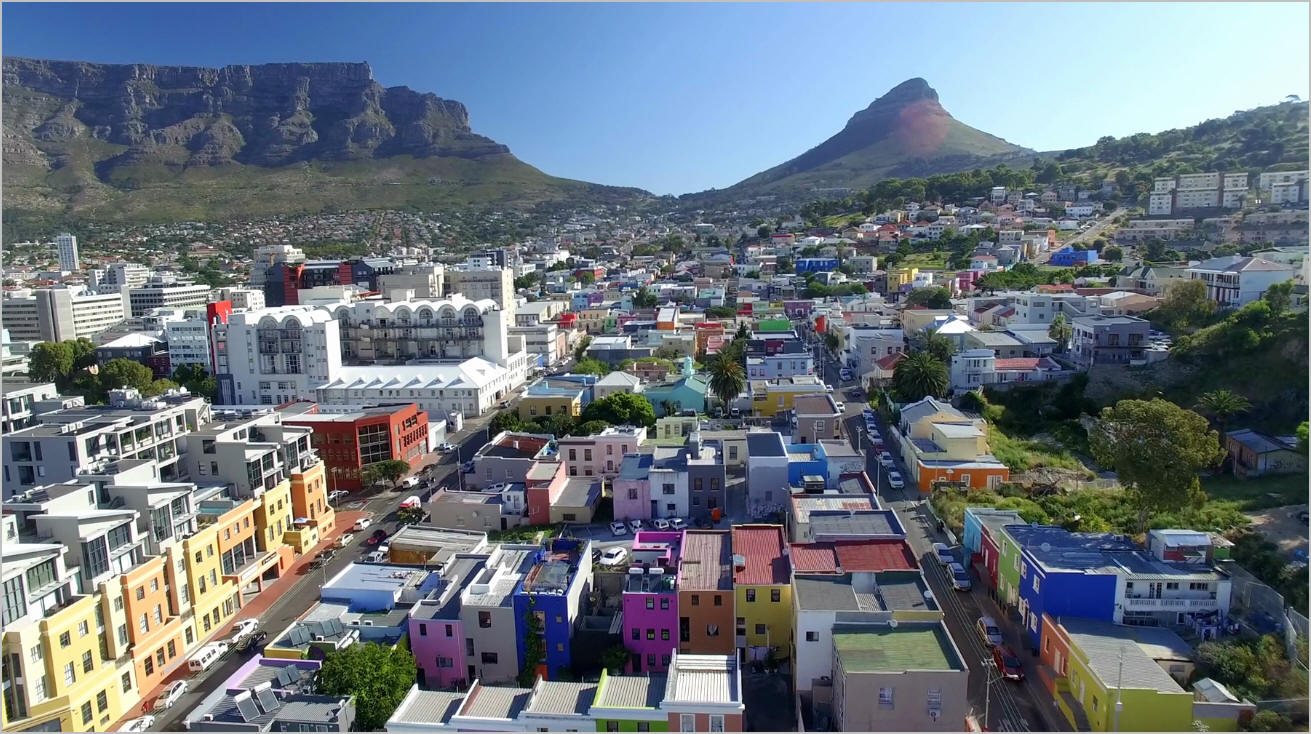 An image of Cape Town South Africa
.
.
Click the link below for images:
.
__________________________________________
April 25, 2022
Mohenjo
Business, Human Interest
amazon, business, Business News, current-events, Future, Hotels, human-rights, medicine, mental-health, research, Science, Science News, technology, Technology News, travel, vacation

Click the link below the picture
.
Of all the questions we can conceive of about the Universe, perhaps the grandest one of all is to ask where it all came from in the first place? This isn’t an easy question, because in order to understand where something came from, we have to first know precisely what it is. Similarly, we also have to understand the laws of physics well enough to be able to calculate the outcome of a physical system that begins with a specific set of initial conditions. Only from those starting points can we identify the possible avenues for how things got to be the way they are today and to figure out which ones make predictions that agree with the Universe we inhabit.
However, the remarkable thing about considering this is the following: no matter when in the past or the future we would’ve asked this question, taking a scientific approach to it would always yield the same cosmic story. Today, we’ve pushed the frontiers back incredibly far, having identified the origin of the planets, stars, elements, atoms, and more. We’ve discovered overwhelming evidence for the hot Big Bang and even information that takes us before that stupendous instant of creation. Despite all we know, there are some epic unknowns that have no solution at present. Here’s where we are today.
.
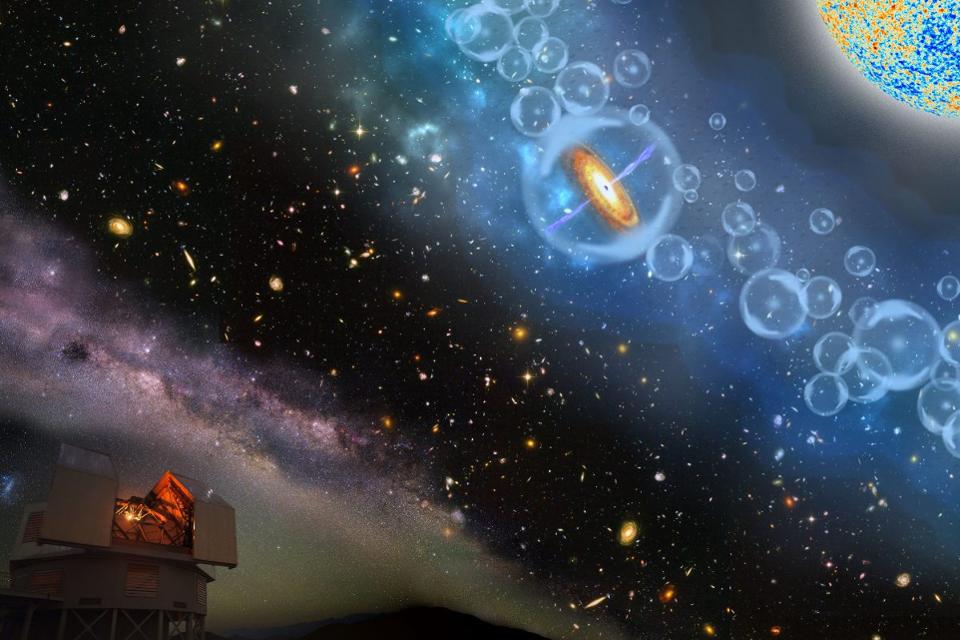 (Credit: Robin Dienel/Carnegie Institution for Science) The farther away we look, the closer in time we’re seeing towards the Big Bang. As our observatories improve, we may yet reveal the very first stars and galaxies, and find the limits to which, beyond them, there are none
.
.
Click the link below for the article:
.
__________________________________________
Older Entries
Newer Entries

