June 13, 2021
Mohenjo
Business, Food For Thought, Human Interest, Science, Technical
amazon, business, Business News, current-events, Future, Hotels, human-rights, medicine, mental-health, research, Science, Science News, technology, Technology News, travel, vacation

Click the link below the picture
.
In the early days of the mobile phone, Nokia was everywhere—ubiquitous, inescapable, supreme. It created the best-selling 1100, with a keypad like droplets of water; the gray-blue 3310; even the cutting-edge 8810, with a slip-sliding protective cover that felt like the future. You always remember your first: For many people, one of these phones, pre-loaded with the game Snake (or its illustrious successor, Snake II) and the OG ringtone, was it. In 2009, at its peak, Nokia was the 85th largest company in the world.
Today, the firm is doing just fine, though its primary money-makers are less obvious than they once were. The Finnish giant now derives most of its income from those invisible elements of the mobile internet that allow you to access an infinite repository of information from almost anywhere in the world: routers, network processors, base station radio access units, and other whizz-bang components. In 2018, with revenue of €23 billion, Nokia dropped to 466th place.
The transition from handset juggernaut to invisible technological unguent was not without casualties. Over nine years of downsizing, the company lost its handset business; eliminated thousands of jobs; and saw millions down the drain.
The Finnish town of Oulu, with a present-day population of around 200,000 at the time this article was written in 2019, looked like another certain victim. Formerly a quiet lumber town, it had been buoyed by the rise of Nokia, becoming a regional tech powerhouse in the process. By 2000, the so-called “Oulu miracle” had hit its stride, with more than 15,000 IT jobs in the city. But Nokia’s travails became the town’s: Between 2009 and 2011, the company cut more than 1,000 Oulu jobs, many of which were related to its handset business. Five years later, another 1,000 positions followed.
.

.
.
Click the link below for the article:
.
__________________________________________
June 12, 2021
Mohenjo
Business, Food For Thought, Human Interest, Science, Technical
amazon, business, Business News, current-events, Future, Hotels, human-rights, medicine, mental-health, research, Science, Science News, technology, Technology News, travel, vacation
Click the link below the picture
.
You might think that the impact of aging on the brain is something you can’t do much about. After all, isn’t it an inevitability?
To an extent, as we may not be able to rewind the clock and change our levels of higher education or intelligence (both factors that delay the onset of symptoms of aging). But adopting specific lifestyle behaviors–whether you’re in your thirties or late forties–can have a tangible effect on how well you age. Even in your fifties and beyond, activities like learning a new language or musical instrument, taking part in aerobic exercise, and developing meaningful social relationships can do wonders for your brain. There’s no question that when we compromise on looking after ourselves, our aging minds pick up the tab.
.

Photo by Evgeny Gromov/Getty Images
.
.
Click the link below for the article:
.
__________________________________________
June 12, 2021
Mohenjo
Arts, Business, Food For Thought, Human Interest, Technical
amazon, business, Business News, current-events, Future, Hotels, human-rights, medicine, mental-health, research, Science, Science News, technology, Technology News, travel, vacation
Some content on this page was disabled on April 15, 2025 as a result of a DMCA takedown notice from Guardian Media Group. You can learn more about the DMCA here:
https://wordpress.com/support/copyright-and-the-dmca/
June 12, 2021
Mohenjo
Arts, Food For Thought, Human Interest, Medical, missed News, Science, Technical
amazon, business, Business News, current-events, Future, Hotels, human-rights, medicine, mental-health, research, Science, Science News, technology, Technology News, travel, vacation

.
News You might have missed!
Use your browser or smartphone back arrow (<-) to return to this table for your next selection.
.
__________________________________________
June 11, 2021
Mohenjo
Business, Food For Thought, Human Interest, Science, Technical
amazon, business, Business News, current-events, Future, Hotels, human-rights, medicine, mental-health, research, Science, Science News, technology, Technology News, travel, vacation
Click the link below the picture
.
Mona Lisa’s smile. Mary Lou Retton’s Olympic vault. Mariah Carey’s musical pitch. All are considered perfect. So are the numbers 6 and 28.
With feats of artistry and athleticism, perfection lies in the eye of the beholder. But for numbers, perfection is mathematically defined. “Perfect numbers” are equal to the sum of their “proper” divisors (positive integers that divide a number evenly, not counting itself). For example, 6 = 3 + 2 + 1, and 28 = 14 + 7 + 4 + 2 + 1. While these mathematical curiosities are about as likely to grace the walls of the Louvre as they are to perform a twisting layout back somersault, they do offer something irresistible: a perfect mystery.
Euclid laid out the basics of perfect numbers over 2,000 years ago, and he knew that the first four perfect numbers were 6, 28, 496, and 8,128. Since then, many more perfect numbers have been discovered. But, curiously, they’re all even. No one has been able to find an odd perfect number, and after thousands of years of unsuccessful searching, it might be tempting to conclude that odd perfect numbers don’t exist. But mathematicians haven’t been able to prove that either. How is it that we can know so much about even perfect numbers without being able to answer the simplest question about an odd one? And how are modern mathematicians trying to resolve this ancient question?
.
 BIG MOUTH for Quanta Magazine
.
.
Click the link below for the article:
.
__________________________________________
June 11, 2021
Mohenjo
Arts, Food For Thought, Human Interest, Medical, missed News, Science, Technical
amazon, business, Business News, current-events, Future, Hotels, human-rights, medicine, mental-health, research, Science, Science News, technology, Technology News, travel, vacation
.
News You might have missed!
Use your browser or smartphone back arrow (<-) to return to this table for your next selection.
.
__________________________________________
June 10, 2021
Mohenjo
Business, Food For Thought, Human Interest, Technical
amazon, business, Business News, current-events, Future, Hotels, human-rights, medicine, mental-health, research, Science, Science News, technology, Technology News, travel, vacation

Click the link below the picture
.
According to Nielsen, the average American spends three hours a day staring into a phone or tablet. Factor in TVs and computers, and it’s up to about nine hours in the glow of a screen. That’s a lot of time that could be better used for professional gain. In his book, Digital Minimalism, technology and productivity expert Cal Newport offers advice on how to free yourself from the tyranny of email, social media, and other digital services.
.

Illustrations by César Pelizer for Bloomberg Businessweek.
.
.
Click the link below for the article:
.
__________________________________________
June 10, 2021
Mohenjo
Business, Food For Thought, Human Interest, Science, Technical
amazon, business, Business News, current-events, Future, Hotels, human-rights, medicine, mental-health, research, Science, Science News, technology, Technology News, travel, vacation

Click the link below the picture
.
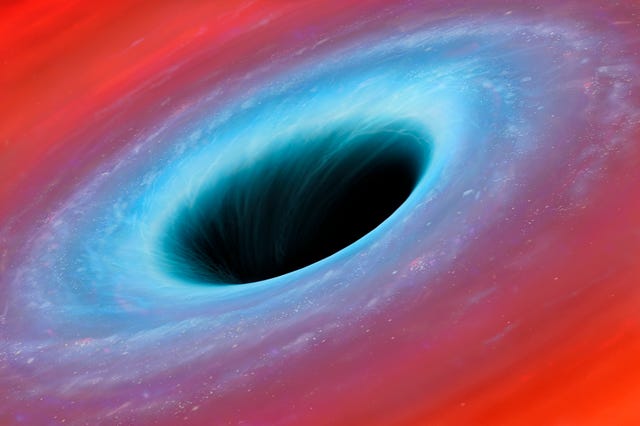
What if black holes, those all-consuming gravitational behemoths of the cosmos, aren’t actually black at all—or even holes, for that matter? Instead, a new theory suggests black holes may be dark stars with hearts of extremely dense, exotic matter. This could help explain one of the biggest mysteries of the universe: the origin and nature of dark matter.
Black holes are real-life examples of Albert Einstein’s general theory of relativity taken to the extreme. They’re places in the universe where enormously dense amounts of matter stretch the fabric of space and time to its limit, forming an infinitely deep gravitational well that not even light can escape—hence the “black hole” name.
Scientists believe at the center of each black hole, there lies an infinitely small and dense point called a singularity. Gravity is so strong at the singularity that it forms an event horizon surrounding it, where the pull of gravity surpasses even the speed of light.
.
MARK GARLICKGetty Images
.
.
Click the link below for the article:
.
__________________________________________
June 10, 2021
Mohenjo
Enthralling, Food For Thought, Human Interest, Medical, missed News, Political, Science, Technical
amazon, business, Business News, current-events, Future, Hotels, human-rights, medicine, mental-health, research, Science, Science News, technology, Technology News, travel, vacation
.
News You might have missed!
Use your browser or smartphone back arrow (<-) to return to this table for your next selection.
.
__________________________________________
June 9, 2021
Mohenjo
Business, Food For Thought, Human Interest, Science, Technical
amazon, business, Business News, current-events, Future, Hotels, human-rights, medicine, mental-health, research, Science, Science News, technology, Technology News, travel, vacation
Some content on this page was disabled on April 15, 2025 as a result of a DMCA takedown notice from Guardian Media Group. You can learn more about the DMCA here:
https://wordpress.com/support/copyright-and-the-dmca/
Older Entries
Newer Entries

