June 18, 2021
Mohenjo
Business, Food For Thought, Human Interest, Medical, Science, Technical
amazon, business, Business News, current-events, Future, Hotels, human-rights, medicine, mental-health, research, Science, Science News, technology, Technology News, travel, vacation

Click the link below the picture
.
United Airlines would very much like people to start flying on airplanes again. They stopped during the pandemic—nearly 10 times as many people flew in the United States on Memorial Day weekend in 2019, the Before Times, as on the same three days in 2020. That’s a problem for United, because air travel is, like, United’s whole thing.
That company would also very much like the people who do fly on airplanes to be vaccinated against Covid-19. Not that planes and airports are crucibles of infection! Definitely not, probably. But vaccinations are, let’s agree, a social good. Pretty much everyone wins, except germs.
But United doesn’t want to require vaccination. People get so mad. So earlier this year, corporate bigwigs started brainstorming ideas to encourage people to get vaccinated and also fly United. Their idea: Give everyone who gets their shots a reward. Maybe a few thousand miles’ worth of frequent-flier points? It’s the airline equivalent of a doughnut or a beer. You can have it, as a treat.
But no. “There were a number of us involved who, I would say, lean heavily from the marketing sciences group within United who said, ‘Actually, that’s not the right path,” says Luc Bondar, the vice president of marketing at United and president of the airline’s frequent-flier program, MileagePlus. “I may have crashed an executive meeting to say that there’s a different way. And out of some healthy discussion, we agreed on an approach that’s very aligned with behavioral science.”
.
 Photograph: Tony Garcia/Getty Images
.
.
Click the link below for the article:
.
__________________________________________
June 18, 2021
Mohenjo
Business, Food For Thought, Human Interest, Science, Technical
amazon, business, Business News, current-events, Future, Hotels, human-rights, medicine, mental-health, research, Science, Science News, technology, Technology News, travel, vacation

Click the link below the picture
.
Wake up, work, relax, sleep, repeat.
For many on Earth, this is a typical day—a nine to five job, some downtime in the evening ready for the day ahead, and two days off at the weekend.
It might come as a surprise to learn that astronauts in space keep a very similar schedule. Just like us mere Earthlings, they work regular hours, with plenty of free time to unwind. They even get weekends off—barring any cause for alarm on the International Space Station (ISS) that requires immediate attention, like dodging space debris.
“It’s important to offer those opportunities for them to decompress,” says Alexandra Whitemire, the Deputy Element Scientist for the Human Factors and Behavioral Performance (HFBP) team at NASA. “They’re living and working in the same tin can, so it’s an important aspect of the mission.”
While it might seem obvious now, this consideration for an astronaut’s work-life balance and mental health was not always the case. Decades of space missions have allowed us to reach this point, and along the way, we’ve encountered and overcome a few challenges. To understand where it all began, we need to take a step back to the dawn of human spaceflight.
.
:focal(807x594:808x595)/https://public-media.si-cdn.com/filer/e8/f1/e8f1d4f3-de51-4cfc-9d02-971c3a6a315b/iss20_music_meir_saxophone_iss062e150087_web.jpg)
Jessica U. Meir plays sax in the Cupola. (NASA)
.
.
Click the link below for the article:
.
__________________________________________
June 18, 2021
Mohenjo
Food For Thought, Human Interest, Medical, missed News, Political, Science, Technical
amazon, business, Business News, current-events, Future, Hotels, human-rights, medicine, mental-health, research, Science, Science News, technology, Technology News, travel, vacation

.
News You might have missed!
Use your browser or smartphone back arrow (<-) to return to this table for your next selection.
.
__________________________________________
June 17, 2021
Mohenjo
Crime, Food For Thought, Human Interest, missed News, Political, Science, Technical
amazon, business, Business News, current-events, Future, Hotels, human-rights, medicine, mental-health, research, Science, Science News, technology, Technology News, travel, vacation
.
News You might have missed!
Use your browser or smartphone back arrow (<-) to return to this table for your next selection.
.
__________________________________________
June 16, 2021
Mohenjo
Business, Food For Thought, Human Interest, Science, Technical
amazon, business, Business News, current-events, Future, Hotels, human-rights, medicine, mental-health, research, Science, Science News, technology, Technology News, travel, vacation

Click the link below the picture
.
At a sleep research symposium in January 2020, Janna Lendner presented findings that hint at a way to look at people’s brain activity for signs of the boundary between wakefulness and unconsciousness. For patients who are comatose or under anesthesia, it can be all-important that physicians make that distinction correctly. Doing so is trickier than it might sound, however, because when someone is in the dreaming state of rapid-eye-movement (REM) sleep, their brain produces the same familiar, smoothly oscillating brain waves as when they are awake.
Lendner argued, though, that the answer isn’t in the regular brain waves, but rather is an aspect of neural activity that scientists might normally ignore: the erratic background noise.
Some researchers seemed incredulous. “They said, ‘So, you’re telling me that there’s, like, information in the noise?’” said Lendner, an anesthesiology resident at the University Medical Center in Tübingen, Germany, who recently completed a postdoc at the University of California, Berkeley. “I said, ‘Yes. Someone’s noise is another one’s signal.’”
.
 Olena Shmahalo/Quanta Magazine; noise generated by Thomas Donoghue
.
.
Click the link below for the article:
.
__________________________________________
June 16, 2021
Mohenjo
Business, Food For Thought, Human Interest, Science, Technical
amazon, business, Business News, current-events, Future, Hotels, human-rights, medicine, mental-health, research, Science, Science News, technology, Technology News, travel, vacation

Click the link below the picture
.
In 1974, Stephen Hawking theorized that the universe’s darkest gravitational behemoths, black holes, were not the pitch-black star swallowers astronomers imagined, but they spontaneously emitted light — a phenomenon now dubbed Hawking radiation.
The problem is, no astronomer has ever observed Hawking’s mysterious radiation, and because it is predicted to be very dim, they may never will. This is why scientists today are creating their own black holes.
Researchers at the Technion-Israel Institute of Technology did just that. They created a black hole analog out of a few thousand atoms. They were trying to confirm two of Hawking’s most important predictions, that Hawking radiation arises from nothing and that it does not change in intensity over time, meaning it’s stationary.
“A black hole is supposed to radiate like a black body, which is essentially a warm object that emits a constant infrared radiation,” study co-author Jeff Steinhauer, an associate professor of physics at Technion-Israel Institute of Technology, told Phys.org. “Hawking suggested that black holes are just like regular stars, which radiate a certain type of radiation all the time, constantly. That’s what we wanted to confirm in our study, and we did.”
.
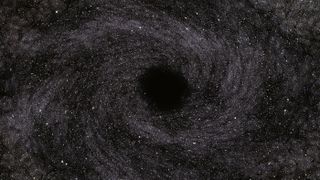 Image credit: Aaron Horowitz via Getty Images)
.
.
Click the link below for the article:
.
__________________________________________
June 15, 2021
Mohenjo
Food For Thought, Human Interest, Medical, missed News, Science, Technical
amazon, business, Business News, current-events, Future, Hotels, human-rights, medicine, mental-health, research, Science, Science News, technology, Technology News, travel, vacation
.
News You might have missed!
Use your browser or smartphone back arrow (<-) to return to this table for your next selection.
.
__________________________________________
June 14, 2021
Mohenjo
Business, Food For Thought, Human Interest, Science, Technical
amazon, business, Business News, current-events, Future, Hotels, human-rights, medicine, mental-health, research, Science, Science News, technology, Technology News, travel, vacation

Click the link below the picture
.
On September 16, 2011, an anime fan posted a math question to the online bulletin board 4chan about the cult classic television series The Melancholy of Haruhi Suzumiya. Season one of the show, which involves time travel, had originally aired in nonchronological order, and a re-broadcast and a DVD version had each further rearranged the episodes. Fans were arguing online about the best order to watch the episodes, and the 4chan poster wondered: If viewers wanted to see the series in every possible order, what is the shortest list of episodes they’d have to watch?
In less than an hour, an anonymous person offered an answer — not a complete solution, but a lower bound on the number of episodes required. The argument, which covered series with any number of episodes, showed that for the 14-episode first season of Haruhi, viewers would have to watch at least 93,884,313,611 episodes to see all possible orderings. “Please look over [the proof] for any loopholes I might have missed,” the anonymous poster wrote.
The proof slipped under the radar of the mathematics community for seven years — apparently, only one professional mathematician spotted it at the time, and he didn’t check it carefully. But in a plot twist in late-2018, the Australian science fiction novelist Greg Egan proved a new upper bound on the number of episodes required. Egan’s discovery renewed interest in the problem and drew attention to the lower bound posted anonymously in 2011. Both proofs are now being hailed as significant advances on a puzzle mathematicians have been studying for at least 25 years.
.

Credit: Maciej Rebisz for Quanta Magazine.
.
.
Click the link below for the article:
.
__________________________________________
June 14, 2021
Mohenjo
Business, Food For Thought, Human Interest, Science, Technical
amazon, business, Business News, current-events, Future, Hotels, human-rights, medicine, mental-health, research, Science, Science News, technology, Technology News, travel, vacation

Click the link below the picture
.
Raul Puente-Martinez has been pierced by quite a number of cactuses in his time. A research botanist and curator of living collections at the Desert Botanical Garden in Phoenix, he’s been studying prickly pears and chollas, which are infamous for their barbed spines, for decades. However, the worst cholla attack he’s ever witnessed came while he was hiking with several friends in Mexico. As they strolled through a cholla forest, one of the hikers discovered a chunk of cactus stuck to the tip of his shoe. He tried kicking his foot out to dislodge the spiny hitchhiker. Sure enough, most of the cactus flew off—including one piece that shot straight up and became stuck in the man’s upper lip.
Luckily, Puente-Martinez has had a lot of practice with removing spines. “You could see that they were really deep inside his lip,” he recalls. “Every time I pulled one, there was this little stream of blood coming out of the hole; that was pretty bad.”
Most cactus encounters aren’t quite that harrowing. But cactuses are ubiquitous in some parts of the desert, not to mention their popularity as houseplants. They’ve evolved a wide variety of spines to thrive in the unforgiving desert and some can snare you more easily than others. They can also cause painful complications. So it’s a good idea to prepare yourself for a cactus crisis. Luckily, Puente-Martinez and several other cactus experts can offer a number of tips for removing spines based on their hard-won experience.
.

Prickly pear spines up close and personal. Photo by Raul Puente-Martinez.
.
.
Click the link below for the article:
.
__________________________________________
June 13, 2021
Mohenjo
Arts, Business, Food For Thought, Human Interest, Technical
amazon, business, Business News, current-events, Future, Hotels, human-rights, medicine, mental-health, research, Science, Science News, technology, Technology News, travel, vacation
Click the link below the picture
.
Few debut albums have altered the course of rock to the extent that Are You Experienced, the full-length bow from the Jimi Hendrix Experience, did in the spring of 1967. First released in the U.K. – a version with a different track selection and running order would be issued in the U.S. three months later – the LP not only showcased Hendrix’s remarkably inventive guitar playing but also combined R&B, blues, psychedelia, pop, heavy rock, and even jazz in a way that no one had ever done (or even imagined) before. Are You Experienced also revealed Hendrix (a veteran of the “chitlin’ circuit” who’d been all but unknown to rock fans a year earlier) as a songwriter with a uniquely whimsical and imaginative lyrical vision, one which could leap from earthy lust to futuristic fantasy with just a handful of words?
Featuring such immortal tracks as “Foxy Lady,” “Fire,” “Love or Confusion,” “Are You Experienced?” and “Manic Depression,” the album – especially the U.S. edition, which also included the U.K. singles “Hey Joe,” “Purple Haze,” and “The Wind Cries Mary” – is practically a greatest-hits record unto itself. Hendrix, however, was just getting started; on his next two albums, 1967’s Axis: Bold As Love and 1968’s Electric Ladyland, he would paint sonic canvases so colorful and detailed as to make Are You Experienced seem raw and primitive by comparison. “Are You Experienced was one of the most direct records we’ve done,” he told Hit Parader magazine in January 1969. “What it was saying was, ‘Let us through the wall, man, we want you to dig it.’” And dig it, they did: Are You Experienced went on to spend 106 weeks on the Billboard 200, eventually selling more than 5 million copies in the U.S. alone.
.
 Jimi Hendrix
.
.
Click the link below for the article:
.
__________________________________________
Older Entries
Newer Entries

