December 1, 2021
Mohenjo
Business, Food For Thought, Human Interest, Science, Technical
amazon, business, Business News, current-events, Future, Hotels, human-rights, medicine, mental-health, research, Science, Science News, technology, Technology News, travel, vacation

Click the link below the picture
.
Physically speaking, our Universe seems uncannily perfect. It stands to reason that if it wasn’t, life as we know it – and planets, atoms, everything else really – wouldn’t exist.
Now, three physicists from the US, France, and Korea have put forward a new explanation for why life, the Universe, and everything in it has had such a prime opportunity to exist at all.
For some reason, the amount of energy – or more precisely, the mass it equates – and the Universe’s accelerating expansion are so neatly balanced, there’s been ample opportunity for a few interesting things to unfold over the past 13 billion years or so.
A few magnitudes either way, and the overwhelming gravity would have glued the expansion of spacetime together better than a mouthful of taffy… or been so weak, the rapidly expanding Universe would have left little of interest in its wake.
Such an apparent near-perfect balance might be a consequence of something called fine-tuning, a process in physics where the features of a system necessarily match or cancel out with such precision. If it didn’t, the system just wouldn’t look the way it does.
.
 (Supoj Buranaprapapong/Moment/Getty Images
.
.
Click the link below for the article:
.
__________________________________________
December 1, 2021
Mohenjo
Arts, Food For Thought, Human Interest, Medical, missed News, Political, Science, Technical
amazon, business, Business News, current-events, Future, Hotels, human-rights, medicine, mental-health, research, Science, Science News, technology, Technology News, travel, vacation

.
News You might have missed!
Use your browser or smartphone back arrow (<-) to return to this table for your next selection.
.
__________________________________________
November 30, 2021
Mohenjo
Business, Food For Thought, Human Interest, Science, Technical
amazon, business, Business News, current-events, Future, Hotels, human-rights, medicine, mental-health, research, Science, Science News, technology, Technology News, travel, vacation

Click the link below the picture
.
The first-known interstellar object in our solar system, known as ‘Oumuamua, continues to defy scientific explanation. Now, one of the latest explanations for what the cigar-shaped interloper is made of — a “nitrogen iceberg” — has also been shot down.
In a recent attempt to explain ‘Oumuamua, researchers described it as a nitrogen iceberg. But astrophysicists at Harvard say that’s impossible, and explain why in a new paper published Nov. 5 in the journal New Astronomy.
In October 2017, when astronomers first caught sight of ‘Oumuamua zipping through our solar system, it was making its exit at nearly 57,000 mph (92,000 km/h) — way too fast to have originated in our solar system.
As the flat, wonky-shaped object passed the sun, tumbling end-over-end, it accelerated at a pace that couldn’t be explained by the gravitational pull of the sun. And astronomers couldn’t find any visible evidence of a propellant, such as water vapor or gases escaping the object and thrusting it forward.
Not only are scientists unsure what propelled ‘Oumuamua on its slingshot visit into and out of our solar system, they also don’t know what it is made of.
But in March, Arizona State University astrophysicists Alan Jackson and Steven Desch said they had figured it out. The team published two papers announcing that ‘Oumuamua was most likely a chunk of nitrogen ice that popped off a Pluto-like planet somewhere outside our solar system, Live Science previously reported.
.
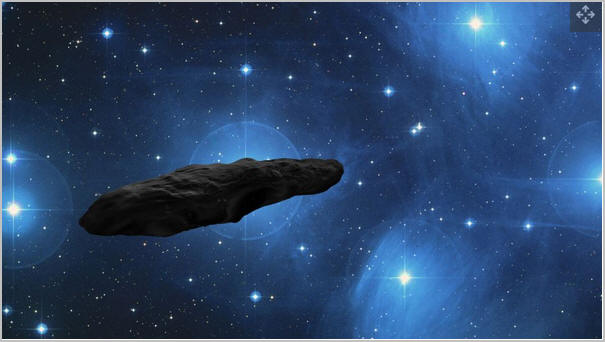 The interloper ‘Oumuamua continues to puzzle astronomers and astrophysicists. (Image credit: Bjorn Bakstad via Getty Images)
.
.
Click the link below for the article:
.
__________________________________________
November 30, 2021
Mohenjo
Business, Food For Thought, Human Interest, Science, Technical
amazon, business, Business News, current-events, Future, Hotels, human-rights, medicine, mental-health, research, Science, Science News, technology, Technology News, travel, vacation

Click the link below the picture
.
La Niña will be joining us for the winter again, according to federal forecasters.
The National Oceanic and Atmospheric Administration’s (NOAA) Climate Prediction Center released its official winter outlook on Thursday and confirmed that La Niña conditions will be in place from December to February.
It’s not a total surprise: NOAA announced earlier this month that La Niña conditions had already developed, with an 87% chance they would remain in place during that three-month period. Now it’s forecasting wetter-than-average conditions across portions of the northern U.S., namely the Pacific Northwest, northern Rockies, Great Lakes, Ohio Valley, and western Alaska.
La Niña (translated from Spanish as “little girl”) is not a storm, but a climate pattern that occurs in the Pacific Ocean every few years and can impact weather around the world.
The U.S. is expected to feel its effects on temperature and precipitation, which could, in turn, have consequences for things such as hurricanes, tornadoes, and droughts.
.
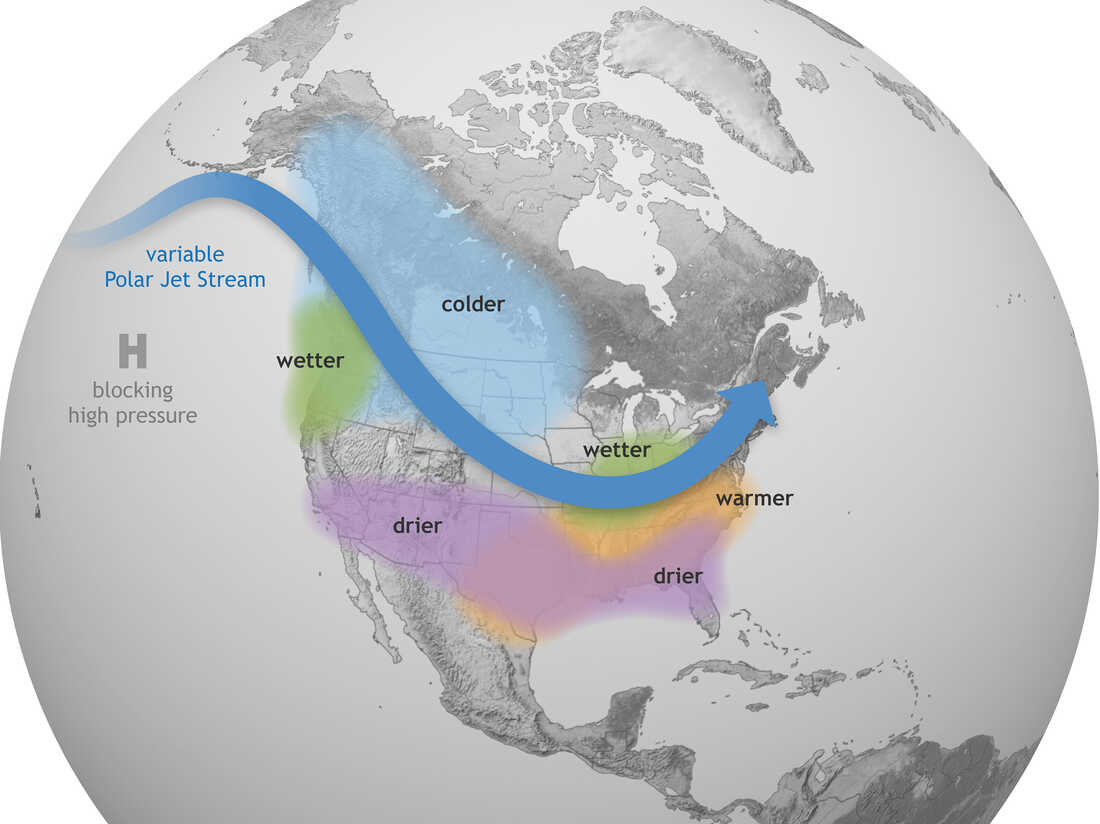
This Climate.gov graphic shows how La Niña generally affects weather conditions in the United States. Forecasters say there’s a nearly 90% chance that La Niña conditions will be in place from December 2021 to February 2022. National Oceanic and Atmospheric Administration
.
.
Click the link below for the article:
.
__________________________________________
November 30, 2021
Mohenjo
Food For Thought, Human Interest, Medical, missed News, Political, Science, Technical
amazon, business, Business News, current-events, Future, Hotels, human-rights, medicine, mental-health, research, Science, Science News, technology, Technology News, travel, vacation
.
News You might have missed!
Use your browser or smartphone back arrow (<-) to return to this table for your next selection.
.
__________________________________________
November 29, 2021
Mohenjo
Business, Food For Thought, Human Interest, Science, Technical
amazon, business, Business News, current-events, Future, Hotels, human-rights, medicine, mental-health, research, Science, Science News, technology, Technology News, travel, vacation

Click the link below the picture
.
As human beings, we can’t really think of ourselves without time. We organize our days around its passing. We define ourselves through the events that have been encoded into our memories. Experiences unfold through a present that passes relentlessly from one moment to the next, and we make plans to achieve our goals with the knowledge that tomorrow will arrive on schedule, as it always does.
This is the phenomenology of time, or what neuroscientists call time consciousness. These aspects, or layers, of our experience of time, have played an important role in informing our intuitions about the nature of physical time. We assume that it has directionality, moving from an unchangeable past to an immersive present to unknown future— and that all of the above unfolds at a uniform rate throughout the cosmos.
But the more scientists have scrutinized the concept of time, the more they’ve come to understand that these common-sense assumptions may not reflect time’s true nature.
Einstein’s Big Idea
The first radical shift in our understanding of time came with the widespread scientific acceptance of Einstein’s theory of general relativity. Up until then, Newtonian time, or absolute time, existed independently of a perceiver, and progressed at a constant rate, everywhere. Relativity changed all of this. By perceiving space and time as an interwoven material, Einstein explained how mass warps this fabric to create gravity. The implications for merging space and time meant that mass not only distorted space; it distorted time, too.
Today, GPS satellites have to account for Earth’s varying distortion of space-time at different locations by adjusting the clocks in satellites and building mathematical corrections into their computer chips. Without this adjusting for relativity, Earth’s GPS systems would fail in about two minutes.
.
 (Credit: GoodIdeas/Shutterstock)
.
.
Click the link below for the article:
.
__________________________________________
November 29, 2021
Mohenjo
Business, Food For Thought, Human Interest, Science, Technical
amazon, business, Business News, current-events, Future, Hotels, human-rights, medicine, mental-health, research, Science, Science News, technology, Technology News, travel, vacation

Click the link below the picture
.
The ancient village of Culham, nestled in a bend of the River Thames west of London, seems an unlikely launching pad for the future. But next year, construction will start here on a gleaming building of glass and steel that could house what many people consider to be an essential technology to meet demand for clean energy in the twenty-first century and beyond.
Long derided as a prospect that is forever 30 years away, nuclear fusion seems finally to be approaching commercial viability. There are now more than 30 private fusion firms globally, according to an October survey by the Fusion Industry Association (FIA) in Washington DC, which represents companies in the sector; the 18 firms that have declared their funding say they have attracted more than US$2.4 billion in total, almost entirely from private investments (see ‘Fusion funding’). Key to these efforts are advances in materials research and computing that are enabling technologies other than the standard designs that national and international agencies have pursued for so long.
.
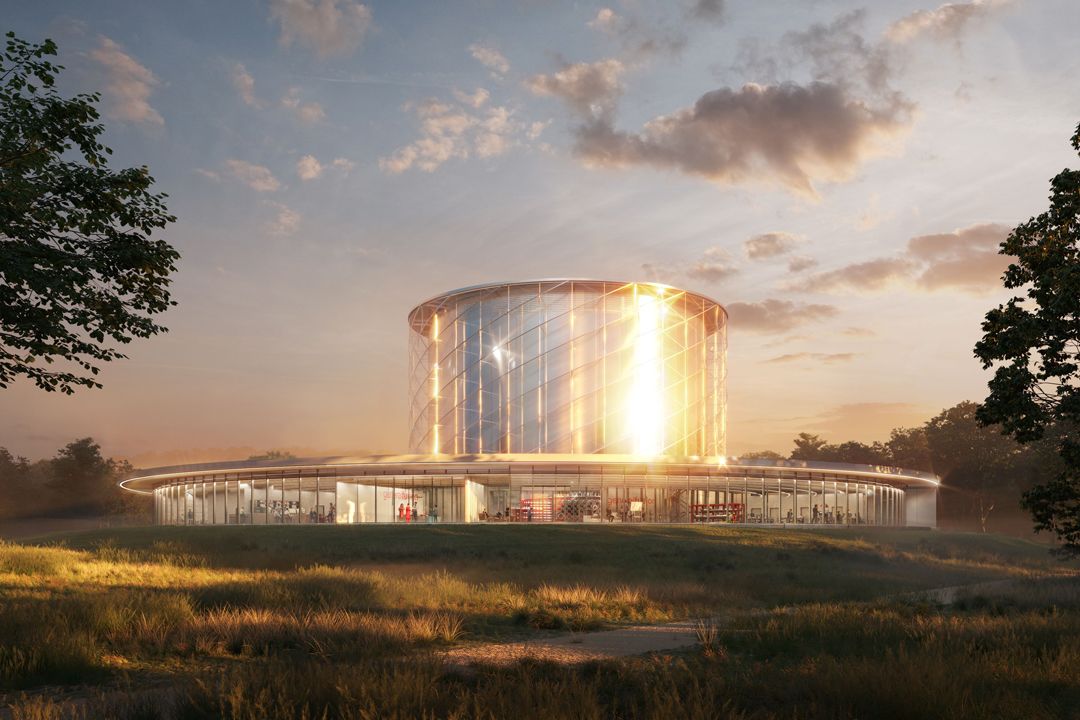 Artist’s impression of General Fusion’s planned plant at Culham, UK. Credit: AL_A for General Fusion. Lead image: The world’s strongest high-temperature superconducting magnet will be used in a 2025 fusion reactor in Massachusetts. Credit: Gretchen Ertl, CFS/MIT-PSFC, 2021
.
.
Click the link below for the article:
.
__________________________________________
November 29, 2021
Mohenjo
Crime, Food For Thought, Human Interest, Medical, missed News, Political, Science, sports, Technical
amazon, business, Business News, current-events, Future, Hotels, human-rights, medicine, mental-health, research, Science, Science News, technology, Technology News, travel, vacation
.
News You might have missed!
Use your browser or smartphone back arrow (<-) to return to this table for your next selection.
.
__________________________________________
November 28, 2021
Mohenjo
Business, Food For Thought, Human Interest, Science, Technical
amazon, business, Business News, current-events, Future, Hotels, human-rights, medicine, mental-health, research, Science, Science News, technology, Technology News, travel, vacation

Click the link below the picture
.
KISANFU, Democratic Republic of Congo — Just up a red dirt road, across an expanse of tall, dew-soaked weeds, bulldozers are hollowing out a yawning new canyon that is central to the world’s urgent race against global warming.
For more than a decade, the vast expanse of untouched land was controlled by an American company. Now a Chinese mining conglomerate has bought it and is racing to retrieve its buried treasure: millions of tons of cobalt.
At 73, Kyahile Mangi has lived here long enough to predict the path ahead. Once the blasting starts, the walls of mud-brick homes will crack. Chemicals will seep into the river where women do laundry and dishes while worrying about hippo attacks. Soon a manager from the mine will announce that everyone needs to be relocated.
“We know our ground is rich,” said Mr. Mangi, a village chief who also knows residents will share little of the mine’s wealth.
.
 Kisanfu is a new cobalt and copper mine being built by a Chinese conglomerate in the Democratic Republic of Congo.
.
.
Click the link below for the article:
.
__________________________________________
November 28, 2021
Mohenjo
Business, Food For Thought, Human Interest, Science, Technical
amazon, business, Business News, current-events, Future, Hotels, human-rights, medicine, mental-health, research, Science, Science News, technology, Technology News, travel, vacation

Click the link below the picture
.
In November 1915, Albert Einstein presented his general theory of relativity to a bewildered Prussian Academy of Sciences in Berlin, the theory that revolutionized our view of the universe.
Einstein’s theory reframed the idea of gravity in a completely novel way, profoundly different from the then accepted theory, created by Isaac Newton in 1686. Newton’s theory worked beautifully describing a host of gravitational phenomena, from the orbits of planets and comets around the sun to the tides and the oblateness of the Earth. (The Earth is an oblate spheroid — that is, slightly flattened at the poles.) Rocket engineers still use Newton’s theory to calculate their paths to reach other worlds in the solar system. The theory only begins to fail when gravitational forces are extremely strong, far from our everyday lives. But its premise, Einstein discovered, albeit an excellent approximation, is profoundly wrong.
.
 Credit: ezstudiophoto / Adobe Stock
.
.
Click the link below for the article:
.
__________________________________________
Older Entries
Newer Entries

