December 4, 2021
Mohenjo
Business, Food For Thought, Human Interest, Science, Technical
amazon, business, Business News, current-events, Future, Hotels, human-rights, medicine, mental-health, research, Science, Science News, technology, Technology News, travel, vacation
Click the link below the picture
.
Newton’s third law tells us that for every action, there’s an equal reaction going the opposite way. It’s been reassuring us for 400 years, explaining why we don’t fall through the floor (the floor pushes up on us too), and why paddling a boat makes it glide through water. When a system is in equilibrium, no energy goes in or out and such reciprocity is the rule. Mathematically, these systems are elegantly described with statistical mechanics, the branch of physics that explains how collections of objects behave. This allows researchers to fully model the conditions that give rise to phase transitions in matter, when one state of matter transforms into another, such as when water freezes.
But many systems exist and persist far from equilibrium. Perhaps the most glaring example is life itself. We’re kept out of equilibrium by our metabolism, which converts matter into energy. A human body that settles into equilibrium is a dead body.
In such systems, Newton’s third law becomes moot. Equal and opposite fall apart. “Imagine two particles,” said Vincenzo Vitelli, a condensed matter theorist at the University of Chicago, “where A interacts with B in a different way than how B interacts with A.” Such nonreciprocal relationships show up in systems like neuron networks and particles in fluids and even, on a larger scale, in social groups. Predators eat prey, for example, but prey doesn’t eat its predators.
.
 By programming a fleet of robots to behave nonreciprocally — blue cars react to red cars differently than red cars react to blue cars — a team of researchers elicited spontaneous phase transitions. Kristen Norman for Quanta Magazine
.
.
Click the link below for the article:
.
__________________________________________
December 4, 2021
Mohenjo
Business, Food For Thought, Human Interest, Science, Technical
amazon, business, Business News, current-events, Future, Hotels, human-rights, medicine, mental-health, research, Science, Science News, technology, Technology News, travel, vacation

Click the link below the picture
.
Within a diamond hauled from deep beneath Earth’s surface, scientists have discovered the first example of a never-before-seen mineral.
Named davemaoite after prominent geophysicist Ho-kwang (Dave) Mao, the mineral is the first example of a high-pressure calcium silicate perovskite (CaSiO3) found on Earth. Another form of CaSiO3, known as wollastonite, is commonly found across the globe, but davemaoite has a crystalline structure that forms only under high pressure and high temperatures in Earth’s mantle, the mainly solid layer of Earth trapped between the outer core and the crust.
Davemaoite has long been expected to be an abundant and geochemically important mineral in Earth’s mantle. But scientists have never found any direct evidence of its existence because it breaks down into other minerals when it moves toward the surface and pressure decreases. However, analysis of a diamond from Botswana, which formed in the mantle around 410 miles (660 kilometers) below Earth’s surface, has revealed a sample of intact davemaoite trapped inside. As a result, the International Mineralogical Association has now confirmed davemaoite as a new mineral.
.
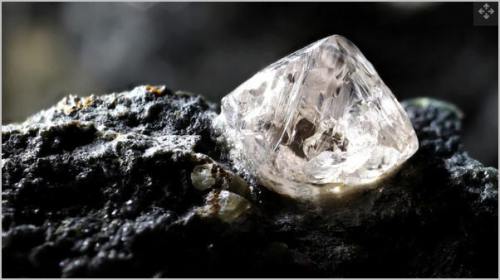 Researchers discovered the mineral davemaoite inside a diamond that was formed in Earth’s mantle. (Image credit: Shutterstock)
.
.
Click the link below for the article:
.
__________________________________________
December 4, 2021
Mohenjo
Crime, Food For Thought, Human Interest, Medical, missed News, Political, Science, Technical
amazon, business, Business News, current-events, Future, Hotels, human-rights, medicine, mental-health, research, Science, Science News, technology, Technology News, travel, vacation

.
News You might have missed!
Use your browser or smartphone back arrow (<-) to return to this table for your next selection.
.
__________________________________________
December 3, 2021
Mohenjo
Business, Food For Thought, Human Interest, Science, Technical
amazon, business, Business News, current-events, Future, Hotels, human-rights, medicine, mental-health, research, Science, Science News, technology, Technology News, travel, vacation

Click the link below the picture
.
The biggest mystery concerning the history of our universe is what happened before the big bang. Where did our universe come from? Nearly a century ago, Albert Einstein searched for steady-state alternatives to the big bang model because a beginning in time was not philosophically satisfying in his mind.
Now there are a variety of conjectures in the scientific literature for our cosmic origins, including the ideas that our universe emerged from a vacuum fluctuation, or that it is cyclic with repeated periods of contraction and expansion, or that it was selected by the anthropic principle out of the string theory landscape of the multiverse—where, as the MIT cosmologist Alan Guth says “everything that can happen will happen … an infinite number of times,” or that it emerged out of the collapse of matter in the interior of a black hole.
A less explored possibility is that our universe was created in the laboratory of an advanced technological civilization. Since our universe has a flat geometry with a zero net energy, an advanced civilization could have developed a technology that created a baby universe out of nothing through quantum tunneling.
.
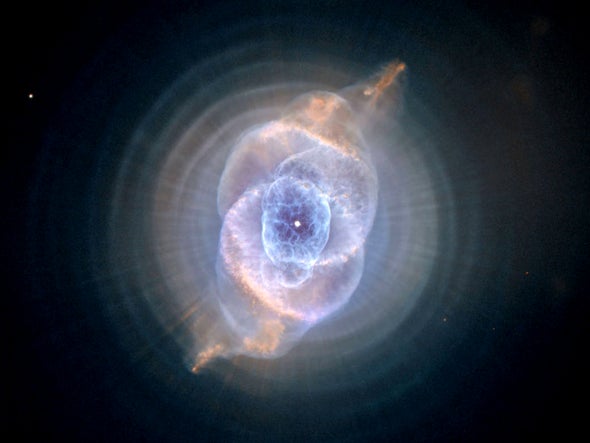 Credit: NASA, ESA, HEIC, and The Hubble Heritage Team (STScI/AURA)
.
.
Click the link below for the article:
.
__________________________________________
December 3, 2021
Mohenjo
Business, Food For Thought, Human Interest, Science, Technical
amazon, business, Business News, current-events, Future, Hotels, human-rights, medicine, mental-health, research, Science, Science News, technology, Technology News, travel, vacation

Click the link below the picture
.
It’s easy to be brand loyal to the moon. We’ve only got the one, after all, unlike Jupiter and Saturn, where you’d have dozens to choose from. Here, it’s luna or nada. Or not. The fact is, there’s another sorta, kinda moon in a sorta, kinda orbit around Earth that was discovered only in 2016. And according to a new study in Nature, we may at last know how it was formed.
The quasi-moon—named Kamo’oalewa, after a Hawaiian word that refers to a moving celestial object—is not much to speak of, measuring less than 50 m (164 ft) across. It circles the Earth in a repeating corkscrew-like trajectory that brings it no closer than 40 to 100 times the 384,000 km (239,000 mi.) distance of our more familiar moon. Its odd flight path is caused by the competing gravitational pulls of the Earth and the sun, which continually bend and torque the moonlet’s motions, preventing it from achieving a more conventional orbit.
.

.
.
Click the link below for the article:
.
__________________________________________
December 3, 2021
Mohenjo
Crime, Food For Thought, Human Interest, Medical, missed News, Political, Science, Technical
amazon, business, Business News, current-events, Future, Hotels, human-rights, medicine, mental-health, research, Science, Science News, technology, Technology News, travel, vacation
.
News You might have missed!
Use your browser or smartphone back arrow (<-) to return to this table for your next selection.
.
__________________________________________
December 2, 2021
Mohenjo
Business, Food For Thought, Human Interest, Science, Technical
amazon, business, Business News, current-events, Future, Hotels, human-rights, medicine, mental-health, research, Science, Science News, technology, Technology News, travel, vacation

Click the link below the picture
.
Where did all this come from? In every direction we care to observe, we find stars, galaxies, clouds of gas and dust, tenuous plasmas, and radiation spanning the gamut of wavelengths: from radio to infrared to visible light to gamma rays. No matter where we look or how we look at the universe, it’s full of matter and energy absolutely everywhere and at all times. And yet, it’s only natural to assume that it all came from somewhere. If you want to know the answer to the biggest question of all — the question of our cosmic origins — you have to pose the question to the universe itself, and listen to what it tells you to find out the answer.
Today, the universe as we see it is expanding, rarifying (getting less dense), and cooling. Although it’s tempting to simply extrapolate forward in time, when things will be even larger, less dense, and cooler, the laws of physics allow us to extrapolate backwards just as easily. Long ago, the universe was smaller, denser, and hotter. How far back can we take this extrapolation? Mathematically, it’s tempting to go as far as possible: all the way back to infinitesimal sizes and infinite densities and temperatures, or what we know as a singularity. This idea, of a singular beginning to space, time, and the universe, was long known as the Big Bang.
.
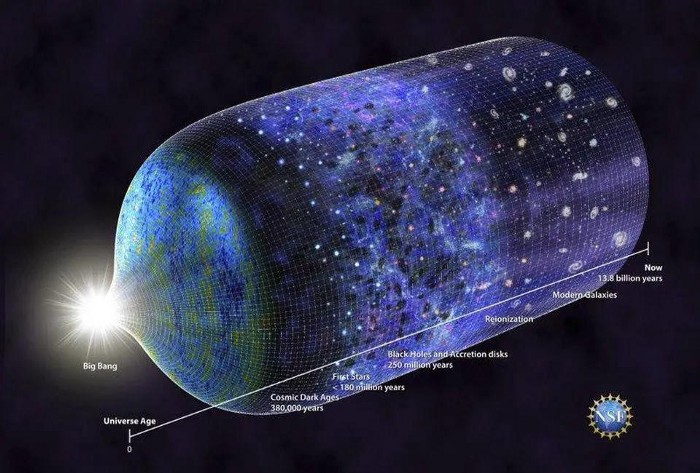
The modern cosmic picture of our universe’s history begins not with a singularity that we identify with the Big Bang, but rather with a period of cosmic inflation that stretches the universe to enormous scales, with uniform properties and spatial flatness. The end of inflation signifies the onset of the hot Big Bang. (Credit: Nicole Rager Fuller/National Science Foundation)
.
.
Click the link below for the article:
.
__________________________________________
December 2, 2021
Mohenjo
Business, Food For Thought, Human Interest, Science, Technical
amazon, business, Business News, current-events, Future, Hotels, human-rights, medicine, mental-health, research, Science, Science News, technology, Technology News, travel, vacation
Click the link below the picture
.
Our planet, along with the rest of the solar system and some nearby stars, may be trapped inside a giant magnetic tunnel — and astronomers don’t know why.
A tube of vast magnetized tendrils, 1,000 light-years long and invisible to the naked eye, may encircle the solar system, astronomers propose in a new paper. Jennifer West, an astronomer at the Dunlap Institute for Astronomy and Astrophysics at the University of Toronto, made the proposal after an investigation into the North Polar Spur and the Fan Region — two of the brightest radio-emitting gas structures in our galactic neighborhood — revealed that the two structures might be linked even though they are located on different sides of the sky.
“If we were to look up in the sky, we would see this tunnel-like structure in just about every direction we looked — that is, if we had eyes that could see radio light,” West said in a statement.
.
 The proposed giant tunnel is hundred of light-years wide, making it big enough to encompass Earth, our solar system, and even nearby stars. (Image credit: Eduard Muzhevskyi via Getty Images)
.
.
Click the link below for the article:
.
__________________________________________
December 2, 2021
Mohenjo
Crime, Food For Thought, Human Interest, Medical, missed News, Political, Science, Technical
amazon, business, Business News, current-events, Future, Hotels, human-rights, medicine, mental-health, research, Science, Science News, technology, Technology News, travel, vacation
.
News You might have missed!
Use your browser or smartphone back arrow (<-) to return to this table for your next selection.
.
__________________________________________
December 1, 2021
Mohenjo
Business, Food For Thought, Human Interest, Science, Technical
amazon, business, Business News, current-events, Future, Hotels, human-rights, medicine, mental-health, research, Science, Science News, technology, Technology News, travel, vacation

Click the link below the picture
.
A short update on the projected launch date of the $10 billion James Webb Space Telescope came out of NASA on Monday, and it wasn’t exactly a heart-warming missive.
The large, space-based telescope’s “no earlier than” launch date will slip from December 18 to at least December 22 after an “incident” occurred during processing operations at the launch site in Kourou, French Guiana. That is where the telescope will launch on an Ariane 5 rocket provided by the European Space Agency.
“Technicians were preparing to attach Webb to the launch vehicle adapter, which is used to integrate the observatory with the upper stage of the Ariane 5 rocket,” NASA said in a blog post. “A sudden, unplanned release of a clamp band—which secures Webb to the launch vehicle adapter—caused a vibration throughout the observatory.”
.
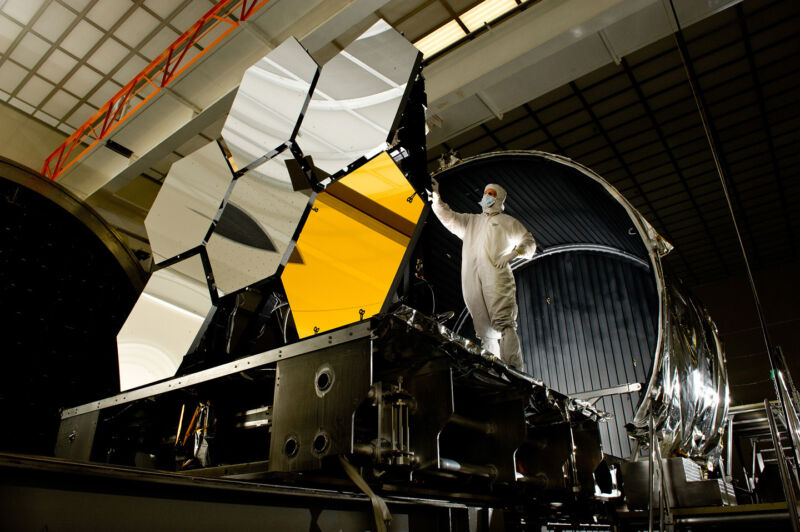 Technician standing near some of the segments of the James Webb Space Telescope primary mirror.
.
.
Click the link below for the article:
.
__________________________________________
Older Entries
Newer Entries

