York is a cathedral city and unitary authority area, at the confluence of the rivers Ouse and Foss, in England. The city has long-standing buildings and structures, such as a minster, castle, and ancient city walls.
It is the head city of historic Yorkshire and was a county corporate, outside of the county’s council and the ridings. City of York Council is a unitary authority responsible for providing all local services and facilities throughout the city and rural areas around the outside of the old city boundaries. The city is in ceremonial North Yorkshire and a non-constituent member of the Leeds city region.
The city was founded by the Romans as Eboracum in 71 AD. It became the capital of the Roman province of Britannia Inferior, and later of the kingdoms of Deira, Northumbria, and Jórvík. In the Middle Ages, York grew as a major wool trading center and became the capital of the northern ecclesiastical province of the Church of England, a role it has retained. In the 19th century, York became a major hub of the railway network and a confectionery manufacturing center, a status it maintained well into the 20th century. During the Second World War, York was bombed as part of the Baedeker Blitz. Although less affected by bombing than other northern cities, several historic buildings were gutted and restoration efforts continued into the 1960s.
The city had a population of 153,717 in the 2011 census and is in the Yorkshire and the Humber region. The district borough, governed from the city, had a mid-2019 est. population of 210,618, the 87th most populous district in England. Wikipedia
As the car with the blacked-out windows came to a halt in a sidestreet near Tübingen’s botanical gardens, keen-eyed passersby may have noticed something unusual about its number plate. In Germany, the first few letters usually denote the municipality where a vehicle is registered. The letter Y, however, is reserved for members of the armed forces.
Military men are a rare, not to say unwelcome, sight in Tübingen. A picturesque 15th-century university town that brought forth great German minds including the philosopher Hegel and the poet Friedrich Hölderlin, it is also a modern stronghold of the German Green party, thanks to its left-leaning academic population. In 2018, there was growing resistance on campus against plans to establish Europe’s leading artificial intelligence research hub in the surrounding area: the involvement of arms manufacturers in Tübingen’s “cyber valley”, argued students who occupied a lecture hall that year, brought shame to the university’s intellectual tradition.
Yet the two high-ranking officials in field-grey Bundeswehr uniforms who stepped out of the Y-plated vehicle on 1 February 2018 had traveled into hostile territory to shake hands on a collaboration with academia, the like of which the world had never seen before.
The name of the initiative was Project Cassandra: for the next two years, university researchers would use their expertise to help the German defense ministry predict the future.
.
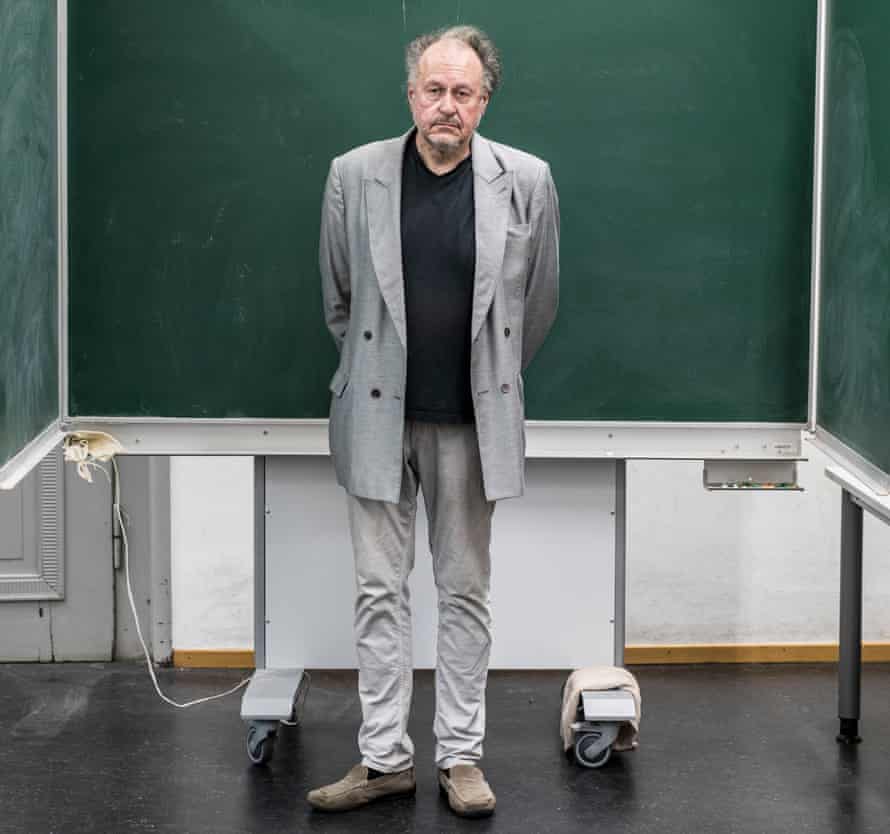
Jürgen Wertheimer, who set up Project Cassandra: ‘Writers operate on a plane that is both objective and subjective.’ Photograph: Dominik Gigler/The Guardian
Like many people during COVID, I reevaluated what I really want my quality of life to be. I’ve lived in big cities making a high salary, but I’m single and have been intimidated by homeownership only having one income source (my job).
I’m 52, a renter, and have around $230,000 in retirement, brokerage, and savings accounts. I pared back my lifestyle, and I’m now saving $5,000 a month to play a bit of catch-up. I’ve been advised to consider real estate as part of my investment strategy. I have little debt beyond a car note ($300 a month) and a 750 credit score. Should I buy a home or invest in a property like a condo near a resort?
I am yearning for a more stable lifestyle as I age, and my family all own homes, so they are pressuring me to buy something near them in a lower-cost market. With remote working, this is now a feasible option. I would look at a 15- or a 20-year mortgage either way given my age.
Sincerely,
Too old to buy?
.
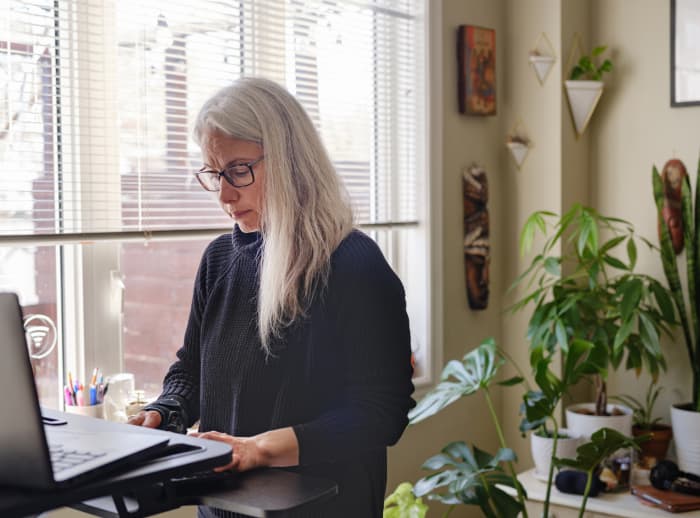
Buying a home later in life involves different calculations. Getty Images
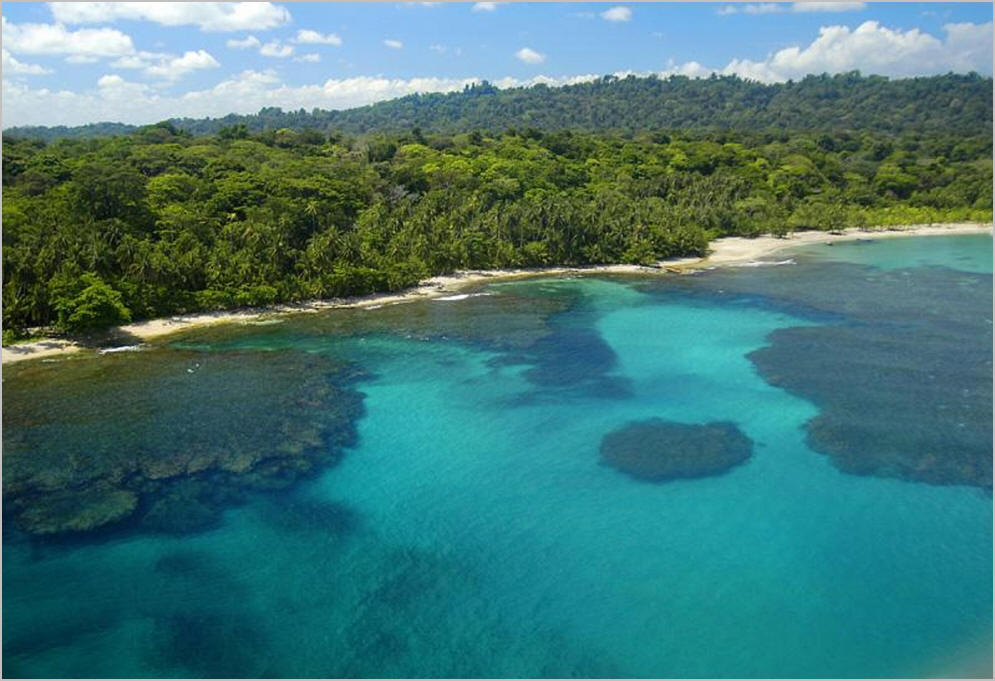
Located in Costa Rica’s southeastern Talmanca region is the large Gandoca-Manzanillo Refuge, a collection of rainforest and wetland habitat complete with a coral reef.At 23,348 total acres (9,450 ha), this vast refuge begins south of Punta Uva-3 miles south of Puerto Viejo-until it runs into the Sixaola River at the Panamanian border. Besides Cahuita, this park is the only other place in the country with a coral reef.
The giant tech companies with their power-hungry, football-field-size data centers are not the environmental villains they are sometimes portrayed to be on social media and elsewhere.
Shutting off your Zoom camera or throttling your Netflix service to lower-definition viewing does not yield a big saving in energy use, contrary to what some people have claimed.
Even the predicted environmental impact of Bitcoin, which does require lots of computing firepower, has been considerably exaggerated by some researchers.
Those are the conclusions of a new analysis by Jonathan Koomey and Eric Masanet, two leading scientists in the field of technology, energy use and the environment. Both are former researchers at the Lawrence Berkeley National Laboratory. Mr. Koomey is now an independent analyst, and Mr. Masanet is a professor at the University of California, Santa Barbara. (Mr. Masanet receives research funding from Amazon.)
.
An analysis published on Thursday suggests technology is not an environmental villain. One of the authors is Eric Masanet, a former researcher at the Lawrence Berkeley National Laboratory.Credit…Erica Urech for The New York Times
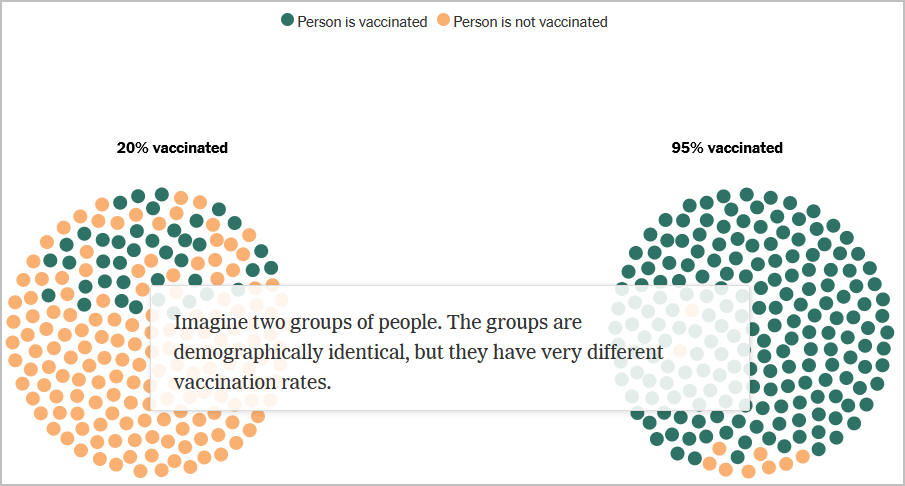
The Delta variant, the highly transmissible version of the coronavirus that now makes up almost all new cases in the United States, continues to drive a surge throughout the country, with average new cases topping 100,000 for the past week.
Some of those infections have been reported in fully vaccinated people in so-called breakthrough cases. As the sheer number of those vaccinated increases, so will the raw number of breakthrough cases, especially with the Delta variant circulating. But experts say breakthrough cases do not mean the vaccine is ineffective.
The Delta variant’s dominance is new enough that authoritative data does not yet exist, but the available data shows that unvaccinated people are still much more likely to contract Covid-19 and far more likely to experience symptomatic disease, while vaccines drastically reduce the risk of hospitalization and death from the virus.
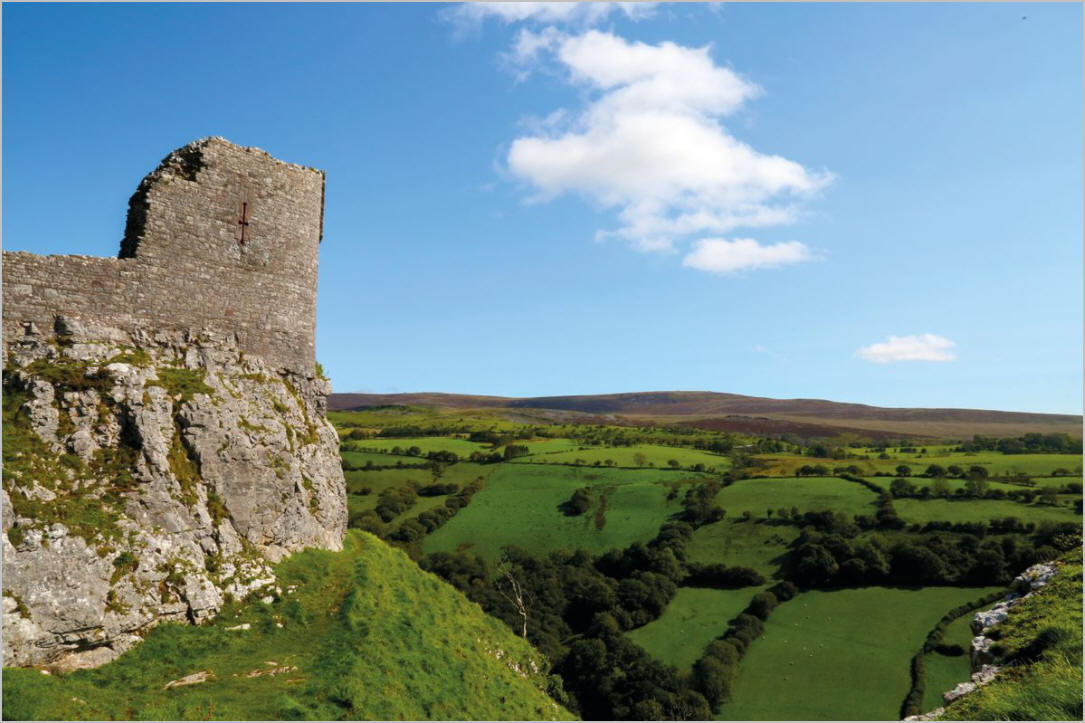
The Brecon Beacons National Park is one of three national parks in Wales and is centered on the Brecon Beacons range of hills in southern Wales. It includes the Black Mountain in the west, Fforest Fawr (Great Forest) and the Brecon Beacons in the center, and the Black Mountains in the east.
The Brecon Beacons National Park was established in 1957, the third of the three Welsh parks after Snowdonia in 1951, and the Pembrokeshire Coast in 1952. It stretches from Llandeilo in the west to Hay-on-Wye in the northeast and Pontypool in the southeast, covering 519 square miles (1,340 km2) and encompassing four main regions – the Black Mountain in the west, reaching 802 meters (2631 feet) at Fan Brycheiniog, Fforest Fawr and the Brecon Beacons in the center, including the highest summit in the park and in South Wales at Pen y Fan 886 meters (2,907 feet) and the confusingly named Black Mountains in the east, where the highest point is Waun Fach 811 meters (2,661 feet). The western half gained European and global status in 2005 as Fforest Fawr Geopark. This includes the Black Mountain, the historic extent of Fforest Fawr, and much of the Brecon Beacons and surrounding lowlands.
The Black Mountains in the east are clearly separated from the central Beacons by the Usk valley between Brecon and Abergavenny. The other three regions form a continuous massif of high ground above 300 meters (1000′), and the divisions are less clear; the A470 road forms the approximate boundary between the central Beacons and Fforest Fawr, while a minor road from Sennybridge to Ystradgynlais divides Fforest Fawr from the Black Mountain range to the west. Wikipedia
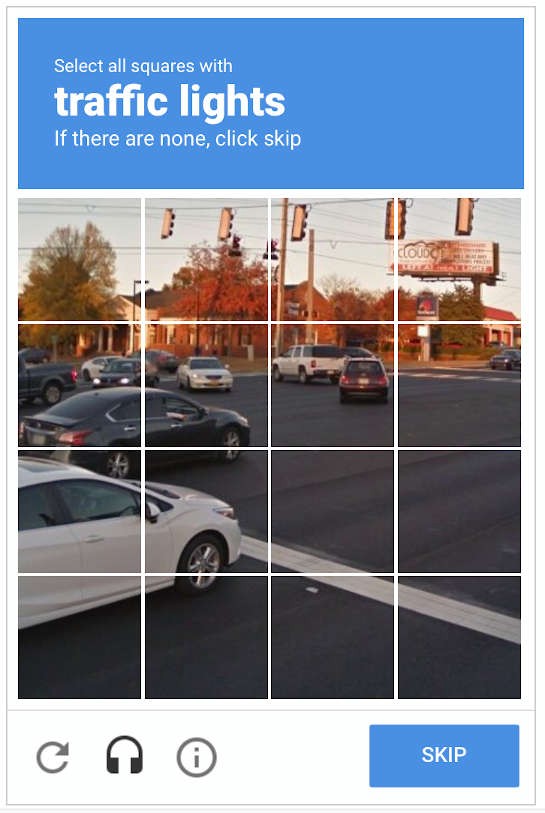
Part of it is the sheer hassle of repeatedly identifying objects — traffic lights, staircases, palm trees, and buses — just so I can finish a web search. I also don’t like being forced to donate free labor to AI companies to help train their visual-recognition systems.
But a while ago, while numbly clicking on grainy images of fire hydrants, I was struck by another reason:
The images are deeply, overwhelmingly depressing.
CAPTCHA images are never joyful vistas of human activity, full of Whitmanesque vigor. No, they’re blurry, anonymous landscapes that possess positively Soviet anomie.
Even iPhone users with nothing to hide could be forgiven for being a little creeped out that Apple will scan their photos and see if they match existing databases of known illegal pornographic images. Privacy experts called the idea a potential back door for governments to request or demand scans for other images or files. Some of Apple’s own employees are reportedly pushing back on the idea.
It’s a good indication that things are headed in the wrong direction when your company’s anti-child-pornography initiative gets panned.
A major reason for the failure of Apple’s defense is that the photo-scanning program confirms a fear many users already harbor: Personal data, even the most sensitive, is effectively out of users’ control, accessible at the flip of a switch.
Apple says, relentlessly, that privacy is the central feature of its iPhones. But as the photo scanning demonstrates, that’s true only until the company changes its mind about its policies.
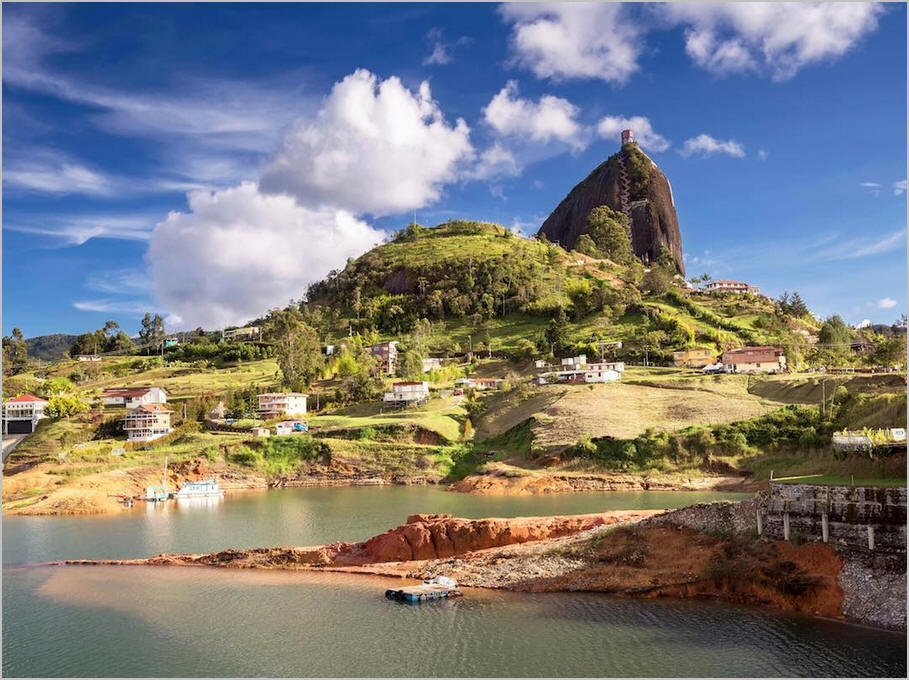
Colombia, officially the Republic of Colombia, is a country in South America. It is bounded on the north by the Caribbean Sea, the northwest by Panama, the south by Ecuador and Peru, the east by Venezuela, the southeast by Brazil, and the west by the Pacific Ocean. Colombia is composed of 32 departments and the Capital District of Bogotá, the country’s largest city. It covers an area of 1,141,748 square kilometers (440,831 sq mi), with a population of 50 million. Colombia’s rich cultural heritage reflects influences by various Amerindian civilizations, European settlement, African slaves, and immigration from Europe and the Middle East. Spanish is the nation’s official language, besides which over 70 languages are spoken.
Colombia has been inhabited by various indigenous peoples since at least 12,000 BCE, including the Muisca, Quimbaya, and the Tairona. The Spanish landed first in La Guajira in 1499 and by the mid-16th century colonized parts of the region, establishing the New Kingdom of Granada, with Santafé de Bogotá as its capital. Independence from the Spanish Empire was achieved in 1810, with what is now Colombia emerging as the United Provinces of New Granada. The new nation experimented with federalism as the Granadine Confederation (1858), and then the United States of Colombia (1863), before the Republic of Colombia was finally declared in 1886. Panama seceded in 1903, leading to Colombia’s present borders. Beginning in the 1960s, the country has suffered from an asymmetric low-intensity armed conflict and political violence, both of which escalated in the 1990s. Since 2005, there has been significant improvement in security, stability, and rule of law, as well as unprecedented economic growth and development.
In the world, human beings are facing various problems. People who are full of greed, anger, and ignorance are seen to be fighting with each other in words and deeds. As the fighting continues, various problems such as civil wars, wars of aggression, and wars of aggression are occurring. As world peace is being destroyed, humans are facing unbearable problems. Innocent children and women are not getting the rights they deserve and deserve. I can't think of one thing every time. What is it? The United Nations. If we look at the responsibilities and duties of the United Nations, I think it is not suitable for solving the problems that are happening in the world today. In fact, the United Nations and the World Security Council, such an organization must rule the world, must be able to give orders, and must have various ways to obey orders. There must be no organization that can influence more than that organization. There should be experts from each country. They can even dominate the superpowers like the US, China, and Britain. Only then will global peace be achieved quickly. Now, if a country with power develops more militarily, economically, or socially than its own country, then powerful countries will jealously seek out enemies and wage war. Or they will attack with fighter jets. In this, innocent people are losing their lives. No one understands the value of a life. You should think about how to achieve global peace by controlling these. If the US continues to be the permanent president of the UN, world peace will never be achieved. If you think carefully, no one sees that they are working for the common good, but for their own benefit, for the benefit of their own country. The permanent president of the UN and the Security Council has rejected this, As a young Rohingya, I have come to realize that only by electing the president and secretary from among the countries in the world through a secret ballot system and governing the world fairly can we achieve global peace. The United Nations and the Security Council are organizations in which any country must govern, give orders, and make them obey their orders. For example, only when a defendant is tried in court can we hold the leaders of the countries in check and control them, can we achieve global peace smoothly. Otherwise, it will not be easy for powerful countries to use various excuses to end this war every year, every year, for the benefit of themselves and their countries. No country's leaders pay any attention to the words of the United Nations and the Security Council. If we look at it in practice, look at the Rohingya issue. Myanmar is a small country. Even that country has been under siege for 8 years. What action can be taken? Why is the UN and the Security Council Powerless? Without such Power, how can the organization bring about global peace? Everyone should think about it. Whether there is a veto or a strong one, all countries in the world can only achieve global peace if they are subject to the UN and the Security Council. Seek peace in the quiet embrace of nature. Peace is an indispensable need of the human race. It is not as if one person can kill another person, and it is as if one country can attack another country, but instead of trying to build peace, we must try to destroy the peace now, and the world is getting hotter and is on the verge of collapse. I especially appeal to all the world experts to urgently try to bring about peace in all parts of the world. Mr, Noor Muhamed Arkhan Rohingya Youth Myanmar
Film and Writing Festival for Comedy. Showcasing best of comedy short films at the FEEDBACK Film Festival. Plus, showcasing best of comedy novels, short stories, poems, screenplays (TV, short, feature) at the festival performed by professional actors.

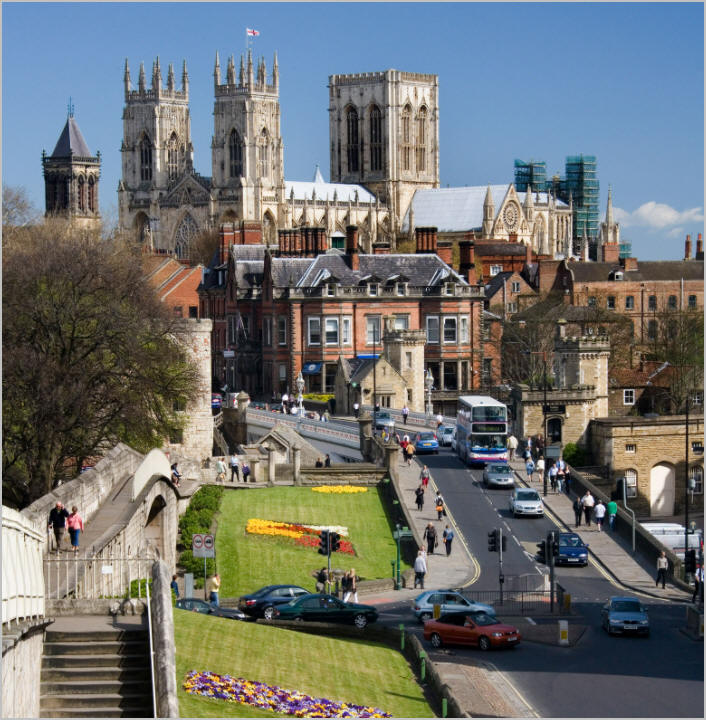 An image from York, UK




 .
.