October 31, 2021
Mohenjo
Business, Food For Thought, Human Interest, Science, Technical
amazon, business, Business News, current-events, Future, Hotels, human-rights, medicine, mental-health, research, Science, Science News, technology, Technology News, travel, vacation

Click the link below the picture
.
In the early afternoon of September 12, 1915, a British vessel set off from the western coast of England and freighted up the Irish Sea toward Scotland. It was a warm day, but most of the men aboard, confined to an airless chamber below deck, longed only to escape the sickening quarters. The passage was short: After traveling 70 miles, the SS Connaught docked at the Douglas breakwater on the Isle of Man. Immediately, the British guards overseeing the ship lowered a ramp and began shouting commands. Wearily, the men disembarked.
The scene was chaotic. “There was no law or order whatsoever,” a reporter for the Peel City Guardian wrote. Within minutes, men from the ship were confused with locals milling about the harbor, most of whom were Manx people native to the isle. Eventually, separated from the crowd, they marched along the South Quay and boarded a steam-powered train that weaved sluggishly into the heart of the isle. As the tin-gray sky turned starless black, the train stopped at St. John’s station. Another march followed, this time under the watch of the King’s Liverpool Regiment. For hours, they trudged through soil that sunk like clay, over streams, through cattle gates. In the distance, hundreds of bright lights flickered, a site rare in the customary blackness of wartime. “Almost like Paris,” one of the men thought.
.

For Joseph Pilates, confinement paradoxically offered a kind of liberation. Illustrations by Julie Benbassat
.
.
Click the link below for the article:
.
__________________________________________
October 31, 2021
Mohenjo
Business, Food For Thought, Human Interest, Science, Technical
amazon, business, Business News, current-events, Future, Hotels, human-rights, medicine, mental-health, research, Science, Science News, technology, Technology News, travel, vacation

Click the link below the picture
.
No matter how many years you’ve worked, starting a new job is often nerve-racking. There are so many unknowns to figure out, and one of the biggest question marks is your new boss. How can you set your relationship up for success?
One of the biggest things I learned in my coaching career is that helping people manage their bosses is arguably as important as helping them to manage themselves. This often means relearning what it means to adapt to an organization, as everything that may have made you effective with your previous manager may not necessarily help you with your new one. For example, I once went from working for a very sociable, hedonistic, and assertive boss to working for a very quiet, cautious, and serious boss — my personality stayed the same, but I was forced to learn new habits, adjust my behaviors, and relearn how to adapt.
.

.
.
Click the link below for the article:
.
__________________________________________
October 30, 2021
Mohenjo
Business, Enthralling, Human Interest, Photographs
amazon, business, Business News, current-events, Future, Hotels, human-rights, medicine, mental-health, research, Science, Science News, technology, Technology News, travel, vacation

Click the link below the picture
.
San Francisco Bay is a shallow estuary in the U.S. state of California. It is surrounded by a contiguous region known as the San Francisco Bay Area (often simply “the Bay Area”) and is dominated by the large cities of San Francisco, San Jose, and Oakland.
San Francisco Bay drains water from approximately 40 percent of California. Water from the Sacramento and San Joaquin rivers, and from the Sierra Nevada mountains, flow into Suisun Bay, which then travels through the Carquinez Strait to meet with the Napa River at the entrance to San Pablo Bay, which connects at its south end to San Francisco Bay. It then connects to the Pacific Ocean via the Golden Gate strait. However, this entire group of interconnected bays is often called the San Francisco Bay. The bay was designated a Ramsar Wetland of International Importance on February 2, 2017.
The bay covers somewhere between 400 and 1,600 square miles (1,000–4,000 km2), depending on which sub-bays (such as San Pablo Bay), estuaries, wetlands, and so on are included in the measurement. The main part of the bay measures three to twelve miles (5–19 km) wide east-to-west and somewhere between 48 miles (77 km)1 and 60 miles (97 km)2 north-to-south. It is the largest Pacific estuary in the Americas.
The bay was navigable as far south as San Jose until the 1850s when hydraulic mining released massive amounts of sediment from the rivers that settled in those parts of the bay that had little or no current. Later, wetlands and inlets were deliberately filled in, reducing the Bay’s size since the mid-19th century by as much as one-third. Recently, large areas of wetlands have been restored, further confusing the issue of the Bay’s size. Despite its value as a waterway and harbor, many thousands of acres of marshy wetlands at the edges of the bay were, for many years, considered wasted space. As a result, soil excavated for building projects or dredged from channels was often dumped onto the wetlands and other parts of the bay as landfill. Wikipedia
.
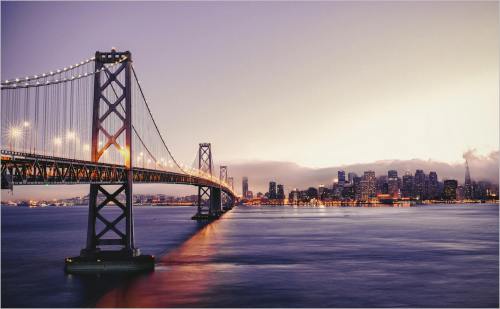 An image from Sanfrancisco Bay
.
.
Click the link below for images:
.
__________________________________________
October 30, 2021
Mohenjo
Business, Food For Thought, Human Interest, Science, Technical
amazon, business, Business News, current-events, Future, Hotels, human-rights, medicine, mental-health, research, Science, Science News, technology, Technology News, travel, vacation

Click the link below the picture
.
Goodbye. Farewell. Adios. Sayonara. Workers have been giving their bosses an earful of such words as of late. Last week, the U.S. Bureau of Labor Statistics announced that 4.3 million Americans, or 2.9% of the entire workforce, quit their jobs in August. That was a record-breaking month, piggybacking on previous record months. “The Great Resignation” is real, and it can be seen across virtually all industries.
It’s common to see a surge in quitting when the job market is tight and there’s a cornucopia of open positions. But what’s happening now is unlike anything we’ve seen before. Economists and pollsters are still investigating what’s going on. Are generous government benefits encouraging people to quit? Maybe, but some evidence suggests not. Are people angling for a raise after decades of stagnant pay? Probably, yeah. The family pressures imposed by closed schools, the closing and reopening of businesses, the reshuffling of the population to different locations and industries, and the fear of the virus in face-to-face settings have all also almost certainly played a role. But the historic rise in quitting also seems to be about more than all of this.
.
Mohamed Hassan/Pixabay
.
.
Click the link below for the article:
.
__________________________________________
October 30, 2021
Mohenjo
Arts, Business, Crime, Food For Thought, Human Interest, Technical
amazon, business, Business News, current-events, Future, Hotels, human-rights, medicine, mental-health, research, Science, Science News, technology, Technology News, travel, vacation
Some content on this page was disabled on April 15, 2025 as a result of a DMCA takedown notice from Guardian Media Group. You can learn more about the DMCA here:
https://wordpress.com/support/copyright-and-the-dmca/
October 29, 2021
Mohenjo
Business, Enthralling, Human Interest, Photographs
amazon, business, Business News, current-events, Future, Hotels, human-rights, medicine, mental-health, research, Science, Science News, technology, Technology News, travel, vacation
Click the link below the picture
.
Eastbourne is a town and seaside resort in the non-metropolitan county of East Sussex on the south coast of England, 19 miles (31 km) east of Brighton and 54 miles (87 km) south of London. Eastbourne is immediately to the east of Beachy Head, the highest chalk sea cliff in Great Britain and part of the larger Eastbourne Downland Estate.
The seafront consists largely of Victorian hotels, a pier, a state-of-the-art theatre, a contemporary art gallery, and a Napoleonic era fort and military museum. Eastbourne was developed at the direction of the Duke of Devonshire from 1859 from four separate hamlets. Eastbourne boasts a newly-modernized town center, consisting of a large shopping center, ‘The Beacon’, and an extensive high street. It has a growing population, a broad economic base, and is home to companies in a wide range of industries.
Though Eastbourne is a relatively new town, there is evidence of human occupation in the area from the Stone Age. The town grew as a fashionable tourist resort largely thanks to prominent landowner, William Cavendish, later to become the Duke of Devonshire. Cavendish appointed architect Henry Currey to design a street plan for the town, but not before sending him to Europe to draw inspiration. The resulting mix of architecture is typically Victorian and remains a key feature of Eastbourne.
As a seaside resort, Eastbourne derives a large and increasing income from tourism, with revenue from traditional seaside attractions augmented by conferences, public events, and cultural sightseeing. The other main industries in Eastbourne include trade and retail, healthcare, education, construction, manufacturing, professional scientific, and the technical sector.
Eastbourne’s population is growing; between 2001 and 2011 it increased from 89,800 to 99,412. The 2011 census shows that the average age of residents has decreased as the town has attracted students, families, and those commuting to London and Brighton. In June 2019, the population of Eastbourne was estimated to be 104,042. Wikipedia
.
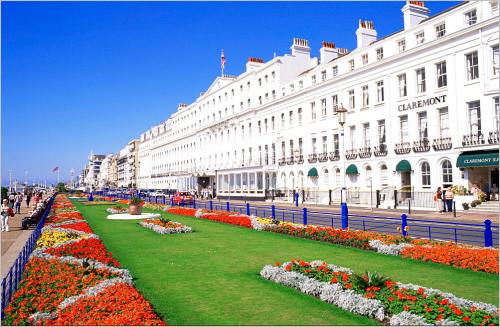 An image from Eastbourne, UK
.
.
Click the link below for images:
.
__________________________________________
October 29, 2021
Mohenjo
Arts, Business, Food For Thought, Human Interest, Technical
amazon, business, Business News, current-events, Future, Hotels, human-rights, medicine, mental-health, research, Science, Science News, technology, Technology News, travel, vacation
Click the link below the picture
.
It’s time to find something good to watch.
Maybe you didn’t have exactly the hot vaccinated summer we were all hoping for. While we can’t fix the big stuff, our critics do have good news about staying entertained — and challenged, and invigorated, and curious.
We’re back with a guide of what to watch this fall. Because the lines between movies and television are being rapidly blurred, we’ve included both. Plus, everything we’re recommending can be seen from the comfort of your couch. You can search by release date, genre, and, most importantly, wherein the heck you’re supposed to find it.
It’s not a complete listing by any means though, so take a look and then head to the Pop Culture Happy Hour Facebook page to let us know what you’ll be watching.
.

Clockwise from top left: Insecure, Impeachment: American Crime Story, Everybody’s Talking About Jamie, The Wonder Years, The Premise, and Star Wars: Visions. WarnerMedia, FX, Amazon Studios, ABC, FX, Disney+
.
.
Click the link below for article:
.
__________________________________________
October 29, 2021
Mohenjo
Arts, Business, Food For Thought, Human Interest, Technical
amazon, business, Business News, current-events, Future, Hotels, human-rights, medicine, mental-health, research, Science, Science News, technology, Technology News, travel, vacation
Click the link below the picture
.
Colette Maze welcomes me warmly into her apartment on the 14th floor of a building overlooking the Seine River. From her flowered balcony, she has a view of the Eiffel Tower. She offers me a whiskey or a cognac — along with a hearty laugh as it’s 10:30 in the morning.
It’s that humor, a sense of optimism, and her beloved piano that have buttressed and comforted this centenarian through an often difficult life. Maze has just released her sixth album at the age of 107.
While she lives alone, on this day her 71-year-old son, Fabrice, has joined us. Maze sits down to play her Steinway baby grand — one of two pianos she owns — with her gray tabby cat, Tigrou, stretched out on the carpet near her feet.
Across the room is the Pleyel piano she received on her 18th birthday. Maze began playing at the age of 5. Her grandmother played piano and her mother the violin. She remembers concerts at their grand Paris apartment when she was a child.
But Maze, born on June 16, 1914, says her mother was severe and unloving. So she turned to music for the affection she lacked at home.
.
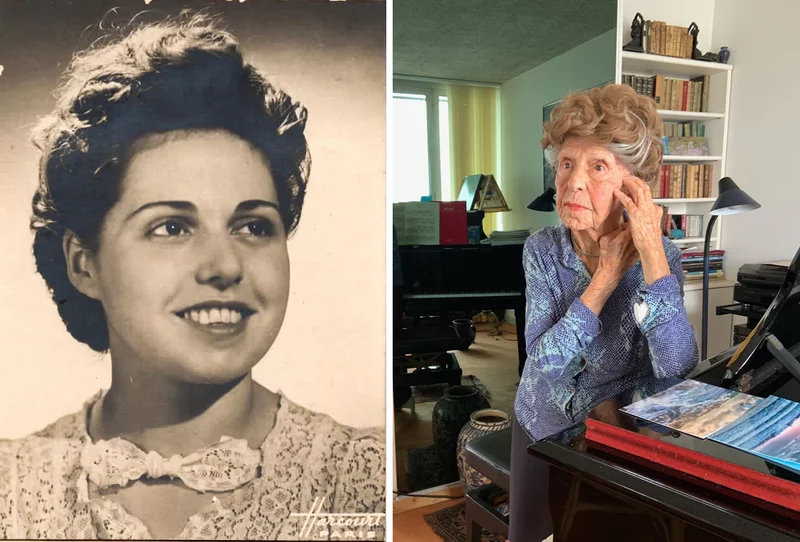
Colette Maze, now 107, began playing the piano at age 5 and defied the social conventions of her day to embrace it as a profession rather than as a pastime. Her son first arranged for her performances to be recorded when she was in her 90s. She has just released her sixth album. Family photo; Eleanor Beardsley/NPR
.
.
Click the link below for the article:
.
__________________________________________
October 29, 2021
Mohenjo
Arts, Business, Food For Thought, Human Interest, Medical, missed News, Political, Science, Technical
amazon, business, Business News, current-events, Future, Hotels, human-rights, medicine, mental-health, research, Science, Science News, technology, Technology News, travel, vacation

.
News You might have missed!
Use your browser or smartphone back arrow (<-) to return to this table for your next selection.
.
__________________________________________
October 28, 2021
Mohenjo
Business, Enthralling, Human Interest, Photographs
amazon, business, Business News, current-events, Future, Hotels, human-rights, medicine, mental-health, research, Science, Science News, technology, Technology News, travel, vacation

Click the link below the picture
.
The Kosciuszko National Park is a 6,900-square-kilometre (2,700 sq mi) national park and contains mainland Australia’s highest peak, Mount Kosciuszko, for which it is named, and Cabramurra the highest town in Australia. Its borders contain a mix of rugged mountains and wilderness, characterized by an alpine climate, which makes it popular with recreational skiers and bushwalkers.
The park is located in the southeastern corner of New South Wales, 354 km (220 mi) southwest of Sydney, and is contiguous with the Alpine National Park in Victoria to the south, and the Namadgi National Park in the Australian Capital Territory to the northeast. The larger towns of Cooma, Tumut, and Jindabyne lie just outside and service the park.
The waters of the Snowy River, the Murray River, the Murrumbidgee River, and the Gungarlin River all rise in this park.
Other notable peaks in the park include Gungartan, Mount Jagungal, Bimberi Peak, and Mount Townsend.
On 7 November 2008, the Park was added to the Australian National Heritage List as one of eleven areas constituting the Australian Alps National Parks and Reserves.
Multiple Aboriginal groups in the southern part of NSW gathered in the Australian Alps Bioregion in the summer on an annual pilgrimage to the Bogong and Snowy Mountains. Here, the men participated in a feast of Bogong moths (Agrotis infusa) that were found on the rocky outcrops of the mountains.
The area was explored by Europeans in 1835, and in 1840, Edmund Strzelecki ascended Mount Kosciuszko and re-named it after a Polish patriot and military leader Tadeusz Kościuszko. High-country stockmen followed, using the Snowy Mountains for grazing during the summer months. Banjo Paterson’s famous poem The Man From Snowy River recalls this era. The cattle graziers have left a legacy of mountain huts scattered across the area. Today these huts are maintained by the National Parks and Wildlife Service or volunteer organizations like the Kosciuszko Huts Association. In the 19th century, gold was mined on the high plains near Kiandra. At its height, this community had a population of about 4,000 people and ran 14 hotels. It was here that Skiing in Australia commenced around 1861. Since the last resident left in 1974, Kiandra has become a ghost town of ruins and abandoned diggings. In the 20th century, the focus of Skiing in New South Wales shifted south closer to the Kosciuszko Main Range. Wikipedia
.
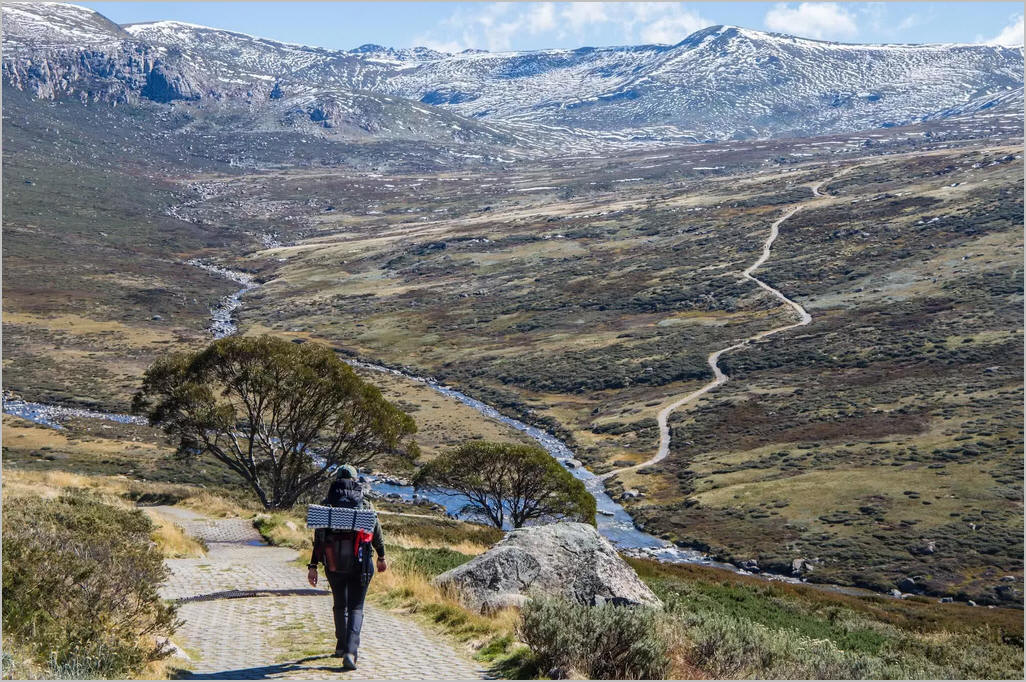 An image from Kosciuszko National Park
.
.
Click the link below for images:
.
__________________________________________
Older Entries
Newer Entries


